


TL;DR:
- A quick, consistent oral care routine of two to three minutes twice daily prevents plaque buildup and cavities.
- Electric toothbrushes with timers outperform manual brushes in plaque removal, especially for busy individuals.
- Focusing on simple, targeted habits and using the right tools increases adherence and improves oral health.
Packed schedules, back-to-back meetings, and family commitments make it easy to treat dental hygiene as an afterthought. Yet skipping or rushing oral care builds up plaque, increases cavity risk, and leads to costly dental visits down the road. The encouraging truth is that a well-structured, fast, effective routine does not require perfection or elaborate steps. Just a few focused minutes, split between morning and night, can deliver clinically meaningful results. This guide walks you through exactly what tools you need, how to use them efficiently, and how to stay consistent even on your busiest days.
Table of Contents
- What you need for a quick dental routine
- Step-by-step: The 5-minute fast dental routine
- Electric vs manual brushing: What fits your lifestyle?
- Top challenges and expert strategies for staying consistent
- Why short, targeted routines beat complicated ones (even if you skip a day)
- Get started with smarter dental solutions
- Frequently asked questions
Key Takeaways
| Point | Details |
|---|---|
| Just 5 minutes needed | A science-backed dental routine fits into two 2–3 minute sessions each day. |
| Electric wins for busy lives | Electric toothbrushes help you brush thoroughly and consistently when time is tight. |
| Focus on consistency | Sticking to your routine daily matters more than doing it perfectly every time. |
| Simplify for success | Pack a minimal kit and use apps or timers to keep oral care effortless—even on the busiest days. |
What you need for a quick dental routine
Before you can build a fast routine, you need the right tools on hand. Fortunately, effective oral care does not demand a cabinet full of products. A minimal, well-chosen kit is all it takes to cover the dental hygiene essentials that matter most.
| Tool | Why it matters | Busy-life tip |
|---|---|---|
| Soft-bristle toothbrush | Cleans without irritating gums | Replace every 3 months |
| Fluoride toothpaste | Strengthens enamel and fights cavities | Look for ADA Seal |
| Floss or interdental picks | Removes plaque between teeth | Picks are faster for on-the-go |
| ADA accepted mouthrinse | Optional adjunct for fresher breath | Not a substitute for brushing |
| Portable travel case | Keeps your kit together | Pre-pack for gym or office |
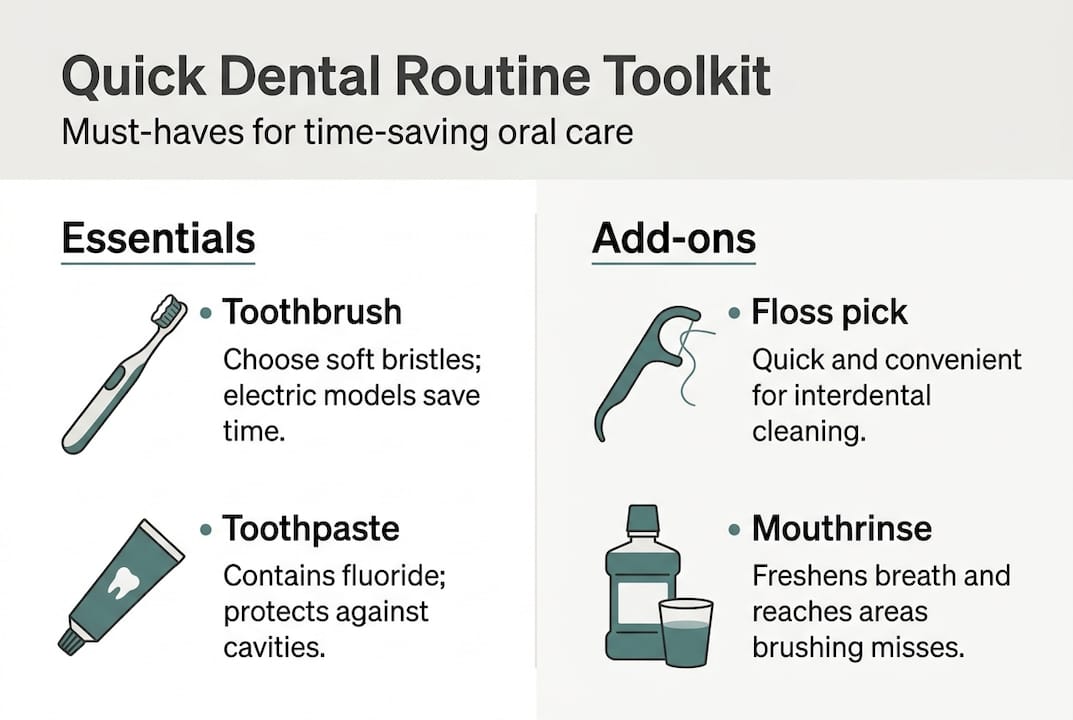
A soft-bristle brush is non-negotiable. Firm bristles feel thorough but can actually erode enamel and inflame gums over time. Pair it with a fluoride toothpaste, since fluoride is the ingredient proven to remineralize early decay and reduce cavity incidence. For interdental cleaning, floss remains the gold standard, but interdental picks and water flossers are equally valid for people who struggle with traditional string floss.
Mouthrinse is useful but optional. An ADA accepted mouthrinse adds an extra layer of protection for those with higher cavity or gum disease risk, but it should never replace brushing and flossing. The standard recommendation is to brush twice daily with fluoride toothpaste using soft bristles at a 45-degree angle to the gums, combined with one to two minutes of daily interdental cleaning.
Pro Tip: Pre-pack a small travel pouch with a foldable toothbrush, a single-use floss pick, and a mini toothpaste. Stash it in your work bag or gym locker so your oral care stays on track no matter where the day takes you.
Step-by-step: The 5-minute fast dental routine
With the right tools ready, a five-minute daily routine becomes straightforward. The key is splitting the effort between morning and evening rather than trying to do everything at once. Here is how the steps break down:
- Floss or interdental clean (1 to 2 minutes): Start here, especially at night. Working floss between each tooth before brushing lets the toothpaste reach newly cleared surfaces more effectively.
- Brush with fluoride toothpaste (2 minutes): Hold the brush at a 45-degree angle to the gumline and use short, circular strokes. Cover all four quadrants, spending roughly 30 seconds on each.
- Optional rinse (30 to 60 seconds): If you use mouthwash, swish it now. Skip if you are short on time; brushing and flossing already cover the essentials.
- Spit, do not rinse: After brushing, spit out the toothpaste but avoid rinsing with water immediately. This keeps fluoride in contact with your enamel longer for maximum protection.
- Drink water for dry mouth: If you wake up with a dry mouth, a glass of water stimulates saliva and helps neutralize morning acids before your full routine begins.
Research makes the time investment clear. Brushing longer than 120 seconds removes 30% more plaque than stopping at 45 seconds. Yet twice-daily brushing adherence sits at roughly 44.6% globally, meaning more than half of adults are not even hitting the twice-daily target. Following these five steps puts you firmly in the top half.
| Feature | Manual brush | Electric brush |
|---|---|---|
| Average brush time | Often under 60 seconds | 2 minutes with built-in timer |
| Plaque removal | Effective with good technique | Clinically superior |
| Ease of use | Requires consistent technique | Consistent pressure built-in |
| Portability | Easy to travel with | Slightly bulkier |
For a detailed breakdown of each step in a printable format, the efficient oral care steps checklist is a practical resource. Building the habit is easier when the steps are visible and simple to follow each morning and night.
Electric vs manual brushing: What fits your lifestyle?
Choosing between an electric and manual toothbrush is not about prestige. It is about which tool you will actually use correctly, every single day. Both are recognized as effective, but the data consistently favors electric brushes for most users, especially those with time constraints.
Electric toothbrushes remove 21% more plaque and reduce gingivitis by 11% compared to manual brushes. The biggest practical advantage for busy people is the built-in timer. Most electric models vibrate or pause at the 30-second mark to prompt you to switch quadrants, which reliably gets you to the full two minutes without counting in your head.
| Factor | Manual toothbrush | Electric toothbrush |
|---|---|---|
| Plaque removal | Good with proper technique | 21% better on average |
| Gingivitis reduction | Effective | 11% greater reduction |
| Built-in timer | No | Yes, most models |
| Cost | Low upfront | Higher upfront, lower long-term |
| Best for | Travelers, technique-confident users | Busy users, those with dexterity issues |
Manual brushes still have a place. They are lightweight, affordable, travel-friendly, and perfectly effective when used with proper technique for a full two minutes. The honest truth, though, is that most people do not brush long enough or with the right angle when using a manual brush. That is where electric brushes earn their advantage.
For a deeper look at the clinical evidence, why electric toothbrushes outperform manual alternatives is worth reviewing. And if you are exploring fast solutions for busy lifestyles, an electric brush with smart timer functionality is one of the highest-value upgrades you can make.
Pro Tip: Choose a brush with app integration if you tend to lose track of time in the morning. Some models send reminders and track your sessions, turning a healthy habit into an almost automatic one.
Top challenges and expert strategies for staying consistent
Knowing the right routine and actually doing it every day are two different things. Most people fall short not because they lack information but because real life gets in the way. Understanding the specific obstacles makes it easier to plan around them.
Common barriers to consistent oral care:
- Forgetting to brush at night after a long day
- Rushing through the morning and cutting the routine short
- Skipping flossing because it feels like an extra step
- Brushing too hard, causing soreness that discourages the habit
- Traveling and leaving the dental kit at home
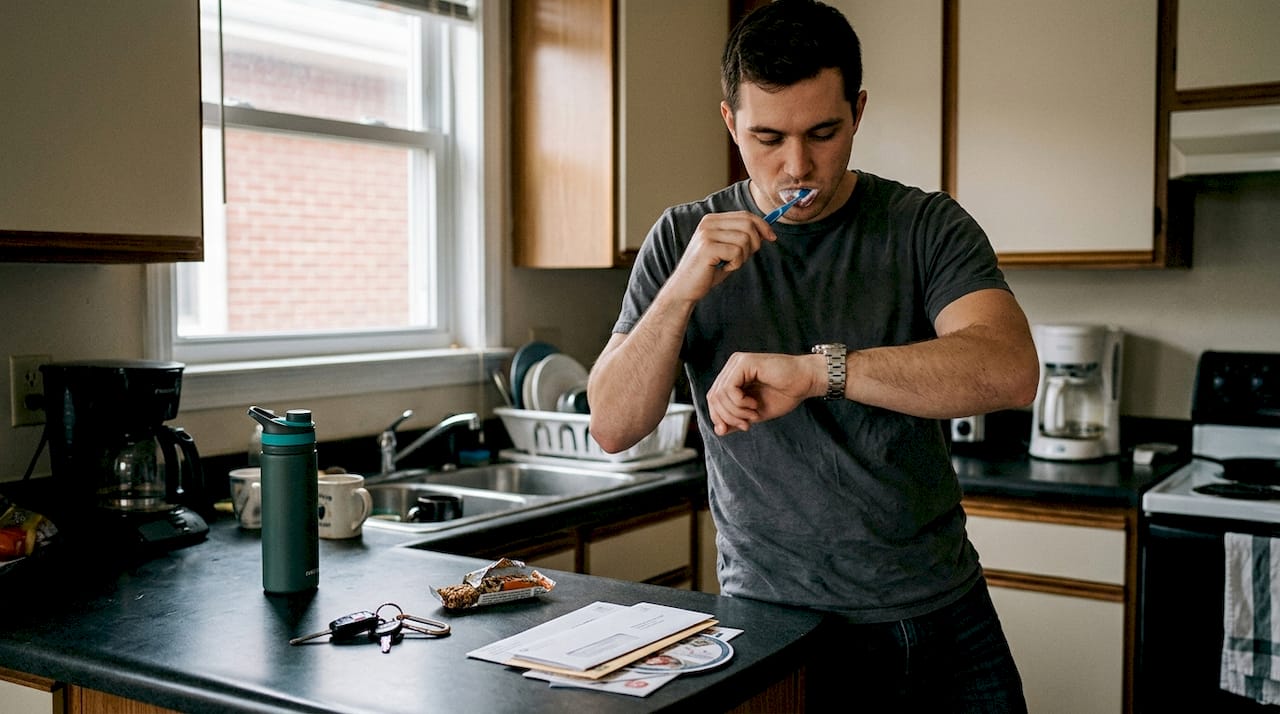
Expert strategies address each of these directly. Low adherence highlights the value of using timers, apps, and visual reminders to close the gap between intention and action. Set a recurring phone alarm labeled “brush” for 10 p.m. so the night routine does not slip. Keep your toothbrush visible on the counter rather than stored in a drawer, since out-of-sight habits fade fastest.
“A consistent five-minute targeted routine produces better outcomes than an elaborate one that gets skipped. Frequency and regularity matter more than any single perfect session.”
For fast oral care for busy professionals, habit stacking is one of the most effective strategies available. Pair brushing with something you already do without thinking, like running the coffee maker or washing your face. The new habit piggybacks on the existing one, making it easier to sustain.
Night routines deserve special attention. Saliva production drops significantly during sleep, which means bacteria colonize teeth and gums more aggressively overnight. Flossing and brushing before bed reduces the bacterial load that has direct access to your enamel for six to eight hours. For efficient routines for healthier smiles, the evening session is the one to protect most fiercely.
Pro Tip: Pair your evening oral care with a low-effort activity like listening to a two-minute podcast clip. It makes the routine feel less like a chore and keeps you at the brush long enough to hit the full time.
Why short, targeted routines beat complicated ones (even if you skip a day)
Here is an uncomfortable reality most dental advice glosses over: chasing the perfect routine often leads to doing nothing at all. When people set ambitious oral care goals and miss a day, they tend to abandon the habit entirely rather than simply resuming the next morning. Perfectionism is the enemy of consistency.
The research is clear on this point: consistency matters more than perfect technique. A two-minute brush done every single day outperforms a meticulous five-step routine performed three times a week. This reframing is genuinely useful for busy Americans who tend to be all-or-nothing about health habits.
We think the right mental model is “good enough, every day” rather than “perfect when possible.” Miss a night? Resume in the morning without guilt. Skipped flossing today? Do it tonight. The easy oral hygiene checklist approach works precisely because it lowers the activation energy for each session. Short, repeatable, and realistic beats elaborate and aspirational every time.
Most people also overestimate how well they are currently brushing. Studies consistently show that self-reported brushing time significantly exceeds actual brushing time. Using a timer or smart brush removes that self-deception entirely, which is why technology-assisted routines outperform unassisted ones in real-world practice.
Get started with smarter dental solutions
Building a faster, more effective oral care routine starts with the right tools. Y-Brush products are designed specifically to meet the demands of busy schedules, delivering clinically effective cleaning without the time investment that traditional routines require.
The Y-Brush Essential Sonic Toothbrush is engineered to maximize plaque removal in less time, making it easier to hit your daily targets consistently. Whether you are rushing through a weekday morning or wrapping up a late night, the right brush removes the friction that causes routines to break down. Explore the full range of solutions and guides at brush smarter not longer to find tools that work as hard as you do.
Frequently asked questions
How fast can I realistically clean my teeth and still be healthy?
A focused routine takes about 4 to 6 minutes daily, split between morning and night, and that timeframe meets optimal ADA standards when it covers both brushing and flossing. Quality and consistency within that window matter far more than spending longer at the sink.
Are electric toothbrushes worth it for busy people?
Yes. Electric toothbrushes offer 21% better plaque removal and 11% greater gingivitis reduction compared to manual brushes, and built-in timers make it far easier to reach the full two-minute target every session.
Is skipping mouthwash okay in a fast routine?
Absolutely. Mouthrinse is an optional adjunct and not a substitute for brushing and flossing. If time is tight, skip the rinse and focus on the two core steps instead.
What’s the best time to floss for a fast routine?
Flossing at night before brushing is most effective because overnight bacteria thrive in a dry mouth environment, and removing plaque before sleep significantly reduces their impact on your enamel and gums.


