


TL;DR:
- Choosing the right floss depends on personal comfort, dental needs, and consistency.
- Floss type varies in features, but regular use is more important than selecting the most expensive option.
- Alternative tools like interdental brushes and water flossers enhance cleaning for specific dental conditions.
Standing in the drugstore floss aisle can feel genuinely overwhelming. There are waxed strings, flat tapes, plastic picks, water-powered devices, and tiny brushes, all promising a cleaner, healthier smile. The truth is, not every floss type works equally well for every mouth. Your tooth spacing, gum health, dental appliances, and even your daily routine all influence which option will actually get used and get results. This guide breaks down each major type of dental floss, explains the real differences between them, and helps you match the right tool to your specific needs so you can floss smarter, not just more often.
Table of Contents
- How to choose dental floss: What really matters
- A closer look at string floss: Waxed, unwaxed, PTFE, and dental tape
- Dental floss picks, holders, and tufted floss: Convenient tools for tricky situations
- Beyond floss: Interdental brushes and water flossers
- How to match floss type to your mouth: Situational picks and expert tips
- Expert perspective: Why the perfect floss is the one you’ll use daily
- Take charge of your dental health with advanced cleaning tools
- Frequently asked questions
Key Takeaways
| Point | Details |
|---|---|
| Match floss to gaps | Choose floss type based on whether your teeth are tightly spaced or gapped for best results. |
| Technique is crucial | How you use floss matters as much as the floss type for effective plaque removal. |
| ADA Seal is key | Flosses with the ADA Seal are clinically proven for cleaner, healthier gums. |
| Consistency wins | Daily flossing—regardless of type—is more important than brand or cost. |
| Mix and match tools | Combine floss, brushes, and water flossers for customized, thorough interdental care. |
How to choose dental floss: What really matters
Before picking a product off the shelf, it helps to understand what separates a good floss from the right floss for you. Several factors genuinely shape how effective your flossing routine will be.
The most reliable starting point is the ADA Seal of Acceptance. Products that carry this seal have been independently tested and verified to reduce plaque and gingivitis. It is the single most trustworthy indicator that a floss will perform as claimed, regardless of price point or marketing language.
Beyond the seal, matching floss form to your mouth anatomy matters. Consider these key factors when choosing:
- Tooth spacing: Tight contacts call for slicker, thinner floss; wider gaps benefit from tape or interdental brushes.
- Dental appliances: Braces, bridges, and implants require specialty options like super floss or threaders.
- Dexterity: Limited hand mobility makes picks and holders far more practical than string.
- Sensitivity: Sensitive or receding gums respond better to softer, wider tape than thin string.
- Environmental values: Nylon and PTFE (polytetrafluoroethylene, a synthetic polymer) are not biodegradable; silk floss is a natural, compostable alternative.
Technique is equally important. Use about 18 inches of floss, wind most of it around your middle fingers, and guide it gently between teeth in a C-shape around each tooth, reaching just below the gumline. Snapping floss into the gums causes irritation and defeats the purpose.
Pro Tip: Consistency trumps floss type for better outcomes, according to dental experts. The best floss is the one you will actually use every day. Start with what feels comfortable and adjust from there.
For a deeper look at technique, using dental floss correctly is just as important as choosing the right type. Pairing good floss with dental hygiene essentials creates a routine that compounds results over time.
A closer look at string floss: Waxed, unwaxed, PTFE, and dental tape
With criteria in mind, here is how each type of string floss stacks up. Each has a distinct feel, strength, and ideal use case.
| Floss type | Best for | Key advantage | Drawback |
|---|---|---|---|
| Waxed nylon | Beginners, braces | Smooth glide, less shredding | Slightly thicker |
| Unwaxed nylon | Normal spacing | Thinner, squeaks when clean | Frays more easily |
| PTFE monofilament | Tight contacts | Nearly shred-proof, ultra-slick | Higher cost |
| Dental tape | Wide gaps, recession | Flat, gentle on gums | Less precise in tight spaces |
Waxed nylon is coated with a thin layer of wax, which helps it slide between teeth without catching or shredding. It is a strong choice for beginners and for people with braces, where rough edges can snag uncoated floss. The wax coating makes the experience more forgiving.
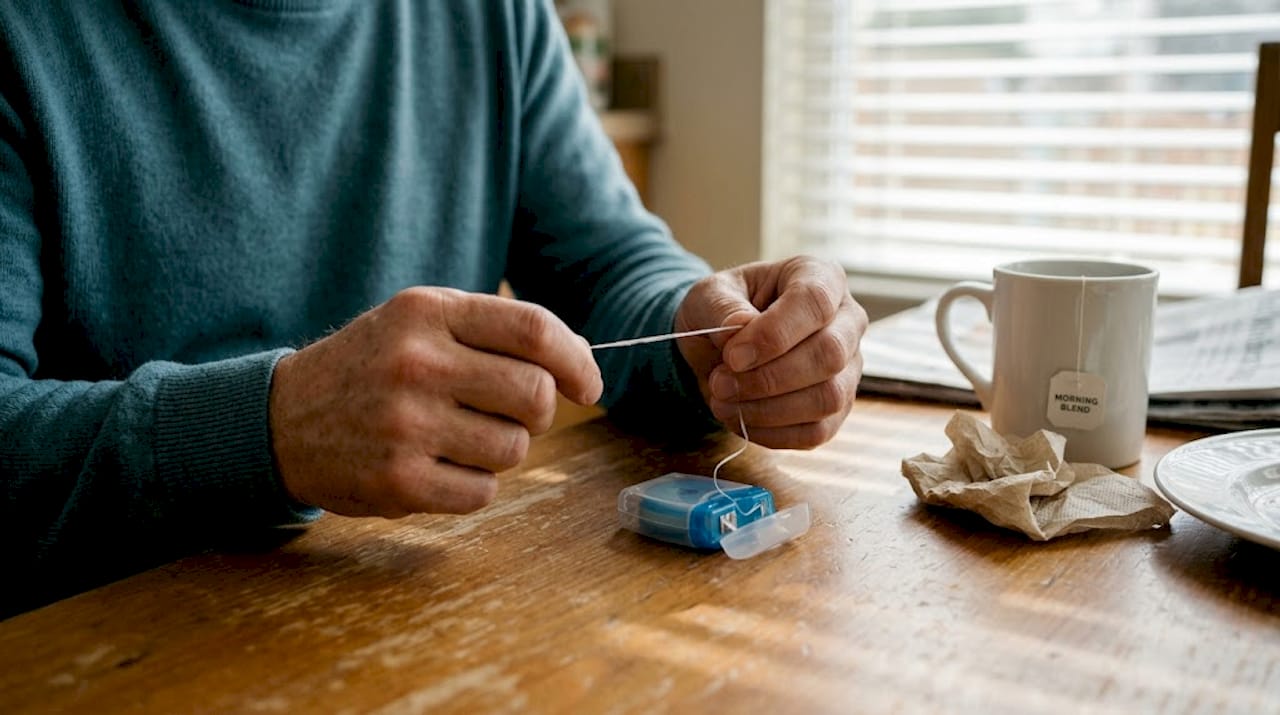
Unwaxed nylon is thinner and grips plaque surfaces slightly better. One useful feature: it emits a faint squeak against clean teeth, giving you real-time feedback that a surface is plaque-free. The downside is that it frays more easily, especially in tight or irregular spaces.
PTFE monofilament floss (often marketed as Glide) is made from a single synthetic fiber, making it virtually shred-proof. It slides through even the tightest contacts with minimal resistance. PTFE floss works best for tight contacts; waxed is easier for beginners and braces, according to dental professionals.
Dental tape is a flat, wide ribbon rather than a round string. It covers more surface area per pass, making it gentler and more effective for people with wider gaps between teeth or gum recession.
Importantly, research confirms no significant difference in plaque removal between waxed and unwaxed; PTFE excels in tight spaces. So comfort and fit, not marketing claims, should guide your pick.
Key insight: Most string floss is made from nylon or PTFE, neither of which is biodegradable. If sustainability matters to you, silk floss is a compostable alternative that works well for standard spacing.
Pro Tip: Explore string floss benefits and combine them with proper flossing techniques for noticeably cleaner results within just a few weeks.
Dental floss picks, holders, and tufted floss: Convenient tools for tricky situations
For those who struggle with traditional floss or have dental appliances, other tools step in to fill the gap. These options prioritize accessibility and usability without sacrificing cleaning effectiveness.
Floss picks are pre-threaded, disposable tools with a small arc of floss stretched between two prongs. They are ideal for on-the-go use and for anyone with limited hand dexterity. The trade-off is that picks offer less precise motion than string floss, making it harder to wrap the floss in a full C-shape around each tooth.
- Great for travel, work, or post-meal cleanup
- Easy for children and older adults to use independently
- Less eco-friendly due to single-use plastic
- Not ideal for very tight contacts or deep gumline cleaning
Reusable floss holders are a smarter middle ground. They allow you to load your preferred string floss into a reusable frame, giving you the ergonomic advantage of a pick while reducing plastic waste. They work well for people who like string floss but find it difficult to maneuver.
Super floss is a specialty product designed specifically for complex dental situations. It features three distinct segments: a stiffened nylon end that threads under appliances, a spongy tufted middle section that cleans around brackets and under bridges, and regular floss for standard areas.
Floss picks and super floss are ideal for limited dexterity, braces, and bridges, making them practical solutions for a wide range of patients.
Super floss has a threader for braces and bridges, allowing it to navigate areas where standard floss simply cannot go. If you have implants, fixed retainers, or multi-unit bridges, super floss is one of the most effective tools available. For more on managing oral hygiene with braces, specialized flossing tools make a measurable difference in outcomes.
Beyond floss: Interdental brushes and water flossers
Some mouths need more than just string or picks. Here is where alternative cleaners shine, particularly for people with complex dental needs or specific clinical conditions.
Interdental brushes are tiny, cone-shaped or cylindrical brushes that fit between teeth. Unlike floss, which slides between surfaces, a brush physically contacts the curved sides of adjacent teeth simultaneously. This makes them especially effective for people with wider gaps, periodontitis (gum disease that creates pockets), or gum recession.
Water flossers use a pressurized stream of water to flush debris and bacteria from between teeth and below the gumline. They do not scrape plaque mechanically the way string floss does, but they excel at flushing out areas that are hard to reach, particularly around braces, bridges, and implants.
Here is how the options compare for specific situations:
| Tool | Best scenario | Clinical strength | Limitation |
|---|---|---|---|
| String floss | Normal spacing, healthy gums | Mechanical plaque removal | Difficult with appliances |
| Interdental brush | Wide gaps, gum disease | Contacts both tooth surfaces | Not for tight contacts |
| Water flosser | Braces, bridges, sensitivity | Flushes debris and bacteria | Less mechanical scraping |
The clinical data is compelling. Interdental brushes remove 32% more plaque in wide gaps; water flossers can remove up to 29% more plaque in trials compared to standard flossing alone. Additionally, water flossers are accepted by the ADA for gingivitis reduction and as a floss alternative.
For guidance on selecting the right device, choosing a water flosser involves considering pressure settings, reservoir size, and tip variety. You can also explore the benefits of water flossers and learn how to get started with using interdental brushes effectively.
How to match floss type to your mouth: Situational picks and expert tips
With all the main types covered, let us zero in on how to choose the best fit for you. The goal is a simple, repeatable decision based on your actual dental situation.
| Dental situation | Recommended tool |
|---|---|
| Tight tooth contacts | PTFE monofilament or waxed floss |
| Wide gaps or gum recession | Dental tape or interdental brushes |
| Braces or fixed bridges | Super floss, floss threader, or water flosser |
| Limited dexterity | Floss picks or reusable holders |
| Eco-conscious preference | Silk floss or reusable holders |
| Sensitivity or gum disease | Soft dental tape or water flosser |
Key principles to guide your decision:
- Always look for the ADA Seal for proven plaque and gingivitis reduction.
- PTFE for tight teeth; tape or brushes for wide gaps; super floss or water flossers for braces or bridges.
- Explore natural dental floss options if you prefer chemical-free materials.
- Do not assume higher price means better results. No correlation between cost and mechanical strength has been found; consistency matters more than type.
- Revisit your floss choice when your dental situation changes, such as getting braces, experiencing gum recession, or having a bridge placed.
Pro Tip: Use the oral care checklist to audit your full routine. Small adjustments to floss type and technique, done consistently, produce far better results than occasional thorough cleanings.
Expert perspective: Why the perfect floss is the one you’ll use daily
The dental industry constantly introduces new floss innovations, and it is easy to assume that the latest product will finally solve your oral health challenges. But the data tells a different story. Most dentists agree: consistency outperforms floss type or brand for oral health results.
What this means in practice is that a basic waxed floss used every single day will outperform a premium PTFE product used three times a week. The habit is the intervention, not the product. This is a perspective worth holding onto when you feel tempted to overhaul your entire routine after reading about a new tool.
That said, adaptability matters. As your dental situation evolves, your tools should evolve with it. Adding a water flosser when you get braces, or switching to interdental brushes after gum recession, is smart and evidence-based. The key is anchoring your routine in what you know you will actually do, then layering in upgrades when they serve a clear purpose.
Building habits for busy lives means choosing tools that fit your real schedule, not your ideal one. Start simple, stay consistent, and adjust with intention.
Take charge of your dental health with advanced cleaning tools
Ready to upgrade your oral care routine? Flossing is a critical piece of the puzzle, but it works best when paired with a toothbrush that delivers a genuinely thorough clean. At Y-Brush, we designed our products for real life, not the ideal two-minute brushing session that most people never actually complete.
Our essential sonic toothbrush and advanced sonic toothbrush are built to deliver a superior, plaque-free clean in just 20 seconds, making it easier than ever to stay consistent. When you combine effective flossing with the right brushing technology, you give your smile the complete care it deserves every single day.
Frequently asked questions
Is waxed or unwaxed dental floss better for removing plaque?
Studies show no significant difference in plaque removal between waxed and unwaxed floss, so choose whichever type feels more comfortable and easier to use consistently.
What type of floss should I use if I have braces or dental bridges?
Super floss and water flossers are recommended for braces and bridges, along with floss threaders, which help navigate areas where standard floss cannot reach.
Can interdental brushes or water flossers replace string floss?
Interdental brushes and water flossers have proven clinical benefits; interdental brushes are superior for wide gaps, while water flossers are ADA-accepted for reducing gingivitis and can serve as effective alternatives or complements depending on your needs.
Is expensive dental floss better than cheaper alternatives?
Research confirms no correlation between floss cost and mechanical strength or plaque removal effectiveness, so focus on fit, comfort, and daily use rather than price.
How do I know if my floss is effective?
Look for the ADA Seal of Acceptance, which verifies efficacy for plaque and gingivitis removal, and pair it with proper technique used consistently every day.
Recommended
- Master teeth cleaning methods for a healthier smile in 2026 – Y-Brush USA
- Optimize your dental hygiene essentials for busy lifestyles – Y-Brush USA
- Dental health checklist 2026: essential steps for healthier smiles – Y-Brush USA
- Top 6 betterbiom.com Alternatives in 2026 for Efficient Oral Care – Y-Brush USA


