


TL;DR:
- AI-powered oral care tools provide quick, personalized dental assessments via smartphones.
- Clinical studies show AI toothbrushes significantly improve plaque reduction and gum health.
- Benefits are greatest for children, braces wearers, and those with dexterity challenges.
Imagine scanning your teeth for plaque, inflammation, and crowding in under a minute using nothing but your smartphone. That’s not a distant promise. Consumer AI tools like GUM SmileScan already detect dental issues in under 1 minute via smartphone, giving everyday users a level of oral health insight that once required a clinic visit. For the millions of Americans who struggle to build consistent brushing habits, this shift is significant. AI is no longer just for hospitals or research labs. It’s moving into your bathroom, your morning routine, and your family’s daily oral care habits in ways that are practical, measurable, and genuinely exciting.
Table of Contents
- How AI is changing the way we care for our teeth
- Top AI-powered oral care tools and how they work
- The science behind AI toothbrushes: What studies reveal
- Limitations, pitfalls, and how to get the best from AI oral tech
- Our take: Why smarter tech isn’t always smarter oral health
- Ready to upgrade your brushing routine?
- Frequently asked questions
Key Takeaways
| Point | Details |
|---|---|
| AI streamlines oral care | AI-powered tools help make brushing faster, easier, and more consistent for busy users. |
| Best for specific groups | Children, people with braces, and those with poor brushing habits benefit most from AI aids. |
| Evidence-based improvements | Studies confirm AI toothbrushes reduce plaque and gum inflammation better than manual brushes. |
| Know the limits | AI isn’t perfect; long-term oral health depends on good habits and regular dental checkups. |
How AI is changing the way we care for our teeth
Now that you’ve seen how quickly tech can scan your teeth, let’s look closer at how AI tools are actually changing your daily oral health routine.
AI in oral care works by collecting data, analyzing patterns, and delivering personalized guidance in real time. Connected toothbrushes use motion sensors and pressure detectors to map your brushing technique. Smartphone apps process that data and tell you exactly where you’re missing plaque or applying too much force. Some platforms even use your phone’s camera to perform visual scans of your gum tissue and enamel. The result is a feedback loop that most people have never had access to before.
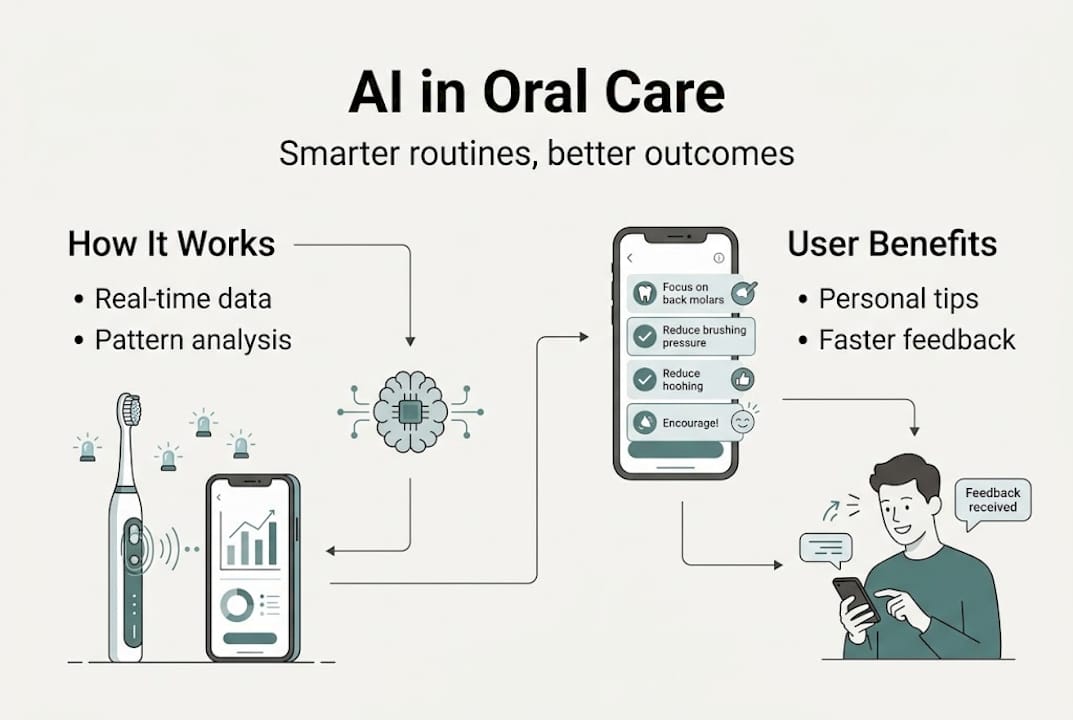
The problems these tools solve are real and widespread. Most people miss the same spots every single time they brush. Back molars, the gumline on the lower front teeth, and the inner surfaces of upper teeth are notorious trouble zones. Without feedback, those habits never change. AI changes that by making the invisible visible.
Here’s what AI oral care tools are specifically designed to address:
- Missed plaque zones from repetitive, unconscious brushing patterns
- Poor technique, including too much pressure or incorrect brush angles
- Infrequent or too-short brushing sessions that leave teeth underclean
- Lack of motivation, especially for children who resist brushing
- Inconsistent routines for busy adults who skip or rush through brushing
For families, the benefits extend beyond adults. Kids respond well to gamified brushing apps that reward consistent two-minute sessions. People with braces face unique challenges keeping teeth clean, and AI feedback helps them target hard-to-reach areas around brackets and wires. Older adults or those with limited hand mobility also benefit from guided coaching that compensates for reduced dexterity.
“AI oral care platforms provide personalized, immediate oral health assessments via smartphone, putting professional-grade feedback directly in the hands of consumers.”
The integration into daily life is smoother than most people expect. Apps sync automatically with smart toothbrushes via Bluetooth. Scan results are stored over time so you can track progress. Some platforms connect directly to dental offices, letting your hygienist review your brushing data before your appointment. You can explore future oral care innovations to understand where this technology is heading next. For anyone interested in how technology is revolutionizing oral care for busy Americans, the current landscape is already impressive.
Top AI-powered oral care tools and how they work
Understanding the benefits, let’s see what options are actually available and how they compare for today’s user.
The AI oral care market has expanded quickly. GUM SmileScan, powered by Dentistry.One, is one of the most accessible entry points. It uses your smartphone camera to detect dental issues in under 1 minute, flagging signs of plaque buildup, gum inflammation, and crowding without any special hardware. Connected AI toothbrushes from brands like Oral-B and Philips Sonicare pair with apps to deliver zone-by-zone brushing maps. Apps like Brush DJ focus on timing and habit building with music-based brushing timers.
Here’s how the leading tools compare:
| Tool | Scan time | Feedback style | App integration | Best for |
|---|---|---|---|---|
| GUM SmileScan | Under 1 minute | Visual + written report | Yes, via Dentistry.One | Quick self-checks, all ages |
| Oral-B iO Series | Real-time | Color-coded zones on app | Yes, Oral-B app | Adults, poor brushers |
| Philips Sonicare 9900 | Real-time | Pressure and zone alerts | Yes, Sonicare app | Adults, sensitive gums |
| Brush DJ | N/A | Timer + music cues | Standalone app | Kids, habit building |
| Y-Brush Halo | 20 seconds | Speed + coverage feedback | Yes | Busy adults, families |
Each tool serves a slightly different need. GUM SmileScan is ideal for quick, low-barrier self-assessments. Connected brushes work best for people who want ongoing, session-by-session coaching. The Y-Brush Halo launch introduced a new category entirely, combining full-mouth brushing in 20 seconds with smart feedback. For a deeper look at how these devices function mechanically, advanced toothbrush tech explained breaks down the engineering behind the results.
Pro Tip: Set up app reminders for both morning and night brushing sessions, and use the quick self-check feature on any AI platform at least twice a week. Consistency with the feedback loop is what drives real improvement over time.
The science behind AI toothbrushes: What studies reveal
So, do these tools really work? Let’s unpack what studies and real-world results actually show.
The clinical evidence is encouraging. RCTs show connected and AI toothbrushes improve plaque reduction and gingival health significantly better than manual brushing. That’s not marketing language. That’s controlled trial data comparing measurable outcomes across groups.

Here’s a summary of key clinical findings:
| Outcome measured | AI/connected toothbrush | Manual toothbrush |
|---|---|---|
| Plaque index reduction | Significantly higher | Baseline |
| Gingival inflammation reduction | Up to 7.9% better | Baseline |
| User-reported satisfaction | High | Moderate |
| Technique improvement | Consistent gains | Minimal change |
92% of users report improved brushing with AI-enabled tools, according to recent clinical data. That’s a striking number, and it reflects how much real-time feedback changes behavior.
Here’s how AI toothbrushes typically deliver those results, step by step:
- Motion sensors detect brush position, angle, and pressure in real time
- Data is processed by the connected app using pre-trained algorithms
- Zone-by-zone feedback is delivered during or immediately after brushing
- Progress is tracked over days and weeks to identify persistent weak spots
- Personalized coaching adjusts recommendations based on your improvement history
Short-term benefits appear quickly. Most users see measurable plaque reduction within the first two to four weeks of consistent use. Long-term benefits depend heavily on sustained engagement with the app and feedback system. Those who stay consistent see continued improvement in gingival health scores. Those who drift from the feedback loop tend to revert to old habits. For a broader view of where this is heading, explore the future of toothbrushing. If you want practical guidance right now, efficient brushing tips offer actionable steps you can apply today.
Limitations, pitfalls, and how to get the best from AI oral tech
Even with all these advances, there’s more to the story. Here’s what most people and marketers don’t tell you about using AI for your oral health.
AI oral care tools are genuinely useful, but they are not perfect. Sensor accuracy varies across devices. Some connected toothbrushes struggle to precisely track every individual tooth, especially in the back of the mouth where the brush head moves quickly. AI excels in aggregate habit feedback but real-time tooth tracking can be imprecise, and long-term benefits may plateau after initial gains.
The market also has a real problem with “AI washing,” where basic Bluetooth connectivity is marketed as sophisticated artificial intelligence. Not every “smart” toothbrush uses genuine machine learning. Some simply track time and send reminders. Knowing the difference matters when you’re making a purchase decision.
Here are the key limitations to keep in mind:
- Sensor precision is not uniform across all devices or price points
- Benefit plateau is common after three to six months for already-consistent brushers
- AI washing inflates claims on lower-end products without real algorithmic feedback
- Overreliance on tech can lead users to skip regular dental checkups
- App fatigue causes many users to disengage from feedback systems over time
Best results are seen in children, braces wearers, and those with dexterity challenges, where guided feedback addresses real, specific needs. For people who already brush consistently and correctly, the incremental gain from AI tools is smaller. That’s not a flaw. It’s just an honest picture of where the technology adds the most value.
Pro Tip: Treat AI feedback like a personal trainer, not a replacement for your dentist. Use it to sharpen your technique and build consistency, but keep your regular checkups. The combination of professional care and daily AI coaching produces the best long-term outcomes. For more context on choosing the right tool, why choose automatic toothbrushes and innovative dental products offer helpful comparisons.
Our take: Why smarter tech isn’t always smarter oral health
Having explored the benefits and limitations, it’s time to take a critical look: does high-tech always mean healthier mouths?
Honestly, no. And we think that’s worth saying clearly. The data shows strong short-term gains from AI-enabled brushing, but long-term adherence and meaningful behavior change are more modest. The technology works best when it meets a real gap in someone’s routine. For someone who already brushes well for two full minutes twice a day, a connected toothbrush adds marginal value. For someone who rushes through 30 seconds each morning, it can be genuinely transformative.
The deeper truth is that consistency and ease of use matter more than sophistication. A tool you actually use every day outperforms a premium device you abandon after two weeks. That’s why we believe the most important feature in any oral care product isn’t its AI capability. It’s whether it fits naturally into how you already live. Data is only useful when it changes behavior, and behavior only changes when the tool is simple enough to use without thinking. Explore effortless oral hygiene insights to see how that philosophy translates into real product design.
Ready to upgrade your brushing routine?
If you’re still weighing your options, here’s how to accelerate your brushing routine with the latest innovations.
Y-Brush was built around one simple idea: a superior clean that fits how real people live. For adults, the Y-Brush Essential Sonic Toothbrush delivers a thorough clean in just 20 seconds, removing the friction that keeps most people from brushing long enough. For families with younger children, the Y-Brush KidsBrush makes brushing fast, fun, and effective for kids aged 4 to 12. And for those who want the most advanced experience, the Ultra Sonic Toothbrush combines full-mouth coverage with powerful sonic technology.
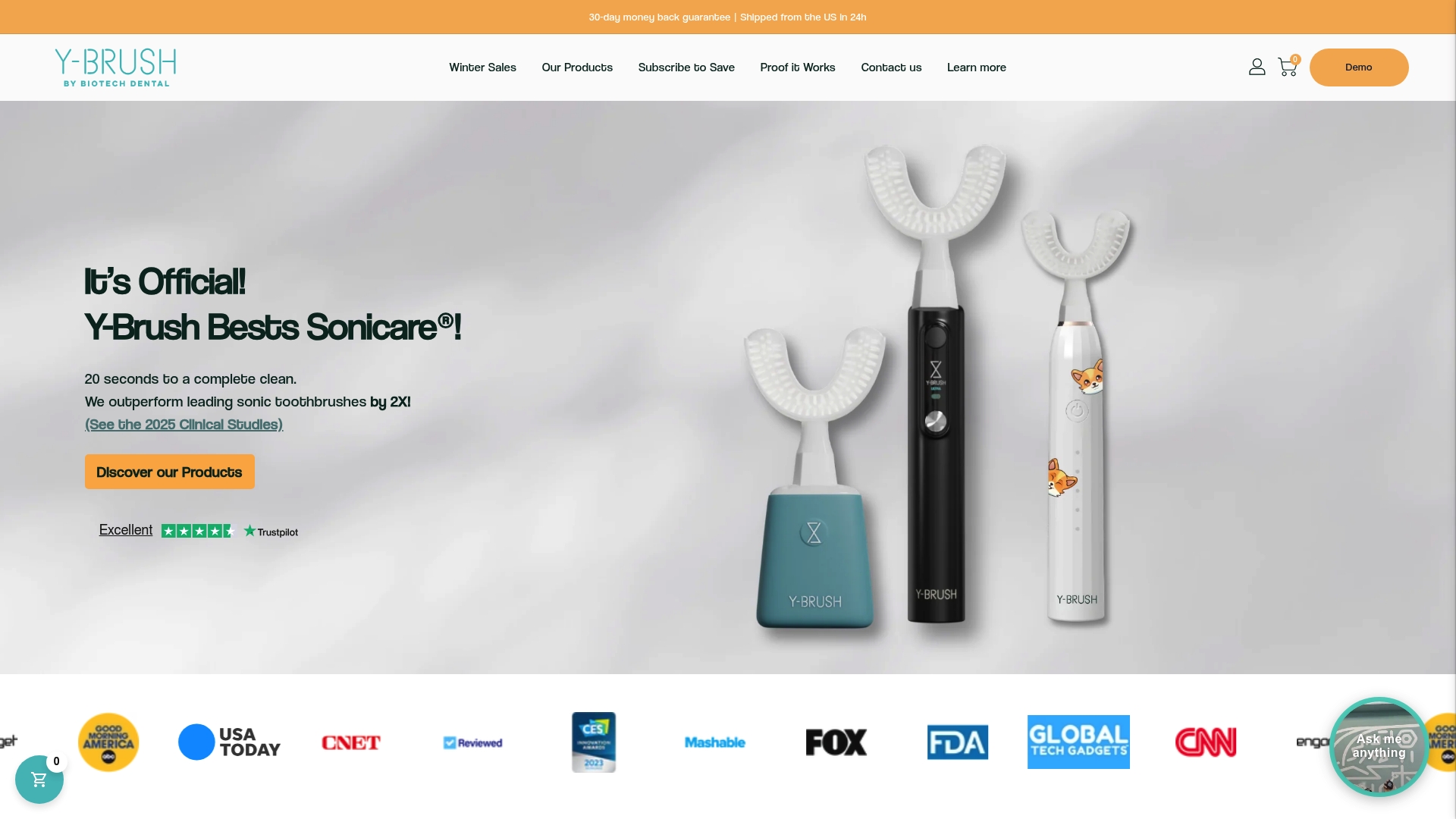
Y-Brush doesn’t just promise smarter brushing. It delivers a clinically designed solution that removes plaque efficiently, builds lasting habits, and fits seamlessly into even the busiest schedules.
Frequently asked questions
What is the most important benefit of AI in oral care for busy adults?
AI oral care apps deliver quick, personalized feedback that helps busy adults build consistent, effective brushing habits without adding time to their morning routine. The real value is making every brushing session count, not just longer.
Are AI toothbrushes actually better than manual toothbrushes?
RCTs confirm AI toothbrushes deliver higher plaque and inflammation reduction than manual brushing, with 92% of users reporting measurable improvement in their brushing results. The advantage is most pronounced for people with poor existing technique.
Who gets the most benefit from AI-powered oral care products?
Children, braces wearers, and people with dexterity problems or inconsistent habits show the greatest improvement from AI oral care tools, because guided feedback addresses their specific challenges directly.
What is the main limitation of using AI in oral care?
AI excels at aggregate feedback but isn’t always precise at tracking individual teeth in real time, and long-term benefits can level off after the initial improvement phase.


