


Most Americans brush their teeth every day, yet a surprising number still fall short of the benchmarks dentists recommend. The gap isn’t always about effort or intention. It’s about time, technique, and tools. Research consistently shows that the average brushing session lasts under one minute, well below the two-minute standard. The good news is that modern technology is quietly closing that gap, offering solutions that deliver superior results in less time and with less guesswork. For busy people who want a genuinely clean mouth without overhauling their entire morning routine, these innovations are worth understanding.
Table of Contents
- Why traditional oral care isn’t always enough
- How smart devices are streamlining oral care routines
- Real-world effectiveness: What the data and experts reveal
- Beyond brushing: AI, apps, and at-home monitoring
- Special situations: Technology for unique needs
- Integrating new oral care tech into a busy lifestyle
- Discover innovative oral care solutions
- Frequently asked questions
Key Takeaways
| Point | Details |
|---|---|
| Tech boosts oral health | Smart toothbrushes and apps help you brush better and save time, making oral care easier for busy people. |
| Evidence backs innovation | Clinical data shows electric brushes reduce plaque and gingivitis more than manual options. |
| Personalization matters | AI-driven apps and feedback make brushing routines smarter and more effective for your unique needs. |
| Special needs supported | Oral care tech is helpful for disabilities and orthodontic cases, but technique and oversight are still key. |
| Easy routine integration | New devices fit quick routines and daily schedules, making advanced oral care accessible for everyone. |
Why traditional oral care isn’t always enough
Manual brushing has been the standard for generations, but it comes with real limitations. Most people simply don’t brush long enough, and even those who do often miss key areas like the gumline, back molars, and the spaces between teeth. Life gets busy, mornings get rushed, and a thorough two-minute brush becomes a 45-second habit.
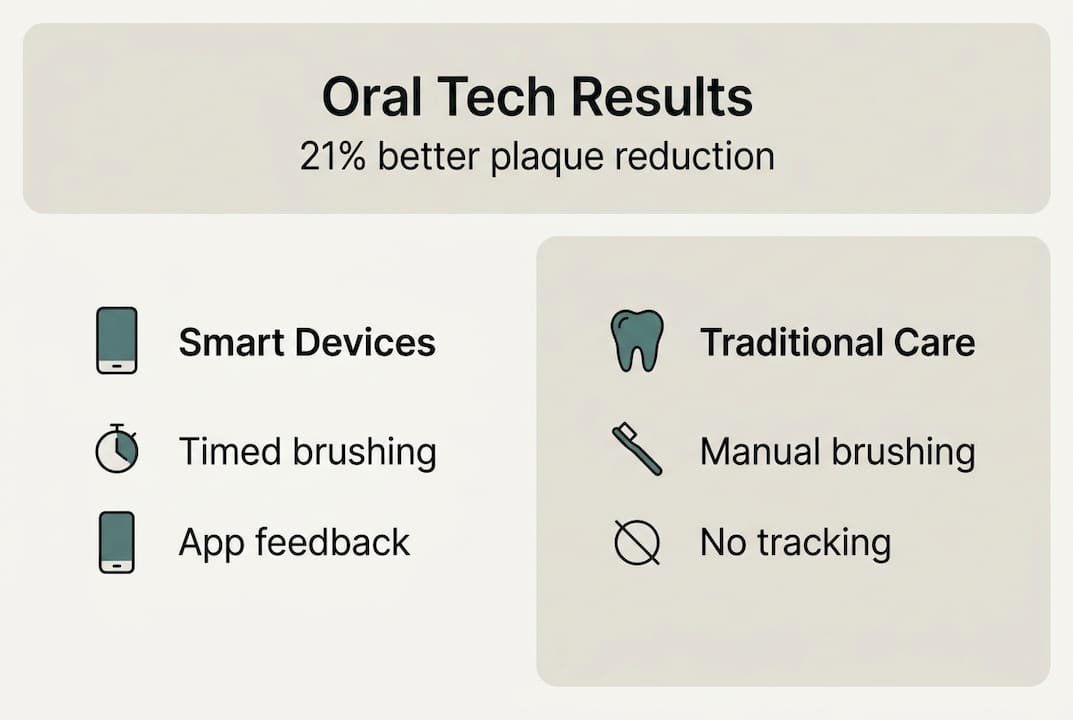
The benefits of electric toothbrushes over manual ones are well documented. Oscillating-rotating brushes reduce plaque by 11 to 21% and gingivitis by 6 to 11% more than manual brushes, according to a Cochrane review. That’s a meaningful clinical difference, not just a marketing claim.
Here’s what traditional brushing often misses:
- Consistent pressure across all tooth surfaces
- Adequate time spent on each quadrant of the mouth
- Proper angle at the gumline to remove plaque buildup
- Motivation and feedback to maintain good habits over time
The comparison between manual vs sonic toothbrushes makes it clear that technology-driven tools address these gaps in ways that willpower alone cannot.
“The best toothbrush is the one you use correctly and consistently. Technology helps make that consistency achievable for everyone.”
Now that we know why traditional brushing isn’t delivering optimal results, let’s look at what modern technology offers.
How smart devices are streamlining oral care routines
Smart toothbrushes have moved well beyond simple vibration. Today’s leading devices pack in features that actively coach you through every session. Smart toothbrushes with AI and sensors provide real-time feedback, track brushing habits, and even gamify the experience to keep users engaged and consistent.
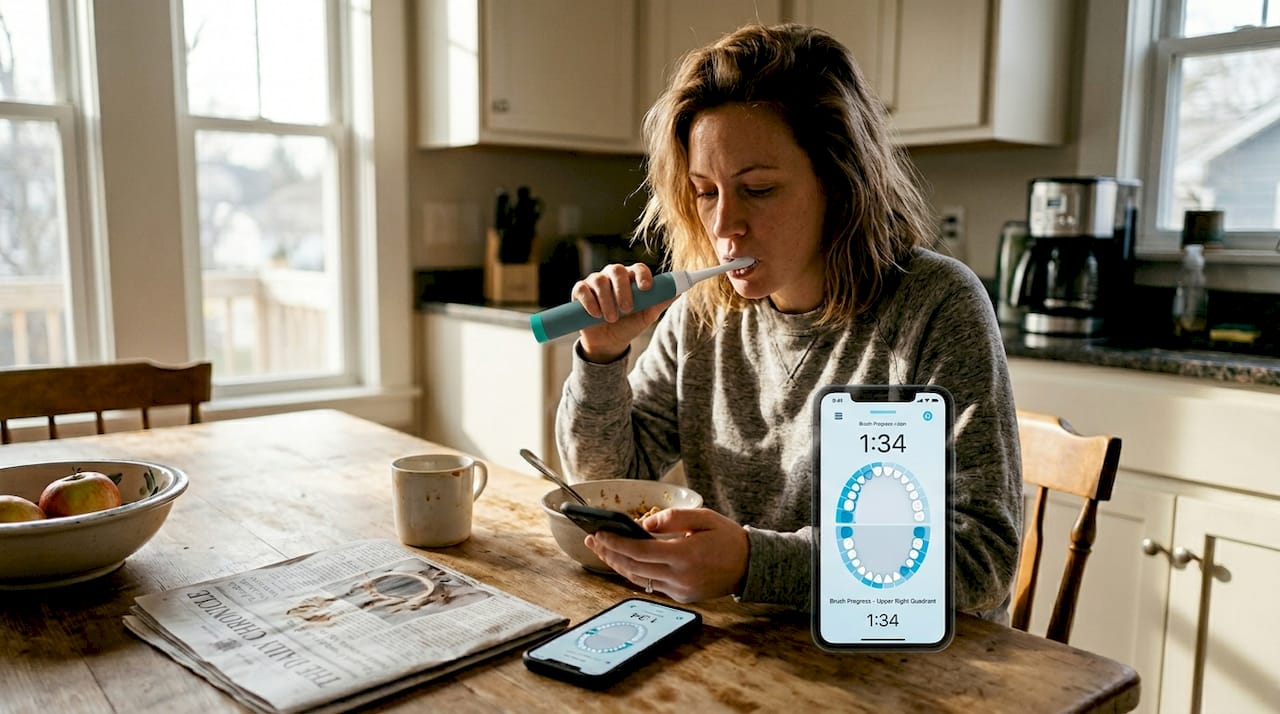
Here’s a look at how the top smart brushes compare:
| Device | Key technology | Routine time | Best for |
|---|---|---|---|
| Oral-B iO Series | AI zone tracking, pressure sensor | 2 minutes | Thoroughness seekers |
| Philips Sonicare 9900 | Adaptive sonic, app coaching | 2 minutes | Sensitive gums |
| Y-Brush | Full-arch sonic, mouthguard design | 20 seconds | Speed and efficiency |
| quip Ultra | Sonic, Bluetooth, app integration | 2 minutes | Minimalist design fans |
The features that matter most for busy users include:
- Built-in timers that ensure you hit the recommended duration without watching the clock
- Pressure sensors that alert you when you’re brushing too hard, protecting enamel and gums
- Bluetooth connectivity that syncs with apps to track your habits and flag missed areas
- Long battery life so charging never becomes an excuse to skip a session
- Compact, travel-friendly designs that keep your routine consistent on the road
Exploring advanced toothbrush technologies reveals just how far these devices have come in a short time. The innovation in oral care space is accelerating, with new features arriving each year.
Pro Tip: If you’re new to smart brushes, start with a model that has a simple app interface. Complexity can become a barrier. The goal is consistency, not perfection.
Technological advancements in toothbrushes make a difference, but how do these devices really stack up when you look at the data?
Real-world effectiveness: What the data and experts reveal
The clinical evidence behind powered toothbrushes is substantial. But it’s worth understanding the nuances so you can choose the right tool for your specific needs.
| Brush type | Plaque reduction vs. manual | Gingivitis reduction | Best use case |
|---|---|---|---|
| Oscillating-rotating | 11 to 21% more | 6 to 11% more | General plaque control |
| Sonic | Comparable, slightly lower | Comparable | Sensitive teeth, quieter use |
| Manual | Baseline | Baseline | Budget-conscious users |
Oscillating-rotating brushes outperform sonic for plaque and gingivitis reduction in most clinical comparisons, though sonic brushes are quieter and gentler on sensitive gums. The quip Ultra, for example, removes 15x more interdental plaque than manual brushes in vitro, a striking figure that highlights how far sonic technology has advanced.
Key takeaway: The technology matters, but consistency matters just as much. A smart brush used sporadically will not outperform a manual brush used diligently twice a day. The real power of these devices is that they make it easier to be consistent.
Pro Tip: If you have a history of gum disease or heavy plaque buildup, an oscillating-rotating brush is likely your best clinical choice. For everyday maintenance with sensitive gums, sonic is a strong option.
For a deeper look at sonic toothbrush effectiveness, the research paints an encouraging picture for anyone willing to make the switch.
Beyond brushing: AI, apps, and at-home monitoring
Technology’s role in oral care doesn’t stop at the brush. A new generation of AI-powered apps and home monitoring tools is giving people access to insights that once required a dental visit.
AI apps and selfie-based monitoring now enable at-home diagnostics and tailored recommendations, helping users manage their oral health between appointments. You can photograph your teeth, receive an instant assessment, and get personalized advice on areas to focus on.
Here’s how these tools are changing daily habits:
- Instant visual feedback from AI-powered photo analysis flags early signs of discoloration, plaque, or gum recession
- Personalized brushing plans adapt to your specific problem areas rather than offering one-size-fits-all advice
- Habit tracking and reminders keep busy users accountable without requiring extra mental effort
- Progress reports show improvement over time, which reinforces positive behavior
“Personalized, data-driven oral care is no longer reserved for the dental office. It’s available on your phone, every morning.”
The future of oral care is moving toward a model where your daily routine generates useful health data. Building effective oral care habits becomes much easier when you have real-time guidance rather than waiting six months for a checkup.
Special situations: Technology for unique needs
For most people, smart brushes and apps are convenient upgrades. For others, they can be genuinely life-changing. People with limited dexterity, orthodontic appliances, or young children in the household face specific challenges that technology is well-positioned to address.
Here’s where powered brushes provide the most meaningful support:
- Limited dexterity: Electric brushes do much of the mechanical work, reducing the fine motor demands of manual brushing
- Braces and orthodontic appliances: Powered brushes can navigate around brackets and wires more effectively than manual brushing alone
- Young children: Timed brushes and app-based games make brushing more engaging, improving compliance
- Elderly users: Larger handles and automated motion reduce fatigue and improve coverage
However, electric brushes for disabilities help but may not fully compensate for poor technique. Supervision and proper instruction remain essential, especially for children and individuals with cognitive or physical challenges.
Pro Tip: For children under eight, use a powered brush with a small head and a built-in timer, but always supervise the session. The technology guides the routine, but adult oversight ensures it’s done correctly.
For families and caregivers, oral hygiene for special needs is an area where the right device can make a real difference in daily quality of life.
Integrating new oral care tech into a busy lifestyle
Knowing the technology exists is one thing. Making it stick in a packed daily schedule is another. The good news is that AI-guided electric brushes fit quick routines and consistently outperform manual methods, even when time is tight.
Here’s how to make smart oral care a seamless part of your day:
- Pair brushing with an existing habit. Brush immediately after your morning coffee or right before your skincare routine. Habit stacking reduces the mental effort of remembering.
- Set app reminders. Most smart brush apps allow you to schedule brushing alerts. A simple notification at 7 a.m. and 9 p.m. builds consistency fast.
- Choose low-maintenance devices. Look for brushes with long battery life (two weeks or more) and easy-to-replace heads. Fewer maintenance steps mean fewer reasons to skip.
- Keep a travel kit ready. A compact brush and travel case means your routine doesn’t break down when you’re away from home.
- Review your app data weekly. Spending two minutes reviewing your brushing stats each week helps you spot patterns and correct them before they become habits.
Pro Tip: Sync your brushing session with a podcast or playlist you enjoy. Associating brushing with something pleasant makes it easier to hit the full recommended time without feeling like a chore.
For more efficient brushing tips and strategies tailored to dental hygiene for busy lifestyles, the right approach can transform a rushed habit into a reliable routine.
Discover innovative oral care solutions
The technology covered in this article points to one clear direction: effective oral care doesn’t have to be time-consuming. Y-Brush was built on exactly that principle. With a full-arch sonic design that cleans every tooth simultaneously, the Y-Brush Essential Sonic Toothbrush delivers a thorough clean in just 20 seconds, making it one of the most efficient options available for busy professionals and families alike.
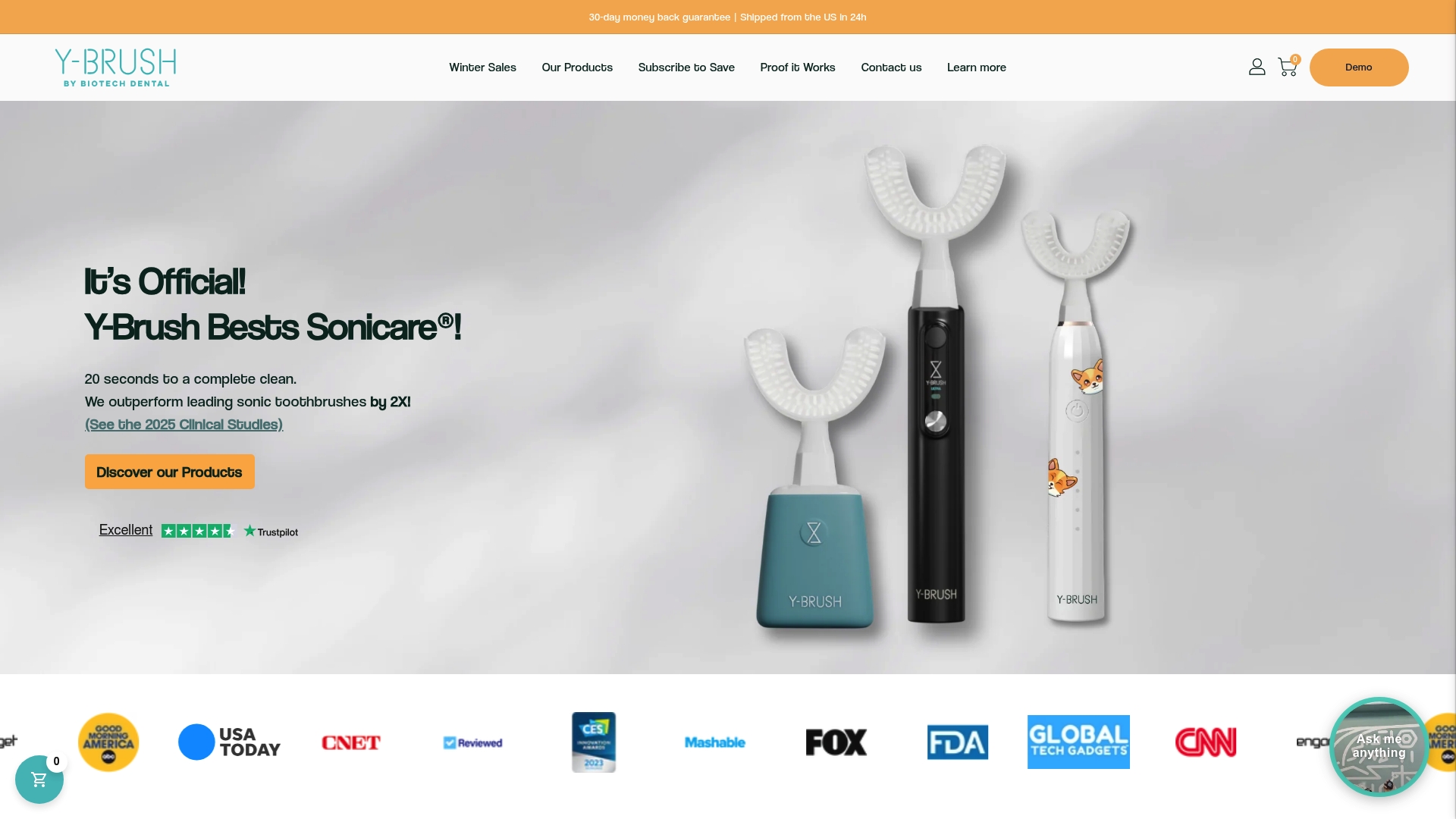
For those who want even more from their routine, the Y-Brush Ultra Sonic Toothbrush combines advanced sonic technology with a design that fits naturally into any schedule. Whether you’re managing a household, traveling for work, or simply trying to do better for your dental health, Y-Brush makes it practical. Ready to brush smarter not longer? The tools are here, and the results speak for themselves.
Frequently asked questions
Do electric toothbrushes really clean better than manual brushes?
Yes. Electric brushes remove up to 21% more plaque and reduce gingivitis more effectively than manual brushes, based on clinical evidence from multiple studies.
What features make a smart toothbrush ‘smart’?
Smart toothbrushes use AI and sensors along with timers and connected apps to deliver real-time feedback, track brushing habits, and help users improve their technique over time.
How can technology help if I have braces or a disability?
Electric brushes make brushing easier with braces or limited dexterity, but proper technique remains essential and supervision is recommended, especially for children or those with significant physical challenges.
Are AI-driven oral care apps safe for home use?
Most AI-based oral care apps are safe and offer convenient at-home monitoring with personalized recommendations, though they work best as a supplement to regular dental visits rather than a replacement.


