


Maintaining consistent, effective oral hygiene routines for every family member can feel overwhelming. Between busy schedules, resistant children, and conflicting advice, many families struggle to establish habits that truly protect against cavities and gum disease. This comprehensive guide delivers evidence-backed strategies for brushing, flossing, and choosing the right tools to fit your lifestyle. You’ll discover practical techniques that work for toddlers through adults, learn how to overcome common obstacles, and find solutions that make oral care convenient without compromising health outcomes.
Table of Contents
- Key takeaways
- What you need: essential oral care tools and supplies
- Step-by-step guide to effective brushing and flossing routines
- Building healthy oral care habits and managing challenges
- When to visit the dentist and additional oral care tips
- Explore convenient family oral care solutions with Y-Brush
- Frequently asked questions
Key Takeaways
| Point | Details |
|---|---|
| Two minute brushing | Brush teeth twice daily for two minutes with a soft bristled brush held at a forty five degree angle to reach under the gumline. |
| Toothpaste by age | Use fluoride toothpaste in age appropriate amounts and supervise children to prevent swallowing excess fluoride. |
| Flossing basics | Floss daily once adjacent teeth touch and consider floss picks or water flossers for braces or dexterity challenges. |
| Electric toothbrush benefits | Electric toothbrushes reduce plaque by twenty one percent and gingivitis by eleven percent compared with manual brushing and include timers and pressure sensors to support proper technique. |
| Sugar limits and visits | Limit sugary snacks and schedule early dental visits to help prevent decay and catch problems early. |
What you need: essential oral care tools and supplies
Before establishing effective routines, you need the right tools for every family member. The foundation starts with soft-bristled toothbrushes that protect enamel while removing plaque. Hard bristles damage gums and wear down tooth surfaces, creating more problems than they solve. Replace brushes every three to four months or sooner if bristles fray.
Fluoride toothpaste strengthens enamel and prevents decay, but the amount matters by age. Children under three need only a rice-grain smear, while those aged three to six should use a pea-sized amount. Adults can apply a full brush head’s worth. Always supervise young children to prevent swallowing excess fluoride, which can cause fluorosis.
Floss becomes essential once adjacent teeth touch, typically between ages two and six. Traditional string floss works well for most people, but floss picks make the process easier for children learning the skill. Water flossers offer an alternative for those with braces or dexterity challenges, though they should supplement rather than replace traditional flossing.
Electric toothbrushes reduce plaque 21% more and gingivitis 11% compared to manual brushes, especially helpful for those with poor technique. Built-in timers ensure the full two-minute brushing duration, while pressure sensors prevent aggressive scrubbing that damages gums. These features make electric options particularly valuable for children still developing coordination and adults who rush through brushing.
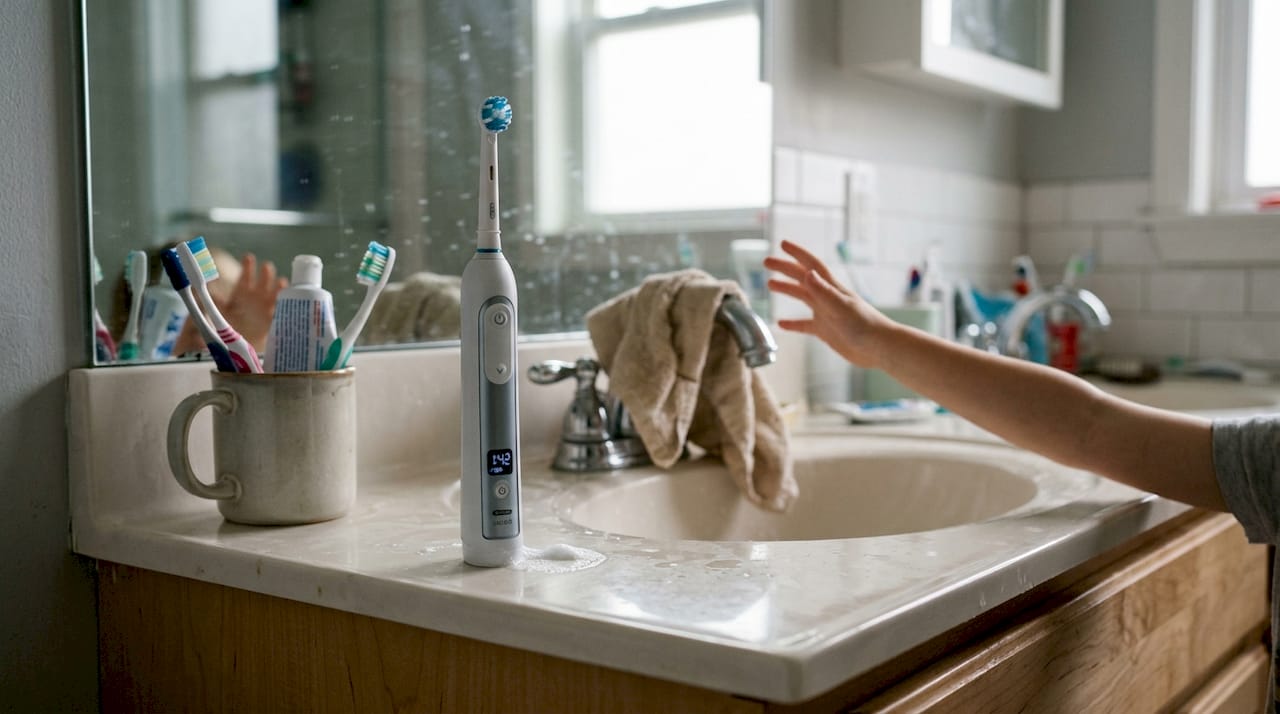
Pro Tip: Choose toothbrushes with built-in timers and pressure sensors to help every family member maintain consistent, effective brushing without guesswork or shortcuts.
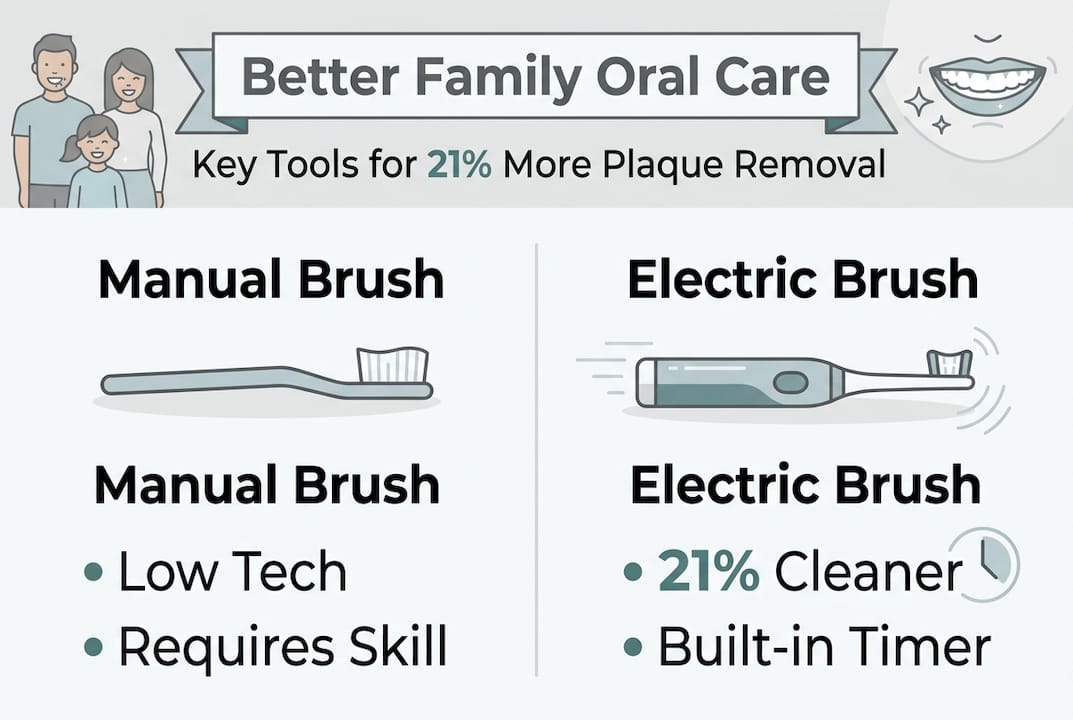
Manual vs electric toothbrush comparison
| Feature | Manual toothbrush | Electric toothbrush |
|---|---|---|
| Plaque removal | Effective with proper technique | 21% more effective on average |
| Gingivitis reduction | Good when used correctly | 11% better reduction |
| Technique assistance | Requires learned skill | Built-in timers and sensors guide proper use |
| Cost | Low upfront, frequent replacement | Higher initial cost, lower long-term cost per use |
| Best for | Budget-conscious families, travel | Children, those with poor technique, convenience seekers |
Essential supplies by age group
- Infants and toddlers (0-3 years): Extra-soft infant toothbrush or finger brush, rice-grain smear of fluoride toothpaste, clean washcloth for gum cleaning before teeth emerge
- Young children (3-6 years): Soft-bristled child-sized brush, pea-sized fluoride toothpaste amount, floss or floss picks once teeth touch, supervision during all brushing
- School-age children (6-12 years): Soft-bristled brush sized for growing mouth, full pea-sized toothpaste amount, regular floss, electric toothbrush for children with fun designs to encourage compliance
- Teens and adults: Soft-bristled full-sized brush, fluoride toothpaste, floss or interdental cleaners, sonic electric toothbrush family pack for household convenience, mouthwash as optional supplement
Stocking these essentials ensures every family member has appropriate tools ready. Keep supplies organized in a designated bathroom area where children can access their items independently as they grow. Replace worn items promptly to maintain effectiveness.
Step-by-step guide to effective brushing and flossing routines
Proper technique matters more than the tools you choose. Brush teeth twice daily for 2 minutes with a soft-bristled brush at a 45-degree angle using gentle circular or short strokes. This angle allows bristles to reach under the gumline where plaque accumulates and causes gingivitis.
Complete brushing technique
- Position the brush correctly: Hold bristles at a 45-degree angle toward the gumline on outer tooth surfaces. This angle is critical for reaching plaque hiding just below the gums.
- Use proper motion: Move the brush in gentle circular motions or short back-and-forth strokes. Avoid aggressive scrubbing, which wears enamel and irritates gums without improving cleaning.
- Cover all surfaces systematically: Brush outer surfaces, inner surfaces, and chewing surfaces of every tooth. Many people miss inner surfaces of back teeth, creating cavity-prone areas.
- Clean the tongue: Gently brush your tongue from back to front to remove bacteria that cause bad breath and contribute to plaque formation.
- Time it right: Brush for the full two minutes, spending about 30 seconds on each quadrant of your mouth. Most people brush for under one minute, missing significant plaque.
- Rinse minimally: Spit out toothpaste but avoid excessive rinsing, which washes away beneficial fluoride before it can strengthen enamel.
Children need supervision until they demonstrate consistent proper technique, usually around age seven or eight. Even after they brush independently, periodic checks ensure they maintain good habits and cover all tooth surfaces.
Flossing guidance for families
- Start early: Floss daily once teeth touch, usually between ages two and six, with adult assistance until children develop the coordination.
- Use enough floss: Break off about 18 inches of floss, winding most around one middle finger and the rest around the other middle finger to grip a clean section.
- Proper technique: Slide floss gently between teeth using a rubbing motion, curve it into a C-shape against one tooth, and slide it under the gumline. Repeat on the adjacent tooth before moving to the next space.
- Make it routine: Floss at least once daily, preferably before bedtime brushing when saliva flow decreases and bacteria multiply faster.
- Address resistance: For children who resist flossing, try flavored floss, floss picks with fun shapes, or let them choose their own supplies to increase buy-in.
Pro Tip: Make brushing fun for kids by playing their favorite two-minute song, using apps with animated characters, or creating a sticker chart that rewards consistent brushing. Positive associations build lasting habits more effectively than nagging.
Establishing these techniques early creates muscle memory that lasts into adulthood. Practice together as a family, demonstrating proper form and making oral care a shared priority rather than a chore.
Building healthy oral care habits and managing challenges
Knowing proper technique means little without consistent application. Families succeed when they integrate oral care into daily routines with specific strategies that address common obstacles.
Strategies for lasting habit formation
- Supervise consistently: Adult supervision prevents toothpaste swallowing, ensures proper technique, and reinforces the importance of thorough cleaning until children internalize the routine.
- Link to existing habits: Brush immediately after breakfast and before bedtime stories, creating automatic triggers that make oral care feel like a natural part of the day.
- Use visual reminders: Place colorful charts in the bathroom showing proper brushing steps, or set phone alarms as gentle reminders for morning and evening routines.
- Celebrate milestones: Acknowledge cavity-free dental visits, consistent brushing streaks, or mastery of new skills like independent flossing to maintain motivation.
- Model behavior: Children imitate what they see. Brush alongside them, demonstrating enthusiasm and proper technique rather than treating it as a rushed obligation.
Dental models and motivational interviewing with gamification effectively reduce plaque and improve brushing behavior in children. These evidence-based interventions work because they make abstract concepts concrete and transform routine tasks into engaging activities.
Supervising children during brushing and flossing prevents toothpaste swallowing, ensures they reach all tooth surfaces, and demonstrates that oral health deserves dedicated attention. This oversight builds skills and habits that protect their teeth for life.
Behavior change methods comparison
| Method | How it works | Effectiveness | Best for |
|---|---|---|---|
| Dental models | Physical demonstrations show proper technique and plaque location | High for skill development | Visual learners, young children |
| Gamification | Apps, rewards, and challenges make brushing fun | High for motivation and consistency | Children aged 4-12, resistant brushers |
| Motivational interviewing | Collaborative conversations explore personal reasons for better habits | Moderate to high for long-term change | Teens, adults, those with low motivation |
| Habit stacking | Links new behavior to established routine | High for automaticity | All ages, busy families |
Research shows school and behavioral programs increase twice-daily brushing to approximately 50%, demonstrating that structured interventions overcome common barriers. Apply these principles at home by creating systems rather than relying on willpower alone.
Overcoming common challenges
Busy morning schedules tempt families to skip or rush brushing. Combat this by preparing the night before, setting alarms 10 minutes earlier, or keeping travel-sized supplies in the car for brushing during commutes when necessary. Consistency matters more than perfection.
Children often resist nighttime brushing when tired. Address this by moving the routine earlier in the evening, before exhaustion sets in. Make it non-negotiable like wearing seatbelts, but keep the tone positive and calm rather than confrontational.
Some children claim brushing hurts or tastes bad. Switch to gentler brushes, try different fluoride toothpaste flavors, or explore children’s electric toothbrush innovation designed specifically for sensitive mouths. Address legitimate discomfort while distinguishing it from avoidance tactics.
Teens may neglect oral care as they assert independence. Discuss the social consequences of bad breath and stained teeth, appeal to their desire for an attractive smile, and give them autonomy in choosing their own supplies. Respect their growing independence while maintaining expectations.
When to visit the dentist and additional oral care tips
Professional dental care complements home routines by catching problems early and providing preventive treatments. Schedule the first dental visit by the first birthday or six months after the first tooth emerges, whichever comes first. Early visits establish comfort with dental environments and allow dentists to monitor development.
Recommended dental visit schedule
- Infants: First visit by age one or within six months of first tooth eruption
- Toddlers and children: Every six months for checkups and cleanings, more frequently if cavities or other issues develop
- Teens: Every six months, with special attention to wisdom teeth development around ages 17-21
- Adults: Every six months for routine care, every three to four months if you have gum disease or high cavity risk
- High-risk individuals: More frequent visits based on dentist recommendations, especially those with diabetes, pregnancy, or immune system conditions
Regular visits allow dentists to apply fluoride varnish twice a year for high-risk individuals, which significantly reduces cavity formation. Professional cleanings remove tartar that brushing and flossing cannot eliminate, preventing it from irritating gums and causing periodontal disease.
Additional strategies for optimal oral health
Diet plays a crucial role beyond brushing and flossing. Limit sugary snacks and beverages, which create acid attacks on teeth that last 20 minutes after each exposure. Frequent snacking means teeth face nearly constant acid damage. Encourage water between meals and save treats for mealtimes when increased saliva flow helps neutralize acids.
Nighttime brushing deserves special emphasis because saliva production decreases during sleep, allowing bacteria to multiply rapidly. Skipping nighttime brushing leaves food particles and plaque undisturbed for eight hours or more, dramatically increasing cavity and gum disease risk. Make this session non-negotiable.
Pro Tip: Watch for bleeding gums during brushing or flossing, which signals gingivitis. Improve your technique, brush more gently, and floss daily. If bleeding persists beyond two weeks, schedule a dental appointment to address potential gum disease before it progresses.
Supervise children’s fluoride toothpaste use carefully. While fluoride strengthens enamel and prevents cavities, swallowing excessive amounts during tooth development can cause fluorosis, which creates white spots or streaks on permanent teeth. The cosmetic issue is permanent but preventable with proper supervision.
Consider your family’s specific risk factors. Those with dry mouth from medications, frequent cavities despite good habits, or orthodontic appliances need extra attention and possibly more frequent professional care. Discuss your situation with your dentist to create a personalized prevention plan.
Seek care promptly for tooth pain, sensitivity, loose teeth, or mouth sores lasting more than two weeks. Early intervention prevents minor issues from becoming expensive, painful problems requiring extensive treatment.
Explore convenient family oral care solutions with Y-Brush
Implementing these evidence-backed strategies becomes easier with tools designed for real family life. Y-Brush creates electric toothbrushes that deliver superior cleaning while fitting seamlessly into busy schedules. The Y-Brush Essential Sonic Toothbrush provides adults with powerful plaque removal and built-in timers that ensure the full two-minute clean.
For children aged four to twelve, the Y-Brush KidsBrush electric toothbrush makes brushing engaging with designs that appeal to young users while delivering the thorough cleaning their developing teeth need. These tools support the techniques you’ve learned by removing guesswork and making consistency effortless.
Y-Brush membership plans simplify ongoing oral care by automatically delivering replacement brush heads and supplies when you need them. You’ll receive exclusive member offers and never worry about forgetting to reorder essential items. Explore how Y-Brush products complement your family’s commitment to excellent oral health.
Frequently asked questions
What is the best age to start flossing my child’s teeth?
Start flossing daily once adjacent teeth begin to touch, usually between ages two and six, with adult assistance. Children lack the coordination for proper flossing until around age 10, so parents must perform or closely supervise the task. Early flossing prevents cavities between teeth where toothbrushes cannot reach.
How much toothpaste should children use at different ages?
Use a rice-grain smear for children under 3, a pea-sized amount for ages three to six, and supervise spitting with minimal rinsing. These quantities provide cavity protection while minimizing fluorosis risk from swallowed toothpaste. Always supervise young children to ensure they spit out toothpaste rather than swallowing it.
Why are electric toothbrushes often recommended for families?
Electric brushes reduce plaque by 21% and gingivitis by 11%, and their timers and sensors help maintain consistent routines. The oscillating or sonic movements clean more thoroughly than manual brushing for most people, especially children and those who rush or use poor technique. Built-in features eliminate guesswork and make proper brushing automatic.
How can I tell if my family’s oral care routine is working?
Healthy gums appear pink and firm without bleeding during brushing or flossing. Teeth feel smooth rather than fuzzy between cleanings, and you notice no persistent bad breath. Regular dental checkups with no new cavities confirm your routine’s effectiveness. If you experience bleeding, sensitivity, or cavities despite consistent care, consult your dentist to identify gaps in technique or additional risk factors.
What should I do if my child refuses to brush their teeth?
Stay calm and make brushing non-negotiable while addressing underlying resistance. Offer choices like which toothbrush or flavor to use, brush alongside them to model behavior, or use timers and apps to make it engaging. For persistent refusal, consult your pediatric dentist, who can explain consequences in age-appropriate terms and may identify oral discomfort causing avoidance. Consistency and positive reinforcement eventually overcome most resistance.


