


Most people brush under a minute, missing the two minute mark proven to fight plaque and gum disease. This habit gap leaves busy professionals vulnerable to cavities, gingivitis, and costly dental visits. This guide delivers a science-backed oral care routine that fits your schedule, combining proper technique with time-saving innovations to protect your smile without compromising your day.
Table of Contents
- Oral Care Prerequisites And Tools Needed
- Core Steps For Effective Brushing
- Incorporating Daily Flossing And Additional Oral Care Steps
- Common Mistakes And Troubleshooting
- Alternative Oral Care Methods For Busy People
- Expected Results And Success Metrics
- Upgrade Your Oral Care With Y-Brush
- Frequently Asked Questions
Key Takeaways
| Point | Details |
|---|---|
| Brush twice daily for 2 minutes | Reduces plaque and gingivitis risk significantly compared to shorter sessions. |
| Floss once daily | Cuts gum disease risk in half by removing interdental plaque. |
| Use fluoride mouthwash after brushing | Can reduce cavities by up to 20% while strengthening enamel. |
| Fast brushing tech cleans in 20 seconds | Delivers effective cleaning for extremely busy schedules. |
| Avoid brushing too hard | Prevents gum recession and enamel damage that lead to sensitivity. |
Oral Care Prerequisites and Tools Needed
Before jumping into your routine, gather the right tools. Quality matters more than quantity when it comes to oral care equipment.
Start with a soft-bristled toothbrush and fluoride toothpaste. Studies confirm that soft bristles effectively clean teeth surfaces while protecting gums from damage. Hard or medium bristles may seem thorough, but they cause gum recession and enamel wear over time.
Replace your toothbrush every three months or sooner if bristles fray. Research shows frayed bristles lose cleaning power and can irritate gums, undermining your entire routine.
Essential Tools:
- Soft-bristled toothbrush (manual or electric)
- Fluoride toothpaste (ADA approved)
- Dental floss (waxed or unwaxed based on preference)
- Alcohol-free fluoride mouthwash
- Tongue scraper or brush with tongue cleaner
| Tool | Purpose | Replacement Schedule |
|---|---|---|
| Toothbrush | Removes plaque from tooth surfaces | Every 3 months |
| Dental floss | Cleans between teeth | Daily use, replace spool when empty |
| Mouthwash | Reduces bacteria and strengthens enamel | Bottle lasts 4-6 weeks |
| Tongue scraper | Removes bacteria from tongue | Every 3-4 months |
Pro Tip: Keep a travel kit with duplicate tools in your bag or desk. This removes excuses when you’re away from home and makes maintaining your oral hygiene checklist effortless throughout busy days.
Proper preparation sets you up for success. With these tools ready, you can execute an effective routine without scrambling for supplies.
Core Steps for Effective Brushing
Brushing technique matters as much as brushing time. Brushing for at least 2 minutes twice daily with fluoride toothpaste significantly reduces plaque and gingivitis compared to shorter sessions.
Follow this sequence for complete coverage:
- Wet your brush and apply a pea-sized amount of fluoride toothpaste. Too much paste creates excess foam that makes you want to spit early.
- Position bristles at a 45-degree angle to your gumline. This angle lets bristles reach under the gum margin where plaque hides.
- Use gentle circular motions on outer surfaces. Spend 30 seconds per quadrant: upper right, upper left, lower right, lower left.
- Clean inner surfaces using the same circular technique. Tilt the brush vertically for front teeth to reach tight spaces.
- Brush chewing surfaces with back-and-forth strokes. These grooves trap food particles and need thorough attention.
- Gently brush your tongue from back to front. This removes bacteria that cause bad breath.
“The combination of proper brushing technique and adequate duration creates the mechanical action needed to disrupt biofilm formation and prevent oral disease.”
Avoid common pressure mistakes. Brushing too hard or using stiff bristles causes gum recession and enamel erosion, leading to sensitivity and increased decay risk over time. Your toothbrush should feel like a gentle massage, not a scrubbing session.
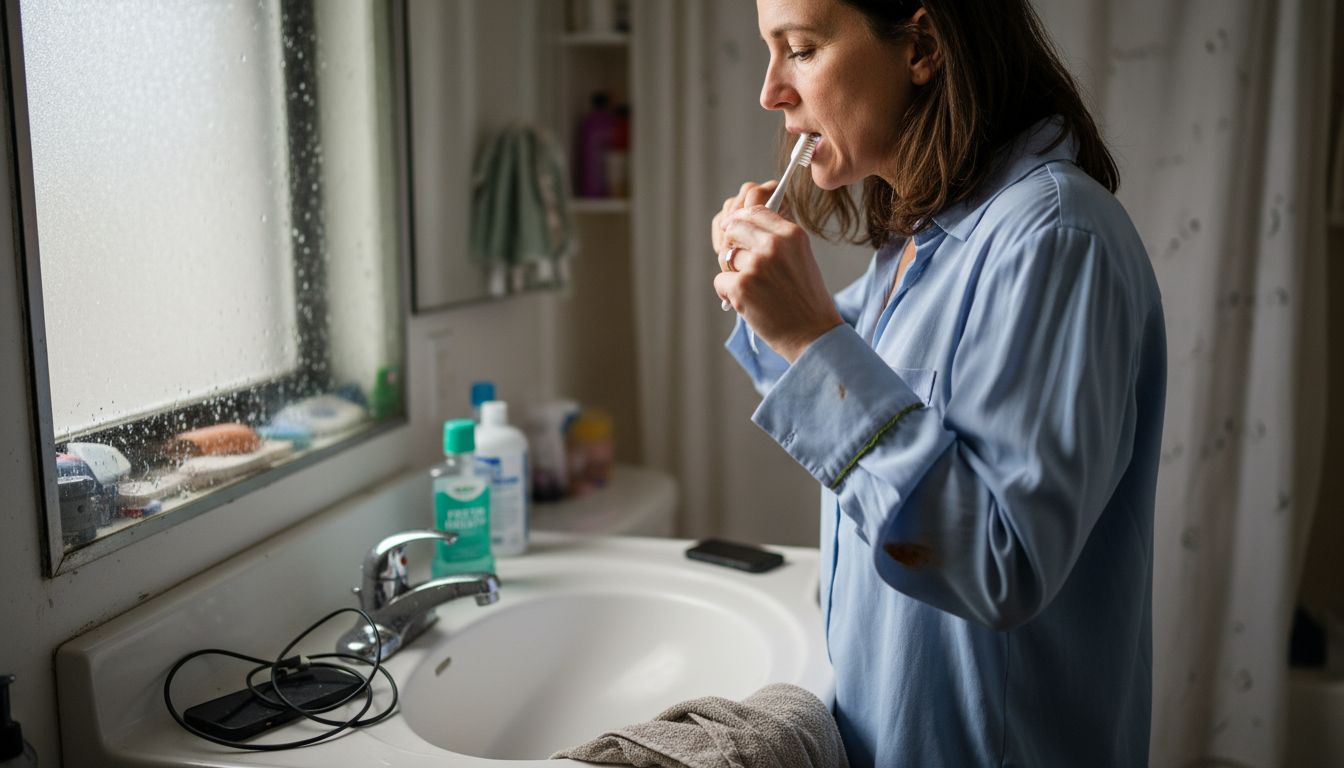
Pro Tip: Set a two-minute timer on your phone or use an electric toothbrush with a built-in timer. Most people drastically underestimate two minutes, ending their routine at 45 seconds. Check your brushing mistakes and corrections to identify other technique issues.
Consistency beats intensity. Two minutes of gentle, methodical brushing twice daily outperforms aggressive scrubbing that damages tissues while missing plaque deposits.
Incorporating Daily Flossing and Additional Oral Care Steps
Brushing alone misses 40% of tooth surfaces. The spaces between teeth harbor plaque that toothbrush bristles cannot reach, making additional steps essential.
Floss once daily to remove interdental plaque that causes gum disease and decay in those vulnerable areas. Studies show this simple habit significantly reduces gum disease risk compared to brushing alone.
Flossing Technique:
- Use 18 inches of floss, winding most around middle fingers
- Hold a 1-2 inch section taut between thumbs and forefingers
- Gently slide floss between teeth using a back-and-forth motion
- Curve floss around each tooth in a C-shape, sliding under the gumline
- Use a clean section for each tooth to avoid spreading bacteria
After brushing and flossing, rinse with alcohol-free fluoride mouthwash. Research demonstrates this step can reduce cavities by up to 20% while improving gum health. Alcohol-free formulas avoid the dry mouth effect that promotes bacterial growth.
Finish by cleaning your tongue. Use a tongue scraper or your toothbrush to remove the bacterial coating that causes bad breath. Scrape or brush from back to front three to five times, rinsing the scraper between passes.
Pro Tip: Keep floss picks in your car, purse, and desk. These convenient tools make it easier to floss after lunch or between meetings. Visit your full oral hygiene checklist for a complete daily routine breakdown.
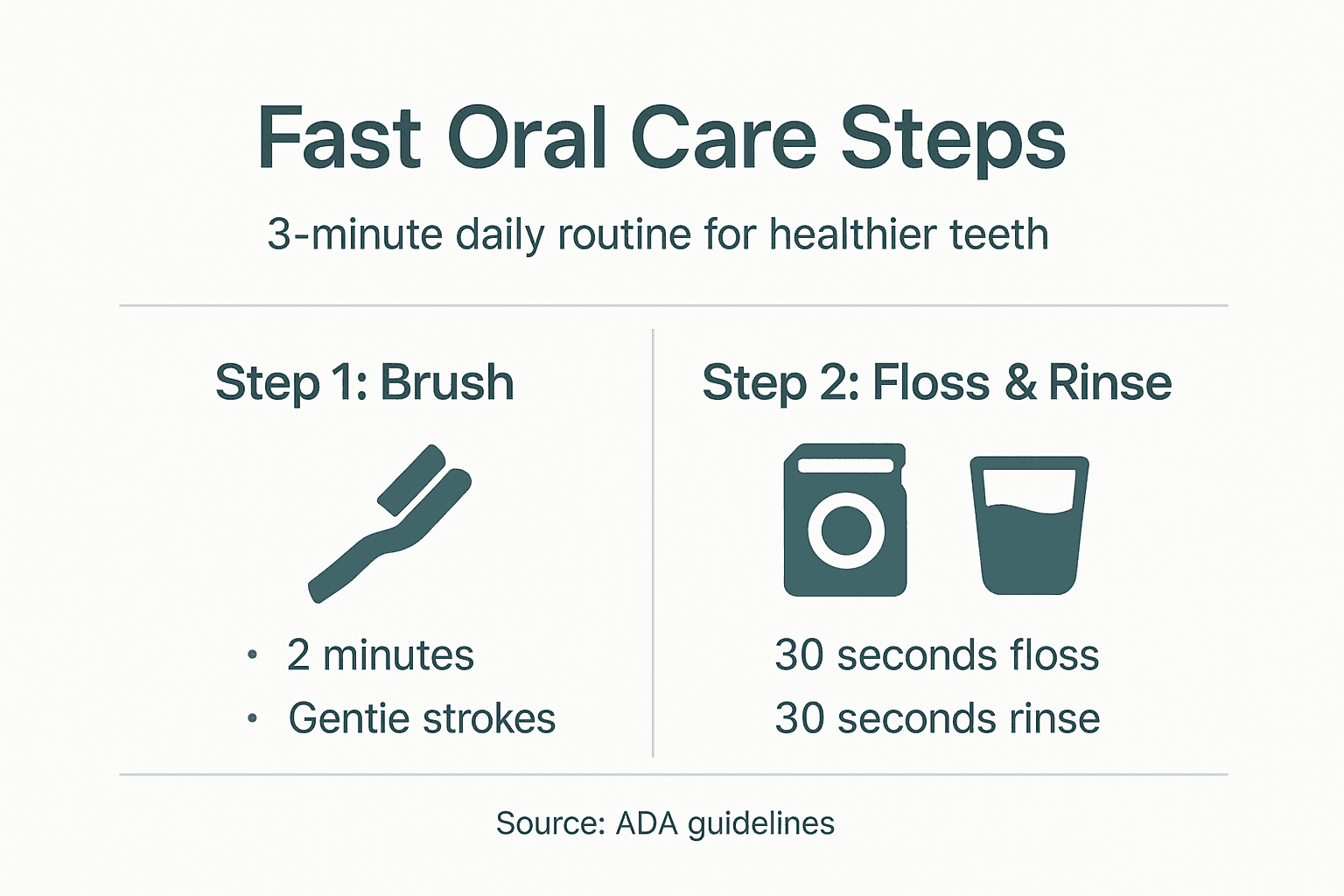
These complementary steps take an extra three minutes but multiply your oral health benefits. Think of brushing as the foundation and flossing, rinsing, and tongue cleaning as the protective coating.
Common Mistakes and Troubleshooting
Even health-conscious professionals make errors that sabotage their oral care efforts. Identifying these mistakes helps you refine your routine for better results.
Critical Errors to Avoid:
- Brushing too hard: Aggressive scrubbing damages gum tissue and wears down enamel. If your bristles splay outward before three months, you’re applying too much pressure.
- Using medium or hard bristles: These feel thorough but cause gum recession and sensitivity. Soft bristles clean just as effectively without tissue damage.
- Skipping flossing: Neglecting this step doubles your gum disease risk compared to daily flossers. No excuses.
- Keeping your toothbrush too long: Frayed bristles lose effectiveness and harbor bacteria. Mark your calendar for three-month replacements.
- Ignoring your tongue: Bacteria accumulate on the tongue surface, causing bad breath and reducing overall oral hygiene.
- Rinsing immediately after brushing: Wait 30 minutes before drinking or eating to let fluoride strengthen enamel.
“The most common oral hygiene mistakes stem from doing too much with the wrong tools or too little with the right ones. Balance and consistency matter more than intensity.”
Studies identify these habits as primary contributors to preventable oral health problems. The good news: they’re simple to correct once you recognize them.
If you experience bleeding gums despite proper technique, you may have existing gum disease requiring professional treatment. See your dentist rather than abandoning flossing, which many people do when they notice blood.
For comprehensive guidance, review common oral care mistakes to ensure you’re not unknowingly undermining your efforts.
Alternative Oral Care Methods for Busy People
Traditional brushing works, but demanding schedules sometimes require innovative solutions. Fast brushing technology offers effective alternatives for professionals who struggle to find four minutes daily for oral care.
Fast brushing devices like Y-Brush clean all tooth surfaces simultaneously in just 20 seconds. These tools use sonic vibrations and specially designed brush heads that contact every tooth at once, delivering thorough cleaning in a fraction of traditional time.
Method Comparison:
| Method | Time Required | Effectiveness | Best For |
|---|---|---|---|
| Manual brushing | 2 minutes x 2 daily | High with proper technique | Those with time and good habits |
| Electric toothbrush | 2 minutes x 2 daily | High, easier technique | People wanting guided brushing |
| Fast brushing tech | 20 seconds x 2 daily | High when used correctly | Extremely busy professionals |
Electric toothbrushes help with timing and pressure control through built-in sensors and timers. They remove more plaque than manual brushing for most users because they enforce proper duration and reduce pressure mistakes.
Fast brushing technology suits people who consistently fail to meet the two-minute standard. If you’re among the 90% brushing under a minute, switching to a device that cleans thoroughly in 20 seconds actually improves your oral health rather than compromising it.
Considerations:
- Initial cost higher than traditional brushes
- Learning curve for optimal positioning
- Still requires daily flossing and rinsing
- Replacement brush heads needed periodically
Pro Tip: Combine fast brushing technology with your regular flossing and rinsing routine. Explore advantages of fast brushing to understand how these tools fit busy lifestyles. Consider Y-Brush membership plans for convenient brush head replacements delivered automatically.
The best oral care method is the one you’ll actually use consistently. If time constraints prevent proper traditional brushing, fast technology offers a scientifically valid alternative.
Expected Results and Success Metrics
Understanding what results to expect keeps you motivated through the first weeks of your new routine. Oral health improvements appear gradually but predictably with consistent care.
Research shows measurable improvements in plaque scores and gum health within 2 to 4 weeks of consistent practice. Your mouth needs time to respond to better care, so patience matters.
Timeline of Expected Changes:
- Week 1: Fresher breath and cleaner feeling teeth. Possible gum bleeding if starting flossing (should decrease).
- Weeks 2-3: Reduced plaque buildup visible as less fuzzy feeling on teeth. Gum bleeding during flossing decreases.
- Week 4: Noticeably healthier gum color (pink vs. red). Reduced sensitivity to temperature.
- Months 2-3: Dentist confirms improved gum health scores. Fewer cavities at checkup.
Success Indicators:
- No bleeding when flossing gently
- Fresh breath lasting several hours after brushing
- Smooth tooth surfaces throughout the day
- Pink, firm gums without swelling
- Reduced plaque at dental cleanings
- Decreased sensitivity to hot and cold
“Consistent adherence to evidence-based oral hygiene practices produces clinically significant improvements in periodontal health markers within one month for most patients.”
Track these metrics in a simple journal or phone note. Checking off each day’s routine builds the habit while monitoring progress maintains motivation. Reference your oral hygiene checklist to ensure you’re completing all steps.
If you don’t see improvements after four weeks of faithful practice, schedule a dental visit. Underlying issues like existing gum disease or cavities may require professional intervention before home care can succeed.
Consistency matters more than perfection. Missing an occasional flossing session won’t derail your progress, but skipping multiple days weekly will prevent the improvements you’re working toward.
Upgrade Your Oral Care with Y-Brush
Busy schedules shouldn’t compromise your oral health. Y-Brush delivers clinically effective cleaning in just 20 seconds, making it possible to maintain excellent oral hygiene no matter how hectic your day becomes.
Our innovative sonic technology cleans all tooth surfaces simultaneously, removing the time barrier that prevents 90% of people from brushing the recommended two minutes. Discover how to upgrade your oral care with solutions designed for real life, not ideal conditions.
Explore the future of toothbrushing technology that adapts to your lifestyle. The Y-Brush Essential Sonic Toothbrush combines proven cleaning power with remarkable convenience, giving you confidence in your smile without sacrificing precious time.
Frequently Asked Questions
What is the minimum effective brushing time for good oral health?
Two minutes twice daily represents the minimum effective duration for removing plaque and preventing gum disease. Shorter sessions leave significant plaque deposits that cause cavities and gingivitis over time.
How often should I replace my toothbrush for the best results?
Replace your toothbrush every three months or immediately when bristles fray. Worn bristles lose cleaning effectiveness and can harbor bacteria that undermine your oral hygiene efforts.
Is flossing truly necessary if I brush carefully?
Yes, flossing removes plaque from between teeth where brush bristles cannot reach. Skipping this step doubles your gum disease risk and leaves 40% of tooth surfaces uncleaned regardless of brushing technique.
Can I use a quick brushing device instead of traditional brushing?
Fast brushing technology that cleans all surfaces simultaneously in 20 seconds offers effective alternatives for people who consistently fail to meet the two-minute standard. These devices deliver thorough cleaning when used correctly and paired with daily flossing.
How soon will I notice improvements after starting this routine?
Most people see measurable improvements within 2 to 4 weeks of consistent practice. Early signs include fresher breath, reduced gum bleeding, and smoother teeth surfaces throughout the day.


