


Long workdays and packed schedules often leave dental care on the back burner for many American professionals. Yet even small habits, like how you brush or which toothbrush you choose, can make a noticeable difference in oral health. By focusing on a few critical brushing techniques and smart tool choices, you can avoid common brushing mistakes and keep your teeth and gums healthy, all without sacrificing precious time.
Table of Contents
- Step 1: Assess Your Current Brushing Routine
- Step 2: Gather The Proper Tools For Effective Brushing
- Step 3: Adopt The Right Brushing Technique
- Step 4: Time Your Brushing For Maximum Results
- Step 5: Verify Your Brushing Effectiveness
Quick Summary
| Key Insight | Explanation |
|---|---|
| 1. Evaluate Your Brushing Routine | Analyze how often and effectively you brush your teeth to identify improvement areas in your oral hygiene. |
| 2. Choose the Right Tools | Select a soft-bristled toothbrush and fluoride toothpaste to enhance cleaning effectiveness and protect your teeth. |
| 3. Master Your Brushing Technique | Use a proper technique by holding the toothbrush at a 45-degree angle and brushing gently, covering all surfaces methodically. |
| 4. Timing Matters for Effectiveness | Brush twice daily for at least two minutes, focusing on timing for optimal plaque removal and oral health maintenance. |
| 5. Regularly Verify Your Technique | Inspect your teeth and gums for cleanliness, and schedule professional checkups to ensure your brushing is effective. |
Step 1: Assess your current brushing routine
Understanding your personal oral hygiene habits is the first crucial step toward achieving cleaner, healthier teeth. By carefully evaluating your current brushing technique, you can identify potential areas for improvement and develop a more effective dental care strategy.
To thoroughly assess your brushing routine, consider these key evaluation points:
-
Frequency: Check how often you actually brush your teeth. Dental experts recommend techniques that include brushing at least twice daily, for two full minutes each session.
-
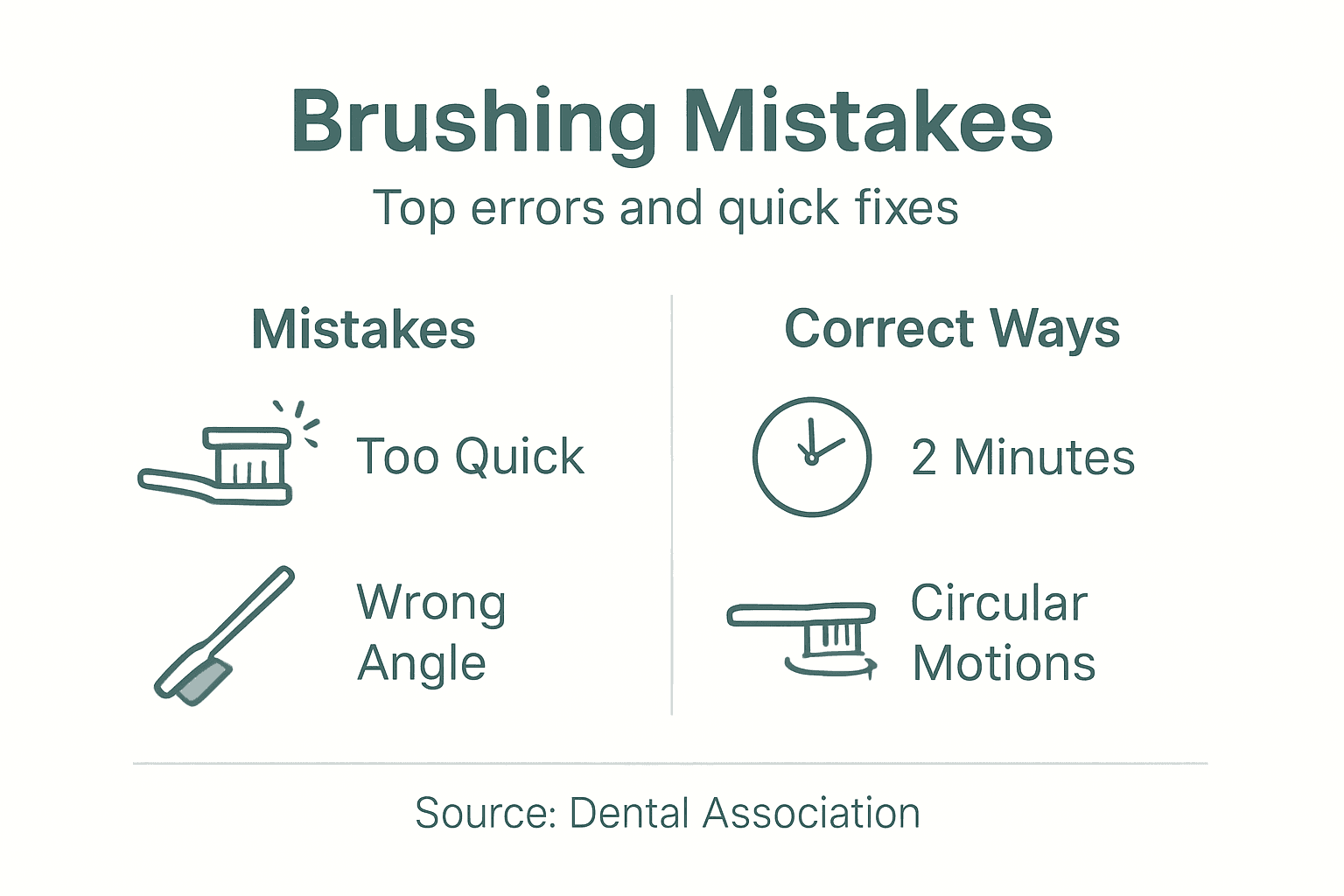
Technique: Analyze your brushing method. Are you using gentle circular motions or aggressive back-and-forth scrubbing? Harsh techniques can damage tooth enamel and gum tissue.
-
Coverage: Examine whether you’re reaching all tooth surfaces. Many people miss critical areas like back molars, inner tooth surfaces, and gumline regions.
-
Tools: Evaluate your toothbrush condition. Worn-out bristles reduce cleaning effectiveness and can harbor harmful bacteria.
A comprehensive oral hygiene assessment helps prevent potential dental issues before they become serious problems.
Most adults think they brush effectively, but studies show significant gaps in proper technique. By objectively examining your current routine, you can make targeted improvements that significantly enhance your overall oral health.
Pro tip: Consider recording a quick video of yourself brushing to objectively analyze your technique and identify potential improvement areas.
Step 2: Gather the proper tools for effective brushing
Preparing for optimal oral hygiene starts with selecting the right dental care tools that can effectively clean your teeth and protect your oral health. Your toothbrush and toothpaste are the primary weapons in your fight against plaque and bacteria.
When choosing your oral care equipment, focus on these critical components:
-
Toothbrush Selection: Choose a small-headed, soft-bristled toothbrush that can comfortably reach all areas of your mouth. The size and softness are crucial for preventing gum damage while ensuring thorough cleaning.
-
Bristle Type: Look for soft to medium bristles that clean effectively without eroding tooth enamel or irritating gums. Avoid hard-bristled brushes that can cause long-term dental damage.
-
Toothbrush Style: Consider your personal needs. Manual toothbrushes work well for many people, while electric toothbrushes can provide more consistent cleaning, especially for those with limited hand dexterity.
-
Fluoride Toothpaste: Select a toothpaste containing fluoride to help prevent cavities and strengthen tooth enamel. Look for options that address specific concerns like sensitivity or whitening.
The right tools are your first line of defense in maintaining excellent oral hygiene.
Most people underestimate the importance of proper tool selection. By investing time in choosing the right toothbrush and toothpaste, you can significantly improve your daily dental care routine and long-term oral health.

Here’s a quick comparison of manual and electric toothbrushes to help you choose the best fit for your needs:
| Attribute | Manual Toothbrush | Electric Toothbrush |
|---|---|---|
| Cleaning Consistency | Depends on user technique | Delivers even brushing action |
| Ease of Use | May require more effort | Simplifies brushing motion |
| Ideal Users | Most adults and children | People with limited dexterity |
| Cost | Typically low | Higher initial investment |
| Maintenance | Replace every 3-4 months | Replace brush heads regularly |
Pro tip: Replace your toothbrush every three to four months, or sooner if the bristles become frayed, to ensure maximum cleaning effectiveness.
Step 3: Adopt the right brushing technique
Mastering the correct tooth brushing technique is crucial for maintaining optimal oral health and preventing common dental problems. Systematic brushing approaches can dramatically improve your cleaning effectiveness and protect your teeth and gums.
To ensure comprehensive and gentle cleaning, follow these essential brushing guidelines:
-
Angle and Position: Hold your toothbrush at a 45-degree angle to your gums, which helps clean the area where teeth and gums meet most effectively.
-
Stroke Technique: Use gentle, short circular or back-and-forth strokes. Avoid aggressive scrubbing that can damage tooth enamel and irritate gum tissue.
-
Surface Coverage: Systematically clean all tooth surfaces:
- Start with chewing surfaces
- Move to outer tooth surfaces
- Clean inner tooth surfaces
- Gently brush your tongue
-
Timing and Pressure: Brush for two full minutes, applying light pressure. Let the bristles do the work without forcing them against your teeth.
Proper brushing technique is about precision, not pressure.
Consistent, mindful brushing can transform your oral health routine. By paying attention to your technique, you’ll remove more plaque and reduce the risk of tooth decay and gum disease.
Pro tip: Consider using an electric toothbrush with a built-in timer to ensure you brush for the full recommended two minutes.
Step 4: Time your brushing for maximum results
Optimizing your tooth brushing schedule is crucial for maintaining excellent oral hygiene and preventing dental problems. Consistent brushing timing can make a significant difference in plaque removal and overall dental health.
To maximize your oral care routine, follow these strategic brushing guidelines:
-
Frequency: Brush your teeth twice daily - once in the morning and once before bed.
-
Duration: Spend at least two full minutes brushing each time. Use these guidelines to track your time:
- 30 seconds per quadrant of your mouth
- Use a timer or electric toothbrush with built-in timing
- Divide your mouth into upper right, upper left, lower right, lower left sections
-
Critical Timing: Prioritize your nighttime brushing session, when saliva production decreases and bacteria can multiply more rapidly.
-
Post-Meal Considerations: When possible, brush after meals or wait at least 30 minutes after eating to protect tooth enamel from acid exposure.
Precision in timing is just as important as the brushing technique itself.
Consistent, well-timed brushing can dramatically reduce plaque buildup and prevent long-term dental issues. Your commitment to a structured oral hygiene routine will pay dividends in your overall health.
Pro tip: Keep a toothbrush and travel-sized toothpaste in your bag or desk drawer to maintain your brushing schedule, even during busy workdays.
Step 5: Verify your brushing effectiveness
Ensuring that your oral hygiene routine actually achieves its intended goal requires systematic self-assessment and professional evaluation. Regular dental effectiveness checks help you maintain optimal oral health and catch potential issues early.
To verify your brushing technique and effectiveness, consider these comprehensive evaluation methods:
-
Visual Inspection: Examine your teeth and gums in good lighting for these indicators:
- No visible plaque or yellowish buildup
- Pink, firm gum tissue without redness or swelling
- Clean, smooth tooth surfaces
-
Texture Check: Run your tongue across your teeth after brushing. They should feel:
- Smooth and slick
- Free from sticky or fuzzy residue
- Consistently clean across all surfaces
-
Professional Assessment: Schedule regular dental checkups to:
- Get expert evaluation of your brushing technique
- Identify missed areas or potential improvements
- Receive personalized oral hygiene recommendations
-
Technology Assistance: Consider using plaque-disclosing tablets or smartphone apps that can help you track brushing coverage and effectiveness.
Effective brushing is not just about technique, but consistent and thorough execution.
By systematically verifying your brushing performance, you transform oral care from a routine task into a precision health practice. Your commitment to self-assessment can prevent long-term dental problems and maintain a healthy, confident smile.
This summary table highlights key signs of effective brushing you can look for:
| Indicator | What to Observe | Why It Matters |
|---|---|---|
| Gum Appearance | Pink, no swelling | Shows healthy gums |
| Tooth Surface | Smooth and shiny | Indicates plaque-free teeth |
| Breath | Fresh smell | Suggests thorough cleaning |
| Plaque Buildup | None visible | Reduces risk of cavities |
Pro tip: Keep a small handheld mirror in your bathroom to help you visually inspect hard-to-see areas of your mouth during and after brushing.
Discover a Smarter Way to Brush for Cleaner Teeth
The article highlights common brushing mistakes like insufficient brushing time and improper technique that leave many people with less-than-ideal oral hygiene. If you struggle to brush the recommended two full minutes or find it hard to maintain the right pressure and coverage, you are not alone. The goal is a precise, effective clean that is easy to achieve each day without frustration or wasted effort.
Y-Brush offers a revolutionary solution designed to fit your lifestyle and help you conquer those exact challenges. Imagine getting a superior, plaque-free clean in just 20 seconds with a device engineered to cover all tooth surfaces evenly and gently. This innovative toothbrush is perfect for anyone seeking to improve their routine while saving time.
Take control of your oral health today by visiting Y-Brush. Learn how this breakthrough technology can complement your brushing technique and transform your daily routine. Don’t wait to experience the confidence and peace of mind that come with a truly clean smile every day. Check out Y-Brush now and say goodbye to common brushing mistakes once and for all.
Frequently Asked Questions
How can I improve my brushing technique to avoid common mistakes?
To enhance your brushing technique, hold your toothbrush at a 45-degree angle to your gums and use gentle circular motions. Focus on systematic coverage of all tooth surfaces to ensure you don’t miss any critical areas.
What tools should I use for effective teeth brushing?
For effective teeth brushing, select a soft-bristled toothbrush with a small head for easy maneuvering and fluoride toothpaste to help prevent cavities. Replace your toothbrush every three to four months to maintain optimal effectiveness.
How often should I brush my teeth for cleaner results?
You should brush your teeth at least twice a day, ideally once in the morning and once before bed. Make sure to spend at least two full minutes brushing each time to effectively remove plaque.
What common areas do people miss while brushing?
Many people neglect to thoroughly clean the back molars, inner tooth surfaces, and the gumline regions. Make an effort to systematically brush these areas to enhance your overall dental hygiene.
How can I verify if my brushing is effective?
To verify your brushing effectiveness, visually inspect your teeth and gums for plaque buildup and check if your teeth feel smooth after brushing. Regularly assess your technique and seek professional advice during dental checkups for personalized feedback.
What timing considerations should I keep in mind for brushing?
Prioritize brushing your teeth twice a day, with special emphasis on the nighttime session when saliva production decreases. If possible, brush after meals or wait at least 30 minutes post-eating to protect your enamel from acid exposure.


