


Getting a deep clean that actually fits into your hectic morning shouldn’t feel impossible. With demands piling up, choosing the right toothbrush can decide whether your smile stays healthy or falls behind. Discover how the unique sonic vibrations found in modern electric toothbrushes provide faster, more thorough plaque removal and a cleaning routine that keeps pace with your lifestyle—no extra time or effort required.
Table of Contents
- What Is a Sonic Toothbrush and How It Works
- Types of Sonic Toothbrushes Explained
- Key Features for Effective Oral Hygiene
- Sonic vs. Manual and Electric Toothbrushes
- Pros, Limitations, and Best Use Cases
Key Takeaways
| Point | Details |
|---|---|
| Sonic Toothbrush Efficiency | Sonic toothbrushes provide superior plaque removal in significantly less time compared to manual brushing, making them ideal for busy professionals. |
| Importance of Proper Technique | Using sonic toothbrushes correctly enhances their effectiveness; light pressure and proper angles maximize cleaning results. |
| Features Matter | Key features like pressure sensors and timers improve safety and ensure consistent cleaning results, addressing common brushing errors. |
| Cost vs. Benefits | Although initial costs are higher, sonic toothbrushes can save money in the long run by reducing dental issues through better cleaning. |
What Is a Sonic Toothbrush and How It Works
A sonic toothbrush is an electric toothbrush that uses rapid vibrations to clean your teeth more effectively than manual brushing. Instead of relying on your hand movements, the brush handles all the work for you.
The Technology Behind Sonic Brushes
Sonic toothbrushes operate through high-frequency vibrations. Sonic toothbrushes vibrate at frequencies roughly between 10,000 to 30,000 movements per minute, mimicking the speed of human speech patterns. This constant, rapid motion disrupts plaque biofilm at the gum line and between teeth where standard brushing often misses.
The bristles work differently than a manual brush. They don’t scrub side-to-side like you’d do by hand. Instead, they oscillate or vibrate vertically and horizontally, creating a pulsing action that breaks apart plaque clusters. This is why many people notice cleaner teeth after just a few uses.
How Sonic Technology Removes Plaque
The mechanism works in multiple ways:
- Direct bristle action removes plaque directly from tooth surfaces
- Fluid dynamics push water and toothpaste between teeth, reaching areas bristles cannot physically access
- Acoustic energy disrupts the bacterial structure of plaque itself
- Gum line penetration cleans below the waterline where cavities and gum disease start
High-speed vibrations create a shock wave effect that stuns plaque bacteria and makes them unable to stick to your teeth.
Using a Sonic Toothbrush Correctly
Proper technique ensures you get maximum benefit from your sonic brush. Here’s what matters:
- Wet the bristles with water before applying toothpaste
- Apply a small amount of fluoride toothpaste (pea-sized portion)
- Place bristles at a 45-degree angle toward your gum line
- Let the brush do the work—use light pressure, not force
- Move the brush slowly across all tooth surfaces
- Guide the brush systematically across upper teeth, then lower teeth
The brush vibrates hundreds of times per second, so aggressive pressure actually reduces effectiveness. Light guidance is all you need.
Why the 20-Second Clean Matters
Most people brush for under one minute, yet dental recommendations suggest two minutes. Sonic toothbrushes deliver superior plaque removal in significantly less time because the vibration frequency does the heavy lifting. You’re not fighting against your own inconsistent hand movements or missed spots.

This efficiency addresses a real problem for busy professionals. You get a thorough clean without adding time to your routine.
Pro tip: Place the brush at the gum line first, let it vibrate for a few seconds in one spot before moving to the next section—this ensures you’re not just rushing across teeth but actually letting the vibrations penetrate the spaces where plaque hides.
Types of Sonic Toothbrushes Explained
Not all sonic toothbrushes work the same way. Understanding the differences helps you pick the right one for your needs and budget.
Sonic vs. Ultrasonic: What’s the Difference?
The main distinction lies in vibration speed. Sonic toothbrushes vibrate between 10,200 to 30,600 movements per minute, operating at frequencies similar to human speech. Ultrasonic brushes, by contrast, operate at much higher frequencies—around 1.6 MHz or approximately 96 million pulses per minute—using piezoelectric crystals to generate these waves.
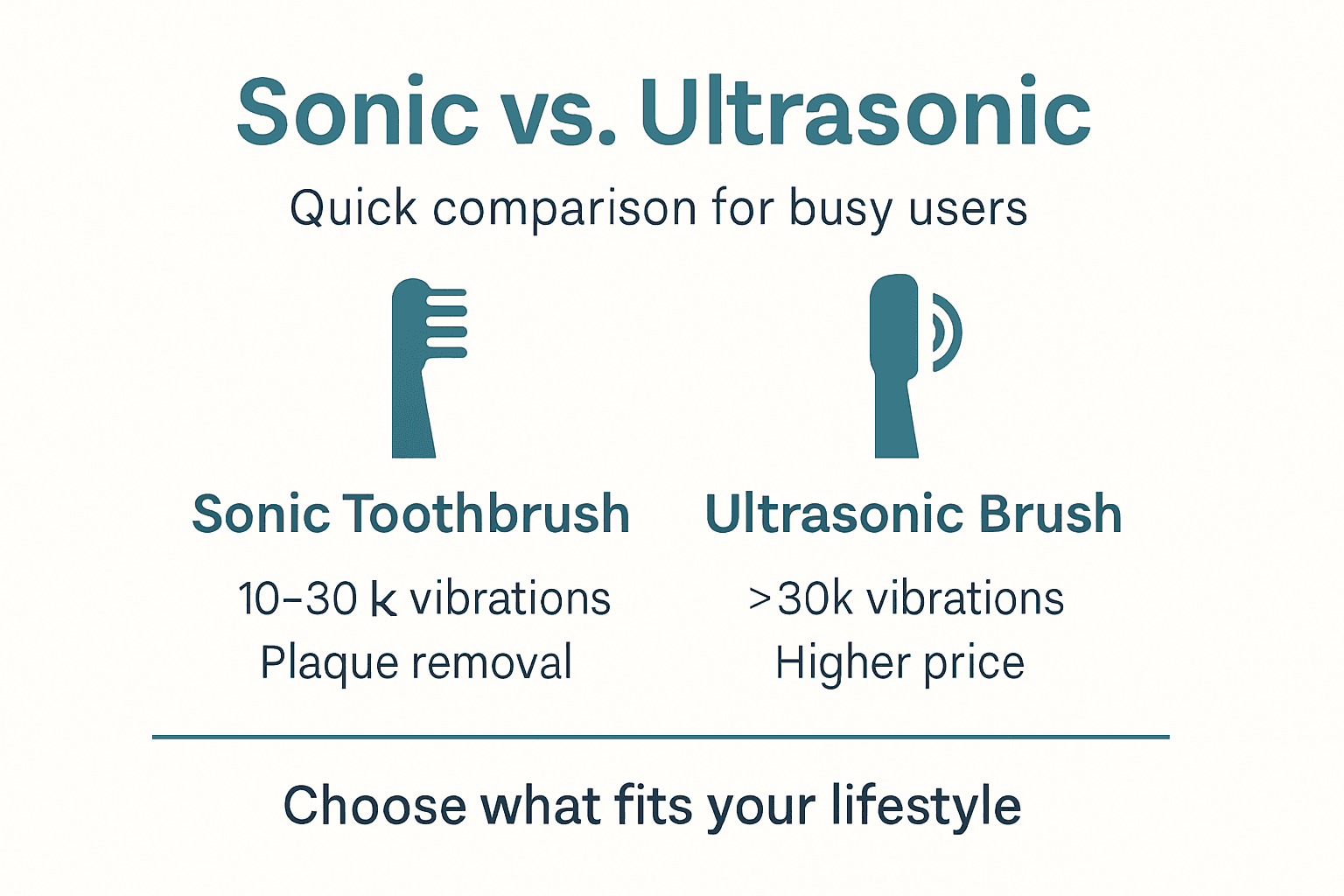
For most people, the difference is minimal in real-world results. Both remove plaque effectively. Ultrasonic brushes cost more and use more complex technology, but sonic brushes deliver excellent cleaning at a lower price point.
Motion Types: Side-to-Side vs. Oscillating-Rotating
Sonic toothbrushes typically use one of two motion patterns:
- Side-to-side vibration moves the brush head horizontally across your teeth, creating a pulsing action
- Oscillating-rotating motion combines back-and-forth movement with slight rotation for a different cleaning pattern
Research on powered toothbrush types30731-5/fulltext) shows small clinical differences between these styles, with no clear winner for plaque removal. Your personal preference matters more than the mechanism itself.
Budget-Friendly vs. Premium Models
Sonic toothbrush options span a wide price range:
- Entry-level models ($25–$50) offer basic sonic vibration and essential features
- Mid-range brushes ($50–$150) include pressure sensors, multiple modes, and better battery life
- Premium options ($150+) feature advanced tracking, app connectivity, and ultrasonic technology
Busy professionals don’t always need the most expensive model. Entry-level sonic brushes deliver the speed advantage you’re looking for—the ability to get a thorough clean in minimal time.
Cordless vs. Electric-Powered
Most modern sonic toothbrushes are cordless with rechargeable batteries lasting 1–3 weeks per charge. Corded options exist but are less convenient for travel and busy schedules. Cordless models fit seamlessly into your routine without setup hassles.
The best sonic toothbrush is the one you’ll actually use consistently, not the most advanced model sitting in your cabinet.
Choosing Based on Your Lifestyle
If you travel frequently, prioritize compact cordless designs with solid battery life. If you have sensitive teeth, look for pressure-sensing technology that adjusts power automatically. When time is your limiting factor, any quality sonic brush delivers faster results than manual brushing.
Pro tip: Test models at your dentist’s office or retailer before buying—the feel and weight matter more than specs, and finding one that feels comfortable in your hand means you’re more likely to use it correctly every single day.
Key Features for Effective Oral Hygiene
A sonic toothbrush is only as good as its features. The right combination of technology and design directly impacts how well you clean your teeth and protect your gums.
Vibration Speed and Motion Quality
Rapid side-to-side bristle vibrations form the foundation of effective sonic cleaning. These vibrations disrupt plaque biofilm and improve gum health more efficiently than manual brushing. The faster and more consistent the motion, the better the plaque removal across all tooth surfaces.
Consistent vibration frequency means you’re not relying on your own hand steadiness. The brush maintains optimal speed throughout your entire routine, which is crucial for busy people who might rush through brushing otherwise.
Pressure Sensors Keep Your Gums Safe
Pressure sensors detect when you’re applying too much force and automatically reduce vibration intensity. This protects your gums from damage and prevents bristle wear. For people with sensitive gums, this feature is a game-changer.
You simply guide the brush—no need to monitor your own pressure level. The sensor handles protection automatically, giving you peace of mind during quick morning or evening cleanings.
Built-In Timers Ensure Proper Duration
A two-minute timer helps you brush long enough without watching the clock. Many sonic brushes pulse every 30 seconds, signaling you to move to the next quadrant of your mouth. This systematic approach covers all surfaces evenly.
For busy professionals, timers solve the “am I done yet?” problem. You know when to stop, ensuring thorough cleaning without guessing or cutting corners.
Multiple Cleaning Modes for Different Needs
Quality sonic toothbrushes offer specialized modes beyond basic cleaning:
- Sensitive mode reduces vibration for delicate teeth and gums
- Deep clean mode increases power for thorough plaque removal
- Gum care mode targets gum line health specifically
- Whitening mode provides gentle surface cleaning
These options let you customize your routine based on daily needs. Some days you need gentle care; other days you need maximum cleaning power.
Battery Life and Charging Convenience
Rechargeable batteries lasting 1–3 weeks mean less frequent charging and more reliability. A dying battery during your morning routine defeats the purpose of efficiency. Look for brushes with solid battery indicators so you know when to recharge.
Powered toothbrushes with proper ergonomic design and user feedback enhance brushing efficacy and user compliance. This matters when your lifestyle is unpredictable—you need a tool that works consistently.
For busy people, these sonic toothbrush features make the biggest difference:
| Feature | Impact on Daily Routine | Why It Matters |
|---|---|---|
| Two-Minute Timer | Ensures thorough brushing | No guessing, full coverage |
| Pressure Sensor | Prevents gum injury | Safer for sensitive users |
| Multiple Modes | Customizes each session | Matches personal comfort |
| Long Battery Life | Reduces charging hassles | Ideal for travel and routine |
Ergonomic Design and Comfort
A brush that feels good in your hand gets used more often. Lightweight handles with non-slip grips reduce fatigue during brushing and improve control. Weight distribution matters when you’re holding the brush at specific angles for two minutes.
The best sonic toothbrush features mean nothing if the brush is uncomfortable to hold and use every single day.
Pro tip: Check that your sonic brush has both a timer and pressure sensor—these two features alone eliminate the most common brushing mistakes people make when rushing through their routine.
Sonic vs. Manual and Electric Toothbrushes
Choosing the right toothbrush type matters for your oral health and your schedule. The differences are more significant than you might think, especially when you’re busy.
The Plaque Removal Advantage
Powered toothbrushes reduce plaque by 11-21% and gingivitis by 6-11% more effectively than manual toothbrushes over 1-3 months. This isn’t a marginal difference—it’s clinically meaningful. That extra 11-21% plaque removal compounds over time, reducing your cavity and gum disease risk.
Manual brushes require perfect technique: consistent pressure, correct angle, adequate duration, and systematic coverage. Most people miss multiple spots every single day without realizing it.
Why Electric Brushes Work Better for Most People
Consistency is the main reason electric toothbrushes outperform manual ones. You can’t maintain perfect brushing technique every time you brush—especially in the morning when you’re half-asleep or at night when you’re exhausted. An electric brush maintains optimal vibration frequency regardless of your hand steadiness.
Electric brushes also reduce user error. The brush handles the difficult parts: reaching the back molars, maintaining the correct angle at the gum line, and delivering consistent motion to every surface.
Manual vs. Sonic: Speed and Efficiency
Manual brushing requires approximately 2 minutes of active hand movement to cover all tooth surfaces properly. Most people finish in under 1 minute, leaving plaque behind. Sonic toothbrushes deliver superior cleaning in significantly less time through rapid vibrations that do the work for you.
For busy professionals, this time difference is transformative:
- Manual brush: 2 minutes of active, focused effort required
- Sonic brush: 20 seconds to 1 minute of guided brushing
- Rotary electric: 1.5-2 minutes of guided motion
Sonic toothbrushes compress cleaning efficiency into your actual schedule.
Effectiveness With Proper Technique
Electric toothbrushes are more effective primarily due to improved brushing technique and consistency facilitated by the device itself. However, with perfect manual technique and discipline, manual brushes can achieve similar results—but few people maintain that consistency.
The real advantage isn’t that sonic brushes are theoretically superior. The advantage is they make superior results automatic, even when you’re rushing.
Cost vs. Long-Term Health
Sonic toothbrushes cost more upfront ($30-$200+) compared to manual brushes ($3-$10). Over three years, a sonic brush with replaceable heads costs roughly $15-$40 per year for heads plus initial investment. Manual brushes cost $20-$40 annually but deliver less plaque removal.
Here’s a quick look at how different toothbrush types compare on key factors:
| Toothbrush Type | Cleaning Efficiency | User Effort Needed | Upfront Cost |
|---|---|---|---|
| Manual | Technique-dependent | High | $3–$10 |
| Rotary Electric | Consistent | Moderate | $20–$100 |
| Sonic | Superior, covers more | Low | $30–$200+ |
| Ultrasonic | Similar to sonic, premium | Very low | $120–$300+ |
When you factor in prevented cavities and gum disease treatment costs, the investment pays for itself quickly.
Sonic toothbrushes give you clinical benefits without requiring perfect discipline every single morning and night.
The Bottom Line for Busy Lives
Manual brushes demand flawless technique you likely won’t maintain. Rotary electric brushes work well but still require full brushing duration. Sonic toothbrushes combine the fastest cleaning time with superior plaque removal, making them ideal for health-conscious professionals who prioritize efficiency.
Pro tip: If you struggle with morning or evening routines, a sonic toothbrush removes the complexity—superior cleaning happens automatically, so you can’t sabotage your own oral health through rushing.
Pros, Limitations, and Best Use Cases
Sonic toothbrushes aren’t perfect for everyone, but they solve specific problems brilliantly. Understanding both strengths and weaknesses helps you decide if one fits your life.
Key Advantages of Sonic Technology
Sonic toothbrushes deliver measurable benefits that matter for your daily routine:
- Superior plaque removal through high-frequency vibrations reaching areas manual brushes miss
- Time efficiency compressing thorough cleaning into 20 seconds to 1 minute
- Consistent results regardless of your brushing technique or hand steadiness
- Gum health improvement through targeted vibration at the gum line
- Built-in safeguards like pressure sensors and timers that prevent user error
- Multiple cleaning modes addressing sensitivity, whitening, and specialized needs
These advantages compound over time. Better plaque removal today means fewer cavities and less gum disease years from now.
Real-World Limitations You Should Know
No toothbrush is universally perfect. Sonic brushes have genuine drawbacks:
- Higher upfront cost ($30-$200+) compared to manual brushes ($3-$10)
- Ongoing replacement expenses for brush heads every 3 months ($15-$40 annually)
- Learning curve for proper technique with some models
- Potential gum sensitivity for some users during initial adjustment period
- Battery dependency requiring regular charging
- Bulkier design making travel less convenient than compact manual brushes
Sonic toothbrushes offer effective plaque removal and improved gum health through multiple brushing modes and smart sensors, but the ongoing costs add up over time.
Who Benefits Most From Sonic Brushes
Sonic toothbrushes are ideal for specific situations:
Best for busy professionals who struggle to find brushing time. The speed advantage (20 seconds versus 2 minutes) fits real-world schedules without sacrificing cleaning quality.
Perfect for people with gum sensitivity or gum disease. The targeted vibration and pressure sensors protect delicate tissues while delivering therapeutic benefits.
Excellent for individuals with poor manual dexterity or arthritis. The brush does the work, reducing strain on hands and wrists.
Great for those with braces or complex dental work requiring specialized cleaning patterns that sonic vibrations handle automatically.
Ideal for people who rush through brushing or forget to brush long enough. The timer and consistent vibration guarantee adequate cleaning even when you’re distracted.
When Manual Brushes Still Make Sense
Manual brushes work fine for committed individuals willing to maintain disciplined technique. If you consistently brush for two full minutes with perfect angle and pressure, a manual brush is cheaper and simpler.
Manual brushes also travel better—no charging needed, minimal space required, and zero battery anxiety. For occasional travelers or minimalists, this matters.
Hybrid Approaches
Some people use both. A sonic brush for daily home use paired with a manual travel brush solves efficiency and portability. This approach costs more but eliminates compromise.
Sonic toothbrushes shine when your life doesn’t align with ideal brushing discipline—they make superior oral health automatic.
Pro tip: If budget is your main concern, start with an entry-level sonic brush ($30-$50 range) rather than a manual brush—the speed advantage pays for itself within months through better compliance with your actual routine.
Achieve a Superior Clean in Just 20 Seconds with Y-Brush
The article highlights the common challenge that 90 percent of people brush their teeth for less than one minute, far short of the recommended two minutes needed for a truly effective clean. This gap between ideal oral care and real-life habits often leads to missed plaque and increased risk of cavities and gum disease. If you find yourself rushing through brushing or struggling to maintain consistent technique despite knowing the importance, the solution is here. Sonic technology promises efficiency, but what if you could get an even faster and better clean without sacrificing your busy schedule
Discover the revolutionary approach of the Y-Brush Toothbrushes designed specifically for people who want a plaque-free smile in just 20 seconds. Y-Brush fits seamlessly into your daily routine by delivering rapid vibrations that clean all tooth surfaces simultaneously. Experience the confidence of a fresh, thorough clean that adapts to your fast-paced lifestyle rather than demanding extra time or effort.
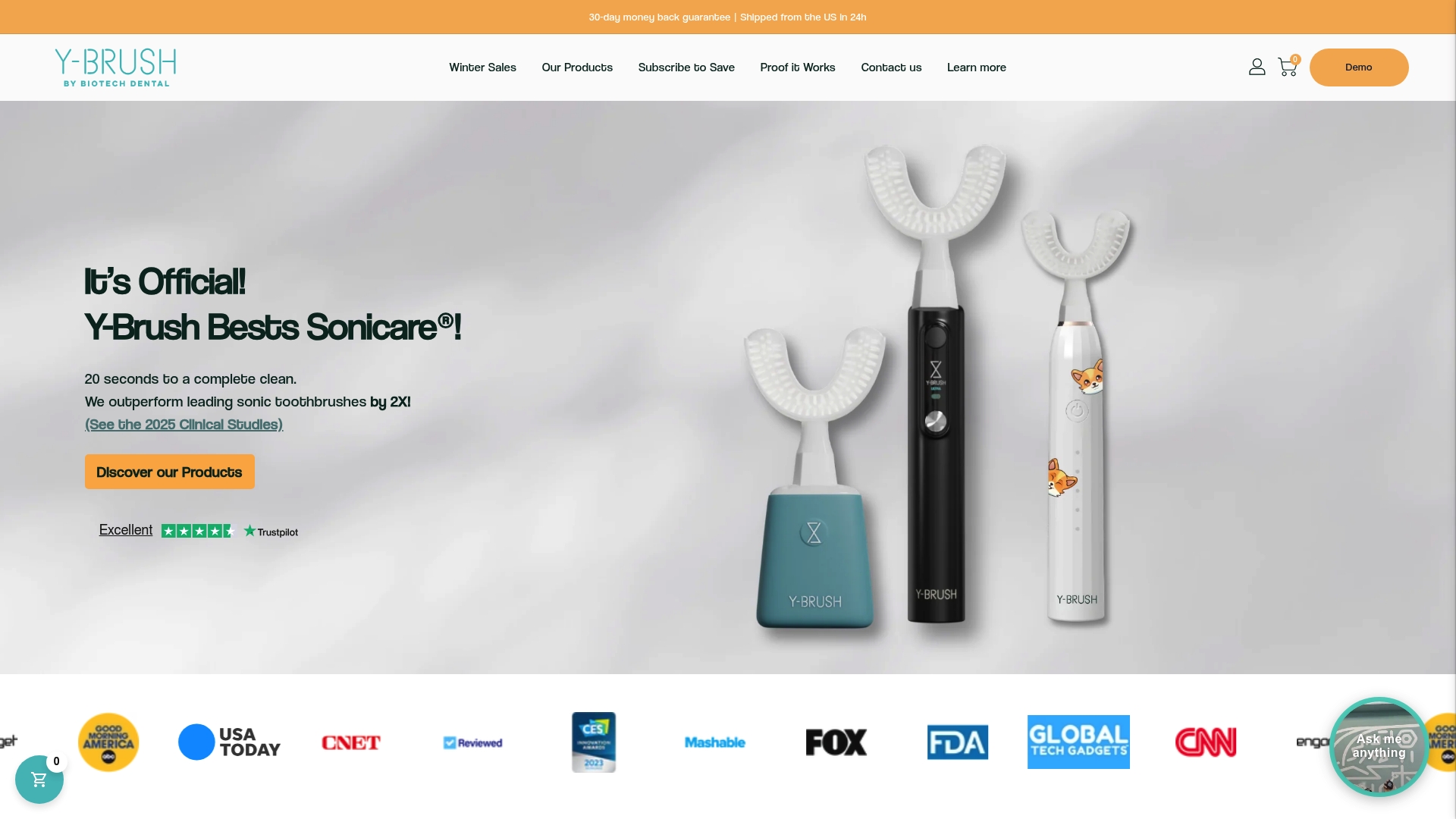
Ready to transform your oral hygiene and reclaim your brushing time Visit Y-Brush USA to explore our innovative designs and detailed Testing results that demonstrate how Y-Brush delivers exceptional cleaning speed and effectiveness. Take control of your dental health today with a smarter, faster toothbrush that works as hard as you do.
Frequently Asked Questions
What is a sonic toothbrush and how does it work?
A sonic toothbrush is an electric toothbrush that uses rapid vibrations—typically between 10,000 to 30,000 movements per minute—to effectively clean teeth and remove plaque. Unlike manual brushing, it relies on the brush’s motion to disrupt plaque and bacteria, reaching areas that manual brushes often miss.
How do you use a sonic toothbrush properly?
To use a sonic toothbrush effectively, wet the bristles before applying a pea-sized amount of fluoride toothpaste. Hold the brush at a 45-degree angle towards your gum line, apply light pressure, and allow the brush to do the work. Move the brush slowly across all tooth surfaces for optimal cleaning.
What are the benefits of using a sonic toothbrush compared to a manual one?
Sonic toothbrushes generally offer superior plaque removal—by 11-21%—because they maintain consistent vibration and can reach places a manual brush may miss. They also allow for faster cleaning, potentially reducing the brushing time needed from two minutes to as little as 20 seconds, making them ideal for busy individuals.
Are there any limitations to using a sonic toothbrush?
While sonic toothbrushes provide many benefits, they do have limitations. These include a higher upfront cost compared to manual brushes, ongoing replacement expenses for brush heads, and a potential learning curve for new users. Users may also experience gum sensitivity during the initial adjustment period.


