


Rushing through your morning routine and still hoping for perfect dental checkups feels familiar to many American adults. Rapid advancements in toothbrush technology now promise more effective cleaning with less effort, addressing everyday struggles like plaque buildup and missed spots. From smart sensors to innovative bristle designs, these tools make oral care simpler and more reliable. Discover how the latest features help you achieve healthier teeth and gums without slowing down your busy schedule.
Table of Contents
- Key Innovations And Tech Variations
- How Smart Toothbrushes Improve Cleaning
- Comparing Tech Toothbrushes To Traditional Options
- Considerations For Safety, Cost, And Adoption
Key Takeaways
| Point | Details |
|---|---|
| Toothbrush Technology Advancements | Modern toothbrushes feature enhanced bristle design, vibration patterns, and antibacterial materials for improved plaque removal and gum health. |
| Oscillating-Rotating vs. Sonic | Choose oscillating-rotating for tight interdental cleaning and sonic for broader coverage to match your specific oral care needs. |
| Smart Toothbrush Benefits | Smart toothbrushes provide real-time feedback and pressure control, promoting consistent brushing techniques and better overall oral health. |
| Cost and Adoption Considerations | While advanced toothbrushes have higher upfront costs, their long-term health benefits and durability present a more cost-effective option than manual brushes. |
…
Key Innovations and Tech Variations
Toothbrush technology has evolved far beyond simple bristles and handles. Today’s advanced models pack sophisticated engineering that directly impacts how effectively you remove plaque and protect your gums.
The most significant innovations focus on three core areas:
- Bristle design enhancements that optimize contact and reduce gum irritation
- Vibration patterns calibrated for maximum plaque disruption without damage
- Anti-bacterial integration built into bristle materials themselves
These improvements have measurably boosted user compliance because the toothbrush does more of the work for you. When a device delivers better results faster, you’re more likely to use it consistently.
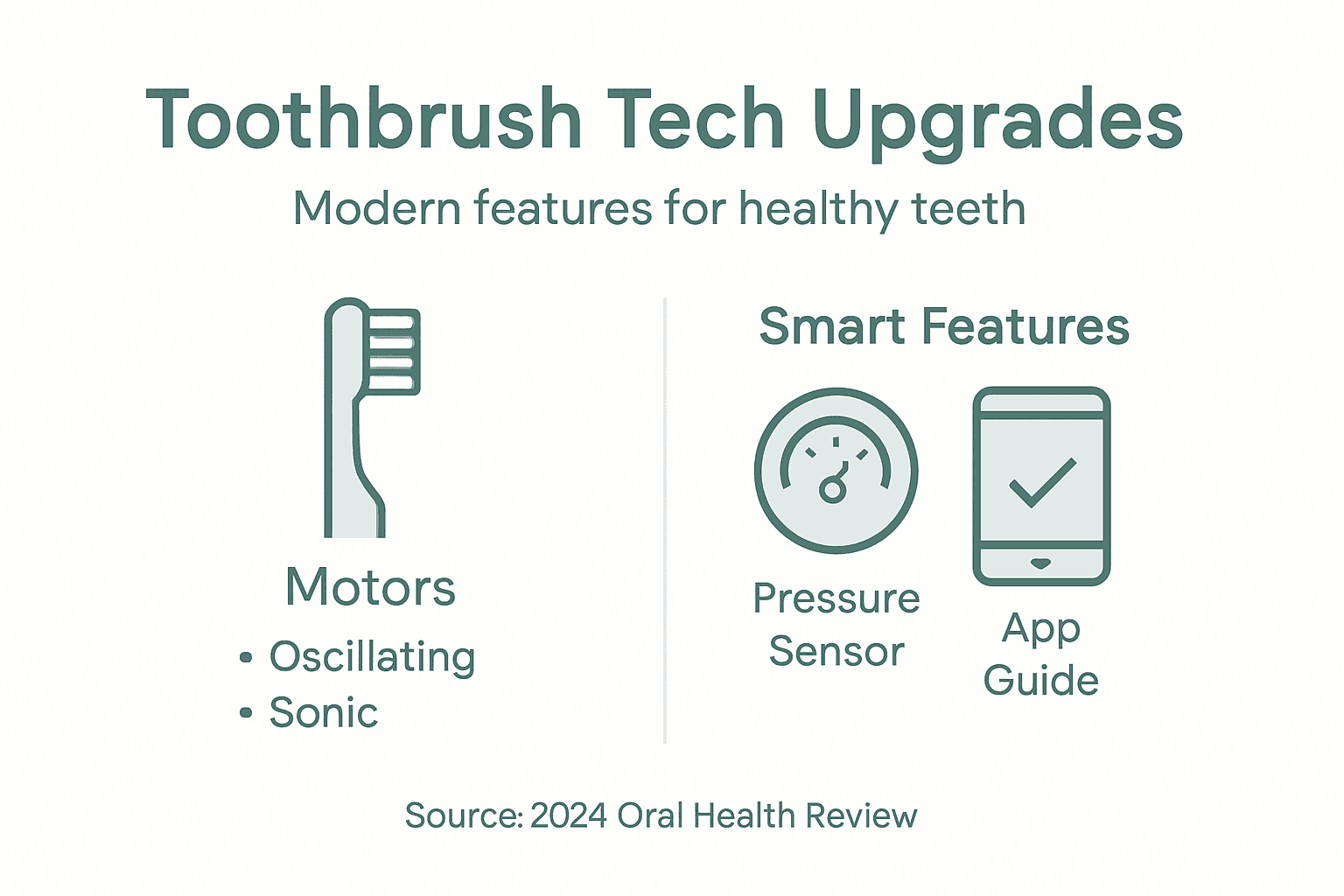
Oscillating-Rotating vs. Sonic Technology
Not all powered toothbrushes work the same way. The two dominant approaches produce distinctly different results.
[Oscillating-rotating models] (https://www.mdpi.com/2227-9032/12/10/1035) excel at interdental cleaning, moving side-to-side and back-and-forth simultaneously. This dual motion creates a scrubbing action particularly effective between teeth where plaque accumulates most.
Sonic toothbrushes, by contrast, vibrate at much higher frequencies, sometimes over 30,000 strokes per minute. This rapid vibration agitates plaque and creates fluid dynamics that help rinse away debris.
Bristle innovations and vibration enhancements have significantly improved plaque control and gingival health by increasing user compliance and effectiveness.
Your specific needs determine which works better. If interdental spaces are your challenge, oscillating-rotating dominates. Prefer gentler, broader coverage? Sonic delivers that profile.
Real-World Performance Differences
Laboratory studies show measurable gaps between these technologies, but your daily routine matters more than the specs.
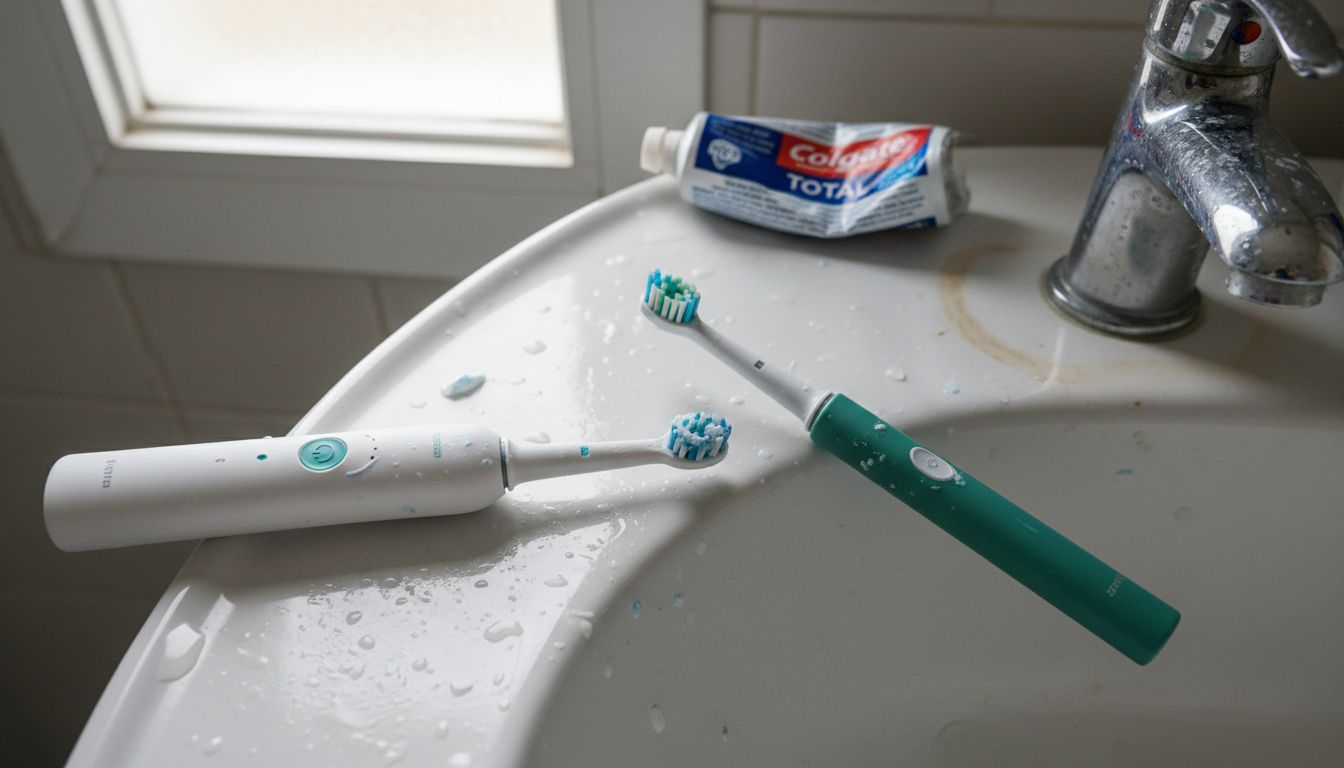
Oscillating-rotating handles tight spaces better because the mechanical action targets specific zones. Sonic provides broader surface coverage with less pressure concentration, which benefits those with sensitive gums.
Here’s a concise comparison of oscillating-rotating versus sonic toothbrush technology:
| Technology Type | Cleaning Mechanism | Best For | Potential Drawbacks |
|---|---|---|---|
| Oscillating-Rotating | Circular and side-to-side motion | Tight interdental spaces | May feel harsh to sensitive gums |
| Sonic | High-frequency vibration | Gentle, full-mouth coverage | Slightly less focused cleaning |
Pro tip: Test your toothbrush’s effectiveness by checking your gum color and bleeding after two weeks of consistent use—visible improvements indicate the technology matches your mouth’s needs.
How Smart Toothbrushes Improve Cleaning
Smart toothbrushes represent a fundamental shift in how you approach daily oral care. Instead of relying on your technique alone, these devices actively guide you toward better results through real-time feedback and data tracking.
The core improvement comes from built-in sensors that monitor your brushing in multiple dimensions:
- Pressure detection prevents you from scrubbing too hard, which damages gums
- Duration tracking ensures you spend adequate time on each tooth surface
- Position awareness alerts you if you’re missing specific zones
- Motion analysis confirms you’re using proper brushing techniques
This constant monitoring transforms brushing from a mindless habit into an intentional practice. You get immediate feedback, which reinforces good habits over time.
Below is an overview of how smart toothbrush features impact oral health outcomes:
| Feature | Role in Oral Health | Added User Benefit |
|---|---|---|
| Pressure Detection | Prevents gum damage | Reduces risk of recession and bleeding |
| Duration Tracking | Ensures thorough cleaning | Builds better brushing habits |
| Position Awareness | Identifies missed areas | Promotes even plaque removal |
| Motion Analysis | Monitors brushing technique | Educates and forms healthy routines |
Artificial Intelligence and Real-Time Guidance
Artificial intelligence systems embedded in smart toothbrushes guide users with feedback on pressure, brushing duration, and effectiveness. The AI learns your patterns and adapts recommendations specifically for your mouth’s needs.
When you apply too much pressure, the brush vibrates or chimes to signal you. When you’ve finished one quadrant, the app tells you to move to the next. These micro-corrections happen during brushing, not after, so you can adjust in real-time.
This approach particularly benefits people with limited dexterity or those struggling with traditional oral hygiene routines. The system compensates for technique gaps through behavioral feedback.
Behavioral Changes That Stick
Smart toothbrush sensors monitor brushing techniques and ensure even distribution of brushing time across all teeth. Clinical studies confirm these devices achieve superior plaque removal compared to standard powered brushes.
The tracking component matters as much as the physical cleaning. When you see your brushing history visualized in an app, you’re more likely to maintain consistency.
Smart toothbrushes transform brushing into an accountable daily habit, with real-time pressure feedback fostering patient education and compliance.
Understanding proper brushing technique amplifies what smart devices deliver, creating a complete system for oral health.
Pro tip: Enable app notifications to get daily reminders, then check your brushing history weekly to identify patterns—this combination reinforces habit formation faster than manual tracking alone.
Comparing Tech Toothbrushes to Traditional Options
The difference between a manual toothbrush and an advanced electric model comes down to one fundamental reality: consistency beats willpower every time. Manual brushing depends entirely on your technique, timing, and daily motivation. Tech toothbrushes remove that guesswork.
Research consistently shows the performance gap. Powered toothbrushes with advanced oscillating and sonic technologies outperform manual brushes in plaque removal, gingival health improvement, and calculus reduction. The advantages are particularly pronounced for vulnerable populations including the elderly and those with limited dexterity.
Here’s what sets them apart:
- Plaque removal: Powered models eliminate 21% more plaque than manual brushing
- Gum health: Electric brushes reduce bleeding and inflammation faster
- Stain reduction: Sonic vibration tackles surface stains more effectively
- Consistency: You get the same brushing power every single time
The Technology Advantage
Manual brushes require you to generate the correct brushing motion at the right pressure and duration. Most people fail at least one of these elements. Electric toothbrushes with modern oscillating-rotating and microvibration technologies provide significantly better plaque control by handling the mechanics for you.
Your hand simply guides the brush. The brush does the actual work. This separation of responsibilities makes superior cleaning almost automatic.
Tech models add another layer with sensors and feedback, turning passive brushing into active guidance. You’re not just getting better mechanics—you’re getting real-time coaching.
Real-World Impact for Your Lifestyle
You’re busy. You skip brushing when tired. You brush for 45 seconds instead of two minutes. Choosing the right electric toothbrush matters because it must fit your actual life, not your ideal self.
Advanced toothbrush technology compensates for this reality. It delivers superior results in less time through more efficient mechanisms.
Electric toothbrushes achieve measurably better oral health outcomes because the technology handles what your willpower cannot guarantee—consistency, correct technique, and adequate coverage every single day.
For individuals with arthritis, tremors, or limited hand strength, powered options aren’t a luxury—they’re the difference between functional oral hygiene and chronic neglect.
Pro tip: If you’re currently a manual brush user, give yourself two weeks with a powered option before deciding—your gums need time to adjust to superior cleaning, and initial sensitivity typically resolves quickly.
Considerations for Safety, Cost, and Adoption
Advanced toothbrush technology delivers real benefits, but three practical realities determine whether it actually works for you: safety, affordability, and whether you’ll actually use it consistently.
Safety concerns are real but manageable. Smart toothbrushes demonstrate improved user compliance and clinical oral health outcomes; however, pressure application accuracy matters. Too much force damages gum tissue and causes recession, which no amount of plaque removal can justify.
Look for these safety features:
- Pressure sensors that alert you when you’re brushing too hard
- Auto-shutoff timers preventing over-brushing in any single area
- Gum-protect modes that reduce vibration intensity for sensitive areas
- Quality construction ensuring bristles won’t fray or degrade quickly
Most modern electric toothbrushes include these safeguards. The key is using them correctly, not forcing the brush against your gums.
The Cost Reality
Cost remains a barrier for widespread adoption, although the benefits are significant. An advanced toothbrush costs $20 to $300 upfront, compared to $1 to $3 for a manual brush. That’s a real difference for many households.
However, calculate the long-term picture. A quality electric toothbrush lasts 3 to 5 years with minimal replacement costs. Manual brushes need replacing every 3 months, adding up to $12 to $20 annually. Over five years, the total cost between both options narrows considerably.
Consider the health costs too. Better plaque removal means fewer cavities, less gum disease, and fewer expensive dental visits. The return on investment extends beyond the device itself.
Making Adoption Stick
Effective toothbrush use depends on proper technique, timely replacement, and individual considerations including manual dexterity and economic factors. Technology alone won’t work if you abandon it after two weeks.
Start with a realistic expectation: you need a toothbrush that fits your lifestyle, not your aspirational self. If you travel constantly, battery life matters. If you have arthritis, ergonomic design is non-negotiable.
Safety and affordability only matter if adoption actually happens—choose a toothbrush that aligns with your actual daily routine and physical capabilities.
Pain or discomfort during the first week is normal as gums adjust to superior cleaning. Expect some sensitivity; it typically resolves within 7 to 10 days. If bleeding persists beyond two weeks, consult your dentist.
Pro tip: Start with a mid-range electric toothbrush rather than premium models—the performance difference above $80 is marginal, but the cost difference is significant, making it easier to justify replacement and adoption over time.
Upgrade Your Oral Care with Technology That Fits Your Life
The article highlights how most people struggle to brush for the recommended two minutes and how even advanced toothbrush technologies can fall short if they don’t match real-life habits. If you find it challenging to maintain consistent, effective brushing despite the best tech innovations like oscillating or sonic movements and AI-guided feedback, it’s clear that convenience and ease of use matter just as much as power. The pain of rushing through your routine or dealing with a brush that feels complicated can leave you frustrated and worried about your oral health.
Y-Brush offers a breakthrough with a scientifically designed solution that cleans thoroughly in just 20 seconds while fitting seamlessly into your busy lifestyle. This means no more cutting corners or feeling guilty about short brush times. You get faster, better plaque removal and the confidence that comes with a plaque-free smile. Discover how Y-Brush merges advanced cleaning technology with user-friendly design to overcome the biggest hurdles mentioned in the article.
Don’t wait for gum sensitivity or missed spots to become a bigger problem. Take action with Y-Brush, and experience a fresh clean that matches your pace. Learn more about how to choose the right electric toothbrush and the proper brushing technique. Start today to transform your oral care routine with technology designed for your life.
Frequently Asked Questions
What are the main benefits of using advanced toothbrush technologies?
Advanced toothbrush technologies, like oscillating-rotating and sonic toothbrushes, improve plaque removal, enhance gum health, and promote better oral hygiene habits through built-in sensors and smart features.
How do oscillating-rotating toothbrushes differ from sonic toothbrushes?
Oscillating-rotating toothbrushes utilize a side-to-side and circular motion to effectively clean interdental spaces, while sonic toothbrushes use high-frequency vibrations to disrupt plaque and improve fluid dynamics for rinsing away debris.
What features should I look for in a smart toothbrush?
When choosing a smart toothbrush, look for pressure sensors, duration tracking, position awareness, and motion analysis capabilities. These features help optimize your brushing technique and ensure thorough cleaning.
Are advanced toothbrushes safe to use, and what safety features do they offer?
Yes, advanced toothbrushes are generally safe when used correctly. Look for options with pressure sensors, auto-shutoff timers, gum-protect modes, and high-quality bristle materials to minimize the risk of gum damage.


