


Rushed mornings and long days in major American cities often leave little time to rethink your oral hygiene habits. Yet finding a toothbrush that actually fits your lifestyle can feel like searching for a needle in a haystack. With recent innovations such as oscillating-rotating heads and built-in toothpaste dispensers simplifying daily routines and improving cleaning efficiency, today’s brushes are designed to fit you—not the other way around. This overview explores which types and features genuinely make oral care simpler, safer, and more effective for urban professionals.
Table of Contents
- Key Types And Innovations In Toothbrushes
- Features That Impact Cleaning Efficiency
- How Design Solves Common Brushing Challenges
Key Takeaways
| Point | Details |
|---|---|
| Toothbrush Innovation | Manual brushes provide fundamental care but powered and multifunctional options enhance cleaning efficiency and convenience. |
| Design Features Matter | Bristle characteristics, head size, and motor function significantly impact cleaning effectiveness and oral health outcomes. |
| Addressing Common Challenges | Modern toothbrushes are designed to tackle issues like inconsistent technique, incomplete plaque removal, and sensitivity, making daily brushing easier and more effective. |
| Lifestyle Considerations | Selecting the right toothbrush should align with your personal habits and preferences to ensure consistent oral care routines. |
…
Key Types and Innovations in Toothbrushes
Toothbrush technology has evolved dramatically over the past decade, moving far beyond the basic manual brush. Today’s market offers multiple solutions designed to fit different lifestyles, preferences, and oral health goals.
Manual toothbrushes remain the foundation of oral care. They’re affordable, require no charging, and work effectively when used correctly. However, they demand precise technique and consistent effort to achieve optimal plaque removal.
Powered toothbrushes have transformed how people brush. Oscillating-rotating heads in modern electric models deliver superior cleaning action compared to manual brushing alone. This innovation significantly reduces user error and improves plaque removal efficiency.
Multifunctional toothbrushes represent the newest frontier in design innovation. Modern versions integrate features like built-in toothpaste dispensers, which streamline your morning routine and reduce clutter in your bathroom cabinet.
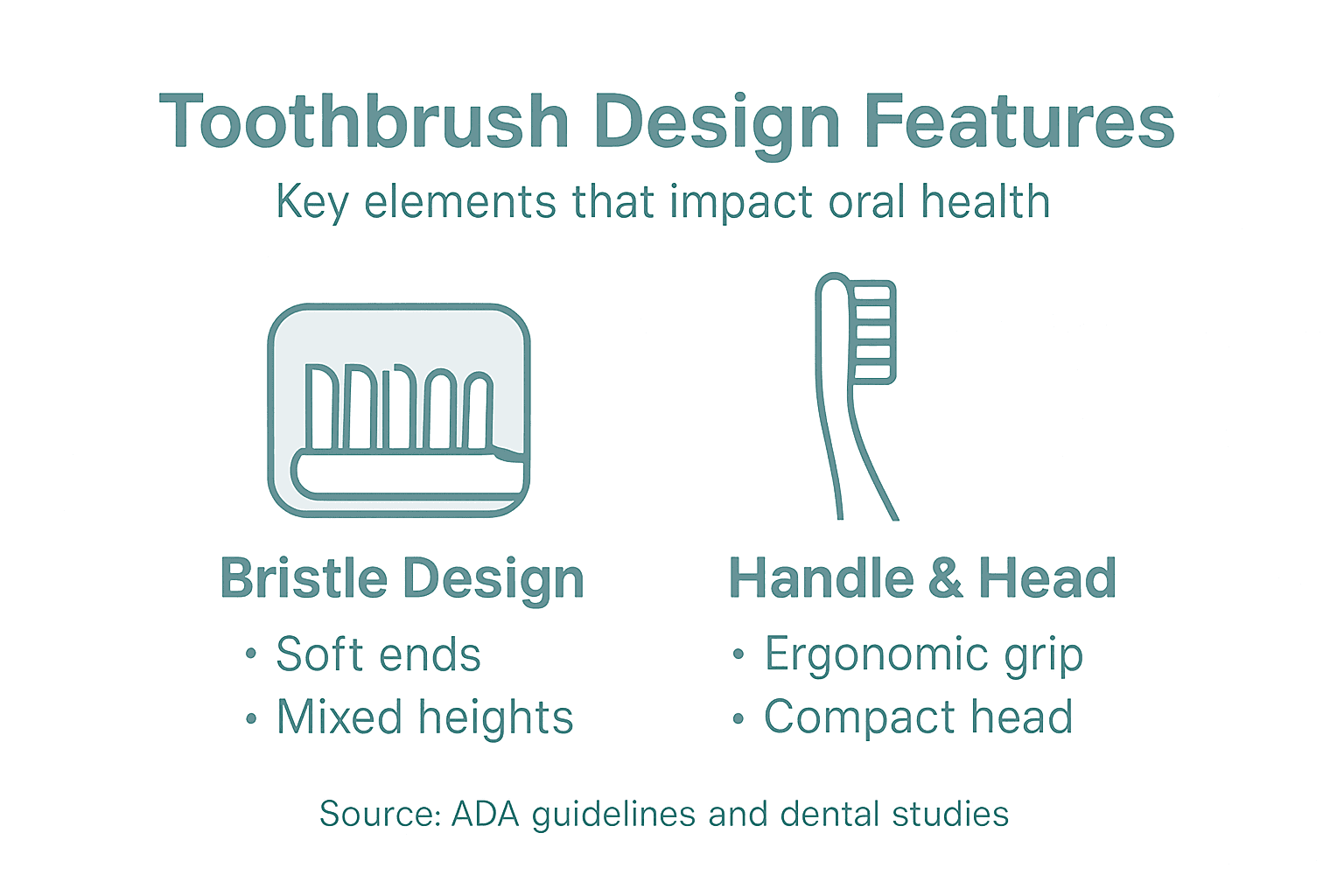
Here’s what separates today’s leading toothbrush types:
Here’s a comparison of toothbrush types by usage scenario and typical users:
| Toothbrush Type | Ideal Usage Scenario | Typical User Profile |
|---|---|---|
| Manual | Travel or basic daily care | Budget-conscious or frequent traveler |
| Sonic | Desire for advanced cleaning | Tech-savvy, prioritizes oral health |
| Oscillating-Rotating | Clinical-grade cleaning at home | Those with dexterity concerns |
| Multifunctional | Streamlined, fast routines | Busy individuals, minimalists |
- Manual brushes - Lightweight, travel-friendly, no maintenance required
- Sonic toothbrushes - High-frequency vibrations deliver rapid bristle movement
- Oscillating-rotating brushes - Side-to-side and circular motions for comprehensive cleaning
- Multifunctional designs - Combine brushing with integrated tools like water flossing
The right toothbrush design eliminates friction between you and your daily routine, making consistent oral care automatic rather than effortful.
You’ll find that different toothbrush types address different pain points. Some prioritize speed, others emphasize ease of use, and some focus on comprehensive cleaning power.
When selecting between options, consider your lifestyle first. Do you travel frequently? Do you struggle to find time for a full routine? Are you looking for clinical-grade cleaning efficiency? Your answer determines which innovation makes sense for you.
The convergence of ergonomic design, mechanical innovation, and user psychology has created toothbrushes that actually fit how modern Americans live—not how dentists wish they lived.
Pro tip: Test any new toothbrush for at least one week before deciding; your mouth needs time to adjust to different bristle patterns and vibration frequencies, and initial discomfort doesn’t mean poor performance.
Features That Impact Cleaning Efficiency
Not all toothbrushes clean equally. The difference comes down to specific design features that directly affect how well bristles remove plaque and protect your gums.
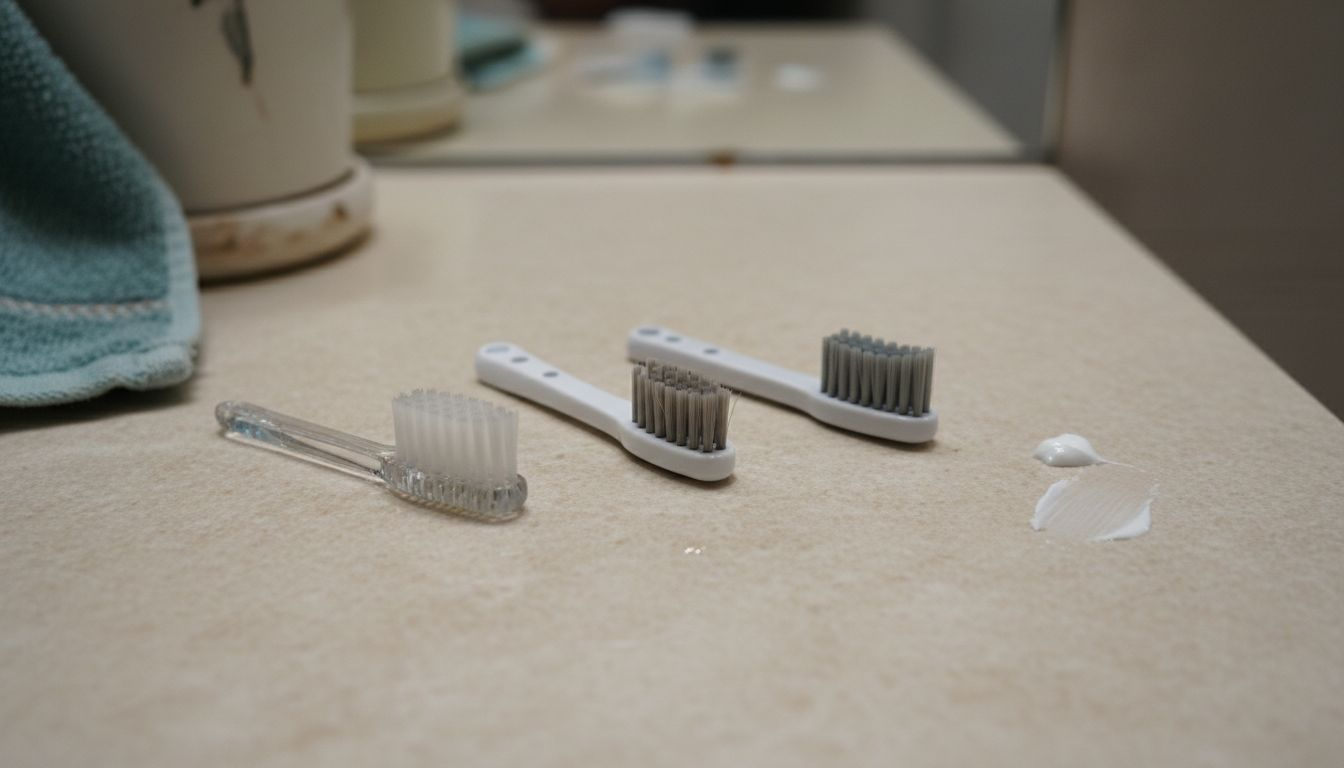
Bristle characteristics matter more than you might think. Filament diameter, bristle stiffness, and varied heights determine how effectively bristles reach between teeth and along the gumline. Softer, thinner filaments access tight spaces that stiffer bristles simply cannot reach.
Head size influences cleaning reach and maneuverability. Smaller brush heads navigate your mouth’s geometry more precisely, accessing molars and back surfaces with greater accuracy. Larger heads cover more surface area but sacrifice precision in tight spaces.
Motor function separates high-performance electric toothbrushes from standard models. Optimized motor shapes and functions improve brushing distribution across all tooth surfaces, ensuring consistent plaque removal rather than spotty coverage.
The bristle pattern itself drives efficiency. Here are the critical design elements:
- Interdental bristles - Designed specifically to clean between teeth
- Angled bristles - Target the gumline where plaque accumulates most
- Varied bristle heights - Access different tooth contours simultaneously
- Bristle density - More bristles increase contact area with tooth surfaces
Superior cleaning efficiency isn’t about scrubbing harder—it’s about bristle design that works smarter for you.
Speed matters, but only when combined with proper design. A toothbrush delivering rapid bristle movement without thoughtful head shape and bristle configuration wastes motion. The best designs balance stroke speed with strategic bristle placement.
Your personal brushing pressure also interacts with bristle design. Toothbrushes engineered with softer materials reduce the risk of gum recession while maintaining cleaning power—crucial for anyone with sensitive gums.
When comparing options, look beyond marketing claims. Check actual bristle specifications: diameter (typically 0.15-0.20 millimeters for optimal cleaning), stiffness rating, and whether height variation is intentional or accidental.
To help assess cleaning efficiency, here’s a quick summary of how core toothbrush features impact results:
| Feature | Role in Cleaning | Impact on Oral Health |
|---|---|---|
| Bristle Diameter | Determines reach into tight spaces | Better plaque removal with thinner |
| Head Size | Influences access and maneuverability | Smaller heads clean molars easier |
| Motor Function | Controls movement and coverage | Consistent results, less user error |
| Bristle Pattern | Targets gumline and tooth contours | Reduces missed spots, protects gums |
Pro tip: Pay attention to how the brush feels during the first week—bristle design affects comfort, and the right design should feel gentle yet effective within a few days of adjustment.
How Design Solves Common Brushing Challenges
Most people struggle with brushing consistency, technique, or time constraints. Modern toothbrush design directly addresses these real-world obstacles rather than ignoring them.
The first challenge: inconsistent brushing technique. Manual brushing demands precise angles, consistent pressure, and methodical coverage—skills most people never master. Powered toothbrush innovations incorporate gentler bristle materials and ergonomic handles that reduce technique dependency, letting you achieve results without perfect form.
Incomplete plaque removal remains the second major problem. People miss molars, skip the gumline, and rush through back teeth. Variable bristle length and softness combined with compact head designs solve this by making difficult areas easier to access and clean thoroughly.
Tissue damage from aggressive brushing affects millions of Americans. Gum recession and tooth sensitivity result from pressure and harsh bristles. Smart design uses softer materials that maintain cleaning power while protecting delicate tissues.
Time pressure kills consistency. When brushing feels tedious, you skip it or rush through. Here’s how design addresses the time challenge:
- Simplified technique - Eliminates the need to learn proper angles
- Faster cleaning cycles - Achieves results in less time without sacrificing effectiveness
- Intuitive handles - Positions bristles correctly automatically
- Built-in timers - Ensures adequate coverage without mental tracking
Good design doesn’t require willpower—it makes the right choice the easiest choice.
Gum sensitivity creates another barrier. People avoid brushing certain areas because it hurts. Toothbrushes designed with softer bristle configurations eliminate this problem, letting you brush sensitive areas confidently.
Morning rush chaos affects brushing quality. You’re grabbing keys, checking your phone, and thinking about meetings. When your toothbrush design requires focus and technique, it loses out. Efficient design works automatically, fitting seamlessly into your chaotic mornings.
The integration of ergonomic handles and user-friendly features means you spend less mental energy on technique and more energy on consistency.
Pro tip: If you find yourself avoiding brushing certain teeth or areas, that’s your signal to test a toothbrush with softer bristles and a different head shape—pain during brushing indicates a design mismatch, not a technique problem.
Experience a Toothbrush Design That Transforms Your Oral Care Routine
Many people struggle with brushing effectively because traditional toothbrushes require perfect technique and extended time. This article highlights how innovative design solves these challenges by focusing on features like bristle arrangement, ergonomic handles, and brushing speed to make oral care efficient and gentle. If you find yourself rushing your brush or missing critical areas like the gumline or molars the Y-Brush Toothbrushes offer a revolutionary solution.
Y-Brush reimagines how a toothbrush fits into your busy life by delivering a superior clean in just 20 seconds while addressing sensitivity and coverage issues discussed above. This lets you enjoy a plaque-free smile without sacrificing minutes every morning or evening. Start your journey toward effortless oral health by exploring the innovative features available in our Testing collection and visit our main website https://y-brush.co to discover how brushing can finally keep up with your lifestyle. Act now for a smarter clean that feels easier from day one.
Frequently Asked Questions
What features should I consider when selecting a toothbrush for efficient cleaning?
Key features include bristle diameter, head size, motor function in electric models, and bristle pattern. Softer, thinner bristles can access tight spaces, while a smaller head size can improve maneuverability.
How do powered toothbrushes improve brushing efficiency compared to manual brushes?
Powered toothbrushes use oscillating-rotating heads, which offer superior cleaning action and reduce user error, improving plaque removal efficiency compared to manual brushing.
What design elements help address brushing challenges like gum sensitivity and incomplete plaque removal?
Design elements like softer bristles, variable heights, and compact head shapes help minimize gum irritation and reach difficult areas, leading to more effective plaque removal without discomfort.
How can I maximize my brushing efficiency with my current toothbrush?
To maximize efficiency, maintain proper brushing technique, pay attention to the bristle type, and test different toothbrush designs for comfort. Also, consider using a brush with built-in timers to ensure adequate coverage.
Recommended
- Is A Rechargeable Electric Toothbrush Worth The Investment For Advance – Y-Brush USA
- How to Make Teeth Brushing Easier and More Effective? – Y-Brush USA
- How Does The Y-Brush Stand Apart In The Market Of Electric Toothbrushe – Y-Brush USA
- The Impact of Brushing Duration on Dental Health – Y-Brush USA
- 7 avantaje aparat dentar 2025 pentru sănătatea copiilor | Lucilla Dental Clinic | cabinet stomatologic Bucuresti sector 4 | stomatologie Bucuresti


