


Choosing the right toothbrush can feel overwhelming when you are faced with dozens of styles, technologies, and promises at the store. Finding a model that not only fits your lifestyle but actually improves your oral health is not always as simple as picking the most expensive or most popular option. The truth is, both manual and electric toothbrushes can deliver real results—when you know what features and techniques matter.
This guide breaks down the specific types of toothbrushes that make the biggest difference for busy professionals like you. Backed by research, you will uncover which designs truly remove plaque better, how advanced features can fit into a packed schedule, and what you should look for to keep your smile healthy everywhere you go. Get ready to discover actionable choices that can transform your daily routine and give you long-lasting confidence in your oral health.
Table of Contents
- 1. Manual Toothbrushes For Everyday Use
- 2. Electric Toothbrushes For Deep Cleaning
- 3. Travel Toothbrushes For Busy Lifestyles
- 4. Eco-Friendly Toothbrushes For Sustainability
- 5. Smart Toothbrushes For Personalized Care
- 6. Innovative Multi-Surface Toothbrushes For Quick Cleaning
Quick Summary
| Takeaway | Explanation |
|---|---|
| 1. Manual brushes require proper technique | Effective plaque removal depends more on brushing technique than the type of toothbrush used. |
| 2. Choose the right brush features | Look for soft bristles, angled heads, and comfortable grips for better cleaning outcomes with manual toothbrushes. |
| 3. Replace brushes regularly | Change your toothbrush every three to four months to maintain effective plaque removal; worn bristles are less effective. |
| 4. Electric brushes enhance cleaning efficiency | Electric toothbrushes provide consistent power and pressure, significantly improving plaque removal, especially in hard-to-reach areas. |
| 5. Eco-friendly options reduce plastic waste | Switching to biodegradable and replaceable head toothbrushes can greatly minimize your environmental impact without sacrificing hygiene. |
1. Manual Toothbrushes for Everyday Use
Manual toothbrushes remain the foundation of daily oral hygiene for millions of people worldwide. They’re simple, affordable, and proven effective when used with proper technique.
Unlike their electric counterparts, manual toothbrushes give you complete control over brushing angle, pressure, and duration. This control is actually an advantage—you can adjust your technique based on what your gums need on any given day.
Why Manual Toothbrushes Work for Plaque Removal
Research shows that manual toothbrushes effectively reduce plaque and gingivitis when used correctly. The key isn’t the tool itself—it’s how you use it.
The bristle design matters significantly. Studies comparing conventional manual toothbrushes to modified designs found that improved head designs deliver higher plaque removal. This means choosing the right brush type can boost your results.
Proper brushing technique with a manual toothbrush is just as effective as electric options when you commit to the two-minute routine.
Key Features That Improve Plaque Removal
Look for these characteristics when selecting a manual toothbrush:
- Soft, rounded bristles that clean without damaging gum tissue
- Angled head design that reaches back molars and the gumline
- Comfortable grip that encourages longer brushing sessions
- Appropriate bristle density for thorough coverage without excessive pressure
- Small head size that fits easily around each tooth
How to Maximize Your Manual Toothbrush’s Effectiveness
Your brushing technique determines whether you remove plaque effectively. Hold your brush at a 45-degree angle toward the gumline. Use gentle, circular motions rather than aggressive back-and-forth strokes.
Brush for a full two minutes. Most people finish in 40 seconds, which explains why plaque buildup remains common. Set a timer on your phone or use a bathroom speaker to keep yourself accountable.
Understanding how effective tooth brushing works helps you optimize your technique and see real improvements in your oral health.
Replacement and Maintenance
Replace your manual toothbrush every three to four months or when bristles start fraying. Worn bristles lose their effectiveness at removing plaque, negating the benefits of proper technique.
Rinse your brush thoroughly after each use and store it upright in a dry location. This simple maintenance extends the life of your brush and keeps bristles in optimal condition.
Pro tip: Buy a few manual toothbrushes at once and rotate between them—this allows bristles to fully dry between uses, reducing bacterial growth and keeping your brush fresher longer.
2. Electric Toothbrushes for Deep Cleaning
Electric toothbrushes represent a significant upgrade from manual brushing, particularly when you’re serious about removing plaque in hard-to-reach areas. The powered bristles do the work for you, delivering hundreds or thousands of strokes per minute.
The real advantage lies in consistency and power. While manual brushes depend entirely on your technique, electric models maintain steady pressure and speed throughout your entire brushing routine, ensuring thorough coverage every single time.
How Electric Toothbrushes Achieve Superior Plaque Removal
Oscillating-rotating electric toothbrushes significantly reduce plaque and gingivitis compared to manual brushes. The rapid mechanical motion allows bristles to reach areas between teeth and below the gumline where manual brushing often falls short.
Some advanced electric toothbrushes incorporate bioelectric technology for even greater cleaning power. These models demonstrate higher biofilm removal effectiveness, meaning they eliminate more bacteria and buildup in a single session.
Electric toothbrushes excel at deep cleaning interdental areas, delivering the plaque removal consistency that busy professionals need for long-term oral health.
Key Technologies That Matter for Deep Cleaning
Understanding what to look for helps you choose the right electric toothbrush for your needs:
- Oscillating-rotating motion that moves bristles side-to-side hundreds of times per second
- Pressure sensors that prevent aggressive brushing that damages gums
- Multiple cleaning modes tailored for sensitive areas and general cleaning
- Timer functions ensuring you brush the recommended two minutes
- Bioelectric capabilities that enhance biofilm removal efficiency
Why Busy Professionals Choose Electric
You’re juggling work deadlines, commutes, and personal commitments. Electric toothbrushes fit seamlessly into your lifestyle because they reduce active effort. You guide the brush while the motor handles the repetitive motion.
This means you can achieve clinical-level cleaning in just 20 seconds of focused attention rather than the standard two minutes of manual work. When choosing the right electric toothbrush, consider models designed specifically for efficiency without sacrificing effectiveness.
The time savings add up dramatically over months and years, making electric options practical for professionals who refuse to compromise on oral health.
Real Results You’ll Notice
People switching to electric toothbrushes typically report fresher breath and visibly cleaner teeth within a few weeks. Gum sensitivity often decreases as plaque buildup diminishes.
Your dentist will notice the difference too. Reduced plaque and gingivitis means fewer problematic findings at checkups and more time focused on maintaining rather than treating your teeth.
Pro tip: Replace your electric toothbrush head every three months, just like a manual brush, and charge it fully before your first use to ensure the motor operates at peak oscillation speed for maximum plaque removal.
3. Travel Toothbrushes for Busy Lifestyles
Travel toothbrushes are designed specifically for professionals constantly on the move. Whether you’re commuting between cities, catching flights, or working from different locations, these compact tools ensure your oral health doesn’t take a backseat.
The key difference from standard toothbrushes is prioritization of portability without sacrificing cleaning power. Travel models combine compact sizing, efficient battery technology, and protective cases into one convenient package.
Why Travel Toothbrushes Matter for Your Schedule
You already know maintaining oral hygiene while traveling is challenging. Traditional full-size toothbrushes take up precious luggage space, and forgetting to brush on busy days becomes easier when your routine is disrupted.
Travel toothbrushes eliminate these obstacles by fitting into toiletry bags, backpacks, and even suit jacket pockets. They’re specifically engineered for the unpredictable schedules of busy professionals who refuse to skip oral care.
Travel toothbrush models with extended battery life enable consistent plaque removal across multiple days, ensuring your smile stays fresh no matter where your schedule takes you.
Essential Features for Effective Travel Brushing
When selecting a travel toothbrush, prioritize these characteristics:
- Extended battery life lasting 30 to 40 days per charge for week-long trips
- Compact, lightweight design that doesn’t burden your luggage
- Protective carrying cases that keep bristles clean and hygienic
- Fast charging capabilities using USB-C for airport accessibility
- Effective cleaning modes maintaining the same plaque removal as standard models
- Self-cleaning or UV-sanitizing cases that eliminate bacteria between uses
Travel Options for Different Trip Lengths
Your travel duration determines the best toothbrush choice for your needs.
For weekend trips, disposable mini toothbrushes offer convenience without commitment. For longer assignments or frequent travel, electric models with extended battery life provide superior cleaning and reliability across multiple weeks.
Advanced travel toothbrushes feature USB-C charging and portable sanitizing cases designed to complement modern professional lifestyles. Some include timer functions that maintain your two-minute routine even while managing a demanding schedule.
Maintaining Oral Health While Traveling
Consistency matters more than location. Using a travel toothbrush during trips prevents the plaque accumulation that occurs when you skip brushing due to inconvenience.
Pack your travel toothbrush in your carry-on bag alongside your other essentials. This ensures you can brush after meals and before important meetings, maintaining fresh breath and confidence throughout your day.
Understanding why fast brushing works for busy professionals helps you maximize efficiency during travel when time is even more limited than usual.
Pro tip: Charge your travel toothbrush fully before departing and pack the charging cable separately in a different bag—this ensures you have backup power accessibility if one cable gets lost or damaged during transit.
4. Eco-Friendly Toothbrushes for Sustainability
Eco-friendly toothbrushes represent a commitment to both your oral health and the planet. These sustainable alternatives reduce plastic waste while delivering the same cleaning effectiveness you expect from traditional models.
The environmental impact of toothbrushes is often overlooked. Billions of conventional brushes end up in landfills annually, where plastic bristles and handles persist for decades. Choosing sustainable options directly addresses this problem.
Understanding the Environmental Impact
Traditional toothbrushes combine multiple plastic components into a single disposable product. When you discard them after three to four months, those materials accumulate in ecosystems where they cannot decompose naturally.
Life cycle assessments reveal that switching to replaceable brush heads and sustainable materials significantly reduces environmental impact. Lightweight designs using minimal materials align with global efforts to eliminate unnecessary plastic waste from oral care routines.
By choosing eco-friendly toothbrushes with replaceable heads, you eliminate hundreds of disposable brushes from the waste stream over a lifetime.
Material Options That Matter
Understanding what makes a toothbrush sustainable helps you make informed choices:
- Biodegradable handles made from bamboo or sustainably harvested wood that decompose naturally
- Replaceable brush heads that reduce plastic waste by 80% compared to full-brush disposal
- Natural bristles from plant-based materials instead of synthetic nylon compounds
- Minimal packaging using recyclable or compostable materials instead of plastic blister packs
- Non-toxic manufacturing processes that prevent harmful chemicals from reaching waterways
- Lightweight construction that reduces carbon emissions during shipping
Practical Sustainability Choices
You don’t need to sacrifice cleaning effectiveness to be environmentally responsible. Many eco-friendly toothbrushes maintain the same plaque removal capabilities as conventional models.
Start by assessing your current habits. If you prefer manual brushes, wooden options with replaceable heads eliminate most of your toothbrush waste. If electric brushing fits your lifestyle better, understanding how toothbrush design impacts both hygiene and environmental sustainability helps you choose models with durable construction and long-lasting components.
Complementing your sustainable toothbrush with green toothpaste formulations amplifies your environmental impact by reducing chemical pollutants in water systems.
Making the Transition Painless
Switching to eco-friendly doesn’t require drastic lifestyle changes. Most sustainable toothbrushes cost similarly to conventional models while offering superior environmental outcomes.
Replace your current toothbrush with an eco-friendly option at your next scheduled replacement. This eliminates waste from prematurely discarding a functional brush while establishing a sustainable habit going forward.
Pro tip: Compost your biodegradable wooden toothbrush handle when the bristles wear out, ensuring the entire product returns to soil rather than accumulating in landfills—most eco-friendly brushes include disposal instructions on their packaging.
5. Smart Toothbrushes for Personalized Care
Smart toothbrushes represent the next evolution in oral hygiene technology. These AI-powered devices go beyond basic brushing to deliver personalized feedback and recommendations tailored to your unique needs.
Unlike traditional toothbrushes, smart models monitor your brushing in real time and adapt their guidance based on your technique, pressure, and coverage. This personalization transforms brushing from a routine task into an optimized health practice.
How Smart Technology Enhances Plaque Removal
AI-powered smart toothbrushes use sensors and machine learning to monitor brushing pressure, duration, and coverage. This real-time feedback helps you identify areas you’re missing or brushing too aggressively, directly improving plaque removal effectiveness.
The technology adapts to your individual needs. If you consistently miss your lower molars, the toothbrush alerts you to spend more time there. If you brush with excessive pressure damaging your gums, it gently nudges you to reduce force.
Smart toothbrushes transform brushing from unconscious habit into intentional, data-driven practice where every stroke counts toward optimal oral health.
Key Features That Drive Better Results
Modern smart toothbrushes include capabilities that revolutionize daily oral care:
- Real-time pressure sensors that prevent aggressive brushing and gum damage
- Coverage tracking showing exactly which teeth and zones you’ve cleaned
- Personalized recommendations based on your brushing patterns and history
- Gamification elements that motivate consistent brushing through challenges and rewards
- Mobile app integration providing detailed analytics about your oral hygiene trends
- Adaptive guidance that adjusts based on your individual mouth anatomy and needs
Who Benefits Most From Smart Toothbrushes
Smart technology particularly helps professionals with demanding schedules who need to maximize efficiency. Your toothbrush provides coaching on proper technique in just 20 seconds rather than requiring a full two-minute session.
Children and individuals with limited manual dexterity benefit tremendously from real-time feedback. The toothbrush guides them toward proper technique, developing healthy habits early and accommodating physical limitations.
Understanding how toothbrush design impacts cleaning efficiency helps you appreciate why smart technology combines optimal brush head design with intelligent feedback systems.
Overcoming Cost and Privacy Concerns
Smart toothbrushes cost more upfront than conventional models, but the investment pays dividends through improved oral health outcomes and reduced dental treatment needs. Many models offer flexible payment options.
Data privacy is legitimate to consider. Choose models from trusted manufacturers with transparent data policies. Most leading smart toothbrushes encrypt user information and allow you to control what data gets collected and stored.
Exploring the future of toothbrushing technology reveals how smart systems continue evolving to balance powerful features with user privacy protection.
Pro tip: Enable app notifications for daily brushing reminders and weekly performance summaries—this consistent feedback loop strengthens habits and keeps you accountable to your oral health goals.
6. Innovative Multi-Surface Toothbrushes for Quick Cleaning
Innovative multi-surface toothbrushes represent a breakthrough for professionals who demand efficiency without compromising results. These advanced designs clean substantially all tooth surfaces simultaneously, accomplishing in seconds what traditional brushes require minutes to achieve.
The key innovation lies in their 360-degree coverage approach. Rather than brushing one tooth surface at a time, multi-surface designs use multiple optimized heads working in concert to tackle fronts, backs, and chewing surfaces at once.
How Multi-Surface Design Works
Traditional toothbrushes force you to manually position bristles against each tooth surface separately. This takes time and relies on your technique to ensure complete coverage.
Advanced multi-surface toothbrushes feature multiple independent heads optimized for different surfaces and angles. This engineering innovation allows bristles to reach frontal surfaces, interproximal areas between teeth, and occlusal chewing surfaces simultaneously during a single brushing motion.
The bristle orientation varies by head position. Some bristles angle inward to clean between teeth, while others stand perpendicular to address frontal and lingual surfaces. This strategic arrangement eliminates the manual repositioning you normally perform.
Multi-surface toothbrushes condense your entire oral cleaning routine into 20 seconds by eliminating the need to reposition bristles for different tooth surfaces.
Benefits for Your Busy Lifestyle
You already know that most professionals brush in under one minute despite recommendations for two minutes. Multi-surface toothbrushes align with how you actually live by delivering comprehensive cleaning in the time you’re willing to invest.
Studies confirm that multi-directional bristle arrangements and advanced designs provide improved plaque control and user compliance. Faster cleaning means you’re more likely to brush consistently, directly improving long-term oral health outcomes.
These toothbrushes particularly benefit those with limited manual dexterity. The design compensates for technique variations, ensuring thorough cleaning regardless of hand coordination challenges.
What Makes Them Effective
Multi-surface effectiveness comes from thoughtful engineering:
- Three independent heads each optimized for specific tooth surface types and angles
- Multi-directional bristles addressing frontal, lingual, and interproximal areas simultaneously
- Enhanced coverage reducing blind spots where plaque typically accumulates
- Reduced repositioning time by eliminating manual brush repositioning steps
- Optimized bristle density providing thorough cleaning without excessive gum trauma
- Rapid motion technology delivering consistent, effective strokes across all surfaces
Implementation Tips
If you’re considering a multi-surface toothbrush, start by assessing your current brushing time commitment. Most users find the transition seamless since these models require minimal learning curve.
Replacement brush heads maintain the same precision engineering as original heads. Quality replacements ensure your multi-surface toothbrush continues delivering optimal coverage throughout its lifespan.
Pro tip: Replace your multi-surface brush head every three months and store it upright to allow bristles to air-dry fully—this maintains the precise angles and orientations that make multi-surface design so effective at 360-degree coverage.
Below is a comprehensive table summarizing the various types of toothbrushes and their respective features, benefits, and considerations as discussed throughout the article.
| Toothbrush Type | Key Features | Benefits |
|---|---|---|
| Manual Toothbrush | Soft rounded bristles, angled head design, comfortable grip, small head size | Affordable, allow for customizable technique, effective plaque removal with proper use |
| Electric Toothbrush | Oscillating-rotating motion, pressure sensors, multiple cleaning modes, timer functions | Ensures consistent cleaning and effective plaque removal, suitable for busy lifestyles |
| Travel Toothbrush | Compact design, extended battery life, protective case, fast charging capability | Portable, maintains effective cleaning during travel, ideal for varying schedules |
| Eco-Friendly Toothbrush | Biodegradable handles, replaceable heads, natural bristles, minimal packaging | Reduces environmental impact and plastic waste while maintaining dental hygiene |
| Smart Toothbrush | Real-time feedback, coverage tracking, mobile app integration, adaptive guidance | Personalized oral care, improved brushing technique, suitable for all dexterity levels |
| Multi-Surface Toothbrush | Multiple independent heads, multi-directional bristles, optimized coverage | Efficient and comprehensive cleaning, suitable for time-constrained individuals |
Discover a Faster Path to a Plaque-Free Smile
The article highlights a common challenge faced by many people today: the difficulty of brushing for the full recommended two minutes to effectively remove plaque. Whether you prefer manual, electric, or smart toothbrushes, maintaining consistency and thorough coverage remains a top goal. If you find brushing routines too time-consuming or struggle with technique, the key pain point is clear—you need a solution that fits your busy lifestyle without sacrificing oral health.
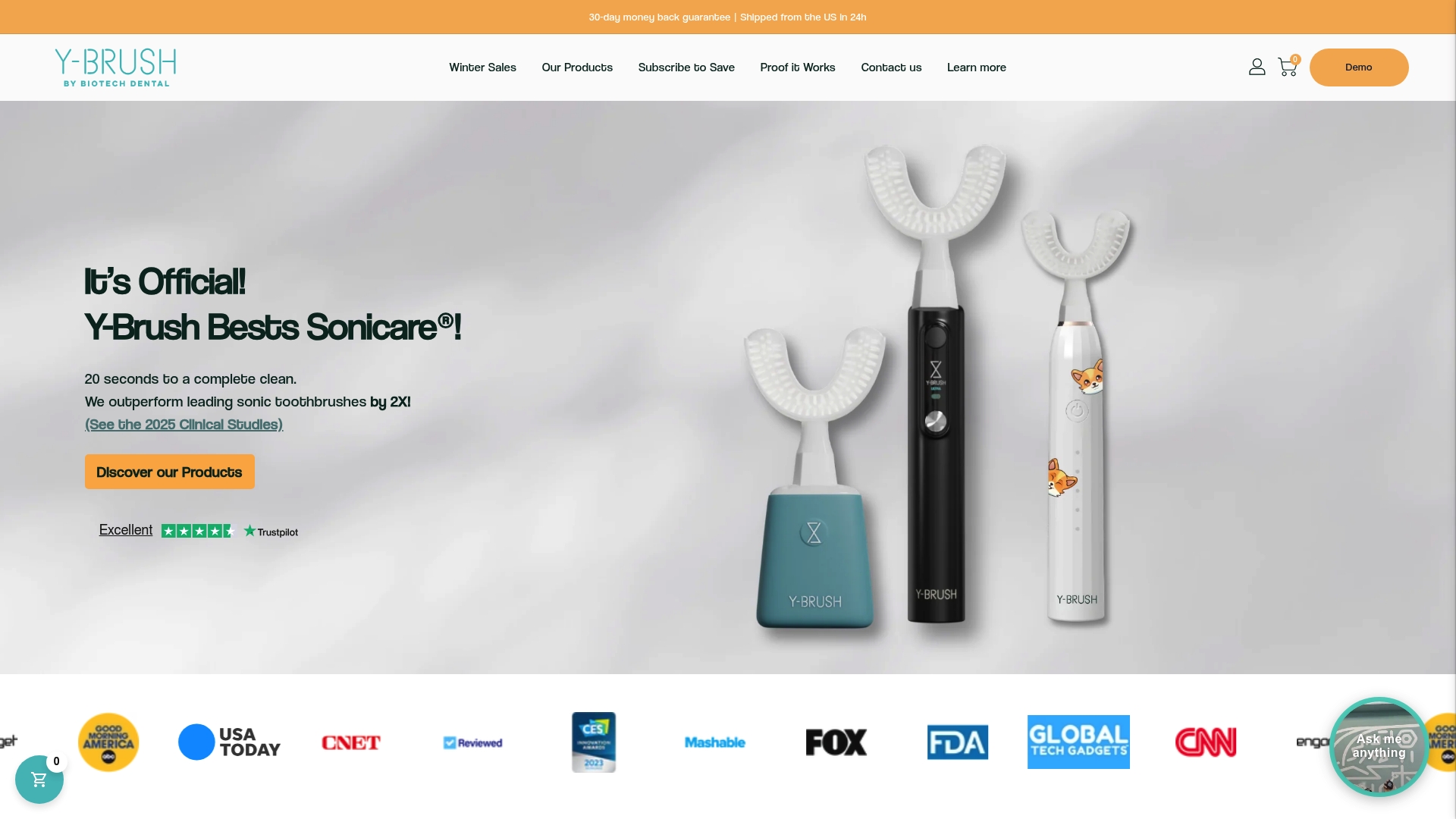
Experience the future of efficient plaque removal with Y-Brush. Designed to deliver superior cleaning in just 20 seconds, Y-Brush complements the insights from this article by addressing the very problem of time and technique. Seamlessly integrating into your daily life, it ensures you gain confidence from a fresh clean and peace of mind knowing your teeth are truly cared for. Don’t wait to upgrade—visit Y-Brush now and unlock a faster, better way to maintain your oral health every day.
Frequently Asked Questions
What are the main types of toothbrushes for efficient plaque removal?
There are six main types of toothbrushes: manual, electric, travel, eco-friendly, smart, and innovative multi-surface toothbrushes. Each type offers unique features to enhance plaque removal effectiveness based on individual needs.
How can I choose the right manual toothbrush for plaque removal?
Look for a manual toothbrush with soft, rounded bristles, an angled head for better access, and a comfortable grip. Prioritize brushes that encourage proper technique to maximize plaque removal while brushing.
What advantages do electric toothbrushes have over manual ones?
Electric toothbrushes provide consistent power and pressure with rapid movements, leading to superior plaque removal, especially in hard-to-reach areas. They often include features like timers and pressure sensors to improve your brushing routine.
How do travel toothbrushes support plaque removal while on the go?
Travel toothbrushes are compact and designed for portability without sacrificing cleaning power. Choose a model with extended battery life to maintain effective plaque removal during longer trips.
What should I consider when selecting an eco-friendly toothbrush?
Consider toothbrushes with biodegradable handles, replaceable heads, and minimal plastic packaging. These options significantly reduce environmental impact while maintaining cleaning effectiveness comparable to traditional models.
How do smart toothbrushes enhance my brushing routine for better plaque removal?
Smart toothbrushes use AI technology to provide personalized feedback on your brushing technique, pressure, and coverage. This guidance helps you target missed areas and optimize brushing, leading to better plaque control over time.


