


Busy mornings often leave little time to think about the environmental footprint of your toothbrush. For health-conscious Americans striving for efficient oral care, most products seem simple until you look closer. The toothbrush lifecycle involves raw material extraction, manufacturing, use, and disposal—each stage directly impacts both your hygiene and the planet. This guide explains how design choices and material upgrades can help you achieve fast, effective plaque removal while minimizing waste.
Table of Contents
- Defining Toothbrush Lifecycle And Its Misconceptions
- Types Of Toothbrushes And Material Differences
- Stages: Manufacturing, Usage, And Replacement
- Environmental Impact Of Toothbrush Disposal
- Alternatives And Solutions For Sustainable Hygiene
Key Takeaways
| Point | Details |
|---|---|
| Understand Toothbrush Lifecycle | The toothbrush lifecycle includes raw material extraction, manufacturing, usage, and disposal, each contributing to its environmental impact. |
| Choose Sustainable Designs | Opt for replaceable-head systems and silicone bristles to significantly reduce waste compared to traditional toothbrushes. |
| Be Aware of Environmental Impact | Recognize that toothbrushes contribute to long-lasting waste; choosing items with better biodegradability can lessen this footprint. |
| Evaluate Before You Buy | Consider manufacturers’ take-back programs for recycling old brushes and aim to extend the life of your current toothbrush before replacing it. |
Defining Toothbrush Lifecycle and Its Misconceptions
When you toss a toothbrush into the trash, you probably don’t think about where it came from or where it goes. Most people view toothbrushes as simple hygiene tools with a straightforward journey: buy, use, discard. Reality tells a much different story.
A toothbrush’s lifecycle encompasses four distinct stages that collectively shape its environmental and hygiene impact:
- Raw material extraction (harvesting plastics, nylon, and metals)
- Manufacturing and packaging (production processes and transport)
- Active use phase (typically 3-4 months of daily brushing)
- Disposal and end-of-life (landfill, incineration, or potential recycling)
Understanding this complete journey is critical because most people focus only on the “use” phase—whether they’re brushing correctly—while overlooking the upstream and downstream consequences.
Common Misconceptions About Toothbrush Waste
Here’s where misconceptions derail informed decisions. Many assume that toothbrush environmental impact comes exclusively from plastic waste. In reality, lifecycle assessment studies reveal that impact stems from complex material combinations, packaging materials, and transportation emissions—not plastic alone.
Another widespread myth: that manufacturing contributes minimally to overall impact. The truth is that production energy demands, raw material processing, and global supply chains create substantial carbon footprints before you ever use the brush.
People also believe that keeping one toothbrush longer reduces waste. While individual durability matters, the real problem is fundamental design. Standard toothbrushes replace entire units every few months, when only the bristles actually wear out.
Non-biodegradable materials like nylon and polypropylene in toothbrushes pose genuine environmental threats that extend far beyond the landfill.
The Material Problem Behind Lifecycle Impact
Design choices fundamentally shape oral care efficiency, and they also determine environmental consequences. Most traditional toothbrushes combine nylon bristles with polypropylene or thermoplastic handles—materials that persist in ecosystems for decades.
These non-biodegradable materials create two distinct problems:
- Long decomposition timelines (100+ years in landfills)
- Microplastic shedding during use and breakdown phases
Each replacement toothbrush adds to accumulated waste because the entire unit—not just worn bristles—enters disposal streams. For someone brushing twice daily for 3-4 months, that’s roughly 3-4 complete toothbrushes annually per person.
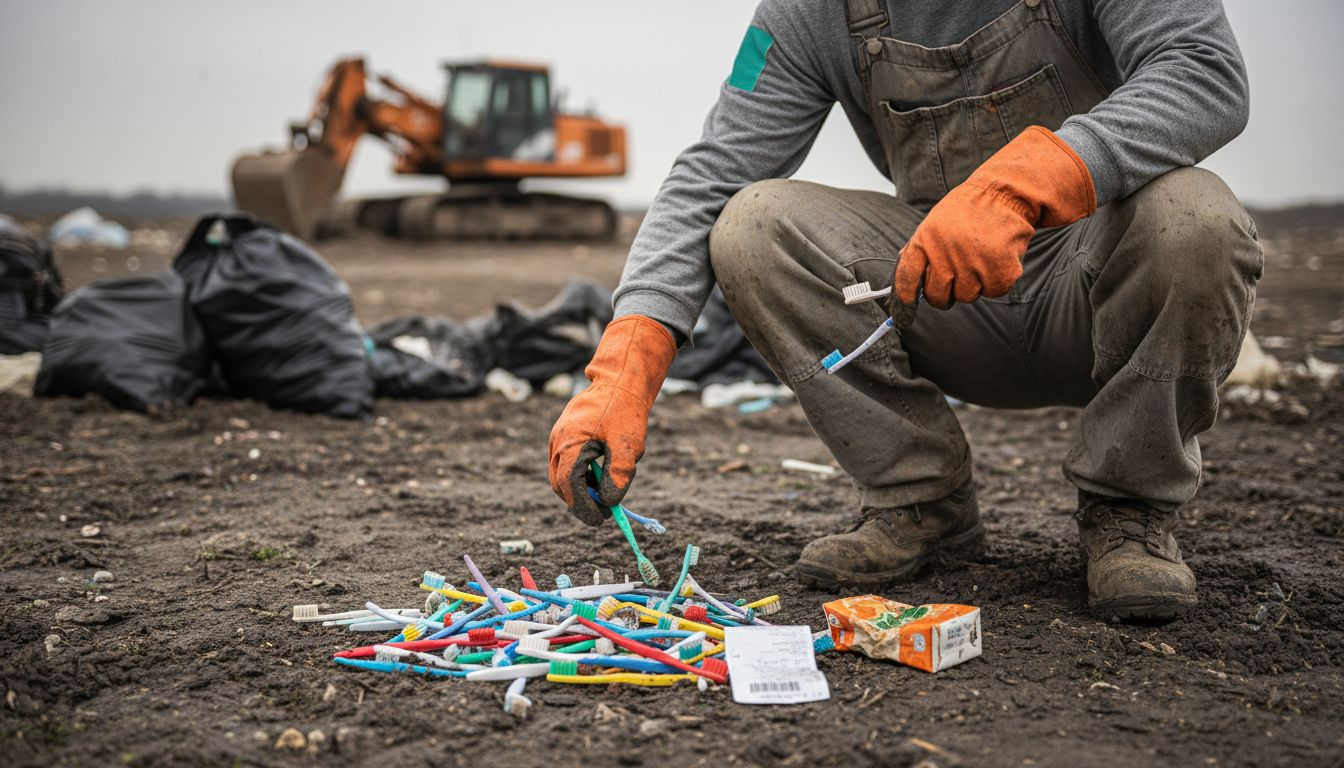
Multiply that across American households, and the scale becomes staggering. Design improvements like lighter materials and replaceable-head systems could dramatically reduce this footprint without compromising hygiene outcomes.
Pro tip: When evaluating toothbrush options, consider the entire lifecycle impact rather than just purchase price or immediate bristle quality—materials and replacement frequency matter as much as cleaning performance for your overall health and environmental footprint.
Types of Toothbrushes and Material Differences
Not all toothbrushes are created equal. The type you choose affects how well you clean your teeth, whether your gums stay healthy, and how much waste you generate. Understanding the material differences between options helps you make a choice that aligns with both your oral health goals and environmental concerns.
Manual vs. Electric Toothbrushes
Traditional manual toothbrushes dominate most bathrooms, but electric alternatives have gained traction. The core difference lies in bristle movement and user control. Manual brushes require you to execute the proper brushing technique consistently—a challenge since most people rush through their routine in under a minute.
Electric toothbrushes automate the bristle motion, delivering consistent stroke patterns regardless of user technique. This consistency matters significantly for plaque removal, especially when you’re brushing quickly during a busy morning.
The material composition of bristles and handles affects both cleaning performance and your environmental footprint equally.
Bristle Material Matters More Than You Think
Nylon and silicone bristles represent the primary material choices, and they perform differently in your mouth. Nylon bristles have dominated for decades because they’re cost-effective and proven for plaque removal. However, nylon creates microscopic sharp edges that can irritate sensitive gums over time.
Silicone bristles, by contrast, offer distinct advantages:
- Gentler on gingival tissue and soft tissues
- Reduced risk of gum recession with prolonged use
- Better for people with sensitive teeth or gum disease
- More sustainable material profile
Silicone options remain underutilized despite benefits including effective plaque removal comparable to nylon while reducing gingival trauma. The main barrier is cost—silicone production costs more, which translates to higher retail prices.
For someone with healthy gums who doesn’t mind standard bristles, nylon works fine. But if you experience sensitivity, recession, or prefer a gentler option, silicone justifies the investment.
Handle Material and Durability
Handles typically use polypropylene or thermoplastic elastomer (TPE) materials. Polypropylene is rigid and lightweight but brittle—it cracks easily with pressure. TPE handles are more flexible and durable, resisting breakage better over months of use.
The handle material directly impacts how long your toothbrush lasts physically. A durable handle that survives three to four months of daily use without cracking keeps the entire unit functional longer.
Environmental Impact by Material
Bristle and handle materials determine disposal timelines and ecosystem impact. Nylon and polypropylene persist in landfills for over a century, slowly breaking into microplastics that contaminate soil and water.
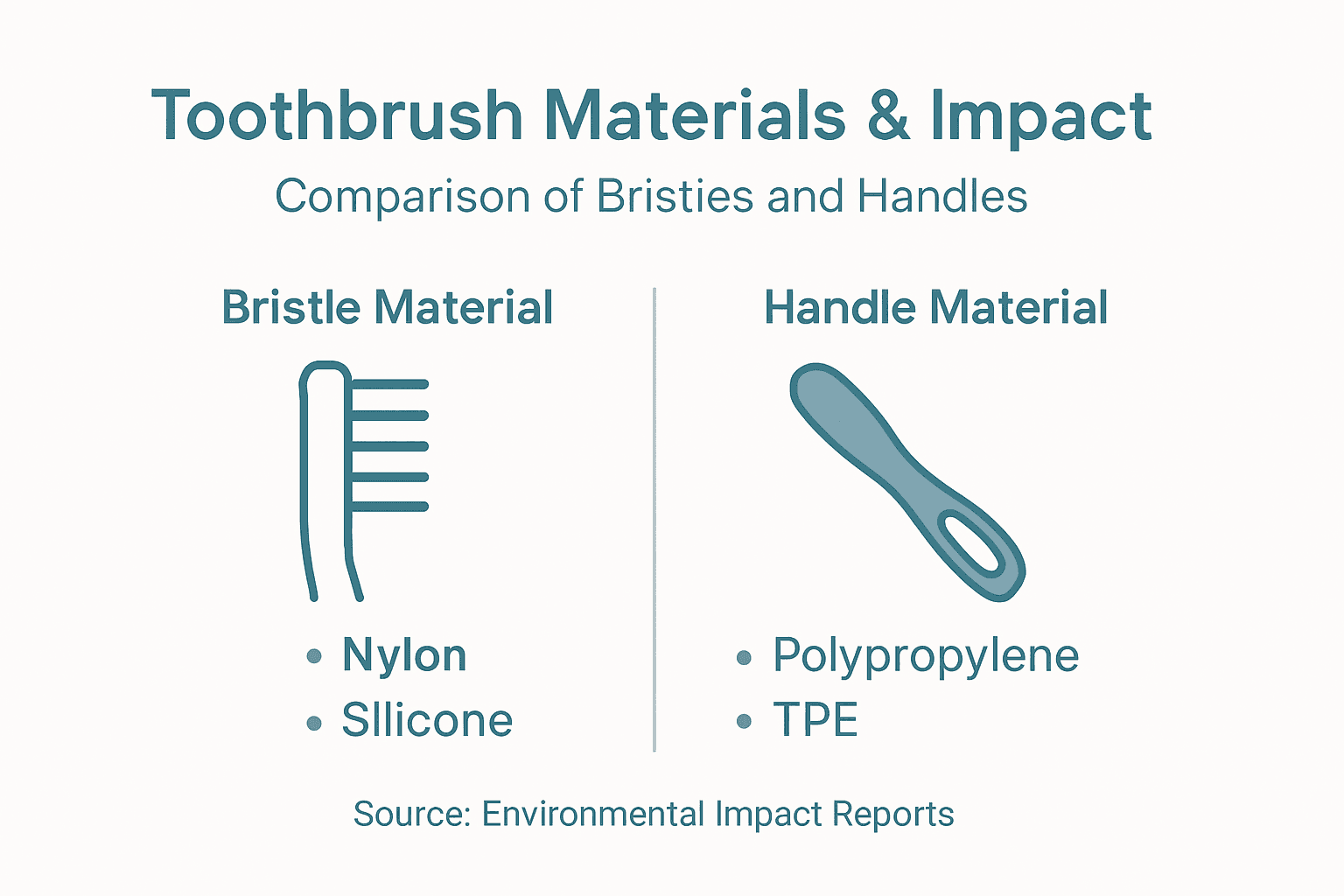
Silicone, while still not ideal, biodegrades faster and creates fewer microplastic particles during breakdown. This difference compounds when multiplied across millions of toothbrushes replaced annually in American households.
Pro tip: Choose silicone bristles if your budget allows and you have sensitive gums, but focus equally on selecting a toothbrush design that lets you finish your entire cleaning routine—whether that’s three minutes or twenty seconds—because consistency with brushing duration matters more for your health than bristle material alone.
Here’s a quick comparison of common toothbrush types by materials, hygiene performance, and environmental impact:
| Toothbrush Type | Main Materials | Cleaning Effectiveness | Environmental Impact |
|---|---|---|---|
| Manual Plastic | Nylon, polypropylene | Good if used properly | High landfill and microplastics |
| Electric | Nylon, plastics, electronics | High, especially timed use | Highest due to batteries/e-waste |
| Bamboo | Bamboo, nylon bristles | Comparable to plastic | Lower if bristles removed |
| Replaceable-Head | Nylon/silicone, durable handle | High, bristles easily replaced | Much lower, less total waste |
| Silicone Bristle | Silicone, plastics | Gentle, good for sensitivity | Lower microplastics, moderate overall |
Stages: Manufacturing, Usage, and Replacement
Every toothbrush follows a predictable journey from factory to trash bin. Understanding each stage reveals where waste accumulates and where better design choices could reduce your environmental impact without sacrificing oral health. The lifecycle consists of three critical phases that shape both performance and sustainability.
The Manufacturing Stage: Where Impact Begins
Toothbrush production starts long before the product reaches store shelves. Raw materials—primarily synthetic polymers like nylon and polypropylene—are extracted, processed, and molded into bristles and handles. This stage consumes significant energy and generates carbon emissions through manufacturing equipment, heating processes, and transportation of materials across global supply chains.
Synthetic materials molded into brushes represent the standard approach, but this method creates inherent waste problems. The entire brush unit—bristles, handle, packaging—enters production as one integrated product, meaning replacement requires manufacturing a complete new unit.
Most manufacturers use injection molding, which heats plastic pellets and forces them into molds. This process is efficient for volume production but creates substantial startup waste and requires continuous energy input. Packaging adds another layer—cardboard boxes, plastic wrap, and printed labels increase both material consumption and shipping weight.
Manufacturing efficiency improvements matter less than fundamental design changes that reduce how many total units need production each year.
The Usage Stage: Three to Four Months of Daily Brushing
Once you start brushing, the toothbrush enters its functional phase. The typical usage window spans three to four months of twice-daily brushing before bristles fray, harden, or lose effectiveness. During this period, you’re relying on the toothbrush to remove plaque, prevent cavities, and maintain gum health.
Here’s the reality most people miss: the entire brush degrades during this phase, not just the bristles. Handles get microscopic cracks, bristles split, and the grip coating wears away. Yet only the bristles actually need replacement for the tool to function properly.
Usage habits also vary significantly. Someone rushing through a 30-second wash uses their brush differently than someone committed to a full two-minute routine. Longer contact time spreads wear across more bristles, potentially extending usable life slightly—but replacement still happens on roughly the same timeline.
The Replacement Problem: Why Current Design Wastes
When bristles wear out, most people discard the entire toothbrush. This triggers the need to manufacture another complete unit, repeating the energy-intensive production cycle. Over a lifetime, a single person generates roughly 300 discarded toothbrushes.
Consider the waste:
- 3-4 toothbrushes per year per person
- 330+ million toothbrushes discarded annually in America
- Each complete brush entering landfills when only bristles degraded
Replaceable head designs reduce waste significantly by keeping durable handles in circulation while swapping only worn bristle components. This approach cuts manufacturing demands, packaging waste, and landfill volume dramatically.
Yet replaceable systems remain uncommon because manufacturers profit from selling complete units repeatedly. Design innovation requires choosing sustainability over short-term revenue—a shift that happens slowly across industries.
Pro tip: If your current toothbrush design allows completing your entire cleaning routine—whether that’s 20 seconds or 3 minutes—stick with it through its full three-month lifespan rather than replacing early, since manufacturing new units creates far more environmental impact than extending existing ones slightly.
Below is a summary of toothbrush lifecycle stages and key sustainability opportunities:
| Lifecycle Stage | Main Activities | Hidden Impact | Sustainability Opportunity |
|---|---|---|---|
| Material Extraction | Harvesting plastics & nylon | Transport emissions, pollution | Use recycled/renewable sources |
| Manufacturing | Molding, assembly, packaging | High energy use, excess waste | Design for modularity, efficiency |
| Usage | Brushing twice daily | Wear on handle, grip coating | Increase handle durability |
| Disposal | Landfill, incineration | Microplastic release, slow decay | Promote replaceable heads, recycling |
Environmental Impact of Toothbrush Disposal
When your toothbrush goes into the trash, it doesn’t disappear. It begins a journey that lasts centuries, releasing microplastics into soil and water while occupying landfill space. Understanding the true environmental cost of disposal helps you make choices that reduce your personal impact.
The Persistence Problem: Plastics That Never Leave
Toothbrushes contain non-biodegradable plastics and nylon bristles that persist in landfills and oceans for over 100 years. Unlike food waste that breaks down in months, your discarded brush remains structurally intact for generations, slowly fragmenting into microplastics that infiltrate ecosystems.
These microplastics present a compounding problem. As larger plastic pieces break apart, they become small enough to enter soil organisms, groundwater, and eventually food chains. Fish, birds, and mammals ingest these particles, causing internal damage and bioaccumulation up the food chain.
The scale matters enormously. America discards approximately 330 million toothbrushes annually—that’s roughly one per person per year. Multiply that across the entire developed world, and disposal sites accumulate billions of persistent plastic objects.
Landfill vs. Ocean: Where Disposal Actually Goes
Most toothbrushes end up in landfills, but some reach oceans through waterway contamination and waste management failures. Disposal poses significant environmental issues because non-biodegradable materials persist indefinitely in both environments.
In landfills, toothbrushes occupy physical space while generating minimal biodegradation. Anaerobic conditions slow breakdown processes, meaning your brush could remain largely intact for your entire lifetime and your children’s lifetimes. In oceans, plastic fragments become marine litter, harming creatures that mistake them for food.
Neither destination is acceptable. Both represent permanent accumulation of waste materials that serve no purpose after disposal.
Carbon Footprint of Disposal Methods
Disposal itself generates emissions. Waste collection vehicles burn fuel transporting toothbrushes to processing facilities. Landfill operations require equipment, monitoring, and infrastructure. Even incinerators—while reducing landfill volume—emit greenhouse gases during combustion.
Electric toothbrushes create higher environmental footprints than manual alternatives due to battery production and electronic components. However, the disposal stage affects all brush types similarly since the materials themselves resist breakdown.
Sustainable alternatives like replaceable-head designs provide better outcomes by reducing the total number of units requiring disposal each year.
Comparing Disposal Impact Across Brush Types
Not all toothbrushes impact the environment equally during disposal:
- Plastic toothbrushes: 100+ years decomposition, extensive microplastic shedding
- Bamboo toothbrushes: Faster biodegradation (3-6 months), but still require nylon bristle removal
- Replaceable-head systems: Dramatically reduced waste since only bristle components need disposal
- Electric toothbrushes: Complex electronics complicate disposal, require specialized e-waste processing
Replaceable-head designs emerge as the clear winner for reducing disposal impact. By keeping durable handles in circulation while replacing only bristles, you cut the total units requiring disposal by 75-80% over five years.
Pro tip: Before purchasing a new toothbrush, research its end-of-life options—some manufacturers accept returns for recycling or refurbishment, which diverts your old brush from landfills while supporting circular economy practices.
Alternatives and Solutions for Sustainable Hygiene
The toothbrush industry is shifting. Instead of accepting that disposable brushes are inevitable, manufacturers and consumers are embracing alternatives that reduce waste without sacrificing cleaning power. These solutions address the core problem: designing for sustainability from the start.
Replaceable-Head Design: The Game-Changer
Replacing only worn bristles instead of entire brushes represents the most effective waste-reduction strategy. A replaceable-head system keeps durable handles in circulation indefinitely while swapping inexpensive bristle components every three to four months.
This approach cuts manufacturing demands dramatically. Over five years, one replaceable-head brush replaces approximately 15 single-use brushes. The math is compelling: fewer factories running, less raw material extracted, reduced packaging waste, and dramatically fewer units entering landfills.
Yet adoption remains low because manufacturers profit more from selling complete units repeatedly. Market shift requires consumer demand, making awareness critical to widespread adoption.
Material Innovations: Beyond Plastic
Sustainable alternatives focus on recyclable and lightweight materials like silicone bristles instead of nylon, modular designs with replaceable heads, and bamboo or bioplastic handles. These innovations reduce both plastic waste and carbon emissions significantly.
Silicone bristles emerge as particularly promising:
- Lower environmental burden than conventional nylon
- Reduced gingival trauma during brushing
- Comparable plaque removal effectiveness
- Faster biodegradation if eventually discarded
Silicone represents an effective and environmentally friendly alternative that combines oral health benefits with sustainability goals. Despite lower market adoption, silicone toothbrushes signal progress toward accessible sustainable oral healthcare globally.
Bamboo handles provide another sustainable option, though they still require nylon bristle removal before composting. Bioplastic materials derived from renewable sources replace petroleum-based polymers while maintaining durability.
The most sustainable toothbrush combines replaceable-head design with silicone bristles and a durable recycled-material handle.
Your Personal Action Steps
Choosing sustainable oral care doesn’t require sacrifice:
- Prioritize replaceable-head systems over single-use brushes
- Select silicone bristles if budget allows; nylon works fine if replaceable-head design is available
- Verify manufacturer take-back programs before purchasing
- Avoid electric toothbrushes unless you specifically need them for mobility or technique issues
- Use your current brush fully before replacing it
The Timeline for Transition
Industry-wide adoption of sustainable designs takes time. Individual choices accelerate this transition by creating market demand that manufacturers respond to. Your selection influences what companies produce.
Pro tip: Start with whichever sustainable option fits your budget and lifestyle—replaceable-head system, silicone bristles, or bamboo handle—because imperfect sustainable progress today beats waiting for the perfect solution tomorrow while discarding standard toothbrushes.
Experience Smarter Oral Care That Fits Your Life
The challenge with traditional toothbrushes is clear from the lifecycle analysis: frequent full-unit replacements create unnecessary waste and demand heavy manufacturing resources. Combine this with the reality that most people brush less than one minute instead of the recommended two minutes and you get a widespread gap in both hygiene and sustainability. If you want a smarter way to clean your teeth that respects your time and the planet, it is time to rethink your brushing routine.
Discover how Your pocket-sized partner for pearly whites! – Y-Brush USA offers a revolutionary solution that meets these challenges head-on. Designed to deliver a superior clean in just 20 seconds, Y-Brush helps you stick to a full effective brushing session without compromising daily habits or generating excess waste.
Take control of your oral health and reduce your environmental footprint now. Visit All Y-Brush Toothbrushes – Y-Brush USA to explore innovative designs that blend efficiency, durability, and sustainability. Embrace a fresh start for your smile at https://y-brush.co today and be part of the new era in oral care.
Frequently Asked Questions
What are the stages of a toothbrush’s lifecycle?
A toothbrush’s lifecycle consists of four stages: raw material extraction, manufacturing and packaging, active use phase, and disposal and end-of-life. Each stage has environmental and hygiene impacts that should be understood for making informed choices.
How does the material composition of toothbrushes affect their environmental impact?
The materials used in toothbrushes, such as nylon for bristles and polypropylene for handles, are non-biodegradable and can persist in landfills for over 100 years, leading to microplastic pollution. Alternatives like silicone and bamboo can reduce this impact.
Why is it important to replace the whole toothbrush instead of just the bristles?
Most conventional toothbrushes are designed to be replaced entirely every 3-4 months because the entire unit degrades over time, not just the bristles. This practice contributes to greater waste in landfills compared to systems that allow for bristle replacement.
What are the benefits of using a replaceable-head toothbrush?
Replaceable-head toothbrushes allow users to keep durable handles in use while swapping out bristle heads every few months. This significantly reduces waste, as only the worn-out bristle head needs to be replaced, leading to a lower overall environmental impact.


