


Long workdays, packed schedules, and city life often lead to rushed oral hygiene routines for busy professionals across American urban centers. Maintaining healthy teeth without sacrificing time is a challenge that demands efficient methods and reliable products. This guide offers practical steps backed by expert recommendations from the American Dental Association, such as using a soft-bristled brush and a pea-sized amount of fluoride toothpaste, so you can keep your smile strong while fitting into your fast-paced lifestyle.
Table of Contents
- Step 1: Prepare Your Toothbrush Efficiently
- Step 2: Apply the Right Amount of Toothpaste
- Step 3: Position the Brush for Maximum Coverage
- Step 4: Clean All Surfaces Thoroughly
- Step 5: Rinse and Inspect for Complete Freshness
Quick Summary
| Key Point | Explanation |
|---|---|
| 1. Choose the right toothbrush | Select a soft-bristled toothbrush that fits your mouth for effective cleaning. |
| 2. Apply the correct amount of toothpaste | Use a pea-sized amount for adults and a rice-grain size for children to avoid waste. |
| 3. Position the brush at an angle | Hold your toothbrush at a 45-degree angle to target plaque effectively. |
| 4. Clean all tooth surfaces | Systematically brush outer, inner, and chewing surfaces to prevent missing plaque. |
| 5. Rinse and inspect thoroughly | Spit out toothpaste and avoid rinsing immediately to maximize fluoride benefits. |
Step 1: Prepare Your Toothbrush Efficiently
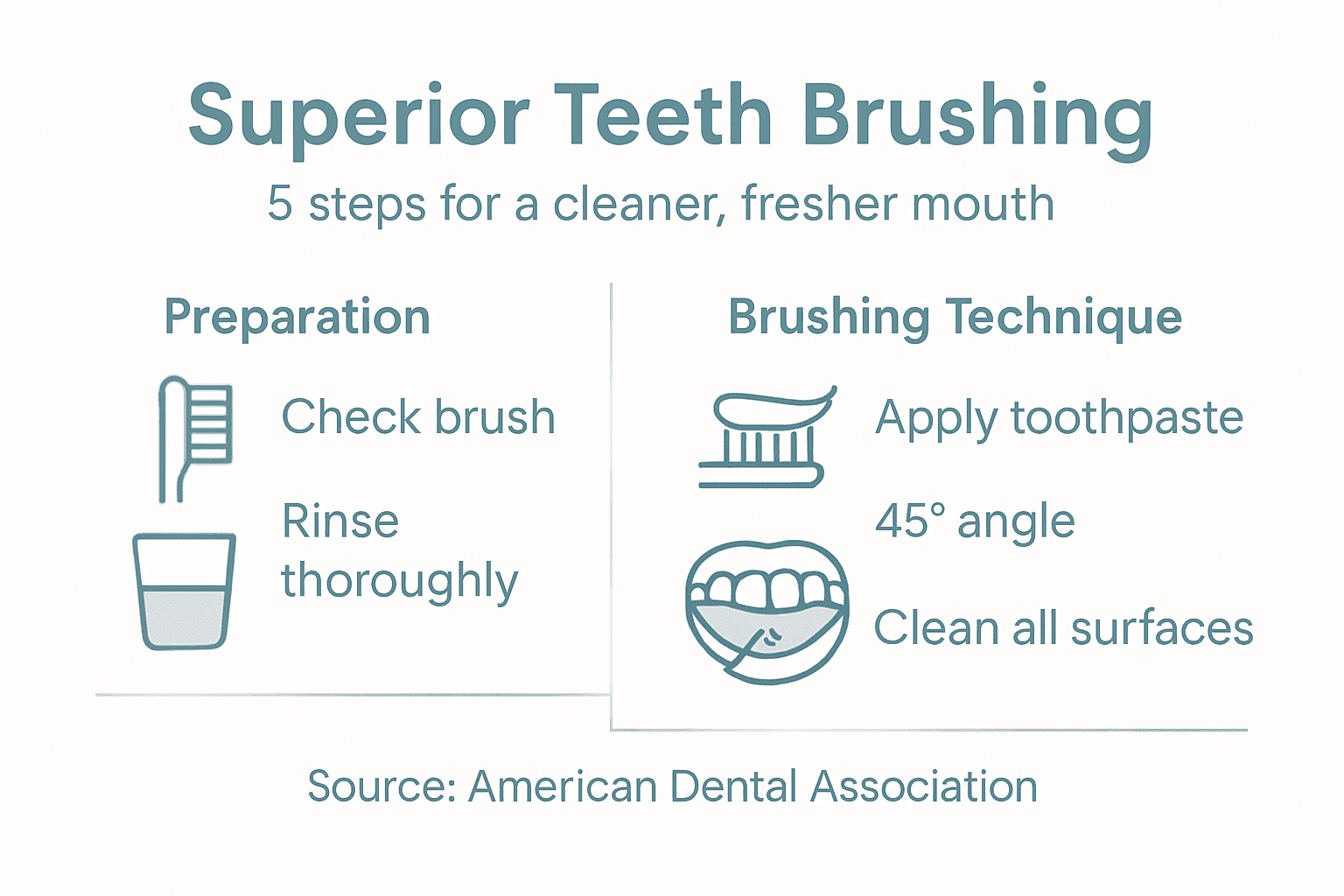
Preparing your toothbrush correctly sets the foundation for a superior oral hygiene routine. A well-prepared toothbrush ensures effective cleaning and maintains optimal dental health.
Start by selecting a toothbrush that fits your mouth perfectly. The American Dental Association recommends soft-bristled brushes that can comfortably reach all areas of your teeth and gums. Look for these key characteristics:
- Soft bristles that won’t damage tooth enamel
- Appropriate head size matching your mouth’s dimensions
- Comfortable handle grip for precise control
Before each use, inspect your toothbrush to ensure it’s in excellent condition. Check for signs of wear like frayed or bent bristles, which can reduce cleaning effectiveness. The general guideline is to replace your toothbrush every three to four months.
Prep your toothbrush by rinsing it thoroughly under running water to remove any dust or stored bacteria. If you’re using an electric toothbrush, ensure the battery is charged or the device is plugged in before starting.
This summary shows popular toothbrush types and their unique advantages:
| Toothbrush Type | Major Benefit | Best For |
|---|---|---|
| Manual Soft Bristle | Protective on gums and enamel | Most adults and children |
| Electric | Efficient coverage, built-in timer | People with limited dexterity |
| Compact Head | Reaches small or crowded areas | Individuals with smaller mouths |
A clean, well-maintained toothbrush is your first defense in achieving superior oral hygiene.
Pro tip: Store your toothbrush upright in a clean, dry area to prevent bacterial growth and maintain its effectiveness.
Step 2: Apply the Right Amount of Toothpaste
Applying the correct amount of toothpaste is crucial for effective oral hygiene and dental protection. Your toothpaste quantity can significantly impact your overall cleaning performance and long-term oral health.
Fluoride toothpaste recommendations vary based on age and individual needs. For adults, the standard guideline is to use a pea-sized amount of toothpaste, which provides optimal fluoride coverage without excessive waste. Here are some key considerations for toothpaste application:
- Use approximately 1/4 inch (pea-sized) of toothpaste
- Distribute toothpaste evenly across the toothbrush bristles
- Avoid applying too much, which can lead to unnecessary foam and potential swallowing
For parents with young children, special care is required. Children under 3 years should use a rice-grain-sized amount of toothpaste, while children 3-6 years old can use a pea-sized quantity. Always supervise children during brushing to ensure proper technique and prevent toothpaste swallowing.

Here’s a quick reference for recommended toothpaste amounts by age group:
| Age Group | Recommended Amount | Purpose |
|---|---|---|
| Under 3 years | Rice-grain-sized | Minimize swallowing risk |
| 3–6 years | Pea-sized | Ensure fluoride coverage safely |
| Adults | Pea-sized | Optimal cleaning and fluoride |
| Seniors | Pea-sized | Gentle, effective protection |
Precise toothpaste application maximizes dental protection while minimizing potential health risks.
Pro tip: Consider purchasing a toothpaste dispenser to help you consistently apply the perfect amount of toothpaste with minimal mess and waste.
Step 3: Position the Brush for Maximum Coverage
Positioning your toothbrush correctly is the key to achieving a comprehensive and effective cleaning routine. The right angle and technique can make a significant difference in removing plaque and maintaining optimal oral hygiene.
Proper brush positioning techniques are critical for thorough dental cleaning. The American Dental Association recommends holding your toothbrush at a 45-degree angle to the gum line, which helps target the areas where plaque typically accumulates. Here are the essential positioning strategies:
- Angle the brush at 45 degrees toward the gum line
- Use gentle, short back-and-forth strokes
- Cover outer, inner, and chewing surfaces of teeth
- For front teeth, use vertical up-and-down strokes
When brushing, divide your mouth into four quadrants to ensure comprehensive coverage. Spend about 30 seconds in each quadrant, using gentle circular motions that clean without damaging your gums. Soft, controlled movements are more effective than aggressive scrubbing.
Precision in brush positioning is your gateway to superior oral health and plaque prevention.
Pro tip: Practice your brushing technique in front of a mirror to ensure you’re maintaining the correct 45-degree angle and reaching all tooth surfaces effectively.
Step 4: Clean All Surfaces Thoroughly
Achieving a comprehensive clean requires methodically addressing every tooth surface to remove plaque and prevent dental issues. Your brushing technique determines the effectiveness of your oral hygiene routine.
Comprehensive oral hygiene techniques involve systematic cleaning of multiple tooth surfaces. Here’s a strategic approach to ensure thorough cleaning:
- Clean outer tooth surfaces using horizontal strokes
- Brush inner tooth surfaces with gentle vertical motions
- Focus on chewing surfaces with back-and-forth strokes
- Pay special attention to the gum line where plaque accumulates
Divide your mouth into four quadrants and spend approximately 30 seconds on each section. Systematic cleaning prevents missed spots and ensures you’re giving equal attention to every tooth. While brushing, maintain gentle pressure to avoid damaging tooth enamel or irritating your gums.
Comprehensive tooth cleaning is your first line of defense against dental decay and oral health complications.
Pro tip: Consider using an electric toothbrush with a timer to ensure you’re dedicating enough time to each mouth quadrant and maintaining consistent cleaning pressure.
Step 5: Rinse and Inspect for Complete Freshness
The final stage of your tooth brushing routine is critical for ensuring thorough cleaning and maintaining optimal oral hygiene. Proper rinsing and inspection help confirm you’ve effectively removed plaque and achieved a comprehensive clean.
Rinsing techniques recommended by dental experts are more nuanced than most people realize. After brushing, follow these strategic steps:
- Spit out excess toothpaste completely
- Avoid immediate water rinsing to maximize fluoride protection
- Wait approximately 20 minutes before drinking or rinsing
- Alternatively, use a small amount of fluoride mouthwash
To inspect your cleaning effectiveness, run your tongue gently across your teeth. Smooth surfaces indicate successful plaque removal. Look for a clean, fresh feeling and check for any remaining rough patches that might require additional brushing. A quick visual inspection in the mirror can also help ensure you’ve cleaned all tooth surfaces thoroughly.
Complete oral hygiene is about precision, not just going through the motions.
Pro tip: Keep a small mirror near your bathroom sink to perform a quick, thorough oral inspection after brushing, ensuring you haven’t missed any spots.
Achieve a Superior Clean in Less Time with Y-Brush
Brushing properly requires the right technique, the correct tools, and time most people do not have. This article highlights common challenges like spending less than the recommended two minutes brushing and missing critical areas despite positioning the brush carefully. If you want to overcome these hurdles and gain the confidence of a truly fresh clean in just seconds, it is time to explore a faster, more effective solution designed for real life.
Experience the breakthrough of the Sonic Toothbrushes for Beginners – Y-Brush USA collection.
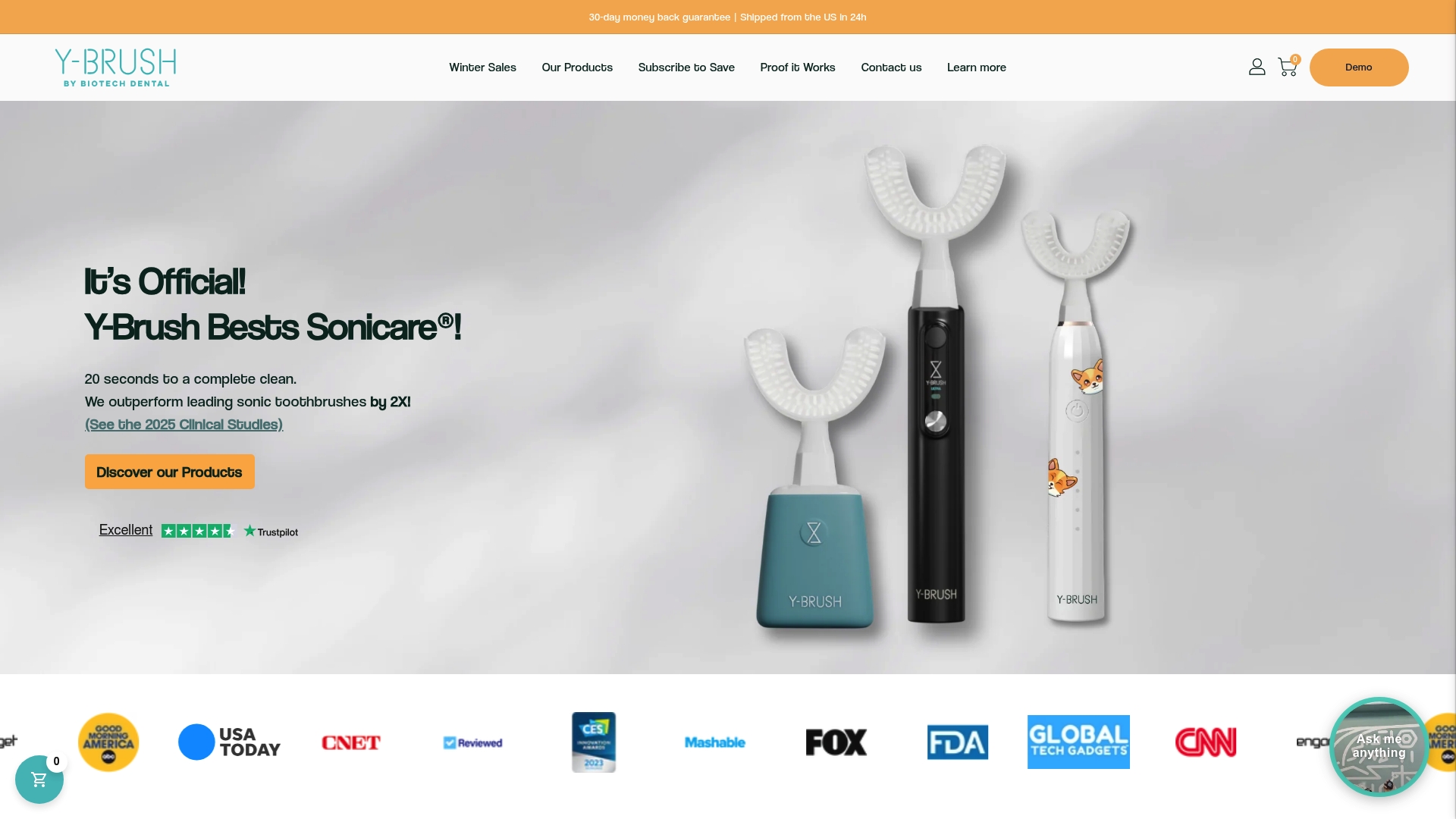
Y-Brush fits perfectly into your busy lifestyle by delivering a superior plaque-free clean in only 20 seconds. No need to worry about exact brush angles or applying the perfect toothpaste amount. You can focus on what matters most while feeling assured of your oral health. Visit our main site at Y-Brush and see why thousands trust this innovative approach to quick, effective brushing. Ready to upgrade your routine? Take the first step on our Testing – Y-Brush USA page and discover how simple oral care can be.
Frequently Asked Questions
How can I select the right toothbrush for effective cleaning?
Choosing the right toothbrush involves selecting one with soft bristles, an appropriate head size for your mouth, and a comfortable handle grip. Ensure to inspect the toothbrush regularly and replace it every three to four months for optimal performance.
What is the correct amount of toothpaste to use when brushing?
For adults, using a pea-sized amount of toothpaste ensures sufficient fluoride coverage and effective cleaning. When brushing children’s teeth, a rice-grain-sized amount is recommended for those under three and a pea-sized amount for those aged three to six.
How should I position my toothbrush to maximize cleaning?
Hold your toothbrush at a 45-degree angle to the gum line to target plaque effectively. Use gentle, short strokes while covering all surfaces of your teeth, and spend about 30 seconds on each quadrant of your mouth for thorough cleaning.
What technique should I follow to clean all surfaces of my teeth?
When brushing, systematically clean each surface by using horizontal strokes for outer surfaces and vertical motions for inner surfaces. Spend roughly 30 seconds on each quadrant, ensuring gentle pressure to avoid damaging your gums or enamel.
How should I rinse after brushing my teeth?
After brushing, spit out any excess toothpaste without rinsing immediately to maximize fluoride retention. Wait about 20 minutes before consuming food or liquid to ensure the fluoride can provide maximum protection.
What are the signs of effective tooth cleaning?
Effective tooth cleaning results in smooth surfaces when you run your tongue across your teeth and a fresh feeling in your mouth. Inspect your teeth visually in a mirror for any rough patches that may indicate missed spots.
Recommended
- How to brush your teeth properly? – Y-Brush USA
- Why and how to brush your teeth properly ? – Y-Brush USA
- Strategies for Stronger Gums: Perfecting Your Brushing Routine – Y-Brush USA
- How many times a day should I brush my teeth? – Y-Brush USA
- Soluții de igienizare a implanturilor dentare - Dr. Rareș Cardaș


