


TL;DR:
- Electric toothbrushes, especially oscillating-rotating and sonic types, significantly improve plaque removal over manual brushing.
- Product effectiveness depends on features like cleaning mechanism, timers, pressure sensors, and user comfort.
- Habit consistency is key; innovative, time-efficient tools like Y-Brush facilitate daily use and better oral health.
Choosing the right dental product has never been more complicated, or more important. The market is packed with oscillating brushes, sonic devices, U-shaped gadgets, and smart subscription kits, each promising a superior clean. Yet most people still rush through brushing in under a minute, leaving plaque behind and wondering why their dentist isn’t impressed. The good news is that today’s innovations genuinely deliver results, provided you know what to look for. This guide breaks down the top dental product categories, explains what the research actually shows, and helps you find the solution that fits your real life.
Table of Contents
- How to evaluate modern dental products
- Oscillating-rotating electric toothbrushes: Top picks
- Sonic electric toothbrushes: Powerful and gentle
- Innovative and specialty dental products: U-shaped and more
- Choosing the right dental product for your lifestyle
- What dental product reviews don’t tell you
- Discover next-generation oral hygiene with Y-Brush
- Frequently asked questions
Key Takeaways
| Point | Details |
|---|---|
| Choose effective tech | Oscillating or sonic brushes outperform manual models in clinical studies. |
| Prioritize features | Look for features like timers, pressure sensors, and study-backed cleaning power. |
| Match to lifestyle | Select products that simplify your routine and make consistent brushing easy. |
| Don’t overlook basics | Consistent use is more important than chasing every new feature or gadget. |
How to evaluate modern dental products
Not all dental products are created equal, and the sheer number of options makes it easy to buy something flashy that underperforms. A practical evaluation framework focuses on a few core criteria that consistently predict real-world results.
Key criteria to assess:
- Cleaning mechanism: Oscillating-rotating, sonic, or manual brushing each produce different plaque removal outcomes. The mechanism is the single most important factor.
- Brushing speed: Measured in strokes or vibrations per minute, speed directly affects how much plaque a brush can dislodge in a given time.
- Built-in timer: A two-minute timer encourages the full brushing duration dentists recommend. Without one, most users stop far too early.
- Pressure sensor: Brushing too hard damages enamel and gums. A pressure sensor alerts you before harm is done.
- Ease of use: A technically superior brush that feels awkward or complicated will get abandoned. Comfort and intuitive design matter.
- Budget vs. premium features: Higher price tags often include smarter sensors, app connectivity, and premium brush heads, but mid-range models frequently deliver comparable cleaning performance.
Dentist recommendations carry real weight here. Clinically validated products, those tested in randomized controlled trials (RCTs), are far more reliable than products backed only by marketing claims. When comparing options, look for independent ratings from sources like Consumer Reports rather than relying solely on brand websites.
Understanding whether an electric or manual toothbrush suits your needs is a smart first step. The data is clear: electric brushes reduce plaque 20-50% more than manual brushes. That gap is significant enough that most dental professionals now recommend making the switch.
Pro Tip: Before buying, read the brushing tips that match your chosen brush type. Even the best device underperforms with poor technique.
Oscillating-rotating electric toothbrushes: Top picks
Oscillating-rotating brushes use a small, round brush head that spins back and forth in alternating directions. This motion physically wraps around each tooth surface, breaking up plaque at the gumline with precision that flat brush heads simply cannot match.
The Oral-B iO Series and the Oral-B Pro 1000 are two of the most recognized models in this category. Both use oscillating-rotating technology with built-in pressure sensors and two-minute timers. The iO Series adds AI-powered brushing guidance and a magnetic charging system, while the Pro 1000 delivers strong core performance at a more accessible price point.
What sets oscillating-rotating brushes apart:
- Round brush head encircles each tooth individually
- Rotating and pulsating motion dislodges plaque at the gumline
- Pressure sensor prevents aggressive brushing that damages enamel
- Built-in timer promotes full two-minute sessions
- Multiple cleaning modes for sensitive teeth, whitening, or deep clean
Clinical outcomes back up the hype. Consumer Reports rates the Oral-B iO Series 2 highly for plaque removal and ease of use, placing it among the top performers in independent testing.
“Oscillating-rotating brushes consistently rank among the most clinically studied electric toothbrush types, with strong evidence for plaque and gingivitis reduction across multiple independent trials.”
For users curious about how these devices compare to newer formats, exploring automatic toothbrushes in depth reveals useful nuance. Oscillating models tend to outperform in thoroughness, but newer automatic designs are closing the gap for convenience.
The main limitation of oscillating-rotating brushes is that the small round head requires methodical, tooth-by-tooth brushing. Users who rush or skip sections will not see the full benefit. Technique still matters, even with excellent technology.
Sonic electric toothbrushes: Powerful and gentle
Sonic toothbrushes work differently. Instead of rotating, the brush head vibrates side-to-side at very high frequencies, creating fluid dynamics that push toothpaste and saliva into hard-to-reach areas between teeth and along the gumline. The result is a cleaning action that feels less aggressive but covers a wider surface area per stroke.
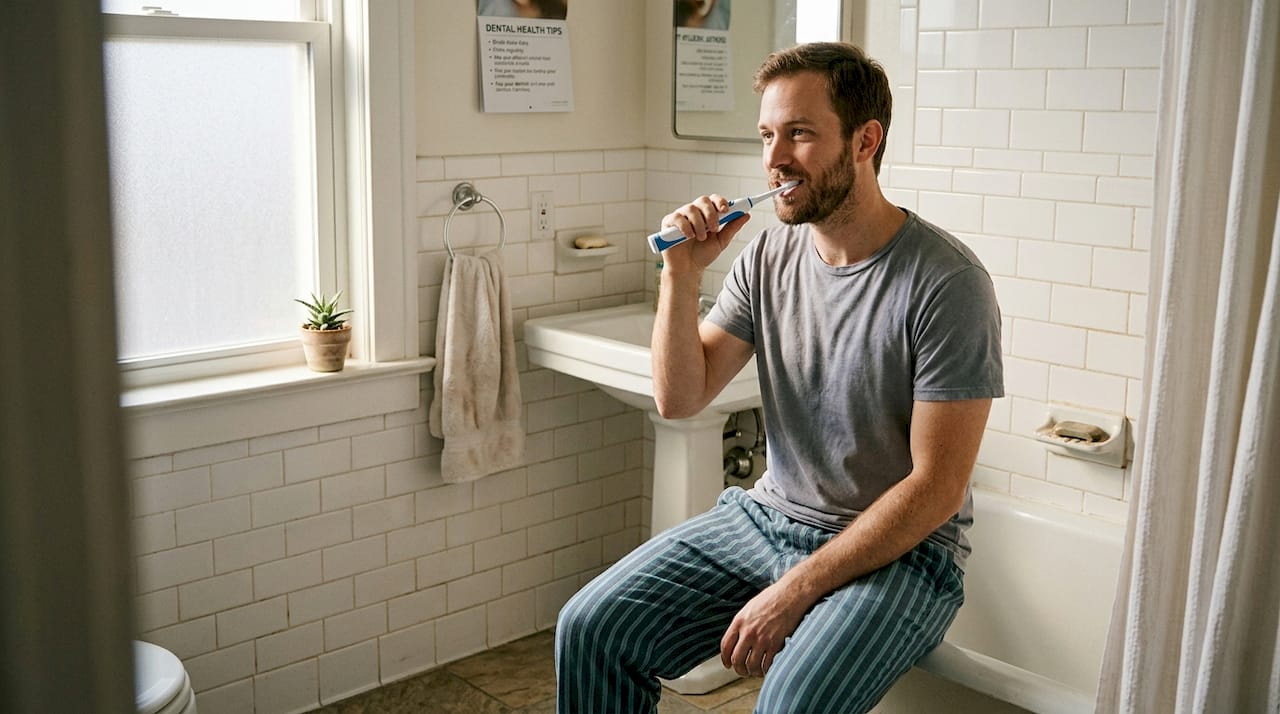
The Philips Sonicare 4100 and the Sonicare 9900 Prestige are leading examples. The 4100 offers a straightforward, reliable experience with a pressure sensor and two-minute timer. The 9900 Prestige adds AI-driven intensity adjustment, multiple brushing modes, and premium brush head options. Both use sonic technology delivering up to 62,000 strokes per minute, with pressure sensors and timers included.
Advantages of sonic toothbrushes:
- High-frequency vibration reaches between teeth without flossing
- Gentler sensation makes them ideal for sensitive gums
- Wide brush head covers more surface area per pass
- Multiple intensity settings accommodate different comfort levels
- Strong clinical track record for reducing gingivitis
For users with gum sensitivity or those who find oscillating brushes too intense, sonic models are often the better fit. The gentler feel encourages longer brushing sessions, which compounds the benefit over time.
Pro Tip: When switching to a sonic brush, start on the lowest intensity setting for the first week. Your gums need time to adjust to the high-frequency vibration before you move to standard or high settings.
Matching brush type to user needs is where expert advice becomes valuable. A manual vs sonic toothbrush comparison shows that sonic brushes outperform manual in nearly every clinical measure, even though the experience feels less forceful.
Innovative and specialty dental products: U-shaped and more
Beyond oscillating and sonic brushes, a newer wave of specialty products is reshaping what oral hygiene can look like for busy households.
Top innovative product types to know:
- U-shaped automatic toothbrushes: These devices fit over the entire arch of teeth simultaneously, vibrating to clean all surfaces at once in as little as 20 seconds.
- Water flossers: Devices like the Waterpik use pressurized water streams to clean between teeth, offering an effective alternative to traditional string floss.
- Smart replacement head subscriptions: Services that automatically ship new brush heads on a schedule, removing the friction of remembering to replace worn heads every three months.
- Tongue scrapers and oral rinse systems: Complementary tools that address bacteria sources manual brushing misses entirely.
| Product type | Best for | Clinical performance | Ease of use |
|---|---|---|---|
| U-shaped brush | Busy adults, kids | Good short-term | Very high |
| Water flosser | Gum health, braces | Strong for gums | Moderate |
| Oscillating brush | Thorough plaque removal | Excellent | Moderate |
| Sonic brush | Sensitive gums | Very good | High |
U-shaped brushes are particularly appealing for families with young children or adults with dexterity challenges. However, electric brushes reduce plaque up to 50% more than manual alternatives, and traditional electrics are still preferred by dentists for thorough cleaning. U-shaped designs are effective for quick maintenance but may not replace a full brushing routine for everyone.
For users focused on maximizing results, understanding plaque removal with electric toothbrushes helps clarify where each product category fits within a complete oral care routine.
Choosing the right dental product for your lifestyle
With a range of options now mapped out, the real question is which product fits your routine. Research helps, but lifestyle alignment is what determines whether a product actually gets used every day.
| Feature | Best match |
|---|---|
| Speed priority | U-shaped brush or sonic with quick mode |
| Sensitive gums | Sonic with pressure sensor |
| Maximum plaque removal | Oscillating-rotating electric |
| Family use (kids included) | Sonic or U-shaped with kid mode |
| Travel-friendly | Compact sonic or manual |
| Budget-conscious | Mid-range oscillating (e.g., Oral-B Pro 1000) |
Key questions to ask before buying: Do you have gum sensitivity? Do you travel frequently? Are you buying for children as well as adults? How much time are you realistically willing to spend brushing each day?
Clinical evidence provides a clear baseline. RCTs and meta-analyses consistently show oscillating-rotating brushes outperform sonic for plaque and gingivitis reduction, but both types are significantly superior to manual brushing. For most users, either electric type is a meaningful upgrade.
If you are weighing the long-term financial case, evaluating a rechargeable electric toothbrush investment against the cost of dental treatments avoided makes the math compelling. Prevention is almost always cheaper than correction.
When expert recommendations or clinical validation are available for a specific product, prioritize those over influencer reviews or star ratings alone. Independent testing and peer-reviewed research are the most reliable guides.
What dental product reviews don’t tell you
Here is the uncomfortable truth that most product roundups skip: the best toothbrush in the world does nothing sitting on your bathroom counter. Consistency beats technology every single time.
Reviews obsess over bristle patterns, motor speed, and app features. What they rarely address is the psychological side of habit formation. People abandon products not because they fail clinically, but because the routine feels like a chore. A brush that takes 20 seconds instead of two minutes removes that friction almost entirely.
The real trade-off is not oscillating vs. sonic. It is innovation that fits your life vs. innovation that demands you adapt to it. Products built around innovations in oral care that reduce time and effort consistently outperform technically superior products that people use inconsistently.
The most effective dental product is the one you reach for every morning and every night without thinking twice. Build the habit first. Then optimize the tool.
Discover next-generation oral hygiene with Y-Brush
If you are ready to experience next-level oral care, the Y-Brush lineup is designed precisely for the realities of busy modern life. The Y-Brush Essential Sonic Toothbrush delivers a clinically effective clean in just 20 seconds, removing the biggest barrier to consistent brushing: time.
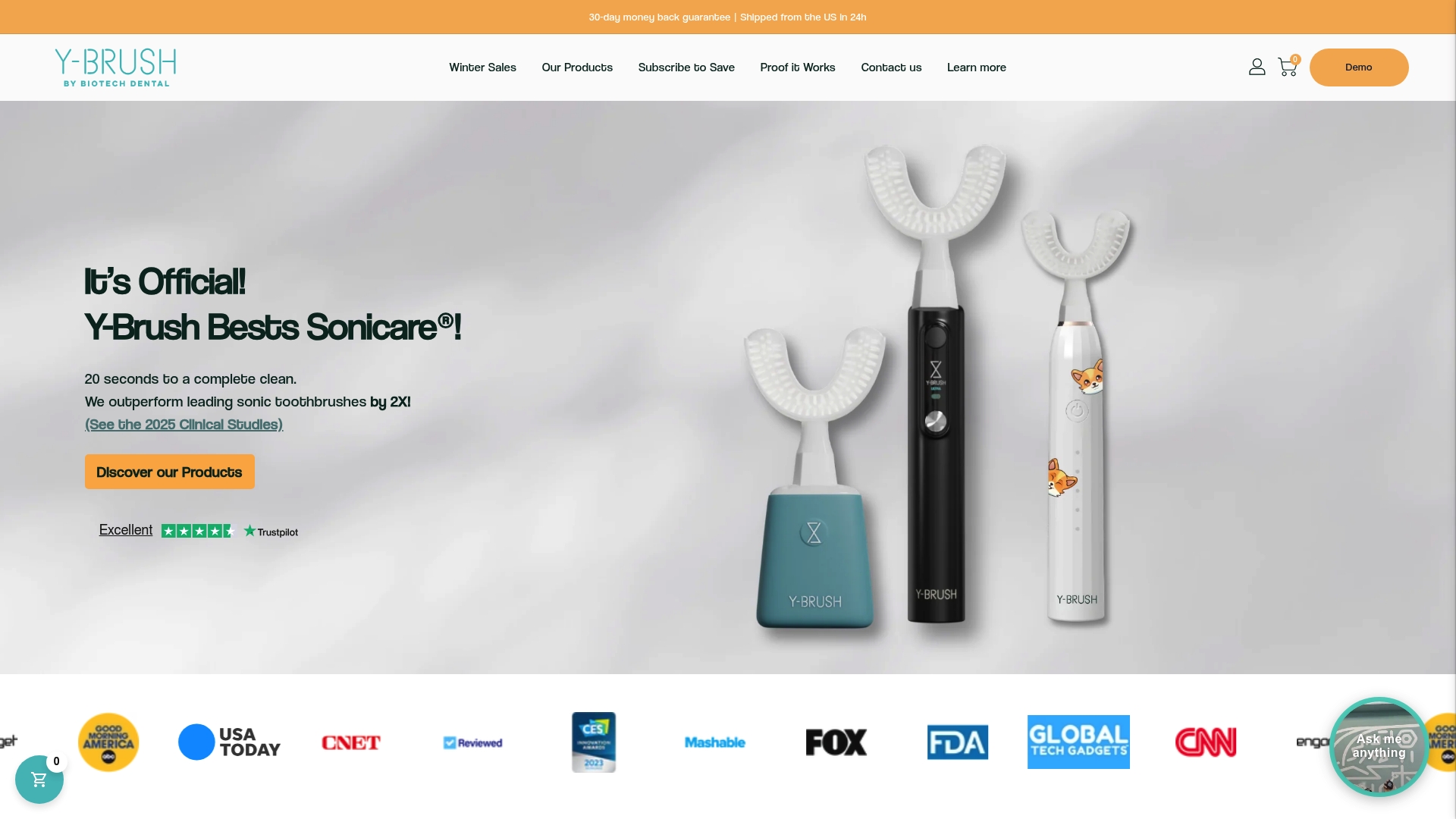
For families, the Y-Brush KidsBrush brings the same speed and effectiveness to children ages 4 to 12, making it easier to build healthy habits early. Explore the full range of new Y-Brush products to find the right fit for every member of your household. When oral hygiene fits your lifestyle, you actually do it.
Frequently asked questions
What are the main differences between oscillating-rotating and sonic toothbrushes?
Oscillating-rotating brushes use a round head that spins back and forth to clean each tooth individually, while sonic toothbrushes vibrate side-to-side at high frequencies to cover wider areas. Studies show oscillating-rotating models often remove more plaque, but sonic brushes tend to feel gentler on sensitive gums.
Are U-shaped automatic toothbrushes as effective as traditional electric models?
U-shaped toothbrushes offer faster, hands-free cleaning that works well for quick maintenance, but traditional electrics are preferred by dentists for thorough plaque removal.
How much better are electric toothbrushes than manual brushes?
Electric toothbrushes reduce plaque by 20-50% more than manual brushes, providing measurably better cleaning and improved gum health over time.
What features should I prioritize when selecting a dental product?
Prioritize cleaning technology, brush head design, a built-in timer, a pressure sensor, and overall comfort to support thorough and consistent daily oral care.


