


Most people brush for less than a minute, falling short of the two-minute recommendation that dentists emphasize for effective plaque removal. This gap creates real risks for dental health, from cavities to gum disease. Busy schedules make thorough brushing feel impossible, yet maintaining oral health doesn’t have to consume your time. This guide reveals how proper brushing works, common mistakes to avoid, and innovative solutions that deliver a complete clean in a fraction of the traditional time.
Table of Contents
- Understanding The Basics: Why Brushing Matters
- The Mechanics Of Brushing And Plaque Removal
- Common Brushing Misconceptions And Mistakes
- Innovations In Brushing Technology To Save Time
- Practical Tips To Integrate Effective Brushing In Busy Lifestyles
- Beyond Brushing: Complementary Habits For Optimal Oral Health
- Summary And Next Steps To Better Oral Hygiene
- Upgrade Your Brushing Routine With Y-Brush
Key takeaways
| Point | Details |
|---|---|
| Effective brushing removes plaque biofilm | Proper technique eliminates up to 70-80% of plaque, preventing cavities and gum disease. |
| Two minutes is essential for plaque removal | Most people brush under one minute, reducing effectiveness and increasing oral health risks. |
| Technique matters more than force | Gentle brushing at a 45-degree angle cleans better than aggressive scrubbing, which damages gums. |
| Innovative devices save time | Y-Brush cleans all teeth simultaneously in 20 seconds with comparable plaque removal effectiveness. |
| Complementary habits enhance results | Interdental cleaning reduces gum disease risk by 20-30% beyond brushing alone. |
Understanding the basics: why brushing matters
Plaque is a sticky bacterial biofilm that constantly forms on teeth. Left undisturbed, this biofilm produces acids that erode enamel and cause cavities. It also triggers inflammation in gums, leading to gingivitis and eventually periodontal disease.
Brushing mechanically disrupts and removes this biofilm. Proper brushing removes 70-80% of plaque when you use correct technique and adequate duration. Regular removal prevents bacteria from organizing into the mature biofilm that damages teeth and gums.
The biological benefits extend beyond cavity prevention:
- Reduced inflammation throughout your mouth
- Lower risk of systemic infections linked to oral bacteria
- Prevention of tooth loss from advanced periodontal disease
- Fresh breath and confidence in social situations
Understanding why brush for 2 minutes reinforces its role as prevention’s cornerstone. Without effective plaque control, dental problems become inevitable rather than preventable.
The mechanics of brushing and plaque removal
Brushing works through physical disruption. Your toothbrush bristles dislodge plaque by breaking apart the bacterial matrix that holds it to tooth surfaces. This mechanical action is more important than toothpaste chemistry.
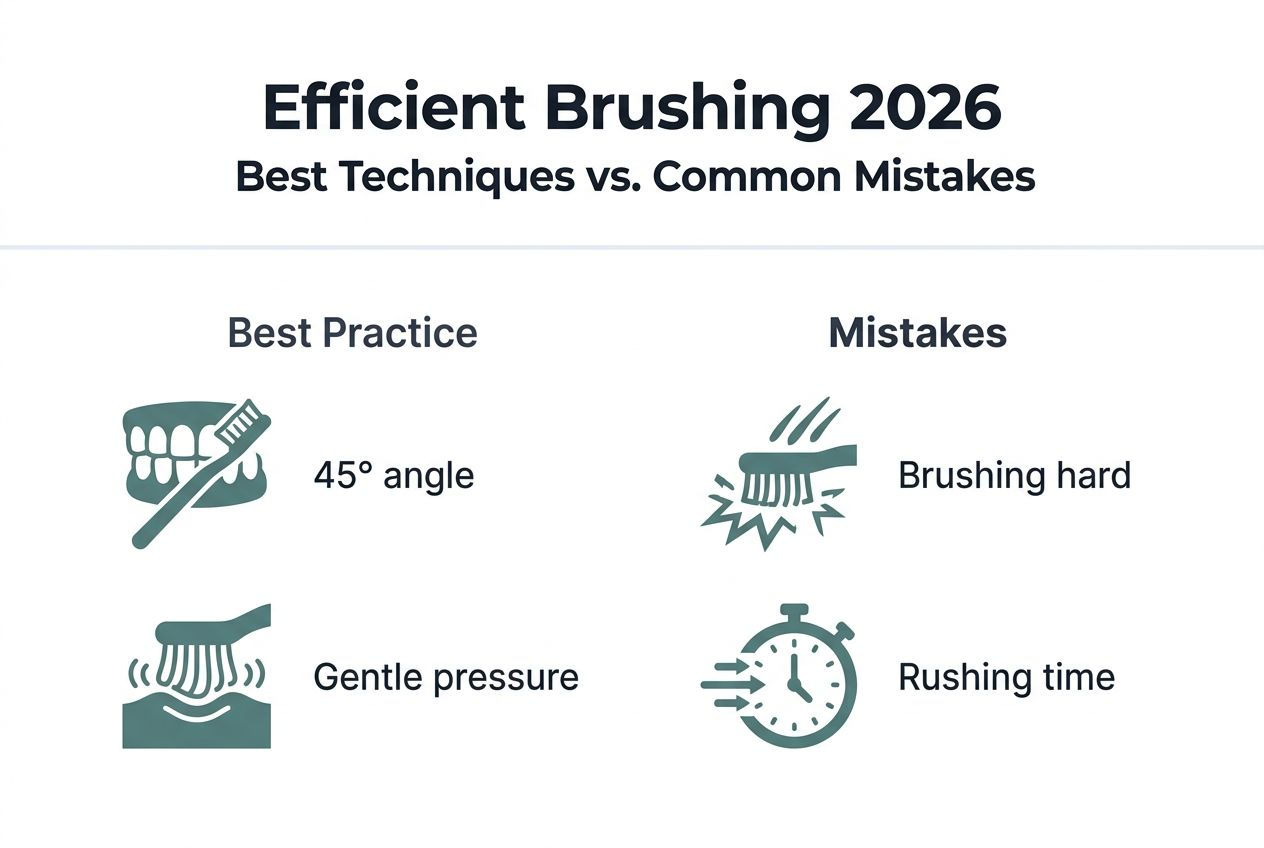
Brushing angle and pressure critically affect cleaning efficiency. Position bristles at a 45-degree angle where teeth meet gums. This targets the gum line, where plaque accumulates most aggressively.
Gentle pressure works better than hard scrubbing. Light contact allows bristles to flex into spaces between teeth and under the gum line. Too much force flattens bristles and reduces their cleaning ability.
Duration determines thoroughness:
- Two minutes allows coverage of all tooth surfaces
- Most people quit after 45 seconds, missing significant plaque
- Front teeth get attention while back molars remain uncleaned
- Consistent timing ensures complete mouth coverage
Pro Tip: Set a timer or use an electric toothbrush with a built-in alert to maintain the full two minutes without guessing.
Frequency matters as much as duration. Brushing twice daily prevents plaque from maturing into the hardened tartar that only dental cleanings can remove. Morning brushing addresses overnight bacterial growth, while nighttime brushing removes food particles and bacteria accumulated during the day.
Avoiding common brushing mistakes maximizes your routine’s effectiveness. Learn more about mechanical plaque control to understand the science behind technique.
Common brushing misconceptions and mistakes
Many people believe brushing harder removes more plaque. This myth persists despite evidence showing that excessive force damages gums without improving cleaning. Hard brushing causes gum recession and enamel wear while missing plaque in hard-to-reach areas.
Most people brush less than one minute, substantially below the recommended duration. Quick brushing feels sufficient but leaves plaque on back teeth and along the gum line. This incomplete cleaning creates vulnerability to cavities and gum disease.
Nighttime brushing gets skipped more often than morning sessions. Neglecting evening brushing lets bacteria feast on food particles overnight, producing acids that attack enamel for hours. Saliva production decreases during sleep, removing natural protection and amplifying damage.
Some believe frequent short sessions equal one thorough brushing:
- Three 30-second brushings don’t replace one two-minute session
- Plaque needs sustained disruption, not brief contact
- Rushed brushing misses systematic coverage of all surfaces
- Quality of technique matters more than brushing frequency
Another misconception treats all toothbrushes equally. Brush head size, bristle softness, and design significantly impact cleaning ability. Oversized heads can’t reach back molars, while hard bristles irritate gums without added benefit.
Correcting these habits transforms oral health outcomes. Understanding what doesn’t work helps you avoid brushing mistakes that undermine your efforts. Research on brushing time patterns reveals widespread time deficits that increase dental risks.
Innovations in brushing technology to save time
Traditional brushing requires two minutes because you clean one or two teeth at a time. Moving systematically through your mouth takes time that busy schedules don’t always accommodate. This time requirement drives the compliance problem that affects 90% of people.
Y-Brush revolutionizes this approach by cleaning all teeth simultaneously. The device wraps around your dental arch, applying sonic vibrations to multiple surfaces at once. This parallel cleaning reduces brushing time to approximately 20 seconds while maintaining thorough coverage.

Clinical studies demonstrate comparable plaque removal effectiveness. The simultaneous action addresses the completeness problem that rushed traditional brushing creates. You can’t skip areas when the device covers everything at once.
| Feature | Traditional Brushing | Y-Brush Technology |
|---|---|---|
| Time Required | 2 minutes | 20 seconds |
| Coverage Pattern | Sequential, one tooth at a time | Simultaneous, all teeth at once |
| Technique Dependency | High (angle, pressure, motion matter) | Low (device handles positioning) |
| Compliance Rate | ~10% brush full 2 minutes | Higher due to time efficiency |
| Plaque Removal | Effective with proper technique | Comparable effectiveness |
Time efficiency directly improves adherence. When brushing takes 20 seconds instead of two minutes, you’re more likely to complete it twice daily. Consistency matters more than perfection for long-term oral health.
Pro Tip: If you consistently skip brushing because of time pressure, innovative devices like Y-Brush remove that barrier and make compliance realistic.
The technology suits specific situations particularly well. Busy professionals, parents managing family routines, and travelers benefit from reduced time requirements. Compare different approaches in this toothbrush comparison to find your best fit.
Practical tips to integrate effective brushing in busy lifestyles
Building sustainable habits requires removing friction from your routine. Strategic changes make thorough brushing automatic rather than effortful.
Start with these foundational practices:
- Set specific times for brushing tied to existing habits
- Keep brushing supplies visible and easily accessible
- Use visual or audio reminders until the habit solidifies
- Track consistency for the first 30 days to build momentum
- Choose tools that match your actual lifestyle, not ideal scenarios
Technique optimization matters as much as consistency:
- Position bristles at a 45-degree angle to the gum line
- Apply gentle pressure that flexes bristles without flattening them
- Use small circular motions rather than horizontal scrubbing
- Systematically cover all surfaces: outer, inner, and chewing
Pro Tip: Prepare your toothbrush with paste the night before morning brushing to eliminate decision fatigue when you’re rushed.
Time management strategies reduce perceived effort. Brush while showering to combine tasks. Use the two minutes for mental planning or reflection rather than viewing it as wasted time. Consider audiobooks or podcasts if you need engagement during the routine.
Innovative tools eliminate time as an obstacle entirely. Y-Brush delivers complete cleaning in 20 seconds, fitting even the tightest schedules. This efficiency makes twice-daily brushing realistic when traditional methods feel impossible.
Scheduling matters for habit formation:
- Morning: Brush after breakfast to remove food particles
- Evening: Brush right before bed as the last step in your routine
- Associate brushing with fixed daily events for consistency
- Set phone reminders if evenings vary in timing
Explore oral care for busy professionals for more strategies. Learn to optimize dental hygiene essentials around your specific constraints.
Beyond brushing: complementary habits for optimal oral health
Brushing removes plaque from tooth surfaces but misses spaces between teeth. Food particles and bacteria accumulate in these gaps, causing decay and gum inflammation that brushing alone can’t prevent.
Interdental cleaning reduces periodontal disease risk by 20-30% compared to brushing alone. Floss or interdental brushes reach areas where bristles can’t penetrate. This complementary cleaning addresses the full oral environment.
Diet significantly impacts oral health beyond brushing habits:
- Sugary foods fuel bacterial acid production
- Acidic beverages erode enamel directly
- Crunchy vegetables stimulate saliva and mechanically clean teeth
- Adequate water intake maintains saliva production for natural protection
Regular dental visits catch problems early when treatment is simple and less expensive. Professional cleanings remove hardened tartar that home care can’t address. Dentists identify cavities, gum disease, and oral cancer in early stages when intervention is most effective.
Saliva provides natural defense against decay. Stay hydrated throughout the day to maintain saliva flow. Dry mouth increases cavity risk significantly, making hydration an underappreciated oral health factor.
Comprehensive care combines multiple habits:
- Brush twice daily with proper technique
- Clean between teeth once daily
- Limit sugar intake and acidic beverages
- Visit your dentist every six months
- Stay hydrated for saliva production
No single habit provides complete protection. Brushing is necessary but not sufficient alone. The combination creates resilience against multiple pathways to dental disease. Review effective oral care habits for a complete approach.
Summary and next steps to better oral hygiene
Brushing mechanically removes the plaque biofilm that causes cavities and gum disease. This simple action prevents complex dental problems when done correctly and consistently.
Proper technique includes a 45-degree angle, gentle pressure, and systematic coverage of all surfaces. Duration matters critically. Two minutes provides adequate time for thorough cleaning, while shorter sessions leave plaque behind.
Innovative tools like Y-Brush solve the time barrier that prevents 90% of people from brushing the full recommended duration. Twenty-second cleaning with simultaneous coverage makes consistent oral care realistic for busy lifestyles.
Key principles for better oral health:
- Prioritize consistency over perfection in your routine
- Choose tools that fit your actual schedule and habits
- Combine brushing with interdental cleaning for comprehensive care
- Address technique errors that reduce cleaning effectiveness
- Visit your dentist regularly for professional cleaning and early detection
Efficient brushing fits even the most demanding schedules. The benefits extend beyond cavity prevention to systemic health, confidence, and quality of life. Small improvements in technique and consistency create significant long-term outcomes.
Check this oral hygiene checklist to ensure you’re covering all essential practices. Start with one improvement today rather than attempting perfect implementation immediately.
Upgrade your brushing routine with Y-Brush
Maintaining excellent oral health shouldn’t require sacrificing time you don’t have. Y-Brush devices clean all teeth simultaneously in just 20 seconds, delivering the thorough plaque removal your schedule demands.
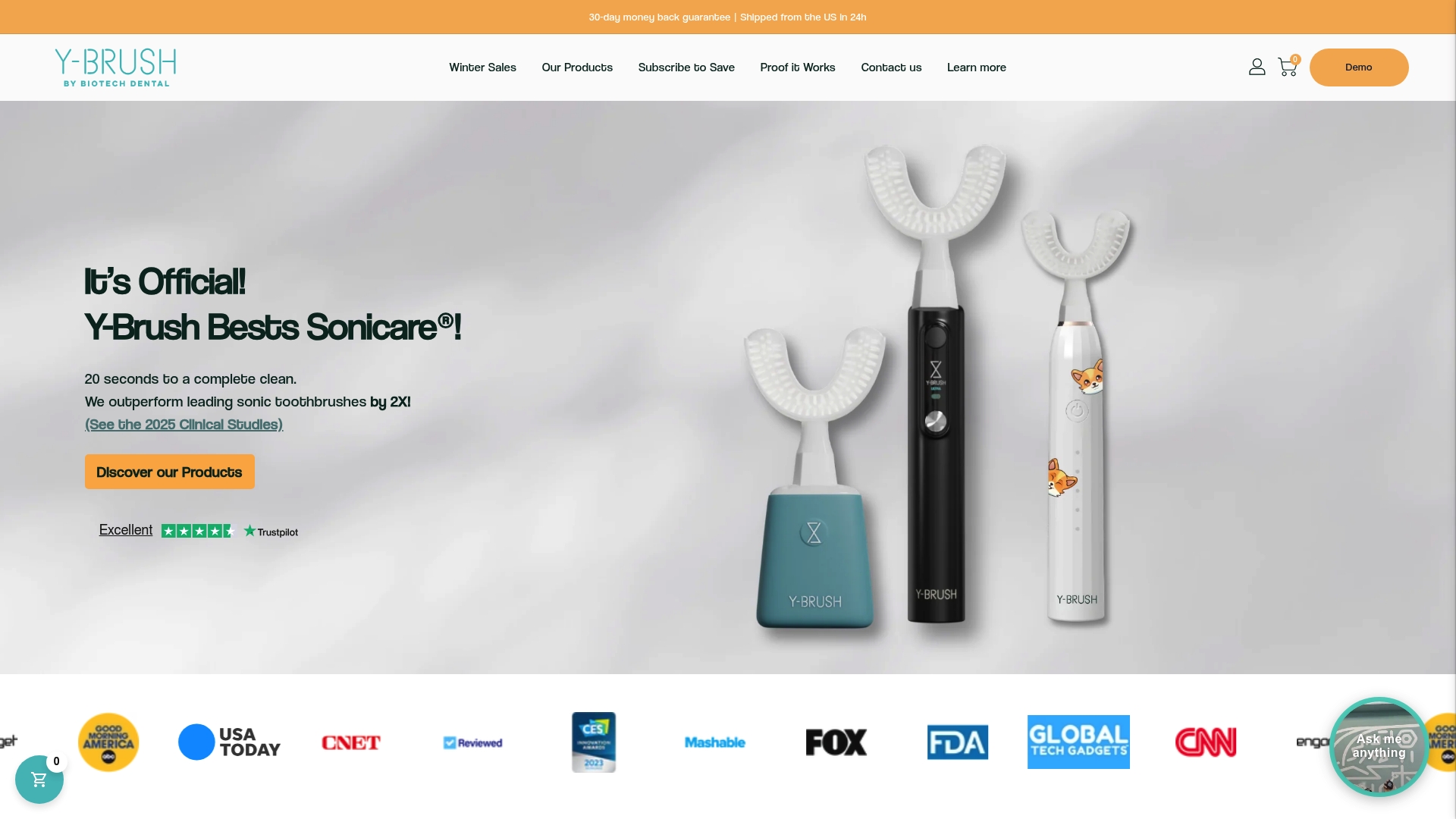
Our sonic technology fits naturally into rushed mornings and exhausted evenings. Clinical effectiveness meets real-world convenience, solving the compliance problem that affects nine out of ten people. Explore the future of toothbrushing to see how innovation makes oral care sustainable.
The Y-Brush DuoBrush toothbrush combines efficiency with proven cleaning power. Our membership plans ensure you never run out of replacement brush heads, maintaining optimal hygiene without extra effort. Upgrade your routine and experience the confidence of consistent, complete cleaning.
FAQ
How long should I brush my teeth to remove plaque effectively?
Brushing for two minutes twice daily provides optimal plaque removal. Shorter durations leave significant plaque behind, particularly on back teeth and along the gum line. If traditional brushing feels too time-consuming, innovative devices like Y-Brush deliver comparable cleaning in 20 seconds.
Does brushing harder clean my teeth better?
Gentle brushing with proper technique outperforms aggressive scrubbing. Excessive force increases gum irritation and recession by 20% without improving plaque removal. Light pressure allows bristles to flex into spaces between teeth where plaque hides.
Can I maintain oral health if I brush only once a day?
Brushing twice daily controls plaque more effectively than single sessions. Once-daily brushing allows plaque to mature overnight or throughout the day, increasing cavity and gum disease risk. Morning and evening brushing address bacterial growth during both active and sleeping hours.
How do innovations like Y-Brush improve brushing efficiency?
Y-Brush cleans all teeth simultaneously rather than sequentially, reducing brushing time to approximately 20 seconds. The simultaneous sonic action provides comparable plaque removal to traditional methods. Learn more about Y-Brush technology and how it solves time barriers to consistent oral care.
Recommended
- Why brush after meals for better dental health in 2026 – Y-Brush USA
- Top Tips for Effective Tooth Brushing: A Guide to a Brighter Smile – Y-Brush USA
- Optimize your dental hygiene essentials for busy lifestyles – Y-Brush USA
- The Future of Toothbrushing: Faster, Smarter, and More Effective – Y-Brush USA
- Expert Dental Services You Can Rely On: How to Choose the Right Clinic for Long-Term Oral Health - Clinic Group


