


TL;DR:
- Using targeted tools like electric toothbrushes and water flossers improves cleaning efficacy with braces.
- Proper brushing and flossing techniques, combined with regular professional cleanings, prevent white spots.
- Modern tools significantly simplify oral hygiene for braces wearers, promoting consistency and healthier results.
Plaque builds up around brackets and wires faster than most people realize, and even a solid brushing habit can leave behind the cloudy white spots that show up after braces come off. For teens and young adults juggling school, sports, and social lives, finding time for a thorough cleaning routine feels like one more thing on an already packed schedule. The good news is that a smarter approach, not a longer one, makes all the difference. This guide walks you through the right tools, the most effective techniques, and the habits that protect your smile from the first day of treatment to the last.
Table of Contents
- What you need: Tools and products for cleaning teeth with braces
- Step-by-step: The most effective way to brush and floss with braces
- Troubleshooting: Avoiding common mistakes and dealing with challenges
- Keeping your results: Long-term success and professional support
- Our take: Why modern tools are transforming braces care
- Take your braces care to the next level with Y-Brush solutions
- Frequently asked questions
Key Takeaways
| Point | Details |
|---|---|
| Right tools matter | Using electric toothbrushes and water flossers ensures thorough cleaning around braces. |
| Step-by-step routine | Following a daily brushing and flossing process is key to preventing plaque and stains. |
| Professional checkups | Regular dental visits every 6 months help avoid long-term issues like white spots and gum disease. |
| Avoid common pitfalls | Watch for missed spots and use smart strategies to stay consistent, even on busy days. |
What you need: Tools and products for cleaning teeth with braces
Starting with the right equipment is half the battle. Braces create small spaces where food and bacteria hide, so standard tools often fall short. Building a simple, targeted kit makes every cleaning session more effective and less frustrating.
Essential tools for braces care:
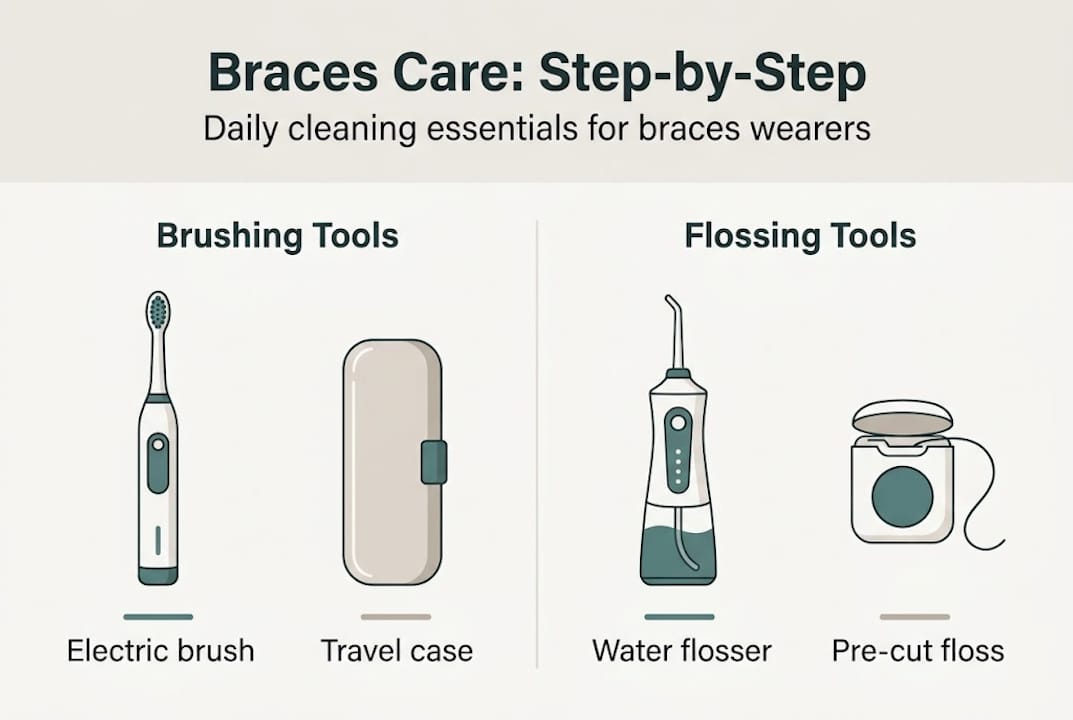
- Electric toothbrush: Electric toothbrushes provide superior plaque removal around braces compared to manual brushes, making them the top recommendation for orthodontic patients.
- Orthodontic or interdental brushes: These small, cone-shaped brushes slide under wires and around brackets to reach spots a regular brush misses.
- Floss threaders: Thin, flexible tools that guide floss under the archwire so you can clean between teeth.
- Water flosser: A pressurized stream of water that flushes debris from around brackets and below the gumline with minimal effort.
- Fluoride toothpaste: Strengthens enamel and helps prevent the white spot lesions that braces can accelerate.
- Fluoride mouth rinse: An optional but valuable add-on for extra enamel protection, especially on days when brushing feels rushed.
- Orthodontic wax: Protects soft tissue from wire irritation, which indirectly supports consistent cleaning by keeping your mouth comfortable.
Manual vs. electric toothbrush: a quick comparison
| Feature | Manual toothbrush | Electric toothbrush |
|---|---|---|
| Plaque removal | Basic | Superior around brackets |
| Ease of use | Requires technique | Consistent pressure built in |
| Cleaning speed | Slower | Faster, more thorough |
| Cost | Low | Moderate to high upfront |
| Best for braces | Adequate backup | Strongly recommended |
Water flossers deserve special mention. Threading floss through wires takes time and patience, and many people skip it entirely. A water flosser removes that barrier by making interdental cleaning fast and intuitive. Pair it with expert oral hygiene tips to get the most out of every session.
Pro Tip: Keep a travel-size water flosser and a compact electric toothbrush in your school bag or gym locker. Access to your tools is the single biggest factor in staying consistent.
For a deeper look at why powered brushing outperforms manual options, explore the electric toothbrush benefits specific to orthodontic care.
Step-by-step: The most effective way to brush and floss with braces
Once you’ve gathered the right tools, it’s important to know the most effective daily cleaning process. Having great equipment means little without a reliable technique to back it up.
How to brush with braces:
- Rinse first. Swish water around your mouth to loosen any large food particles before you start brushing.
- Angle your brush at 45 degrees toward the gumline. This position allows the bristles to slide under the wire and clean the gumline where plaque accumulates fastest.
- Brush above the brackets. Use small circular or back-and-forth motions along the upper portion of each tooth, working one section at a time.
- Brush below the brackets. Reposition the brush to clean the lower portion of each tooth and the bracket base.
- Clean the bracket face directly. Press the bristles gently onto the front of each bracket and use a few short strokes.
- Work through all four quadrants. Spend equal time on upper left, upper right, lower left, and lower right to avoid neglecting any area.
- Brush the inner surfaces and chewing surfaces. These areas collect plaque even without braces, so don’t skip them.
How to floss with braces:
For string floss, thread it through a floss threader and guide it under the archwire before working it gently between two teeth. Water flossers are preferred and show equal or better efficacy than string floss for plaque removal with braces, making them an excellent time-saving alternative.
“Professional cleanings every 6 months and 70% plaque removal reduces white spots below 15%.” This means your daily effort at home directly determines whether your teeth stay spot-free.
Pre-cut floss segments and compact water flossers reduce setup time significantly. Review the full proper brushing technique with braces guide for visual support, and build on it with effective oral care habits that fit any schedule.

Pro Tip: Set a phone timer for each quadrant. Even 30 seconds per section adds up to a thorough clean without feeling overwhelming.
Troubleshooting: Avoiding common mistakes and dealing with challenges
Even with a good routine, it’s easy to make mistakes or encounter challenges. Knowing what to watch for keeps small problems from becoming bigger ones.
Common mistakes and how to fix them:
- Missing plaque spots: Use disclosing tablets once a week. These chewable tablets stain leftover plaque pink or purple, showing you exactly where your technique needs work.
- Rushing through cleaning: Most people brush for under a minute. Set a timer and commit to at least two minutes for brushing alone.
- Skipping flossing: If threading floss feels too slow, switch to a water flosser. Removing the friction removes the excuse.
- Pressing too hard: Aggressive brushing can irritate gums and even loosen brackets. Let the tool do the work, especially with an electric brush.
- Ignoring the back teeth: Molars with brackets are the hardest to reach and the most likely to accumulate plaque. Angle your brush more aggressively toward the back of your mouth.
Manual vs. electric tools for braces: a detailed look
| Situation | Manual tool | Electric tool |
|---|---|---|
| Tight brackets and wires | Difficult to maneuver | Oscillations reach around hardware |
| Gumline cleaning | Requires precise angle | Consistent pressure reduces error |
| Travel convenience | Lightweight, no charging | Portable models available |
| Cleaning speed | Slower | 1,600-3,200 oscillations per minute improve efficiency |
Damaged brackets are one of the most disruptive problems during orthodontic treatment. Check your brackets visually after each cleaning session. If a bracket feels loose or a wire is poking, contact your orthodontist promptly rather than waiting for your next scheduled visit.
Staying consistent during travel or busy school days is a real challenge. A small pouch with a travel brush, floss picks, and a mini water flosser fits in any backpack. Understanding why hygiene matters with braces can also reinforce your motivation on the days when it feels like too much effort. For streamlined approaches that work even on hectic days, check out these efficient oral care routines.
Keeping your results: Long-term success and professional support
Once you’ve mastered daily cleaning and learned to troubleshoot, it’s time to ensure your hard work continues to pay off. Consistency over months and years is what separates a great outcome from a disappointing one.
Habits that protect your results long-term:
- Schedule dental checkups and professional cleanings every 6 months without exception. Consistent plaque control with regular professional cleanings greatly lowers the risk of white spots and gum issues.
- Watch for early warning signs: bleeding gums, persistent bad breath, or visible staining around brackets. These are signals to adjust your routine or contact your dentist sooner.
- Set phone reminders for morning and evening cleaning sessions. Habit stacking, pairing brushing with something you already do like washing your face, makes it automatic.
- Track your progress with monthly photos of your teeth. Seeing improvement is a powerful motivator.
- Avoid foods that increase plaque risk: sticky candies, sugary drinks, and hard foods that can dislodge brackets. Explore foods to eat with braces for a practical guide to braces-friendly nutrition.
Key statistic: Studies show that maintaining 70% plaque control combined with professional cleanings reduces the incidence of white spot lesions to below 15%. That number puts the power firmly in your hands.
When you’re ready to take your routine further, upgrade your routine with tools designed to make every session faster and more thorough. The investment in better tools now pays off in a cleaner, healthier smile when your braces finally come off.
Our take: Why modern tools are transforming braces care
Here is something most orthodontic guides won’t tell you directly: traditional brushing and flossing alone are rarely enough to keep teeth fully clean with braces. The geometry of brackets and wires creates dozens of small traps that a flat brush head simply cannot reach consistently, no matter how careful you are or how long you brush.
What has genuinely changed the equation is the rise of modern cleaning technology like sonic electric toothbrushes and water flossers. These tools were not just incremental upgrades. They were real game-changers that addressed the structural problem braces create. A sonic brush delivers thousands of micro-movements per minute, cleaning around hardware in ways that manual technique cannot replicate. A water flosser removes the single biggest barrier to flossing: the time and skill it demands.
We also want to push back on a common assumption: that people who struggle with braces hygiene are lazy or unmotivated. Most aren’t. They simply haven’t had the right tools or clear enough guidance to make it work within a real schedule. When the process becomes faster and more intuitive, consistency follows naturally. That’s the real shift worth making.
Take your braces care to the next level with Y-Brush solutions
Understanding the value of the right tools and routines is the first step. The next is finding products that actually fit your life.
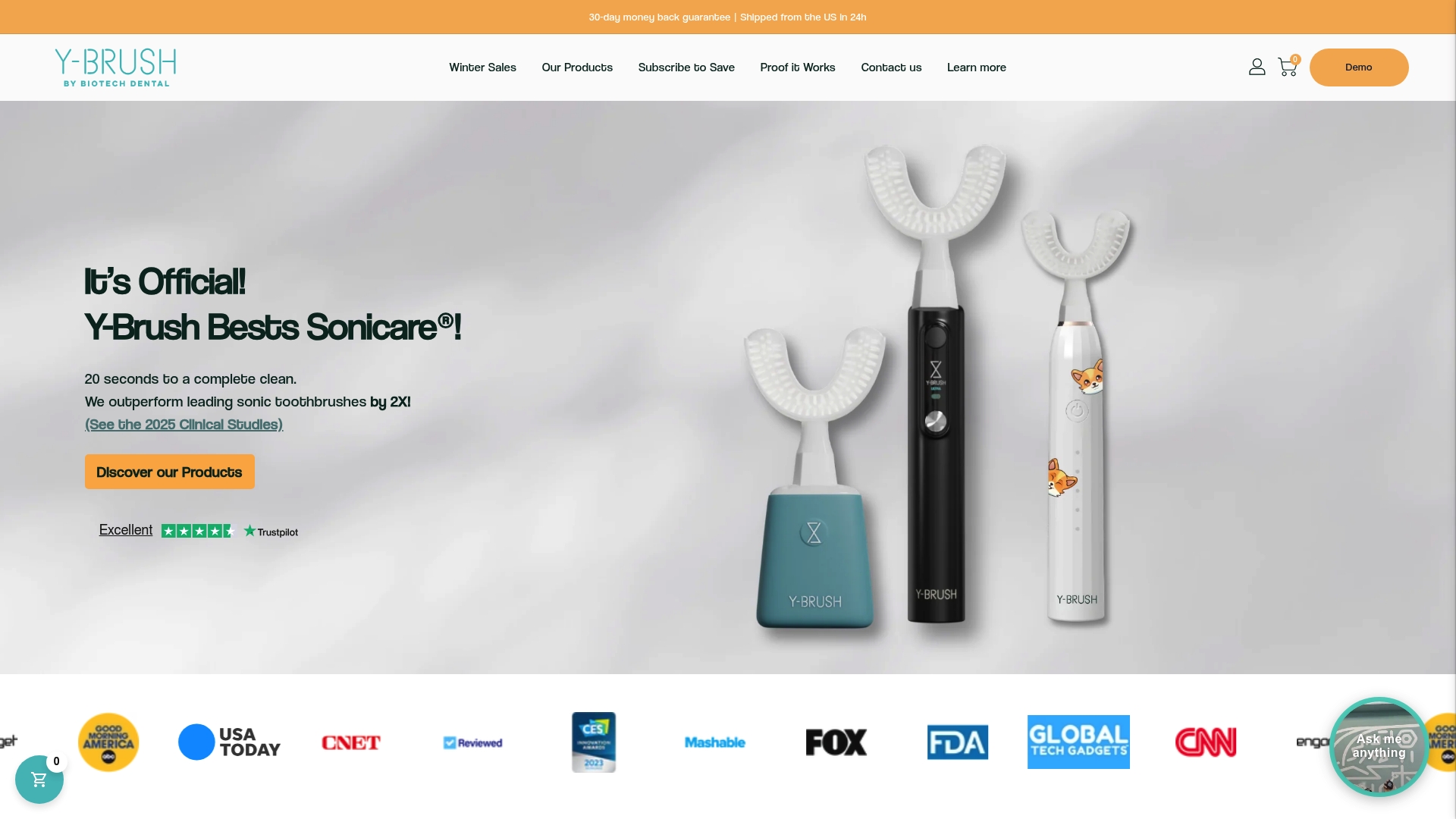
Y-Brush is built for exactly this challenge. The Y-Brush Essential Sonic Toothbrush delivers a clinically effective clean in a fraction of the time, making it ideal for teens and young adults who need results without the hassle. Younger patients and families will find the Y-Brush KidsBrush a perfect fit for building good habits early. For those who want the most advanced clean available, the Ultra Sonic Toothbrush raises the bar on speed and effectiveness. Explore the full range and find the solution that matches your braces care needs.
Frequently asked questions
How often should I brush my teeth with braces?
Brush at least twice daily, ideally after every meal, to prevent plaque buildup around brackets and wires. Electric toothbrushes are effective for plaque removal when used regularly with braces.
Is it better to use a water flosser or regular floss with braces?
Water flossers are preferred for braces because they make it easier to clean around wires and brackets. Water flossers show similar or better efficacy than traditional floss for braces patients.
How do I prevent white spots on my teeth while wearing braces?
Maintain diligent plaque removal and get professional cleanings every 6 months. 70% plaque control with professional cleaning reduces white spots below 15%.
Can an electric toothbrush damage my brackets or wires?
Electric toothbrushes do not harm orthodontic devices when used correctly. Electric toothbrushes with 1,600-3,200 oscillations per minute are both effective and safe for braces.


