


You might think you’re doing everything right when you brush your teeth twice a day, but studies reveal that most people unknowingly damage their teeth and gums through improper technique. Horizontal scrubbing with excessive force, rushing through the process, and using the wrong tools can lead to enamel abrasion, gum recession, and increased sensitivity. This guide explains effective brushing methods that prevent these problems, explores modern toothbrush options that simplify proper technique, and provides actionable tips to transform your daily oral care routine into a foundation for lasting dental health.
Table of Contents
- Common Mistakes And The Impact Of Improper Brushing
- The Modified Bass Technique: A Gold Standard For Effective Brushing
- Electric Toothbrushes: Advancing Brushing Efficacy And Ease
- Putting It All Together: Brushing Time, Technique, And Toothbrush Selection
- Discover Advanced Brushing Solutions With Y-Brush
- Frequently Asked Questions
Key takeaways
| Point | Details |
|---|---|
| Technique matters more than effort | Brushing too hard with horizontal scrubbing causes enamel wear and gum recession rather than better cleaning. |
| Modified Bass Technique is gold standard | Angling bristles 45 degrees toward the gumline with gentle circular motions cleans beneath gums where disease starts. |
| Electric brushes deliver measurable benefits | Oscillating-rotating electric toothbrushes reduce plaque 11-21% and gingivitis 6-11% more than manual brushes. |
| Two minutes ensures thorough coverage | Brushing for the full recommended time allows proper cleaning of all tooth surfaces and gumline areas. |
| Regular brush replacement prevents problems | Worn bristles lose effectiveness and harbor bacteria, requiring replacement every 3-4 months. |
Common mistakes and the impact of improper brushing
Most people develop brushing habits in childhood that persist into adulthood without correction. The most damaging pattern involves horizontal brushing with excessive force, which creates cervical abrasion at the gumline where enamel meets softer root surfaces. This technique wears away tooth structure in V-shaped notches that trap food and bacteria while exposing sensitive dentin layers.
The misconception that harder brushing equals cleaner teeth drives people to apply excessive pressure. Brushing too hard damages gums and enamel, causing recession that exposes tooth roots and creates pockets where bacteria thrive. Over time, this aggressive approach leads to increased sensitivity to hot and cold temperatures, aesthetic concerns from exposed roots, and higher risk of root decay.
Bristle stiffness compounds these problems. Hard bristles act like sandpaper on tooth enamel and delicate gum tissue, accelerating damage with each stroke. Soft bristles provide adequate cleaning power when used with proper technique while protecting vulnerable oral tissues. The brush itself becomes a source of problems when people delay replacement beyond the recommended timeframe.

Worn toothbrushes with splayed or frayed bristles cannot effectively remove plaque from tooth surfaces and gumlines. Bacteria colonize the bristles themselves, potentially reintroducing harmful microorganisms with each use. Many people also rush through brushing, spending under one minute when two minutes provides the minimum time needed for thorough plaque removal across all surfaces.
Pro Tip: Check your toothbrush monthly for signs of wear. If bristles splay outward or lose their original shape, replace the brush immediately rather than waiting for the standard 3-4 month interval.
Missing tooth surfaces creates another layer of risk. People typically focus on front teeth visible in the mirror while neglecting molars, inner surfaces, and the gumline where plaque accumulates most heavily. This selective cleaning leaves bacterial colonies undisturbed, allowing them to mature into the sticky biofilm that causes cavities and gum disease. Understanding these common brushing mistakes creates the foundation for adopting better practices that protect rather than harm oral tissues.
The Modified Bass Technique: a gold standard for effective brushing
Dental professionals consistently recommend the Modified Bass Technique because it addresses the primary site where gum disease begins. This method targets the sulcus, the shallow groove where teeth meet gums, where bacterial plaque first establishes colonies that trigger inflammation. The Modified Bass Technique cleans effectively by combining precise bristle placement with gentle motions that disrupt biofilm without traumatizing tissues.
The technique requires specific positioning and movement patterns:
- Hold the brush at a 45-degree angle with bristles pointing toward the gumline rather than perpendicular to tooth surfaces.
- Apply gentle pressure so bristles slip slightly beneath the gum margin without causing blanching or discomfort.
- Use small vibratory or circular motions in place for 10-15 seconds per area, allowing bristles to disrupt plaque mechanically.
- Sweep bristles from gumline toward the biting surface to remove dislodged debris.
- Move systematically around the mouth, covering outer surfaces, inner surfaces, and chewing surfaces of all teeth.
- Angle bristles appropriately for hard-to-reach areas behind back molars and around dental work.
This approach proves especially valuable for patients with orthodontic appliances, dental restorations, or early signs of gum inflammation. The angled bristles reach into spaces around brackets and beneath bridge pontics where food particles and bacteria accumulate. The gentle vibratory motion disrupts plaque without the abrasive damage caused by horizontal scrubbing.
Pro Tip: Practice the 45-degree angle in front of a mirror until it becomes automatic. Many people think they’re angling correctly but actually hold the brush perpendicular to teeth, missing the critical gumline area entirely.
The Modified Bass Technique requires patience to master but delivers measurable improvements in gum health within weeks. Bleeding during brushing typically decreases as inflammation subsides and tissues tighten around teeth. Plaque scores drop as the method removes bacterial colonies from their preferred hiding spots. These proper brushing techniques form the cornerstone of preventive dental care, reducing the need for intensive treatments later.
Electric toothbrushes: advancing brushing efficacy and ease
Electric toothbrushes transform oral hygiene by automating the precise motions that manual brushing requires users to perform correctly. Research demonstrates that oscillating-rotating brushes reduce plaque significantly compared to manual alternatives, with measurable improvements in both plaque accumulation and gum inflammation. The mechanical advantage comes from thousands of brush strokes per minute that human hands cannot replicate.
Clinical studies reveal the quantifiable benefits electric brushes provide. Electric brushes reduce plaque 11-21% and gingivitis 6-11% more effectively than manual brushing when users follow standard protocols. These improvements appear within the first month of use and increase over time as users become comfortable with the technology.
| Feature | Manual Toothbrush | Electric Toothbrush |
|---|---|---|
| Plaque removal | Baseline effectiveness | 11-21% greater reduction |
| Gingivitis reduction | Standard results | 6-11% better outcomes |
| Brushing time accuracy | User dependent | Built-in 2-minute timer |
| Pressure control | Relies on user awareness | Pressure sensors prevent damage |
| Technique assistance | Requires learned skill | Automated optimal motions |
Built-in features address common brushing errors automatically. Two-minute timers with 30-second interval alerts ensure users spend adequate time in each quadrant of the mouth. Pressure sensors detect excessive force and either slow brush speed or illuminate warning lights, protecting gums from traumatic damage. Some models include smartphone connectivity that tracks brushing habits and provides personalized coaching.
Electric brushes particularly benefit individuals who struggle with manual dexterity due to arthritis, limited mobility, or developmental challenges. The powered brush head performs the complex motions while users simply guide it along tooth surfaces. This accessibility makes thorough cleaning achievable for populations who previously could not execute proper manual technique.
Pro Tip: When transitioning to an electric brush, start with the gentlest setting and gradually increase intensity as your gums adapt. Initial sensitivity is normal and typically resolves within a week.
The manual vs sonic toothbrush comparison reveals important distinctions between brush technologies. While all electric brushes outperform manual options, oscillating-rotating models show the strongest evidence for superior plaque removal. Sonic brushes operating at high frequencies create fluid dynamics that clean slightly beyond bristle contact points. Understanding electric vs manual toothbrush effectiveness helps consumers select tools that match their specific oral health needs and preferences.
Putting it all together: brushing time, technique, and toothbrush selection
Effective oral hygiene emerges from the intersection of adequate time, proper technique, and appropriate tools working together. Brushing for two minutes provides the minimum duration needed to systematically clean all tooth surfaces, the gumline, and the tongue. Shorter sessions inevitably leave plaque deposits undisturbed, allowing bacterial colonies to mature into the sticky biofilm that causes decay and gum disease.
The Modified Bass Technique maximizes cleaning efficiency during those two minutes by targeting the sulcus where disease originates. Combining the 45-degree bristle angle with gentle circular motions disrupts plaque mechanically while protecting enamel and gum tissue from abrasive damage. This technique works equally well with manual or electric brushes, though powered options automate the precise movements.
Toothbrush selection involves multiple factors beyond the manual versus electric decision. Head size should allow comfortable access to back molars without gagging. Bristle softness should always fall in the soft or extra-soft category to prevent tissue trauma. Handle design affects grip comfort and control, particularly for users with hand mobility limitations. Toothbrush design impacts cleaning effectiveness through factors like bristle arrangement, head angulation, and handle ergonomics.
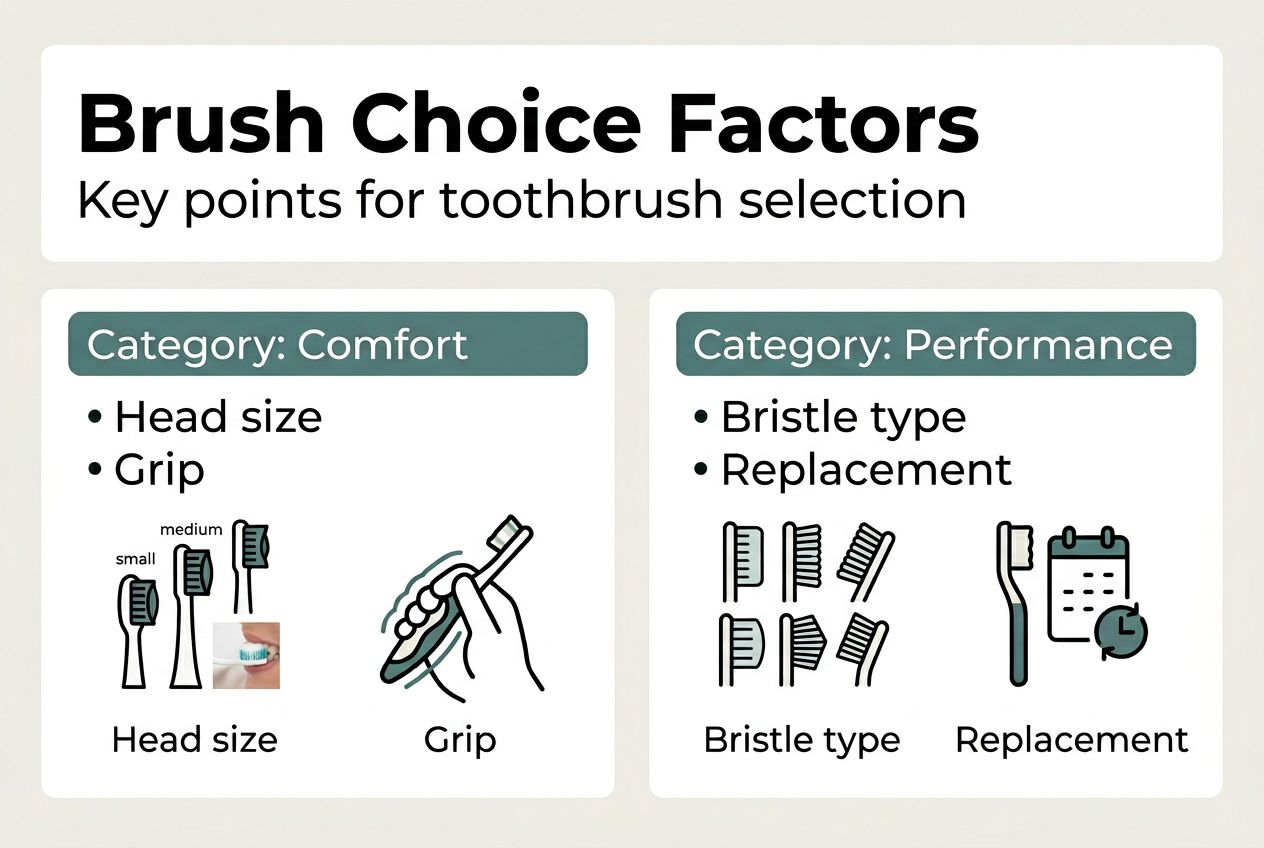
Brush replacement schedules directly affect cleaning performance. Toothbrushes need replacement every 3-4 months because bristles lose their structural integrity and cleaning effectiveness. Frayed bristles cannot penetrate between teeth or along the gumline where plaque accumulates. Bacteria colonize worn brushes, potentially reintroducing harmful microorganisms during each use.
| Brushing Element | Recommendation | Impact on Oral Health |
|---|---|---|
| Duration | 2 minutes minimum | Ensures complete plaque removal from all surfaces |
| Technique | Modified Bass at 45 degrees | Cleans below gumline where disease starts |
| Bristle type | Soft or extra-soft only | Prevents enamel abrasion and gum recession |
| Replacement frequency | Every 3-4 months | Maintains cleaning effectiveness and hygiene |
| Pressure applied | Light, letting bristles do the work | Protects tissues while removing plaque |
Implementing these elements requires developing new habits that replace ingrained patterns. Using a timer removes guesswork about brushing duration. Dividing the mouth into quadrants and spending 30 seconds per section ensures balanced coverage. Applying only enough pressure to feel bristles against teeth prevents the excessive force that damages tissues. Understanding why brush for two minutes helps maintain motivation when the process feels tedious.
Pro Tip: Set your toothbrush replacement on a recurring calendar reminder tied to the first day of each season. This quarterly schedule ensures you never use a worn brush and simplifies the maintenance routine.
Discover advanced brushing solutions with Y-Brush
Transforming your oral care routine becomes easier with tools designed around how people actually live. Y-Brush creates innovative solutions that deliver thorough cleaning without demanding the full two minutes most people struggle to maintain consistently. Their technology addresses the reality that 90% of brushers fall short of the recommended duration, offering effective alternatives that fit seamlessly into busy lifestyles.
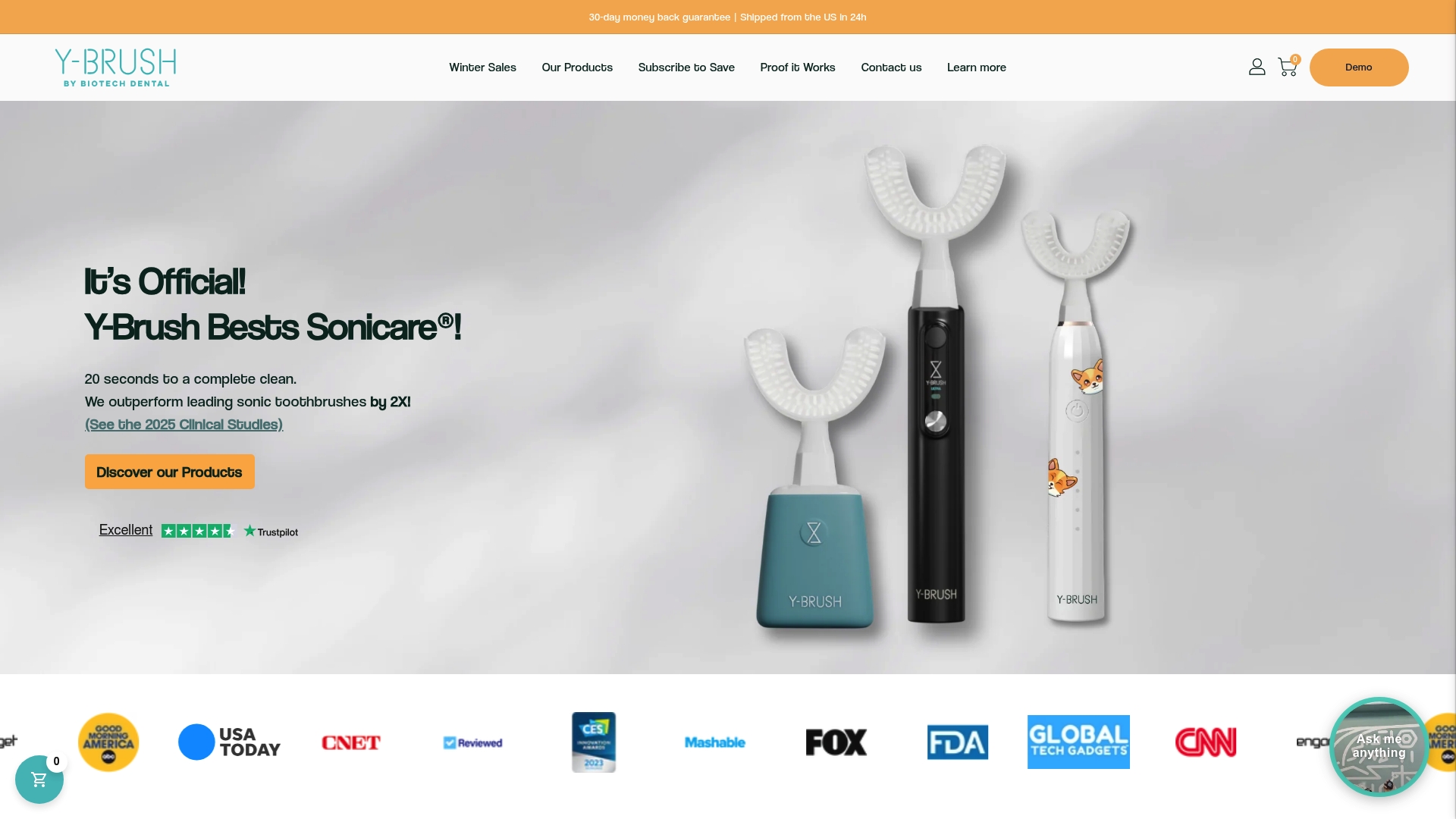
The Y-Brush Essential Sonic Toothbrush combines advanced sonic technology with ergonomic design, making proper technique more accessible. For families, the Y-Brush KidsBrush Sonic Electric Toothbrush introduces children to effective brushing habits early, building the foundation for lifelong oral health. These products incorporate smart features like timers and gentle modes that support mastering the techniques discussed throughout this guide. Discover how to brush smarter not longer with solutions engineered for real-world use.
Frequently asked questions
What is the best brushing technique to prevent gum disease?
The Modified Bass Technique stands as the gold standard because it specifically targets the gumline where gum disease begins. Position bristles at a 45-degree angle toward the gums and use gentle circular motions to clean beneath the gum margin where plaque accumulates.
How often should I replace my toothbrush to maintain oral health?
Replace your toothbrush every three to four months, or sooner if bristles become frayed or splayed. Worn bristles lose cleaning effectiveness and harbor bacteria that can compromise oral health.
Do electric toothbrushes really clean better than manual ones?
Yes, clinical research shows oscillating-rotating electric toothbrushes reduce plaque by 11-21% and gingivitis by 6-11% more than manual brushes. Built-in timers and pressure sensors help users maintain proper technique and brushing duration.
Why do dentists recommend brushing for two full minutes?
Two minutes provides the minimum time needed to systematically clean all tooth surfaces, gumlines, and the tongue. Shorter brushing sessions leave plaque deposits undisturbed, allowing bacterial colonies to cause decay and gum disease.
Can brushing too hard damage my teeth and gums?
Absolutely. Excessive pressure during brushing wears away enamel, causes gum recession, and exposes sensitive root surfaces. Use only light pressure and let the bristles do the cleaning work through proper technique rather than force.


