


Switching to sustainable oral care feels like choosing between your health and the planet. You want to reduce plastic waste and avoid harsh chemicals, but you worry that bamboo toothbrushes and compostable floss won’t clean as well as conventional products. The good news is that eco-friendly oral care can match traditional options in effectiveness when you choose the right products and use proper techniques. This guide walks you through selecting sustainable toothbrushes, floss, and toothpaste that deliver results while protecting the environment.
Table of Contents
- What You Need: Essential Sustainable Oral Care Products
- How To Switch: Step-By-Step Sustainable Oral Hygiene Routine
- Common Pitfalls And Troubleshooting Your Sustainable Oral Care Routine
- Expected Outcomes And Verifying Your Sustainable Oral Care Results
- Explore Sustainable Oral Care Products From Y-Brush
- Frequently Asked Questions
Key takeaways
| Point | Details |
|---|---|
| Sustainable products match conventional effectiveness | Bamboo toothbrushes clean as effectively as plastic when you use correct brushing technique. |
| Natural bristles offer comparable durability | Castor oil bristles perform similarly to nylon in cleaning power and longevity. |
| Compostable floss breaks down at home | Plant-based floss fragments completely in 28-42 days unlike silk alternatives. |
| Proper technique ensures oral health | Correct brushing and flossing methods prevent gum damage and remove plaque thoroughly. |
| Eco-friendly choices reduce chemical exposure | Sustainable products eliminate synthetic additives while maintaining hygiene standards. |
What you need: essential sustainable oral care products
Building an effective sustainable oral care kit starts with understanding the materials and performance of eco-friendly alternatives. The market offers several toothbrush options that balance environmental responsibility with cleaning power.
Bamboo toothbrushes feature biodegradable handles that decompose naturally, unlike plastic versions that persist for centuries. Bamboo toothbrushes clean teeth as effectively as plastic toothbrushes when proper brushing technique is used. The handles break down in compost bins within months, while the bristles require separate disposal if made from nylon.
Natural bristle options now include castor oil-based materials that rival synthetic performance. Research shows castor oil bristles had similar behavior to polyamide bristles in stiffness and cleaning ability. These plant-derived bristles offer the same plaque removal capacity as conventional nylon while reducing petroleum dependence.
For those exploring sustainable brushing methods, understanding why choose a bamboo toothbrush helps clarify the environmental and health benefits of natural materials.
Toothbrush material comparison:
| Material | Biodegradability | Cleaning Effectiveness | Lifespan |
|---|---|---|---|
| Bamboo handle | Fully compostable | Equal to plastic | 6-10 months |
| Castor oil bristles | Biodegradable | Matches nylon | 6-10 months |
| Plastic handle | Non-biodegradable | Standard | 3-4 months |
| Nylon bristles | Non-biodegradable | Standard | 3-4 months |
Compostable dental floss represents another crucial component of sustainable oral care. Unlike conventional floss made from nylon or PTFE, plant-based options use materials like PLA (polylactic acid) derived from corn starch or bamboo fibers. These alternatives break down completely in home composting systems.
The coating on your floss matters as much as the fiber itself. Traditional floss often contains synthetic waxes or PFAS chemicals that prevent composting. Look for products coated with candelilla wax or natural plant waxes that decompose alongside the fiber.
Pro Tip: Check floss packaging for certifications like BPI (Biodegradable Products Institute) or TUV Austria OK Compost Home to verify genuine compostability claims.
Essential sustainable oral care checklist:
- Bamboo or castor oil bristle toothbrush with biodegradable handle
- Certified compostable floss with natural wax coating
- Fluoride toothpaste in recyclable or refillable packaging
- Natural mouthwash in glass bottles (optional)
- Compost bin for disposing biodegradable items
How to switch: step-by-step sustainable oral hygiene routine
Transitioning to sustainable oral care requires adjusting both your product choices and daily habits. Follow these steps to maintain oral health while reducing environmental impact.
1. Select your eco-friendly toothbrush
Choose a brush with natural bristles and a biodegradable handle that matches your brushing preferences. Soft bristles work best for most people, protecting gums while removing plaque effectively. Medium bristles suit those without sensitivity issues but require gentler pressure to avoid enamel damage.
2. Master proper brushing technique
Hold your brush at a 45-degree angle to your gums and use gentle circular motions. Brush for two minutes, covering all tooth surfaces: outer, inner, and chewing surfaces. Natural bristles perform identically to synthetic ones when you apply correct technique, so focus on thoroughness rather than pressure.
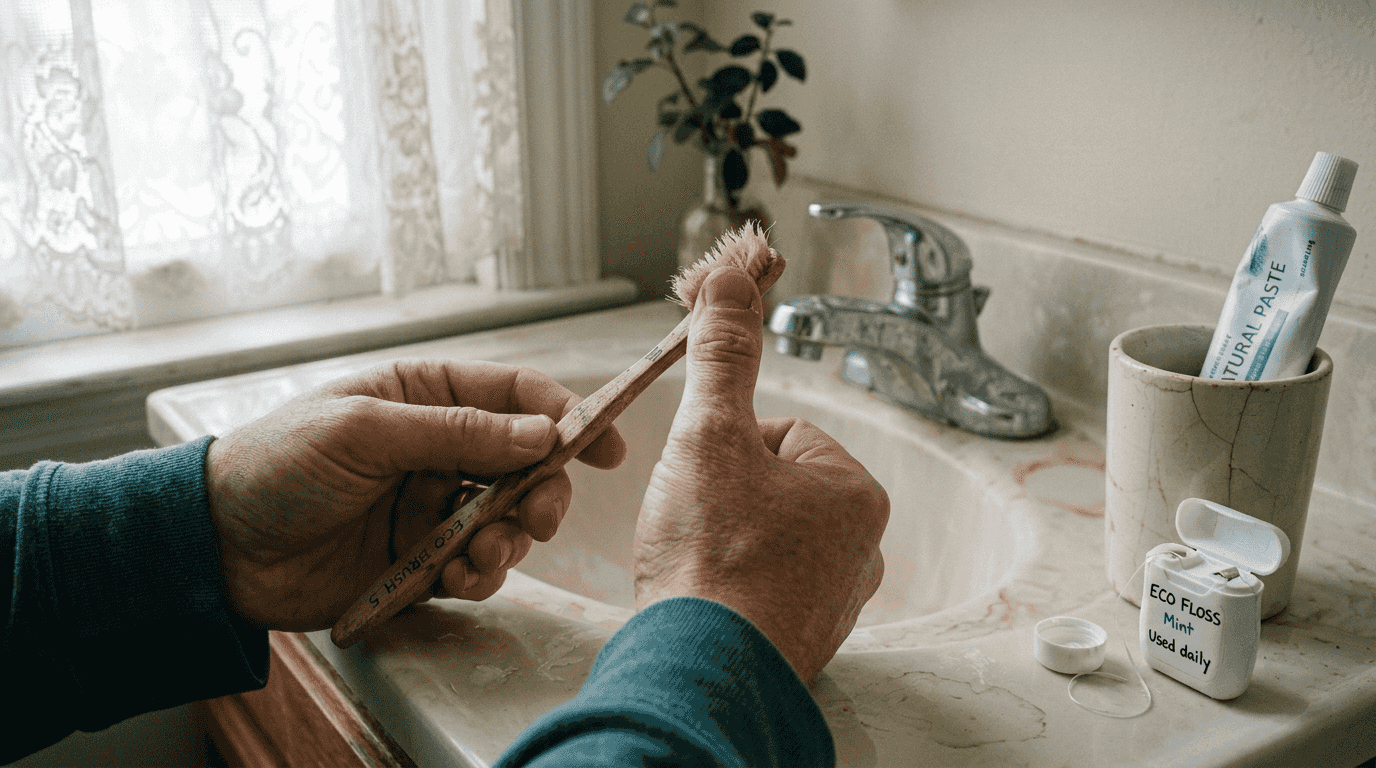
Studies confirm signs of wear were minimal on eco-friendly bristles after six months of simulated toothbrushing, proving durability matches conventional options.
3. Choose certified compostable floss
Select floss made from plant-based fibers like bamboo or corn-derived PLA. Verify the coating uses natural waxes rather than synthetic alternatives. Research shows compostable floss maintains 98% tensile retention during flossing and passes 90-day soil burial assays, confirming both strength and biodegradability.
4. Adopt effective flossing methods
Use 18 inches of floss, winding most around your middle fingers. Slide the floss gently between teeth using a zigzag motion, then curve it into a C-shape against each tooth. Move the floss up and down, reaching below the gumline without forcing it. This technique removes plaque while protecting gum tissue from damage.
Building effective oral care habits ensures your sustainable routine delivers optimal results for both health and environmental goals.
5. Store and dispose sustainably
Keep your toothbrush in a dry, ventilated area to prevent premature degradation of natural materials. When bristles show wear, remove them if non-biodegradable and compost the bamboo handle. Dispose of used floss in your home compost bin, where it will break down within 28-42 days.
For busy lifestyles, learning to optimize dental hygiene essentials helps maintain consistency with sustainable practices.
Pro Tip: Mark your calendar to replace your toothbrush every six months, aligning with dental checkups to establish a consistent routine.
Common pitfalls and troubleshooting your sustainable oral care routine
Even with the right products, common mistakes can undermine your sustainable oral care efforts. Recognizing these issues early helps you adjust your approach.
Floss breaking in tight contacts frustrates many users switching to plant-based options. This usually indicates insufficient wax coating or improper technique rather than product inferiority. Try using shorter sections of floss and gentler pressure when navigating tight spaces. Some brands offer thicker compostable floss that withstands more tension.
Damage to natural bristles often results from excessive pressure or improper storage. Bamboo and castor oil bristles need the same gentle touch as nylon versions. Press too hard and any bristle type will splay and lose effectiveness. Store brushes upright in open air rather than enclosed containers where moisture accelerates degradation.
Common sustainable oral care mistakes:
- Using mint-flavored floss with synthetic menthol that inhibits composting
- Applying excessive pressure with natural bristles, causing premature wear
- Storing bamboo toothbrushes in damp environments, promoting mold growth
- Composting floss with non-biodegradable coatings, contaminating compost
- Continuing to use worn bristles beyond their effective lifespan
Restoration damage poses another concern when transitioning techniques. Research indicates resin composite restorations fail often due to mechanical fatigue and degradation. If you have dental work, maintain gentle brushing and flossing to avoid stressing restorations.
“The key to sustainable oral care success lies in matching product quality with proper technique. Natural materials perform excellently when used correctly, but they won’t compensate for poor brushing habits.”
Non-toxic toothpaste selection complements your sustainable tools. Avoid products with triclosan, sodium lauryl sulfate, or artificial sweeteners. Choose formulations with fluoride for cavity protection unless you have specific sensitivities. For those with gum concerns, understanding which toothpaste for sensitive gums helps optimize your sustainable routine.
Identifying worn tools prevents compromised oral health. Replace your toothbrush when bristles splay outward, typically after six to ten months. Frayed floss or floss that shreds easily needs replacement. Natural materials show wear differently than synthetic ones, so monitor performance rather than relying solely on visual cues.
Expected outcomes and verifying your sustainable oral care results
Measuring the success of your sustainable oral care routine ensures you’re protecting both your health and the environment effectively. Proper use of eco-friendly products should deliver results identical to conventional options.
Effective plaque removal becomes apparent within weeks. Your teeth feel smooth after brushing, and you notice less buildup between dental cleanings. Gum health improves as proper technique reduces inflammation and bleeding. Pink, firm gums that don’t bleed during flossing indicate your sustainable routine is working.
Sustainable vs conventional oral care comparison:
| Factor | Sustainable Products | Conventional Products |
|---|---|---|
| Plaque removal | Equal with proper technique | Standard effectiveness |
| Chemical exposure | Minimal to none | Contains synthetic additives |
| Environmental impact | Biodegradable, low waste | Persistent plastic pollution |
| Cost per unit | Slightly higher upfront | Lower initial cost |
| Lifespan | 6-10 months | 3-4 months |
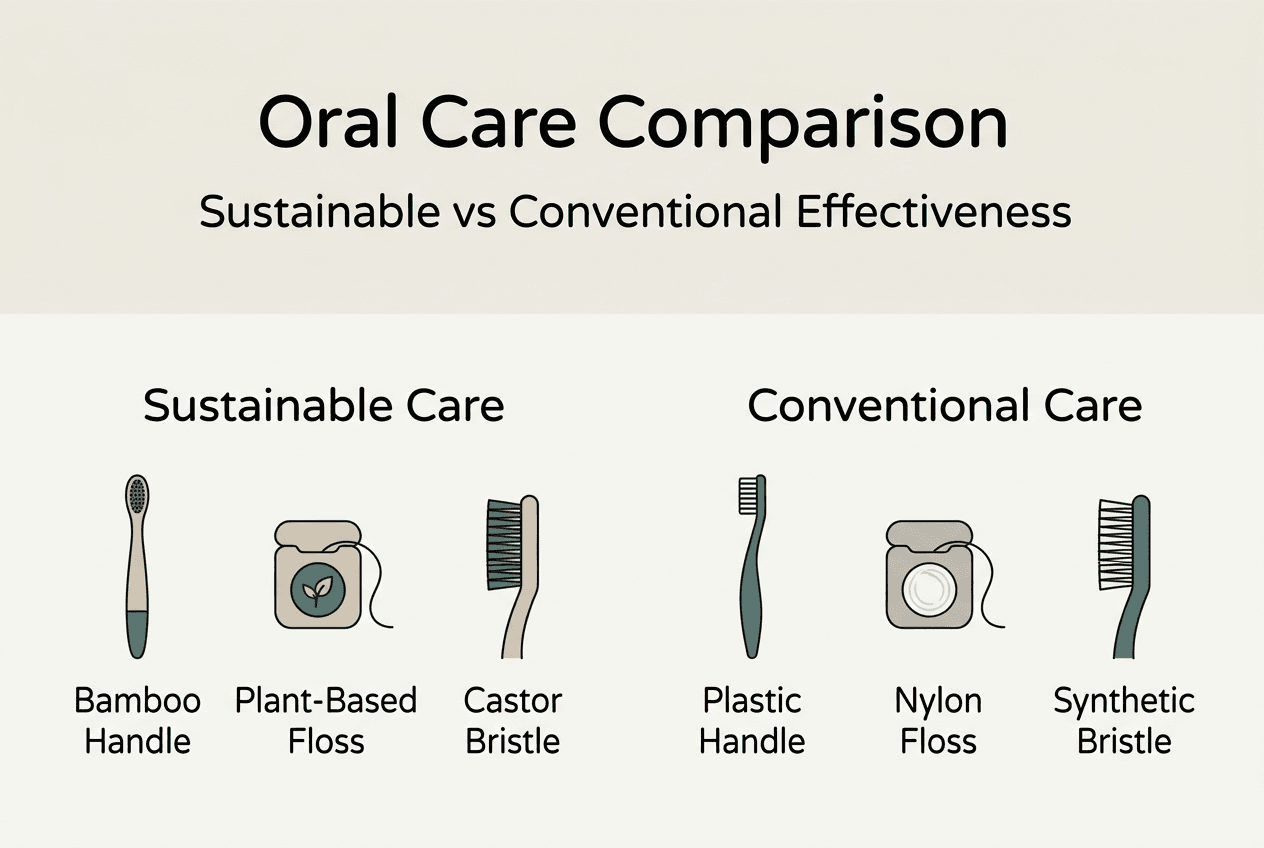
Research confirms sustainable floss reduces exposure to harmful chemicals and maintains plaque removal, offering health benefits beyond environmental advantages. You eliminate PFAS, synthetic fragrances, and petroleum-based materials from your daily routine.
Bristle lifespan for sustainable toothbrushes typically extends six to ten months with proper care. Studies show bamboo toothbrushes clean as effectively as plastic toothbrushes with proper technique, confirming performance parity. Monitor bristle condition rather than following arbitrary replacement schedules.
Compostable floss maintains usability throughout its lifecycle. You should experience smooth gliding between teeth without shredding or breaking under normal use. The natural wax coating provides sufficient slip while biodegrading completely in your compost system.
Monitoring your sustainable oral care success:
- Teeth feel clean and smooth after each brushing session
- Gums appear pink and healthy without bleeding or inflammation
- Plaque buildup decreases noticeably between dental visits
- Bristles maintain shape and stiffness for six months minimum
- Floss glides smoothly without excessive breaking or fraying
Reduced chemical exposure contributes to overall wellness beyond oral health. Eliminating synthetic additives from products you use twice daily decreases your toxic load. Many users report reduced mouth sensitivity and fewer allergic reactions after switching to natural oral care products.
Comparing your routine to conventional methods helps verify effectiveness. Understanding the manual vs sonic toothbrush comparison provides context for evaluating different sustainable brushing technologies.
Pro Tip: Schedule a dental cleaning three months after switching to sustainable products. Ask your hygienist to compare plaque levels with previous visits to objectively measure your routine’s effectiveness.
Recognizing importance of good oral health reinforces why maintaining rigorous hygiene standards matters even when prioritizing sustainability. Your eco-friendly routine should never compromise dental wellness.
Explore sustainable oral care products from Y-Brush
Ready to upgrade your sustainable oral care routine with technology that delivers superior results in less time? Y-Brush combines eco-conscious design with innovative sonic technology, offering effective cleaning that fits seamlessly into health-focused lifestyles.
The Y-Brush Essential Sonic Toothbrush provides thorough plaque removal while reducing plastic waste through durable construction and replaceable brush heads. Its efficient cleaning power means you spend less time brushing without sacrificing results, perfect for busy mornings when sustainability meets practicality.
Families committed to eco-friendly habits can introduce children to sustainable oral care early with the Y-Brush KidsBrush Sonic Electric Toothbrush. Designed for ages 4-12, it makes proper brushing technique easy and engaging while building lifelong sustainable habits.
Explore new sustainable oral care products that continue advancing eco-friendly technology, helping you maintain optimal oral health while minimizing environmental impact.
Frequently asked questions
What is sustainable oral care and why does it matter?
Sustainable oral care uses eco-conscious products and habits that reduce environmental impact while maintaining oral health standards. It matters because traditional oral care generates massive plastic waste, with billions of toothbrushes ending up in landfills and oceans annually. Sustainable alternatives eliminate this pollution while reducing exposure to harmful chemicals found in conventional products. For health-conscious consumers, it aligns personal wellness with environmental responsibility.
Are bamboo toothbrushes as effective as plastic ones?
Yes, bamboo toothbrushes clean teeth as effectively as plastic toothbrushes when proper brushing technique is used. The material of the handle doesn’t affect cleaning power. What matters is bristle quality and your brushing method. Bamboo options offer identical plaque removal while providing the environmental benefit of biodegradable materials that compost naturally rather than persisting as pollution.
What makes dental floss sustainable and compostable?
Sustainable floss uses plant-based fibers like PLA or bamboo with natural wax coatings instead of petroleum-derived nylon and synthetic additives. True compostability requires materials that break down completely in home composting systems. Research confirms compostable floss fully fragments in 28-42 days in active home compost unlike silk floss, which requires industrial facilities. Look for certifications verifying genuine biodegradability.
How do I maintain the durability of sustainable oral care products?
Use proper brushing technique with gentle pressure to minimize mechanical stress on natural bristles. Studies show signs of wear on sustainable toothbrush bristles are minimal after six months of use when brushed properly. Replace toothbrushes every six to ten months or when bristles splay outward. Store brushes in dry, ventilated areas to prevent moisture damage that accelerates degradation of natural materials.
Recommended
- Top Tips for Effective Tooth Brushing: A Guide to a Brighter Smile – Y-Brush USA
- Optimize your dental hygiene essentials for busy lifestyles – Y-Brush USA
- Top 6 betterbiom.com Alternatives in 2026 for Efficient Oral Care – Y-Brush USA
- Cut Cavities 20%: Fast Oral Care for Busy Professionals – Y-Brush USA


