


TL;DR:
- Only half of US adults brush twice daily, often with poor technique and inconsistency.
- Effective brushing requires proper frequency, duration, technique, and daily consistency.
- Technological tools like smart electric brushes can improve compliance and oral health outcomes.
Only 51% of US adults brush their teeth twice a day, which means roughly half the country is falling short of one of the most basic oral health recommendations. But frequency alone tells only part of the story. Real brushing compliance means doing the right things every single time you pick up your toothbrush, including brushing at the correct angle, covering every surface, and spending enough time to actually remove plaque. This guide breaks down what true compliance looks like, why so many Americans miss the mark, and what practical steps you can take to protect your smile without overhauling your entire daily routine.
Table of Contents
- What does brushing compliance really mean?
- Why do so many Americans fall short?
- Brushing technique and technology: What makes a difference?
- How to build lasting brushing compliance: Practical tips
- Brushing compliance: The missing ingredient for efficient oral health
- Effortless brushing compliance: Tools to make it simple
- Frequently asked questions
Key Takeaways
| Point | Details |
|---|---|
| True compliance defined | Brushing compliance means consistently following all recommended steps, not just brushing twice daily. |
| Barriers to compliance | Busy lifestyles, memory issues, and misconceptions lead to low compliance across all ages. |
| Technique over frequency | Proper technique is more important than how often you brush for effective plaque removal. |
| Role of technology | Modern electric and smart brushes make better compliance easier and quicker for Americans. |
What does brushing compliance really mean?
Brushing compliance is not simply about brushing twice a day. It covers the full picture of recommended oral care behavior, including how often you brush, how long you brush, the technique you use, and whether you maintain those habits consistently over time. Think of it as the difference between showing up to the gym and actually completing a workout correctly every visit.
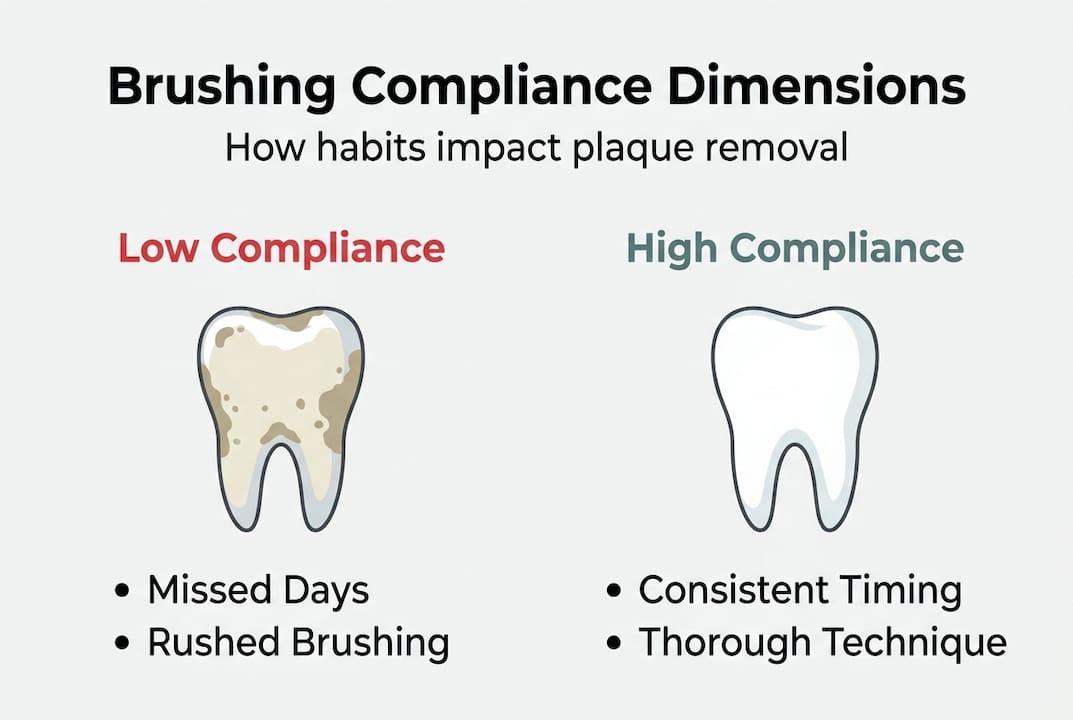
Compliance means adhering to all recommended brushing habits: twice daily, for two full minutes, using the correct method. Each of those three elements carries real weight. Skip one regularly, and your plaque removal suffers noticeably.
Here are the four core dimensions of brushing compliance:
- Frequency: Brushing at least twice daily, ideally after breakfast and before bed
- Duration: Spending a full two minutes to cover all tooth surfaces adequately
- Technique: Using the right angle and motion to dislodge plaque without damaging gums
- Consistency: Maintaining these habits daily, not just when you remember or feel motivated
One of the most revealing findings in oral health research is that self-reports are often inaccurate when it comes to brushing frequency. People genuinely believe they are brushing more thoroughly and more often than they actually are. This gap between perceived and actual behavior is one reason dental problems persist even among people who consider themselves diligent brushers.
The table below illustrates how each compliance dimension affects plaque removal outcomes:
| Compliance dimension | Low compliance impact | High compliance impact |
|---|---|---|
| Frequency | Plaque accumulates overnight and after meals | Plaque disrupted before it hardens |
| Duration | Large areas missed, especially molars | Full mouth coverage achieved |
| Technique | Gum line and tight spaces left unclean | Effective removal at all surfaces |
| Consistency | Irregular habits allow plaque to rebuild | Sustained low plaque levels over time |
Improving even one of these dimensions can produce measurable results. Mastering all four is what separates adequate oral care from genuinely effective plaque control. Learning solid brushing technique basics is a great starting point, and pairing that with effective oral care habits helps lock those improvements in place.
Why do so many Americans fall short?
Understanding what brushing compliance means is one thing. Actually achieving it day after day is where most people struggle. The barriers are real, varied, and often invisible until you examine them closely.
Busy schedules are the most commonly cited reason for poor compliance. Morning routines are rushed, evening routines get skipped when people are tired, and two minutes can feel surprisingly long when you are already running late. The result is a brush that lasts under a minute, covers only the most visible teeth, and misses the back molars entirely.

51% of US adults brush twice daily, and over 91% of elderly adults do not follow brushing recommendations at all. These numbers reveal that non-compliance is not a niche problem. It cuts across age groups, income levels, and education levels.
Children face their own unique challenges. Motivation is low, the concept of oral health consequences feels distant, and proper technique requires fine motor skills that many young children are still developing. Older adults deal with different obstacles: memory issues, reduced dexterity, and sometimes a belief that oral health matters less as they age.
Common barriers to brushing compliance include:
- Time pressure: Mornings and evenings are the busiest parts of the day for most households
- Fatigue: Evening brushing is frequently skipped when people are tired
- Motivation gaps: The consequences of poor brushing are slow to appear, reducing urgency
- Technique confusion: Many people were never taught a correct method and have never corrected it
- Memory lapses: Especially relevant for older adults and young children
Statistic to know: Only about half of American adults meet the basic twice-daily brushing standard, and the gap widens significantly among older age groups.
Pro Tip: Attach brushing to an existing habit, such as making coffee or washing your face, to make it automatic rather than a decision you have to make each morning.
For families navigating these challenges across multiple age groups, a dedicated family oral care guide can provide age-specific strategies that make compliance more realistic for everyone under one roof.
Brushing technique and technology: What makes a difference?
Knowing the barriers to compliance is useful, but the more actionable question is: what actually improves results? The answer involves both technique and the tools you use.
Proper technique is the foundation. The Bass method, widely recommended by dental professionals, involves holding the brush at a 45-degree angle to the gum line and using short, gentle strokes. This position allows the bristles to reach just below the gum line, where plaque tends to accumulate and where most people miss. Full mouth coverage, including the inner surfaces of front teeth and the chewing surfaces of molars, is essential.
Key elements of effective brushing technique:
- Angle: 45 degrees toward the gum line for maximum plaque disruption
- Pressure: Light to medium. Pressing too hard damages enamel and irritates gums
- Coverage: All four quadrants, inner and outer surfaces, plus chewing surfaces
- Time per section: Roughly 30 seconds per quadrant to reach the two-minute total
Technology adds a meaningful layer on top of good technique. Electric brushes improve plaque removal efficiency by 11 to 21% over manual brushing. That is not a marginal difference. For someone who already brushes twice daily but struggles with technique, switching to an electric brush can close a significant gap without requiring any additional time.
The comparison below shows how manual and electric brushes stack up on key compliance factors:
| Feature | Manual toothbrush | Electric toothbrush |
|---|---|---|
| Plaque removal efficiency | Baseline | 11 to 21% higher |
| Built-in timer | No | Yes (most models) |
| Pressure feedback | None | Available on smart models |
| Technique guidance | None | Zone reminders on advanced models |
| Compliance support | Relies on user discipline | Automated cues reduce reliance on willpower |
Research on powered vs. manual brushes consistently supports the advantage of electric options for plaque removal, particularly for people who struggle with consistent technique. Exploring advanced toothbrush technology and understanding oral care technology benefits can help you choose the right tool for your lifestyle.
Pro Tip: If you use an electric brush, let it do the work. Move it slowly from tooth to tooth rather than scrubbing, and let the oscillating or sonic action handle the plaque disruption.
For a deeper look at specific methods, reviewing optimal brushing techniques gives you a clear, evidence-based framework to follow.
How to build lasting brushing compliance: Practical tips
Knowing the right technique and having the right tools only works if you actually use them consistently. Building lasting compliance comes down to creating reliable systems, not relying on motivation alone.
Here is a practical step-by-step approach:
- Set fixed brushing times. Brush at the same two times every day. Consistency builds the habit faster than flexibility.
- Use a timer or built-in brush timer. Two minutes is longer than it feels. A timer removes the guesswork and ensures you complete the full session.
- Place your brush where you will see it. Visibility is a powerful cue. If your brush is out of sight, it is easier to forget.
- Use zone reminders. Smart brushes that signal when to move to the next quadrant help ensure full mouth coverage without mental effort.
- Involve your whole family. Brushing together reinforces the habit for children and creates accountability for adults.
- Track your progress. Some apps connected to smart brushes log your sessions and flag missed areas. Seeing patterns helps you correct them.
“Consistency is the single most powerful predictor of oral health outcomes. A good routine performed reliably will always outperform a perfect routine performed occasionally.”
Smart brushes and consistent technique lead to lower rates of oral health issues across age groups. That finding reinforces what dental professionals have long observed: the tool matters less than the habit.
Pro Tip: For kids, use a two-minute song or a brushing app with a visual timer. Making the two minutes feel purposeful and fun dramatically improves compliance without any battles.
American brushing statistics show that compliance rates improve when people have external cues and accountability. Understanding the smart toothbrush value in this context makes it easier to justify investing in tools that make compliance automatic rather than effortful.
Brushing compliance: The missing ingredient for efficient oral health
Here is an honest observation that most oral care content avoids: people spend significant money on premium toothpaste, whitening treatments, and high-end brushes, yet still have poor oral health outcomes. The reason is almost always compliance, not product quality.
Compliance matters more than frequency. Poor technique cancels out extra time spent brushing. A two-minute session with the wrong angle and insufficient coverage leaves behind more plaque than a focused 20-second session using the right method and the right tool.
The oral care industry tends to focus on features: more bristle rows, higher oscillation speeds, app connectivity. These innovations are genuinely useful, but only when the user is actually complying with the basics. A brush with 40,000 sonic vibrations per minute does nothing for someone who brushes for 45 seconds and misses their back molars every time.
What the market actually needs is innovation that makes compliance automatic. Tools that reduce the cognitive load of brushing, shorten the required time without sacrificing results, and fit into real lifestyles rather than ideal ones. That is the direction the future of oral care is heading, and it is the right one. The most effective brush is not the most expensive one. It is the one you use correctly, every day, without having to think too hard about it.
Effortless brushing compliance: Tools to make it simple
For those who want a more automatic route to compliance, technology can help bridge the gap. Y-Brush was built specifically for people who know they should brush better but need a solution that works with their lifestyle, not against it.
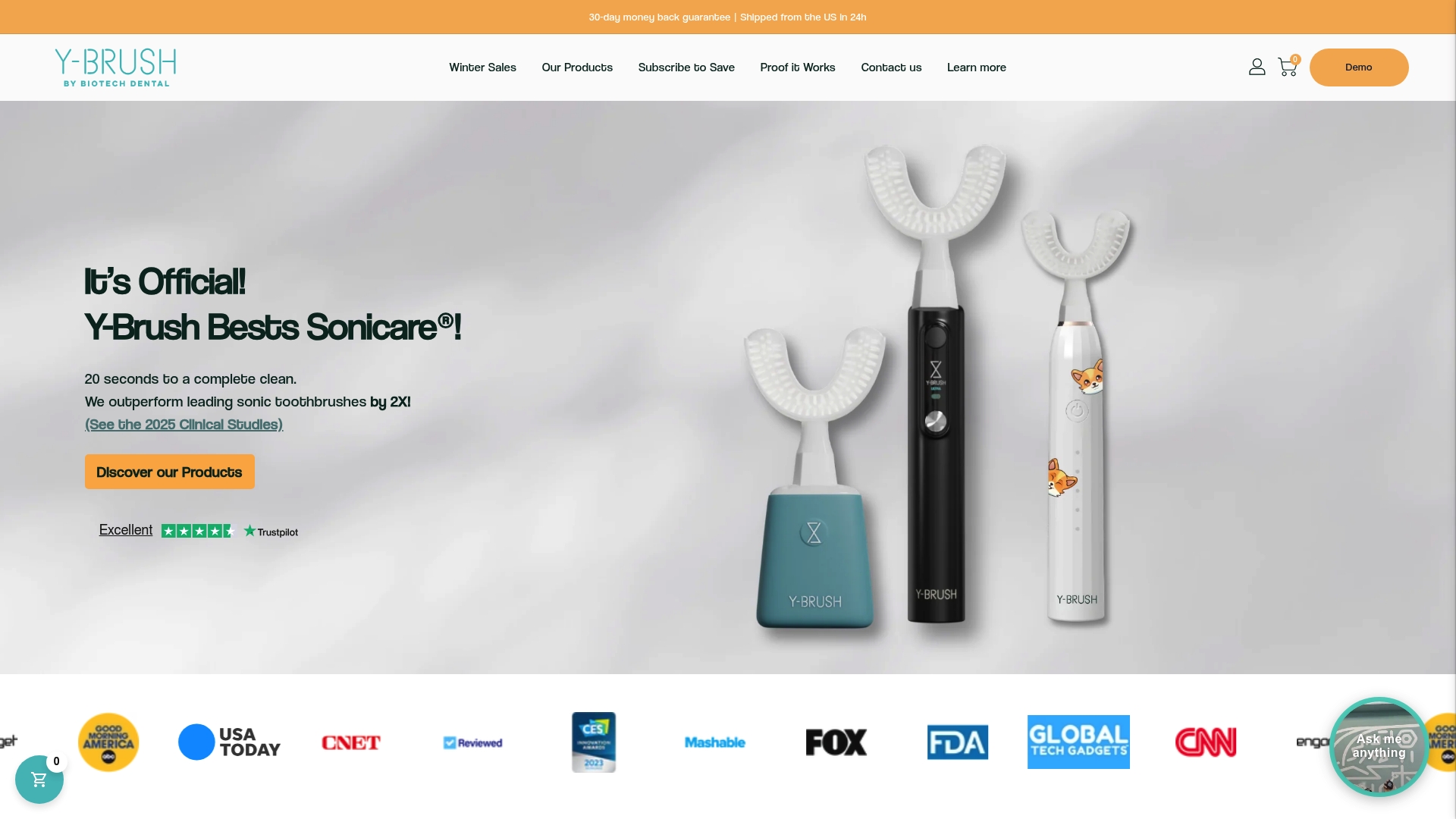
The Y-Brush Essential Sonic Toothbrush delivers a complete, effective clean in just 20 seconds, making full compliance realistic even on the most demanding mornings. For younger brushers, the KidsBrush Sonic Toothbrush brings the same efficiency to children ages 4 to 12, with a design that makes proper coverage automatic. Both options remove the guesswork from compliance and give every member of your household a genuinely achievable path to better oral health.
Frequently asked questions
What happens if I don’t brush twice a day?
People who brush twice daily have measurably lower rates of cavities and gum disease. Brushing only once allows plaque to accumulate and harden into tartar, which requires professional removal.
Does technique matter more than frequency?
Yes. Poor technique leaves behind 30% more plaque even when brushing frequency is high, which means the right method is just as important as how often you brush.
How can technology help with brushing compliance?
Smart brushes improve compliance and plaque removal by over 11% by providing real-time feedback, built-in timers, and zone reminders that guide users through a complete brushing session.
What are signs of poor brushing compliance?
Frequent plaque buildup, bleeding gums during brushing or flossing, persistent bad breath, and recurring cavities are all reliable indicators that your current brushing routine is not meeting the compliance standard.


