


TL;DR:
- Brushing twice daily for two minutes prevents cavities and gum disease.
- Proper technique and timing are essential for effective oral health routines.
- Consistency and system-building are more important than perfection or product perfection.
Brushing once a day feels like enough. You do it, you feel clean, and you move on. But that single daily session leaves your teeth vulnerable for hours, and the evidence is hard to ignore. Dental authorities recommend brushing twice daily for two full minutes with fluoride toothpaste to prevent cavities and gum disease. Yet most people fall well short of that. In this article, we break down why brushing frequency matters so much, what the official guidelines say, the real risks of brushing too little or too much, and practical strategies to build a routine that actually sticks.
Table of Contents
- Why brushing frequency matters: The science explained
- Official dental recommendations: Frequency, timing, and techniques
- The dangers of overbrushing and underbrushing
- Practical strategies for busy lives: Making consistent brushing easier
- Most people underestimate routine: Real success comes from consistency, not perfection
- Transform your brushing habit with Y-Brush solutions
- Frequently asked questions
Key Takeaways
| Point | Details |
|---|---|
| Twice-daily is ideal | Brushing your teeth twice a day for two minutes is the best way to prevent dental problems and remove plaque. |
| Avoid overbrushing | Brushing too often or too hard can harm your enamel and gums, so stick to gentle, regular routines. |
| Consistency trumps perfection | A simple, steady brushing habit that fits your lifestyle is more effective than occasional, forceful efforts. |
| Practical tools help | Reminders, efficient brushes, and fun routines can make healthy brushing habits easy even for busy families. |
Why brushing frequency matters: The science explained
Your mouth is constantly active. The moment you finish eating, bacteria in your mouth begin feeding on food particles and producing acids. These acids attack tooth enamel and contribute to plaque, a sticky film of bacteria that coats your teeth. Plaque does not wait for a convenient time to form. It starts building within minutes of a meal.
This is why brushing frequency is not just a preference. It is a biological necessity. When plaque is left undisturbed, it hardens into tartar within 24 to 72 hours. Tartar cannot be removed by brushing alone. It requires professional cleaning. Regular brushing interrupts this cycle before it becomes a problem.
Here is what consistent brushing actually protects against:
- Cavities: Plaque acids erode enamel, creating small holes that grow over time.
- Gum disease (gingivitis): Plaque buildup along the gumline causes inflammation and bleeding.
- Bad breath: Bacteria left on teeth and tongue produce sulfur compounds that cause odor.
- Periodontitis: Advanced gum disease that damages the bone supporting your teeth.
- Tooth loss: The long-term result of untreated gum disease and decay.
Statistic to know: Twice-daily brushing for two minutes with fluoride toothpaste is the globally recognized standard for preventing caries and gum disease, supported by both the ADA and UK government dental guidance.
Understanding why brush for 2 minutes is just as important as understanding frequency. Two minutes allows enough time to cover all tooth surfaces systematically. Most people brush for under 60 seconds, leaving large areas of the mouth untouched.
Building strong oral hygiene routines does not require perfection. It requires consistency. Brushing twice daily, every day, is the single most effective habit you can build for long-term oral health.

Official dental recommendations: Frequency, timing, and techniques
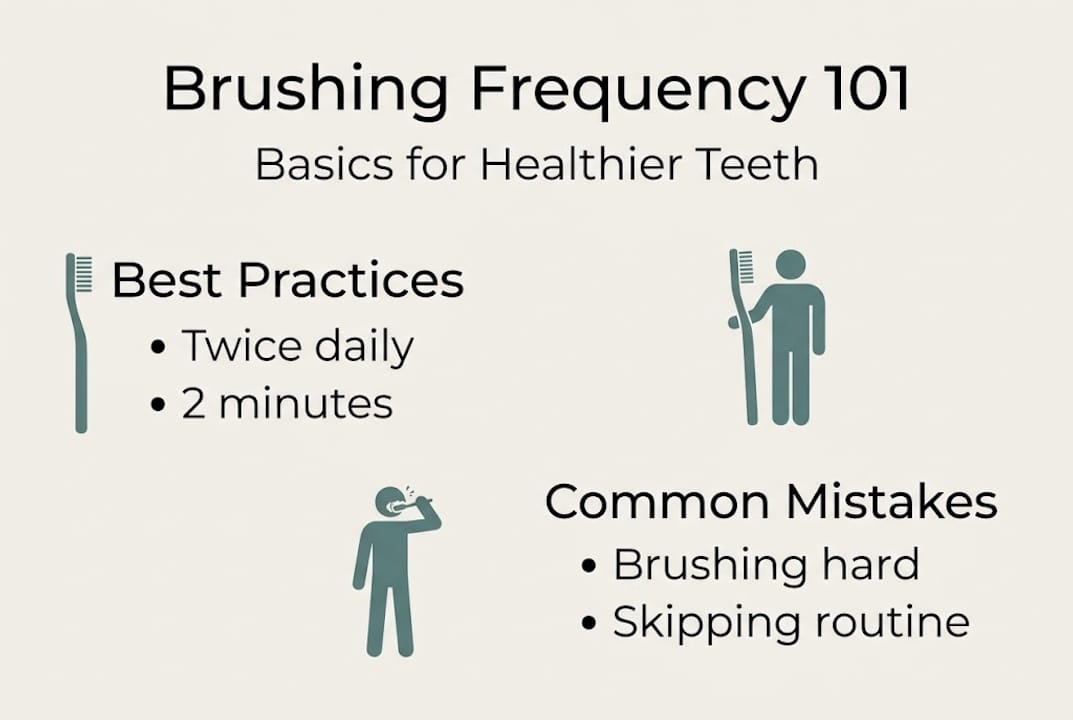
Dental authorities are clear. The UK government dental guidance and the American Dental Association both recommend brushing twice daily for two minutes using fluoride toothpaste. This is not a suggestion. It is the evidence-based minimum for maintaining healthy teeth and gums.
Here is a breakdown of what those recommendations look like in practice:
- Brush after breakfast to remove overnight bacteria and food debris from your morning meal.
- Brush before bed to clear the day’s plaque before your saliva flow decreases during sleep.
- Use fluoride toothpaste at every session to strengthen enamel and fight decay.
- Spend 30 seconds on each quadrant of your mouth to ensure full coverage in two minutes.
- Use a soft-bristled brush and gentle, circular motions rather than aggressive back-and-forth scrubbing.
| Behavior | Recommended | Risky |
|---|---|---|
| Brushing frequency | Twice daily | Once daily or less |
| Session duration | 2 minutes | Under 60 seconds |
| Toothpaste type | Fluoride | Non-fluoride or none |
| Bristle type | Soft | Hard or medium |
| Brushing force | Light to moderate | Heavy or aggressive |
| Timing | After breakfast, before bed | Random or inconsistent |
Following a daily oral hygiene checklist helps you stay on track without overthinking it. Pairing brushing with an existing habit, like your morning coffee or your nighttime skincare routine, makes it easier to stay consistent.
Pro Tip: Understanding the timing in brushing matters more than most people realize. Brushing immediately after acidic foods or drinks can actually harm softened enamel. Wait 30 minutes after consuming citrus, soda, or vinegar-based foods before brushing.
Technique matters as much as timing. Hold your brush at a 45-degree angle to the gumline and use short, gentle strokes. Rushing through brushing or pressing too hard does not clean better. It just causes damage.
The dangers of overbrushing and underbrushing
Most conversations about brushing focus on doing more. But there is a real risk on both ends of the spectrum. Brushing too little and brushing too much each carry specific, documented harms.
Underbrushing risks:
- Rapid plaque accumulation within 24 hours
- Persistent bad breath from bacterial buildup
- Gingivitis and early-stage gum disease
- Accelerated tooth decay and cavity formation
- Increased risk of systemic health issues linked to gum disease
Overbrushing risks:
- Enamel abrasion from excessive friction
- Gum recession exposing sensitive root surfaces
- Tooth sensitivity to hot, cold, and sweet foods
- Irreversible damage that cannot be corrected without dental treatment
| Risk factor | Underbrushing | Overbrushing |
|---|---|---|
| Plaque buildup | High | Low to moderate |
| Enamel damage | Indirect (acid erosion) | Direct (abrasion) |
| Gum health | Inflammation, disease | Recession, sensitivity |
| Cavity risk | High | Low |
| Sensitivity | Moderate | High |
Research confirms that brushing more than three times daily or applying forces above 3 Newtons causes measurable enamel abrasion and gum recession. Soft bristles and light pressure are not optional preferences. They are protective measures.
When comparing your options, understanding the differences between a manual vs sonic toothbrush can help you choose a tool that delivers effective plaque removal without the risk of overbrushing.
Important: The goal is not to brush harder or longer than recommended. The goal is to brush correctly, at the right frequency, with the right tools.
Pro Tip: If your gums bleed when you brush, that is usually a sign of underbrushing and plaque buildup, not overbrushing. Improve your consistency before assuming your technique is the problem.
Practical strategies for busy lives: Making consistent brushing easier
Knowing you should brush twice daily and actually doing it are two very different things. Life gets busy. Mornings are rushed. Evenings are exhausting. The routine slips, and before long, you are back to once-a-day brushing or skipping sessions entirely.
The good news is that consistency does not require willpower. It requires smart systems. Here are proven strategies to make twice-daily brushing automatic:
- Anchor brushing to existing habits. Brush right after your morning coffee and immediately after washing your face at night. Pairing a new habit with an existing one reduces the mental effort required.
- Set phone alarms for the first 30 days. It takes roughly a month to solidify a new routine. A simple alarm labeled “brush now” removes the need to remember.
- Keep your toothbrush visible. Out of sight means out of mind. A brush left on the counter is a visual cue that prompts action.
- Use a two-minute timer or app. Many free apps track brushing sessions and send reminders. Even a basic kitchen timer works.
- Involve your kids. Brushing together as a family creates accountability and makes the routine feel less like a chore. A kids brushing guide can help you build fun, effective habits for the whole family.
- Track your streak. Habit tracking apps or even a simple calendar checkmark create positive reinforcement. Missing a day feels more significant when you can see your progress.
Following efficient oral care routines does not mean spending more time in the bathroom. It means making the time you do spend more intentional and consistent.
Pro Tip: The twice-daily standard is your baseline, but the real win is removing the friction that makes skipping feel easier than brushing. Reduce the barriers, and the behavior follows naturally.
Technology can also help. Electric toothbrushes with built-in timers, pressure sensors, and app connectivity take the guesswork out of proper brushing. They make it easier to meet the two-minute standard without thinking about it.
Most people underestimate routine: Real success comes from consistency, not perfection
Here is something worth saying plainly: the people with the healthiest teeth are rarely the ones obsessing over technique or buying the most expensive products. They are the ones who simply brush twice a day, every day, without making it complicated.
We see this pattern repeatedly. Someone spends weeks researching the best toothbrush, the optimal toothpaste, and the perfect brushing angle. Then life gets busy, and they skip three nights in a row. All that research means nothing without the habit behind it.
The real lever is automation. When brushing becomes as automatic as putting on shoes, it stops requiring effort. Family accountability helps too. When everyone in the household brushes together, the routine reinforces itself.
Understanding the role of plaque removal in long-term oral health makes it easier to stay motivated. But motivation fades. Systems do not. Build the system first, and the results will follow.
Focus on what you can sustain, not what is theoretically perfect. A good-enough routine done consistently beats a perfect routine done occasionally.
Transform your brushing habit with Y-Brush solutions
If the biggest barrier to consistent brushing is time and effort, Y-Brush was built specifically to solve that problem. We know that 90% of people brush for under a minute, and we designed a solution that delivers a superior clean in just 20 seconds, fitting seamlessly into even the most demanding schedules.
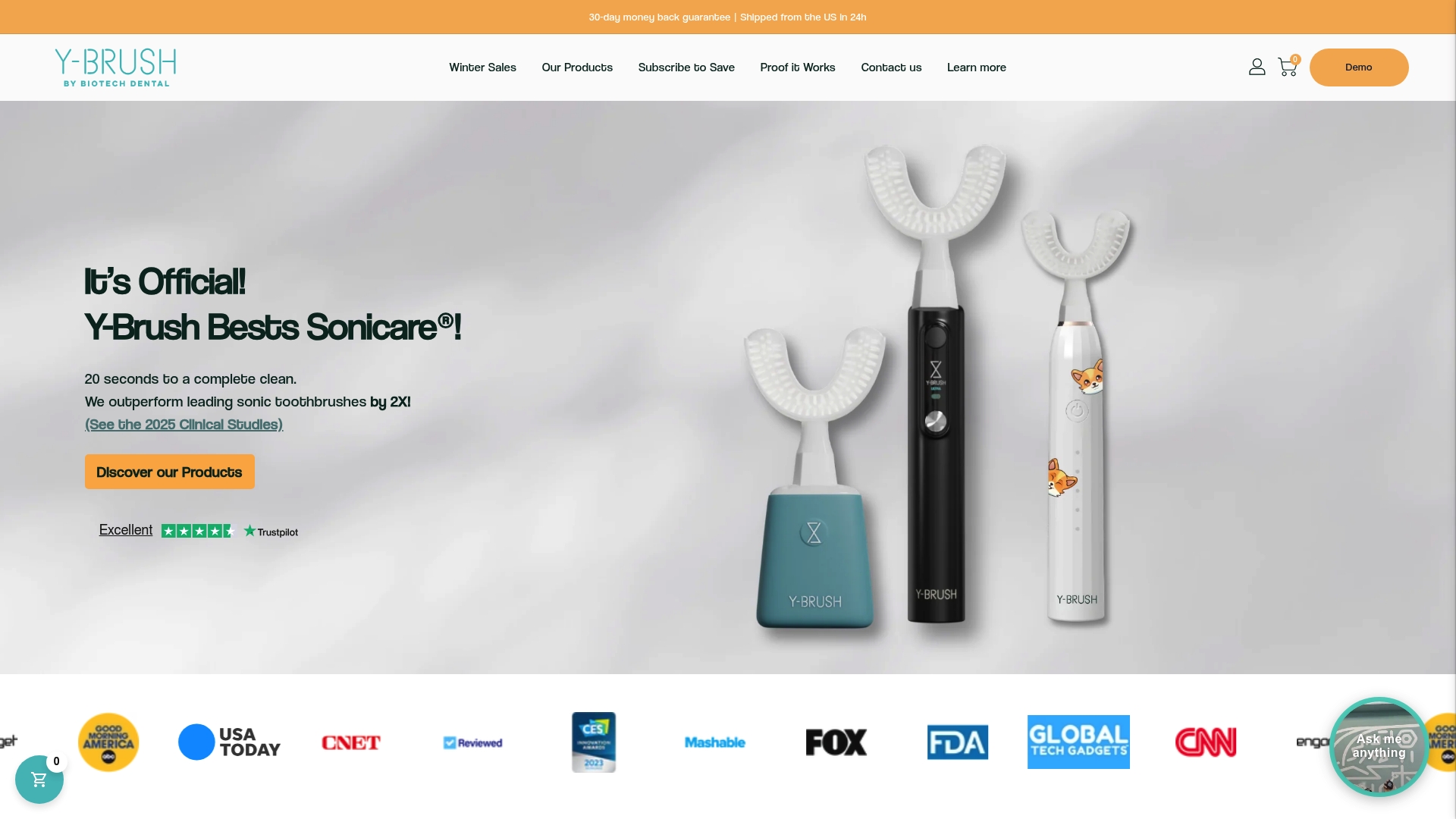
The Y-Brush Essential Sonic Toothbrush makes twice-daily brushing achievable for adults who need speed without sacrifice. For families, the KidsBrush Sonic Electric Toothbrush helps children build strong habits early, making brushing something they actually want to do. Better oral health does not have to be complicated. Start building the routine that works for your life today.
Frequently asked questions
Is it bad to brush more than twice a day?
Brushing more than three times daily can harm enamel and gums, particularly when combined with excessive force or hard bristles. Research shows that vigorous overbrushing causes measurable enamel abrasion and gum recession over time.
How long should a brushing session last?
Dentists recommend brushing for two full minutes per session to maximize plaque removal and protect your teeth. The two-minute standard is supported by both the ADA and UK government dental guidelines.
What is the best time of day to brush your teeth?
Brush after breakfast and before bed for the best protection against plaque and cavities. These two sessions align with the recommended twice-daily schedule that dental authorities consistently endorse.
Does using an electric toothbrush change how often I should brush?
No matter the type of toothbrush you use, the twice-daily recommendation remains the standard. Electric toothbrushes can improve technique and coverage, but they do not change how frequently you need to brush.


