


TL;DR:
- Mouthpiece toothbrushes offer quick, full-arch cleaning with minimal technique needed.
- Proper fit, charge, and technique are essential for optimal effectiveness.
- Consistent use and good oral habits are more impactful than device features alone.
The morning rush is real. Between getting dressed, making coffee, and checking your phone, brushing your teeth often gets cut short. Studies consistently show that most people brush for less than one minute, well below the dentist-recommended two minutes, which leaves plaque intact and gum health at risk. A mouthpiece toothbrush offers a compelling answer to this problem. This guide walks you through exactly what this device is, how to prepare for it, how to use it correctly, and how to know whether it’s actually working for you.
Table of Contents
- What is a mouthpiece toothbrush?
- What you need before you start
- How to use a mouthpiece toothbrush: Step-by-step instructions
- Troubleshooting and common mistakes
- How to tell if your mouthpiece toothbrush is working
- The real-world truth: What matters more than the device
- Ready to upgrade your brushing routine?
- Frequently asked questions
Key Takeaways
| Point | Details |
|---|---|
| Preparation matters | A mouthpiece toothbrush is only effective when it fits and is set up properly. |
| Technique still counts | Even with advanced devices, consistent and correct use is critical for healthy teeth. |
| Troubleshoot fit and coverage | Watch for missed spots and adjust technique or device to improve cleaning. |
| Results are individual | Your dental health depends more on habits and correct usage than the hype of any one gadget. |
What is a mouthpiece toothbrush?
A mouthpiece toothbrush is a U-shaped dental cleaning device designed to fit over your entire set of teeth simultaneously. Rather than moving a brush back and forth across each section of your mouth, you bite gently into the device and let it do the cleaning for you. The design covers the outer, inner, and chewing surfaces of your teeth all at once, which is the core reason it promises a faster brushing experience.
Most models on the market today are powered, relying on vibration or sonic technology to dislodge plaque. Some entry-level versions are manual, requiring you to do the movement yourself, but powered versions tend to deliver more consistent results. As noted in research on electric vs. manual brushes, electric and powered toothbrushes reduce plaque and gingivitis more reliably than manual brushes, especially when proper technique is difficult to maintain.
This matters because the appeal of a mouthpiece toothbrush is speed. If a powered version can simultaneously clean all surfaces in seconds, it has a genuine advantage for people who struggle to maintain correct technique during a two-minute manual session. However, it’s important to understand that results are not universally guaranteed. Research on automated toothbrush effectiveness found that in persons with Down syndrome using an auto-cleaning device unassisted over four weeks, no significant difference in plaque control was observed compared to a rotating-oscillating toothbrush.
For most healthy adults with standard dental anatomy, however, a properly fitted mouthpiece toothbrush can be a genuine time-saver and a meaningful upgrade. You can also explore the broader category of innovative dental products to understand how mouthpiece designs fit within the evolving oral care landscape.
Key features compared to a conventional brush:
| Feature | Conventional electric brush | Mouthpiece toothbrush |
|---|---|---|
| Brushing time | 2 minutes recommended | 20 to 60 seconds |
| Coverage per stroke | One tooth zone at a time | Full arch simultaneously |
| Technique required | Yes, moderate skill | Minimal, bite and hold |
| Motor type | Rotating or sonic | Sonic or vibration |
| Best for | General use | Busy adults, consistency |
| Limitations | Requires diligence | Fit-dependent |
Pro Tip: If you’re still comparing powered brushing options, reading about the manual vs sonic toothbrush difference can help you understand why vibration frequency plays such a big role in plaque removal efficiency.
What you need before you start
Understanding the device is only step one. Preparing properly helps you get the most out of your mouthpiece toothbrush from the very first use.
Before anything else, gather your essentials. You’ll need the mouthpiece toothbrush unit itself, a compatible brush head (most brands include one with purchase, but replacements are sold separately), and a toothpaste that won’t damage silicone components. Avoid overly gritty or whitening formulas with high abrasive ratings for daily use, as they can wear down the brush material faster.
What to have ready before your first use:
- The charged mouthpiece toothbrush device
- A compatible, correctly sized brush head
- A low-abrasion fluoride toothpaste
- A clean glass of water for rinsing
- The instruction manual (at least for setup and first charge)
Fit is the single most important factor in effectiveness. Research on automated toothbrush efficacy confirms that efficacy depends on fit and full coverage, with limitations arising for users with orthodontic appliances, crowded teeth, or improper seating. This is not a minor caveat. A device that doesn’t sit properly against your gum line will leave plaque in exactly the spots where it causes the most harm.
Compatibility considerations before buying or using:
| Dental situation | Compatible with mouthpiece brush? | Notes |
|---|---|---|
| Standard adult dentition | Yes | Best results with proper fit |
| Mild crowding | Likely yes | May miss some tight spots |
| Traditional metal braces | No | Brush head won’t reach brackets |
| Clear aligners | Yes (remove first) | Rinse aligners separately |
| Bridges or partial dentures | Consult dentist | Depends on placement |
| Dental implants | Usually yes | Verify with your provider |
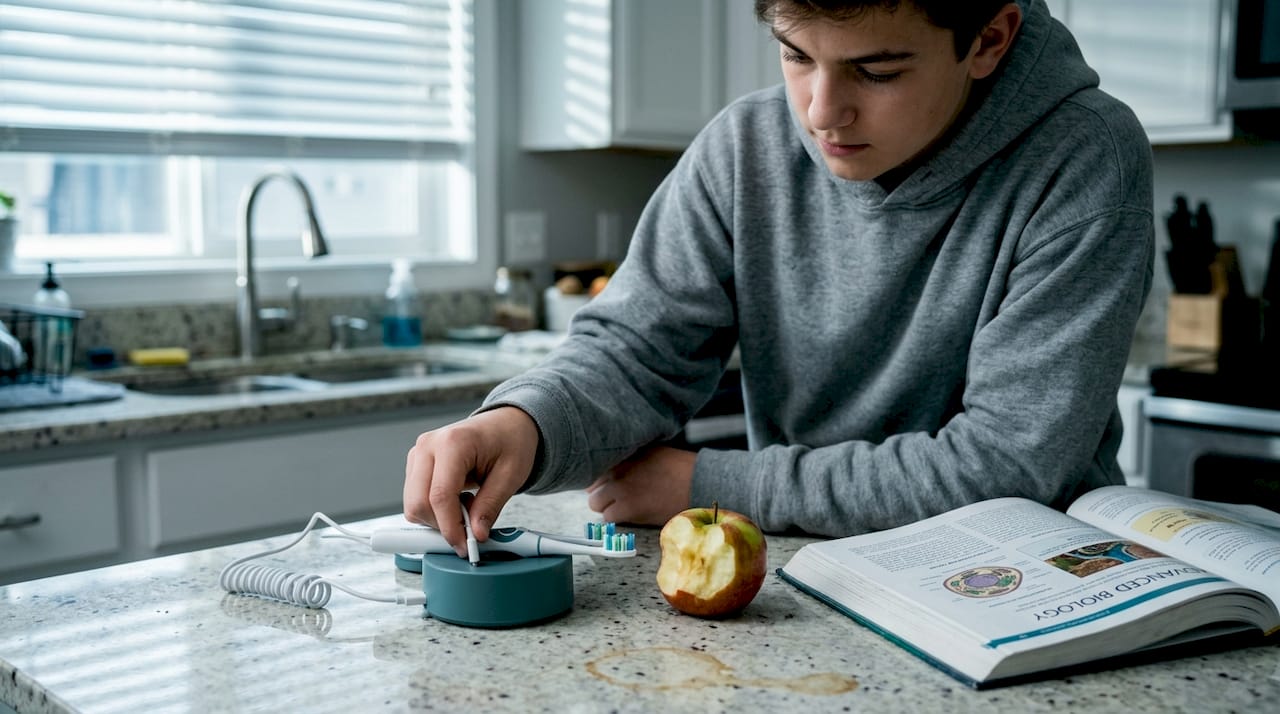
Charging matters more than most people expect. Many devices require a full initial charge of two to three hours before first use. Running the device on a partial charge reduces motor output, which directly affects vibration intensity and cleaning quality. Check that the charge indicator shows full before your first session.
Pro Tip: Check the full mouth toothbrush guide to understand sizing options and whether a standard or custom fit model suits your needs better, especially if you have a narrow arch or wide spacing between teeth.
For parents or caregivers, it’s also worth noting that toothbrushes for disabled kids require specialized consideration around fit and sensory tolerance before introducing a mouthpiece-style device.
How to use a mouthpiece toothbrush: Step-by-step instructions
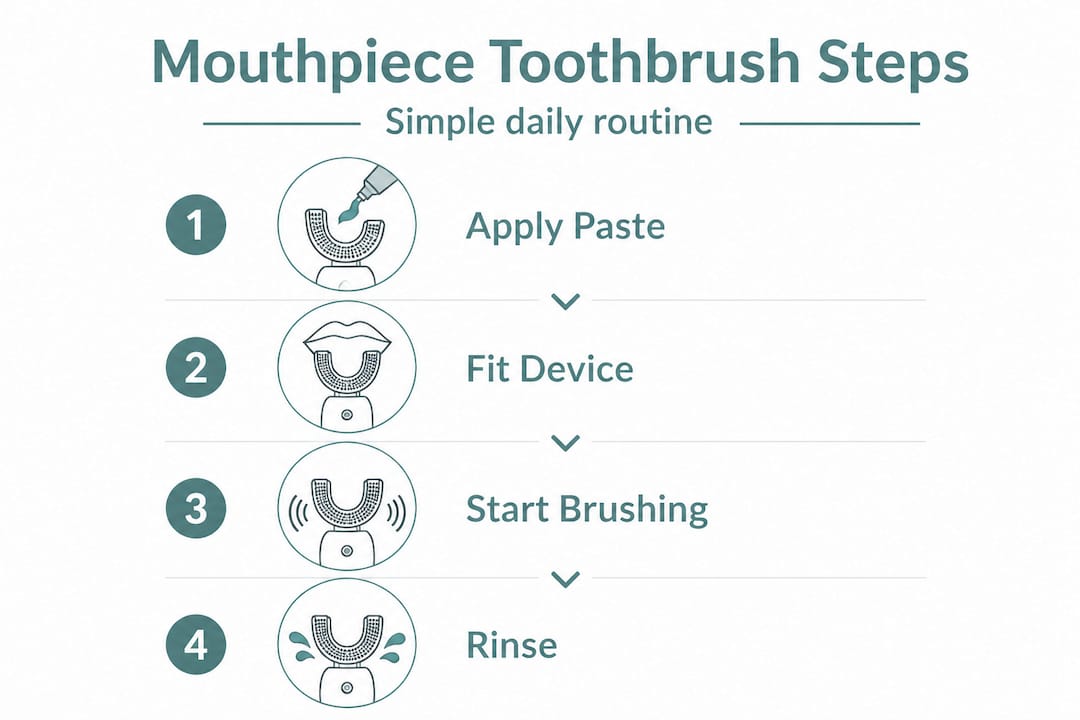
Once you’re set up, here’s how to actually use your mouthpiece toothbrush for the best results. The process is straightforward, but each step carries real weight.
-
Charge the device fully. Never start a brushing session on low battery. Reduced charge means reduced vibration power and less effective plaque disruption.
-
Apply toothpaste to the brush head. Use a pea-sized amount distributed across the inner bristle surface. Don’t overload it, as excess toothpaste can overflow and become difficult to manage during use.
-
Wet the brush head slightly. A small amount of water helps activate the toothpaste and ensures even distribution when you bite down.
-
Power on the device before inserting it. This avoids the awkward fumbling that happens when you try to press a button while the device is already in your mouth.
-
Insert the mouthpiece carefully. Slide it gently over your upper teeth first, then bite down to seat the lower arch. Make sure the bristles make contact with the outer and inner surfaces of both arches.
-
Bite down firmly but not aggressively. A controlled, even bite helps the bristles conform to your tooth surfaces. Biting too hard can distort the brush head and reduce contact in certain spots.
-
Let the device run for the full recommended cycle. Most units have a built-in timer. Don’t stop early. The full cycle, often between 20 and 60 seconds depending on the model, is calibrated for complete coverage.
-
Remove, rinse your mouth, and rinse the device. Spit out the toothpaste, rinse with water, and clean the brush head thoroughly before storing.
-
Follow up with floss or an interdental brush. No toothbrush, mouthpiece or otherwise, cleans between teeth adequately on its own.
Key statistic: Research consistently shows that powered designs do not eliminate the need for correct brushing technique and consistent usage. The device is a tool, not a substitute for smart habits.
Using your mouthpiece toothbrush twice daily gives you a compounding advantage. Missing sessions is where most people lose ground, regardless of what device they use. Explore more effective tooth brushing tips to round out your routine, and check the deeper analysis of automatic toothbrush effectiveness if you want to understand the science behind what your device is actually doing.
Pro Tip: If your device doesn’t have a built-in timer, use your phone’s stopwatch. Set it for 30 seconds and commit to not pulling the device out until it sounds. That single habit closes most of the gap between rushed and thorough cleaning.
Troubleshooting and common mistakes
Even with clear directions, some issues are common. Knowing how to recognize and correct them keeps you from developing false confidence in a routine that isn’t fully working.
The most frequent mistakes users make:
- Not seating the device fully. If the brush head isn’t aligned against the gum line on both arches, the bristles are only cleaning part of each tooth surface.
- Biting too loosely. A relaxed bite lets the mouthpiece shift slightly, creating gaps in coverage. Bite with purpose.
- Using too much toothpaste. Excess paste foams quickly and can force you to pull the device out early to spit, cutting the cycle short.
- Skipping interdental cleaning. Plaque between teeth isn’t reached by any mouthpiece-style brush. Floss or use an interdental cleaner every day.
- Ignoring tight spots. If you have crowded teeth, the brush may not fully contact each surface. A supplemental manual brush on a few problem teeth can close that gap.
- Not replacing brush heads on schedule. Worn bristles lose contact efficiency. Most manufacturers recommend replacement every two to three months.
“Both brushing modalities resulted in unsatisfactory plaque control in unassisted settings for persons with Down syndrome.” This finding is a reminder that certain populations benefit from supervised brushing, and that device design alone doesn’t solve every challenge.
For users managing oral hygiene with braces, a mouthpiece toothbrush may not be the right primary tool. Metal brackets create physical barriers that most mouthpiece designs cannot navigate. In those cases, supplementary brushing with a specialized head or interdental brush is essential. Building solid oral care habits around any device makes the difference between adequate and genuinely effective hygiene.
How to tell if your mouthpiece toothbrush is working
To make the most of any new tool, you need clear ways to judge results and know when to adjust your approach.
The most immediate sign of effective cleaning is how your mouth feels within the first 60 seconds after rinsing. Your teeth should feel smooth against your tongue, your breath should be noticeably fresher, and there should be no soreness or irritation at the gum line. Soreness after use often signals that you’re biting too hard or that the device is slightly misaligned.
Over time, a working routine produces visible and measurable changes. Look for these indicators:
| Indicator | What it means |
|---|---|
| Smoother tooth surfaces | Plaque biofilm is being disrupted consistently |
| Reduced gum bleeding | Gingivitis is resolving with regular cleaning |
| Fresher breath throughout the day | Bacterial load is decreasing |
| No new visible calculus buildup | Consistent removal before hardening occurs |
| Positive dentist feedback | Clinical confirmation at your next checkup |
Clinical assessments use plaque indices and gingival bleeding scores as the gold standard. Evaluations should focus on clinical endpoints such as plaque indices and gingival bleeding, across populations including children, adults, orthodontic patients, and individuals with disabilities. Tracking your own results between dental visits is practical, but there’s no substitute for professional confirmation.
Key takeaways for monitoring effectiveness:
| What to check | How often | When to act |
|---|---|---|
| Smoothness of tooth surfaces | Daily (tongue test) | If rough spots persist, reassess fit |
| Gum color and bleeding | Weekly visual check | Persistent bleeding warrants dental visit |
| Breath freshness | Daily | Persistent bad breath may need evaluation |
| Device performance and battery | Per session | Charge regularly, replace brush head on schedule |
Explore strategies for dental hygiene for busy lifestyles to understand how to fit monitoring into your schedule without adding friction to your routine.
The real-world truth: What matters more than the device
Here’s where we need to be honest with you, even if it’s not the most exciting message. Advanced oral care technology is genuinely useful, but it cannot override the fundamentals.
Clinical research is clear: the best toothbrush is the one used consistently and correctly. Not the most expensive one. Not the one with the most features. The one you actually use, every morning and every evening, without skipping.
This is the uncomfortable truth about mouthpiece toothbrushes specifically. They excel at removing a major barrier, which is the time and technique demand of traditional brushing. But they don’t remove the need for commitment. A person who uses a mouthpiece brush correctly twice a day will always outperform someone who uses even a premium conventional brush sporadically or sloppily.
Individual fit matters enormously too. Two people can buy the same device and have radically different results based purely on dental anatomy. Someone with well-spaced standard-sized teeth will likely see excellent plaque removal. Someone with severe crowding or unusual arch shape may need to supplement with manual technique in specific areas.
The technology is real. The time savings are real. But they work best when paired with smart core oral care habits like consistent flossing, regular rinsing, and scheduled dental visits. Think of a mouthpiece toothbrush as an accelerant for a good habit, not a replacement for the habit itself.
Ready to upgrade your brushing routine?
If reading this has convinced you that a smarter brushing tool deserves a place in your daily routine, now is the right time to explore your options.
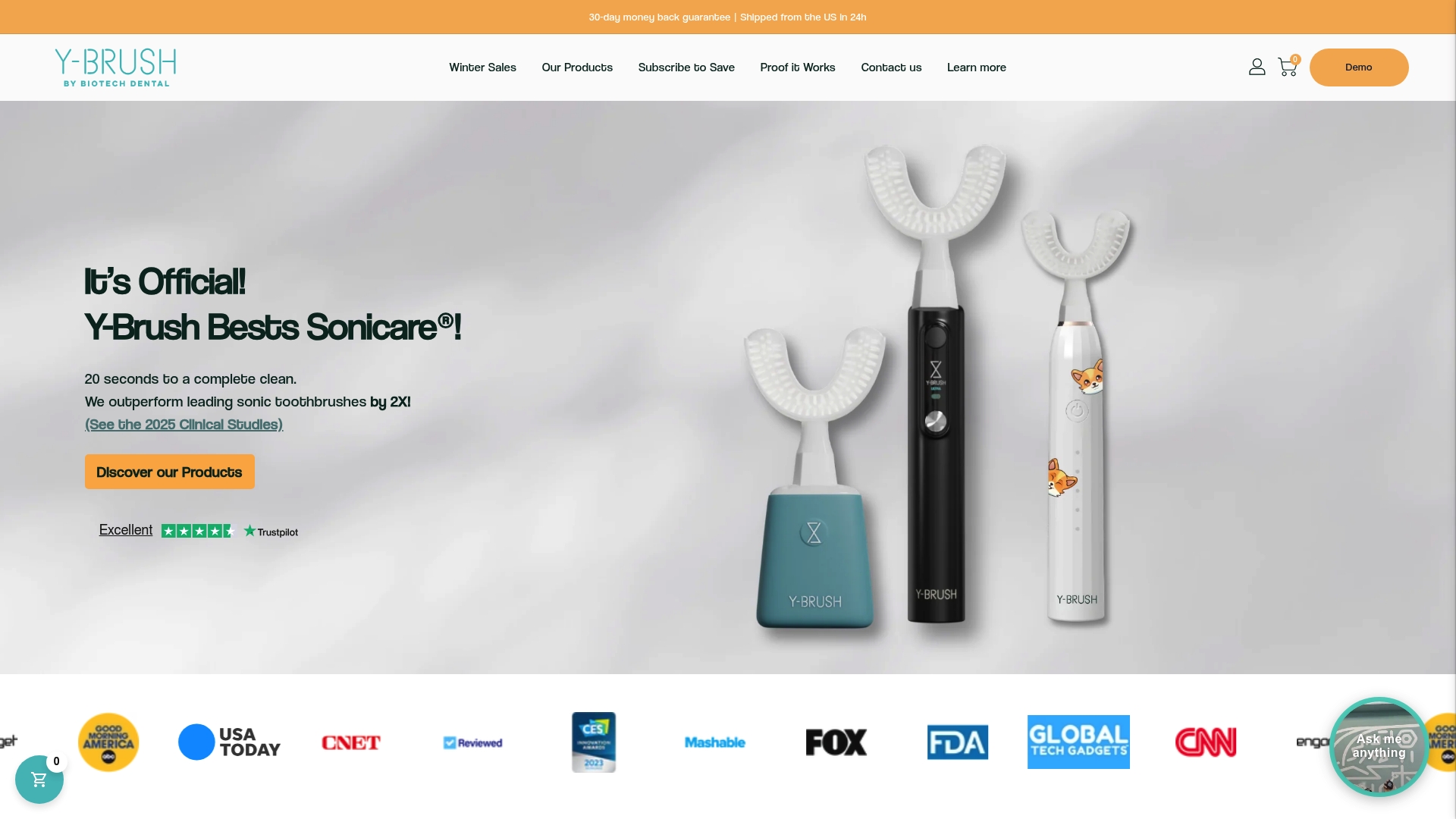
Y-Brush has developed the future of toothbrushing around one core idea: a clinically effective clean should fit the life you actually live, not the one you plan to have. The Y-Brush Essential Sonic Toothbrush delivers a full-mouth clean in as little as 20 seconds using sonic technology designed for everyday real-world use. Whether you’re getting ready at 6 a.m. or squeezing in a quick refresh between meetings, it fits. Browse the full selection of new dental products to find the option that matches your lifestyle, dental needs, and budget.
Frequently asked questions
Are mouthpiece toothbrushes as effective as regular electric ones?
They can be highly effective when used properly, but results depend on fit, technique, and consistency. As research confirms, powered brushes reduce plaque more reliably than manual alternatives, and mouthpiece designs add the advantage of simultaneous full-arch coverage.
Can I use a mouthpiece toothbrush with braces?
It may not clean all surfaces effectively if you have complex braces or crowded teeth; consult your dentist and check for specialty models. Orthodontic appliances can limit how well the brush head contacts all tooth surfaces, making supplemental cleaning necessary.
How long should I use a mouthpiece toothbrush each time?
Follow the device’s built-in timer, typically ranging from 20 to 60 seconds, and ensure you seat the device fully before starting. Many electric toothbrushes include timers precisely because brushing duration is one of the most commonly underestimated factors in plaque control.
What do I do if my mouthpiece toothbrush doesn’t fit well?
Try adjusting your bite position to improve contact, or consult customer support for sizing guidance. Poor fit is a documented limitation, since efficacy depends on coverage and an ill-fitting device will consistently miss plaque in high-risk areas near the gum line.


