


TL;DR:
- Automatic full mouth toothbrushes clean all teeth simultaneously using sonic vibrations, saving time.
- Proper fit and nylon bristles are essential for effective cleaning and user comfort.
- They enhance consistency in oral hygiene but should be complemented with flossing and professional care.
Most people leave the house every morning knowing they rushed through their brushing. A quick swipe here, a few circles there, and they’re done in under 60 seconds. Research consistently shows that 90% of people brush for less than a full minute, well short of the two-minute standard dentists recommend. Automatic full mouth toothbrushes are designed to close that gap by cleaning every tooth simultaneously, using sonic vibration to deliver thorough coverage in a fraction of the time. For anyone with a packed schedule and zero tolerance for skipped steps, this technology is worth understanding in detail.
Table of Contents
- Understanding automatic full mouth toothbrushes
- What you need before starting
- Step-by-step: Using your automatic full mouth toothbrush
- Troubleshooting and common mistakes
- Expected results and expert tips
- What most guides miss about automatic full mouth toothbrushes
- Discover efficient oral care solutions
- Frequently asked questions
Key Takeaways
| Point | Details |
|---|---|
| Save significant time | Automatic full mouth toothbrushes can clean teeth in as little as 30–90 seconds. |
| Prioritize proper technique | Effectiveness depends on good fit, using the right mode, and supplementing with flossing. |
| Choose materials wisely | Nylon bristles tend to clean better than silicone, but fit is critical for results. |
| Supplement, don’t replace | These devices work best alongside traditional brushing—not as a total replacement. |
Understanding automatic full mouth toothbrushes
Automatic full mouth toothbrushes work through a U-shaped mouthpiece that fits over all teeth at once, top and bottom, inside and out. Instead of manually guiding a brush head from tooth to tooth, the user simply bites down on the mouthpiece, applies toothpaste, and activates the device. Sonic vibrations then do the work, reaching surfaces and angles that manual brushing often misses.
According to testing data, these devices generate up to 58,000 vibrations per minute and incorporate a figure-8 or side-to-side motion to optimize contact with each tooth surface. Built-in timers run between 30 and 90 seconds, rechargeable batteries last one to two weeks on a single charge, and most models are compact enough to pack for travel.
Most automatic full mouth toothbrushes offer multiple cleaning modes:
- Clean mode: Standard everyday cleaning for plaque removal and general freshness
- Deep clean mode: Higher intensity for a more thorough session, ideal after meals with strong-flavored foods
- Massage mode: Gentle pulsation that stimulates gum tissue and promotes circulation
- Whitening mode: Often paired with LED light technology to target surface stains over time
These explore innovative dental products that move beyond the limitations of traditional brushing by building efficiency directly into the design.
How they compare to other toothbrush types
| Feature | Automatic full mouth | Traditional electric | Manual |
|---|---|---|---|
| Brushing time | 30 to 90 seconds | 2 minutes | 2 minutes |
| Teeth covered simultaneously | All teeth at once | One section at a time | One section at a time |
| Sonic vibration | Up to 58,000/min | Up to 40,000/min | None |
| Portability | High (rechargeable, compact) | Moderate | High |
| Technique required | Minimal | Moderate | High |
| Modes available | 2 to 4 | 2 to 3 | None |
| Cost range | $50 to $200+ | $30 to $150+ | $2 to $15 |
The table makes clear that the automatic full mouth toothbrush prioritizes speed and consistency above all else. For busy users who struggle to maintain technique across a full two-minute session, this design advantage is significant.
What you need before starting
With the basics covered, it is vital to know what you will need and how to set yourself up for success before the first use.
Choosing the right bristle material
The material of the mouthpiece bristles has a direct impact on cleaning performance. Independent reviews show that nylon bristles outperform silicone in real-world cleaning effectiveness. Silicone mouthpieces are softer and more comfortable for sensitive users initially, but they do not remove plaque as aggressively. Nylon bristles, similar to those found on traditional toothbrushes, provide the mechanical abrasion needed for effective plaque removal.
The tradeoff is comfort. Nylon can feel firmer, particularly at the gumline. For users new to automatic full mouth toothbrushes, starting with a gentle mode and a medium-firmness nylon mouthpiece is often the best approach. Over time, the gums adapt and sensitivity decreases. Understanding nylon vs silicone bristles before purchasing ensures you select the mouthpiece that matches your sensitivity level and cleaning goals.
What you will need
Before you start using the device, gather the following:
- The device itself: Fully charged and with the correct mouthpiece size installed
- Toothpaste: A fluoride formula is recommended; avoid gel-only pastes, which may not distribute evenly through the mouthpiece
- The charger: Store it near your sink for easy access and consistent charging habits
- Correct mouthpiece size: Most brands offer small, medium, and large sizing; fitting matters more than most buyers realize
Mouthpiece fit
Fit is not optional. A mouthpiece that is too large will not create adequate contact with every tooth surface. One that is too small may cause discomfort or miss outer tooth surfaces entirely. Most manufacturers include sizing guides, and some offer trial mouthpieces. Spend time on proper sizing before committing to regular use.
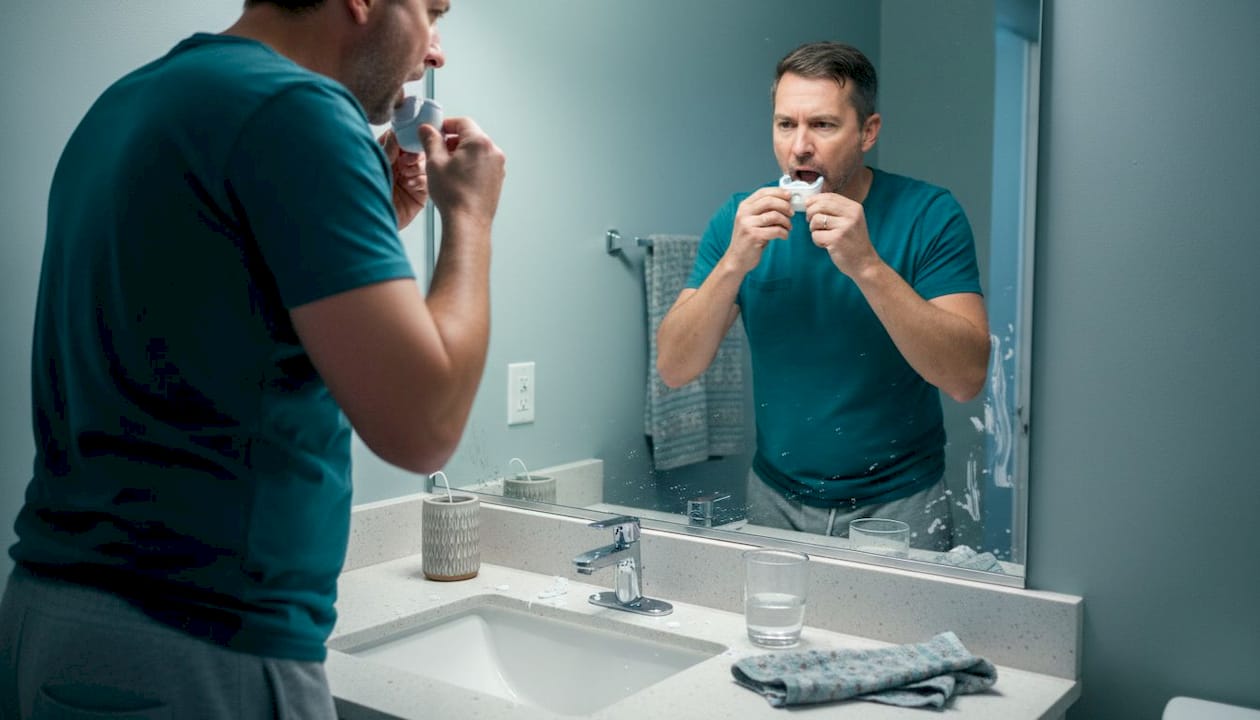
Device and bristle specifications
| Specification | Recommendation |
|---|---|
| Bristle material | Nylon (preferred for plaque removal) |
| Mouthpiece size | Matched to jaw size (S/M/L) |
| Battery level before use | Fully charged |
| Toothpaste type | Fluoride paste (not gel) |
| Mode for first use | Clean (standard) mode |
Pro Tip: Always charge the device fully before your first use and top it off every three to four days. Running the device on low battery can reduce vibration intensity, which directly affects cleaning performance.
Step-by-step: Using your automatic full mouth toothbrush
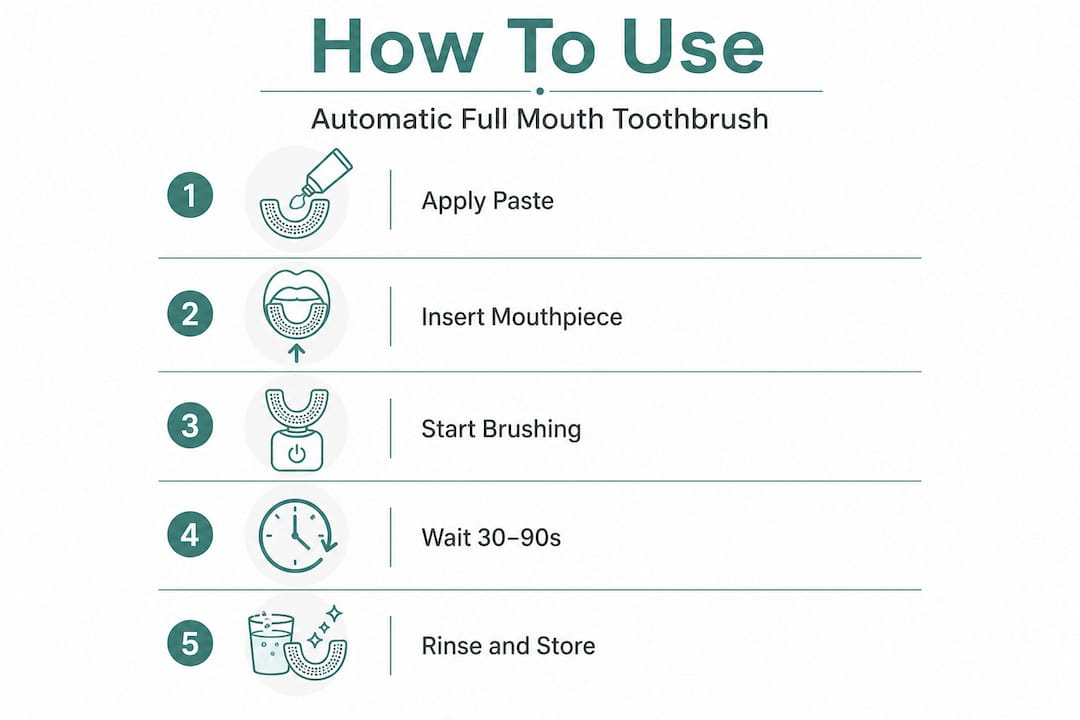
Once you have gathered your essentials and ensured the right fit, it is time to start brushing efficiently. Following a consistent process from day one prevents the most common mistakes and helps you get results faster.
- Charge the device fully. Confirm the battery indicator shows a complete charge before starting. This ensures maximum vibration output throughout the session.
- Apply toothpaste to the mouthpiece. Spread a small amount of fluoride toothpaste evenly across the bristles inside the mouthpiece. Avoid overloading it, as excess paste can foam quickly and cause discomfort.
- Insert the mouthpiece. Gently bite down so the mouthpiece covers all teeth evenly. The bristles should make contact with the front, back, and biting surfaces simultaneously.
- Select your mode. For a daily clean, start with standard clean mode. Use deep clean mode for more intensive sessions, or massage mode if your gums feel tender.
- Activate the device and move it. Turn on the sonic vibrations and use a gentle figure-8 or side-to-side motion throughout the timer cycle. Do not hold the device stationary. Movement helps distribute vibrations across every surface and ensures the gumline receives adequate contact.
- Allow the timer to complete. Most devices run between 30 and 90 seconds. Let the full cycle finish before removing the mouthpiece.
- Rinse thoroughly. Spit out toothpaste, rinse your mouth with water, and rinse the mouthpiece separately.
- Clean and store the device. Rinse the mouthpiece under warm water and allow it to air-dry before capping or storing.
Important: The mouthpiece must fit snugly against all teeth before activating the device. If it feels loose or uneven, pause, adjust your bite, and reinsert before turning it on. Brushing with a poor fit is one of the most common reasons users report missed spots or gum discomfort.
Building effective oral care habits around these steps ensures the device delivers its full potential every session. For more guidance on technique, reviewing efficient brushing steps can help reinforce proper form from the start.
Pro Tip: After each brushing session, rinse the mouthpiece immediately. Toothpaste residue dries quickly and can clog bristle gaps, reducing effectiveness over time. A clean mouthpiece also lasts significantly longer.
Troubleshooting and common mistakes
Even with a modern device, mistakes can undermine your oral hygiene. Here is how to troubleshoot problems and what to watch for.
Most common errors
- Poor mouthpiece fit: The number one performance issue. If the mouthpiece does not seat correctly, contact with back molars is reduced significantly.
- Not moving the device: Users who hold the device completely still during the cycle miss the benefits of the motion-assisted vibration distribution. Always use a gentle side-to-side or figure-8 movement.
- Using the wrong mode every time: Deep clean mode is not necessary for every session. Using it daily can cause gum soreness, particularly in the first weeks of use.
- Brushing for less than the full timer cycle: Even at 30 to 90 seconds, stopping early reduces plaque removal. Let the built-in timer guide every session.
- Skipping supplemental care: Independent research notes that while nylon mouthpieces perform better than silicone options, even well-fitted nylon brushes can miss the gumline and proximal tooth surfaces (the spaces between teeth) without proper motion. Flossing remains necessary.
Solutions and adjustments
If you notice coverage gaps, try repositioning the mouthpiece slightly forward or backward to ensure rear molars are fully seated inside the bristle contact zone. If comfort is an issue, drop to massage or gentle clean mode for a week before progressing. Battery concerns are usually resolved by establishing a regular charging schedule every three to four days.
Understanding automatic vs manual toothbrushes also helps set realistic expectations. The automatic option removes friction from the routine, but it works best alongside, not instead of, thorough supplemental care.
Pro Tip: Replace the mouthpiece every three to six months, or sooner if nylon bristles appear splayed or discolored. Worn bristles lose contact pressure and cleaning effectiveness, even if the device itself still functions normally.
Expected results and expert tips
Once you are using your device confidently, it is important to understand what realistic success looks like and how to sustain it over time.
What improved efficiency looks like
Users who adopt a consistent routine with an automatic full mouth toothbrush typically report:
- Shorter brushing time: Sessions of 30 to 90 seconds replace two-minute manual routines without sacrificing coverage
- More consistent gum contact: The simultaneous cleaning design reduces the chance of skipping sections during rushed mornings
- Reduced plaque buildup between dental visits: Particularly for users who previously brushed inconsistently or for less than the recommended time
- Improved experience for special needs users and children: The simplicity of the device reduces the coordination demands of traditional brushing, making it more accessible
Statistic callout
Research notes that the most validated model in this category holds American Dental Association (ADA) acceptance, a meaningful benchmark for safety and basic efficacy. Still, the ADA standard does not position these devices as full replacements for traditional brushing and flossing. They work best as part of a combined oral care routine.
Expert tips for long-term results
For effective tooth brushing over time, keep these guidelines in mind:
- Floss at least once daily. Automatic toothbrushes do not clean between teeth.
- Schedule professional cleanings every six months regardless of device quality.
- Rotate modes based on your daily needs rather than defaulting to the same setting every time.
- Track your brushing consistency. Many newer models pair with smartphone apps that log sessions.
For a thorough breakdown of performance data, exploring the effectiveness of automatic toothbrushes compared to traditional options provides additional context for setting benchmarks.
What most guides miss about automatic full mouth toothbrushes
Most reviews focus on features and price. Fewer address the fundamental mindset shift these devices require.
Here is the honest truth: the real power of automatic full mouth toothbrushes is not that they replace effort. It is that they lower the barrier to consistency. A two-minute manual brushing session demands focus, proper technique, and enough time to execute it correctly. Most people fail that standard every single day, not out of laziness, but because real life does not accommodate a perfect dental routine at 7 a.m. and 11 p.m.
What these devices genuinely solve is the consistency gap. On a rushed morning, a 30-second automatic session beats a 20-second manual swipe every time. The user gets meaningful coverage, the gums get stimulated, and the plaque removal still happens. Over weeks and months, that daily consistency compounds into better oral health outcomes than sporadic thorough brushings surrounded by days of rushed ones.
The contrarian insight worth holding onto: stop measuring success by what these devices do on their best day. Measure them by what they do on your worst day, when you are late, tired, or distracted. That is where they win. That is where oral care innovation actually matters.
The expert warning still stands. No device eliminates the need for flossing or professional care. Results depend on daily discipline, proper fit, and honest supplementation with traditional methods when needed. But the best oral health routine is not the most thorough one you attempt once a week. It is the solid, consistent one you actually follow every day.
Discover efficient oral care solutions
Ready to upgrade your oral hygiene routine with tools that match your lifestyle?
Y-Brush is built for exactly the kind of person this article describes: someone who understands the value of thorough dental care and needs a device that delivers it without demanding more time than the morning allows. Designed for adults and children alike, Y-Brush products pair advanced sonic technology with nylon bristle mouthpieces in multiple sizes to ensure the right fit for every user. Membership plans make replacing mouthpieces simple and consistent, so performance never drops due to worn bristles. Explore the full Y-Brush product range at y-brush.co and find the option that fits your routine, your family, and your goals for long-term oral health.
Frequently asked questions
Are automatic full mouth toothbrushes as effective as regular brushing?
They can provide consistent cleaning in less time, but mixed efficacy data suggests they work best alongside flossing and occasional traditional brushing rather than as a complete replacement.
How long does it take to brush with these devices?
Most models complete a full brushing cycle in 30 to 90 seconds, making them significantly faster than a standard two-minute manual routine.
Are these devices safe for sensitive gums or children?
Yes. These devices are well-suited for children and users with sensitive gums, especially when the gentle or massage mode is selected and the mouthpiece fits properly from the start.
How often should you replace the mouthpiece?
Replace the mouthpiece every three to six months, or earlier if nylon bristles show wear, as degraded bristles lose the contact pressure needed for effective plaque removal.


