


TL;DR:
- True eco-friendly oral care considers the entire product life cycle, not just single items.
- Applying the 4R framework helps reduce waste and promotes sustainable dental routines.
- Sustainable products must also be clinically effective and verified by dental authorities.
Most people assume switching to eco-friendly oral care means buying a bamboo toothbrush or grabbing a ‘natural’ toothpaste off the shelf. That’s a start, but it barely scratches the surface. Sustainable oral care aims to reduce the environmental impact of your entire hygiene routine while maintaining or improving your oral health outcomes. Ingredients matter. Packaging matters. How long a product lasts matters. And what happens when you throw it away matters just as much. This article breaks down what eco-friendly oral care truly means and gives you practical steps to build a greener, healthier routine.
Table of Contents
- Understanding eco-friendly oral care
- The 4R framework: Reduce, reuse, recycle, rethink
- Product life cycle: Why it matters
- Balancing sustainability with clinical effectiveness
- The truth about eco-friendly oral care: More than meets the eye
- Explore sustainable oral care solutions
- Frequently asked questions
Key Takeaways
| Point | Details |
|---|---|
| Systems thinking matters | Eco-friendly oral care means considering every part of your routine from materials to disposal, not just switching brands. |
| Apply the 4R framework | Reduce, reuse, recycle, and rethink your oral hygiene choices for true sustainability. |
| Life cycle counts | Assess each product’s impact from production to end of use, avoiding greenwashed marketing claims. |
| Health stays first | Choose sustainable options that do not sacrifice your oral health or clinical effectiveness. |
Understanding eco-friendly oral care
With that misconception out of the way, let’s define what eco-friendly oral care truly means. It is not a single product swap. It is a system-level way of thinking about every item in your bathroom cabinet.
Eco-friendly oral care considers the impact of materials, packaging, product lifespan, and disposal as one connected whole. That means a toothbrush made from bamboo but shipped halfway around the world in plastic bubble wrap is not automatically a win for the planet. Context and full-picture thinking are everything.
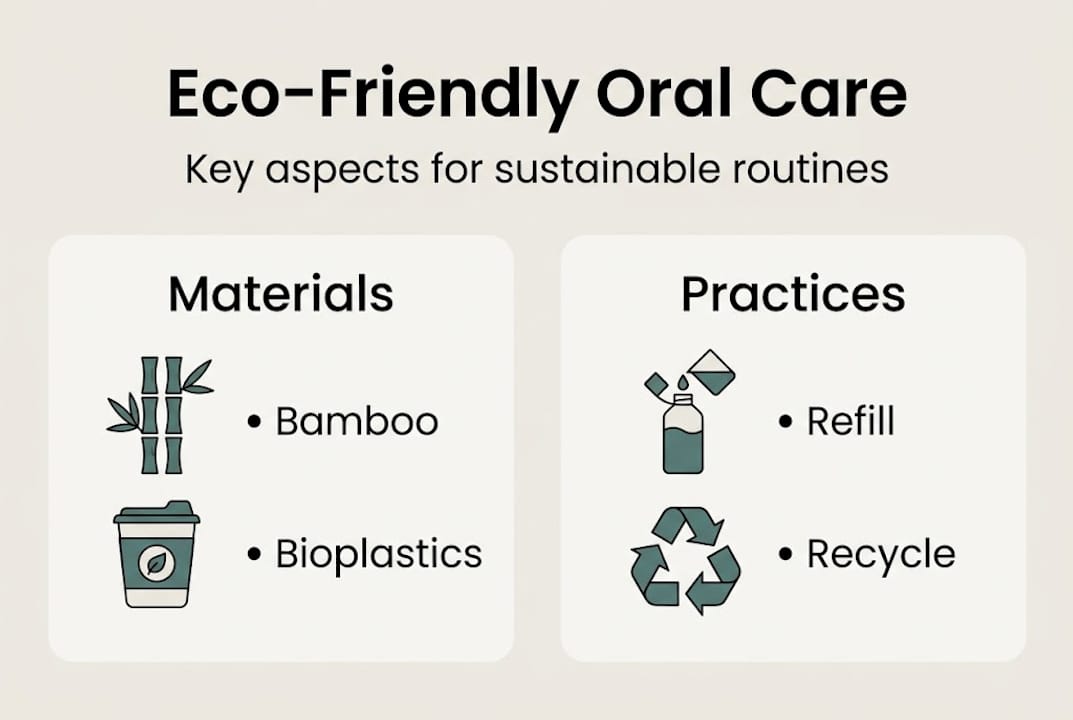
Life cycle thinking is the concept that drives this approach. It asks: what resources went into making this product, what happens while you use it, and where does it go when you’re done? An oral health sustainability analysis applies this lens to dental products, revealing that emissions, water use, and manufacturing waste often tell a very different story than ingredient labels suggest.
Here’s a quick look at common oral care items and where their impact actually comes from:
- Plastic toothbrushes: Over 1 billion are discarded in the U.S. each year, and most cannot be recycled through standard programs
- Toothpaste tubes: Multi-layer materials make them nearly impossible to recycle at home
- Mouthwash bottles: Single-use plastic, often with minimal recyclable content
- Floss containers: Small size means they fall through sorting machines at recycling facilities
- Electric toothbrush heads: Replaceable heads reduce full-unit waste, but the heads themselves still generate plastic
Building healthy oral habits within a sustainable framework is about connecting these dots, not just picking the product with the greenest label.
“Sustainability in oral care is not a marketing category. It is a systems approach that demands accountability across the entire product journey, from raw material extraction to the landfill.” — Multifactorial Sustainability in Oral Healthcare, 2025
The bottom line: genuinely eco-friendly oral care requires more than good intentions. It requires asking the right questions before you buy.
The 4R framework: Reduce, reuse, recycle, rethink
Knowing that eco-friendly oral care means thinking bigger, how do you actually put it into practice? The 4R framework gives you a clear, actionable structure. Sustainability in oral health is often put into practice using exactly this kind of waste-management thinking.
Here is how each R applies to your daily routine:
- Reduce: Use only what you need. Choose toothpaste tablets instead of large tubes to cut packaging waste. Opt for minimal-packaging floss refills. Turn off the tap while brushing to cut water use.
- Reuse: Prioritize products designed to last longer. Electric toothbrushes with replaceable heads are a strong example. Optimizing oral hygiene essentials for longevity means fewer replacements overall.
- Recycle: Learn what is actually recyclable in your area. Many brands now offer take-back programs for used brush heads and packaging. Check before you toss.
- Rethink: Question every default. Do you need a separate mouthwash, or does a fluoride toothpaste cover the same ground? Can you find a fast, effective routine that uses fewer products without sacrificing results?
Here is how a traditional routine compares to an eco-friendly one:
| Routine element | Traditional approach | Eco-friendly approach |
|---|---|---|
| Toothbrush | Disposable plastic, replaced every 3 months | Bamboo or rechargeable electric with replaceable heads |
| Toothpaste | Plastic tube, full formula | Tablet or refillable tube, concentrated formula |
| Floss | Single-use plastic dispenser | Silk or corn-based floss with refillable glass jar |
| Mouthwash | Large plastic bottle | Concentrate tabs dissolved in water |
| Packaging disposal | Landfill | Brand take-back or curbside recycling where available |
Pro Tip: Pair one 4R action with an existing habit. Place your recycling bag right next to the sink so returning empty packaging becomes automatic, not an afterthought.
Product life cycle: Why it matters
Applying the 4Rs helps, but how do you know which products are truly sustainable? That is where product life cycle assessment (LCA) becomes your most reliable tool.
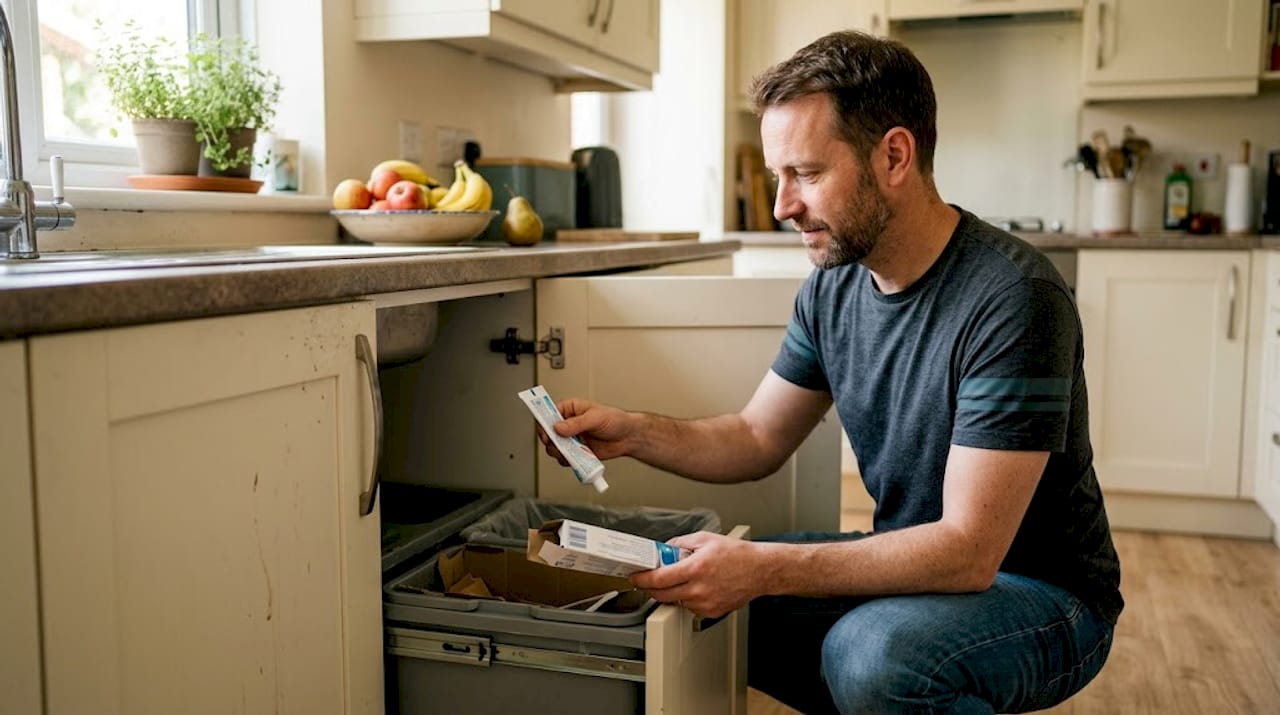
A product’s life cycle covers every stage of its existence: raw material extraction, manufacturing, transportation, consumer use, and final disposal. Life cycle thinking uses benchmarks like emissions and waste rather than just ingredients or packaging to measure real environmental impact.
For oral care, this matters more than most people realize. Consider these data points:
| Product | Traditional option | Eco-friendly alternative | Estimated annual waste reduction |
|---|---|---|---|
| Toothbrush | Plastic brush, 4 per year | Rechargeable electric, 4 heads per year | Up to 90% less plastic per user |
| Toothpaste | 5-6 plastic tubes per year | Tablet refill pouches | Eliminates tube waste entirely |
| Mouthwash | 4 large bottles per year | Concentrate tabs, 1 small packet | Up to 80% packaging reduction |
| Floss | 12 plastic dispensers per year | 1 refillable glass jar + refills | Reduces dispenser waste by ~92% |
Here is a figure worth pausing on: the average American discards roughly 300 toothbrushes in a lifetime, most of which end up in landfills or oceans. Understanding the toothbrush product lifecycle reveals that even small switches, repeated over years, have a measurable environmental footprint.
Rechargeable electric brushes, in particular, stand out. The environmental benefits of rechargeable brushes go well beyond the handle: fewer full-unit replacements, less manufacturing energy per clean, and often superior plaque removal that can reduce the need for intensive dental procedures down the line.
Before buying a new oral care product, ask these three questions: What went into making it? How long will it last? What happens to it afterward? Those questions cut through greenwashing faster than any label claim.
Balancing sustainability with clinical effectiveness
With life cycle and impact in mind, there is still one crucial piece: does ‘eco-friendly’ really work?
The short answer is yes, when chosen carefully. Eco-friendly choices should not undermine clinical effectiveness, and preventive care can itself be a sustainability strategy. Keeping your teeth healthy reduces the need for resource-intensive dental treatments.
Here are eco-friendly swaps that hold up clinically:
- Bamboo toothbrushes with nylon bristles: Approved by dental organizations when used correctly; the bamboo handle is compostable even if the bristles are not
- Fluoride toothpaste in sustainable packaging: Fluoride remains the gold standard for cavity prevention; look for it in tablet or powder form
- Water flossers: Reusable and effective for gum health, especially for those who struggle with traditional floss
- Tongue scrapers (stainless steel): Long-lasting, highly effective, and produce almost no ongoing waste
- Mouthwash tabs with active ingredients: Effective when they contain proven antibacterial agents like cetylpyridinium chloride (CPC)
For maintaining oral health effectiveness, the rule is simple: check for clinical validation before swapping. Look for ADA acceptance or equivalent third-party verification, not just ‘natural’ or ‘plant-based’ on the front of the box.
Pro Tip: If a product claims to whiten, strengthen, or protect without listing active ingredients, ask your dentist before committing. Some green toothpaste options genuinely deliver, but others rely on marketing language alone.
Prevention is also a strategic choice here. Every cavity avoided is one fewer filling, which means less energy, fewer materials, and less clinical waste generated during treatment. Taking care of your teeth well is, in itself, an act of sustainability.
The truth about eco-friendly oral care: More than meets the eye
Now that we have explored both the environmental science and clinical impact, let’s step back and reconsider the bigger picture.
Here is what most eco-friendly marketing misses: buying ‘all-natural’ or ‘compostable’ products feels like progress, but it can actually become a substitute for real systemic change. A compostable toothbrush still has a manufacturing footprint. A ‘natural’ paste still arrives in packaging. Checking the box on one ‘green’ product does not mean your routine is sustainable overall.
Real eco-friendliness is a practice of continuous rethinking. It shows up in small daily decisions: turning off the tap, choosing a longer-lasting product, asking harder questions at the point of purchase. We believe that why sustainability matters becomes clearest when you stop thinking about it as a shopping category and start treating it as a mindset. When millions of people each make one small, smarter choice daily, the collective impact is enormous. That is the version of eco-friendly oral care worth pursuing.
Explore sustainable oral care solutions
Ready to make your oral care routine more sustainable? The good news is that innovation has made it easier than ever to get a clinically superior clean while reducing your environmental footprint at the same time.
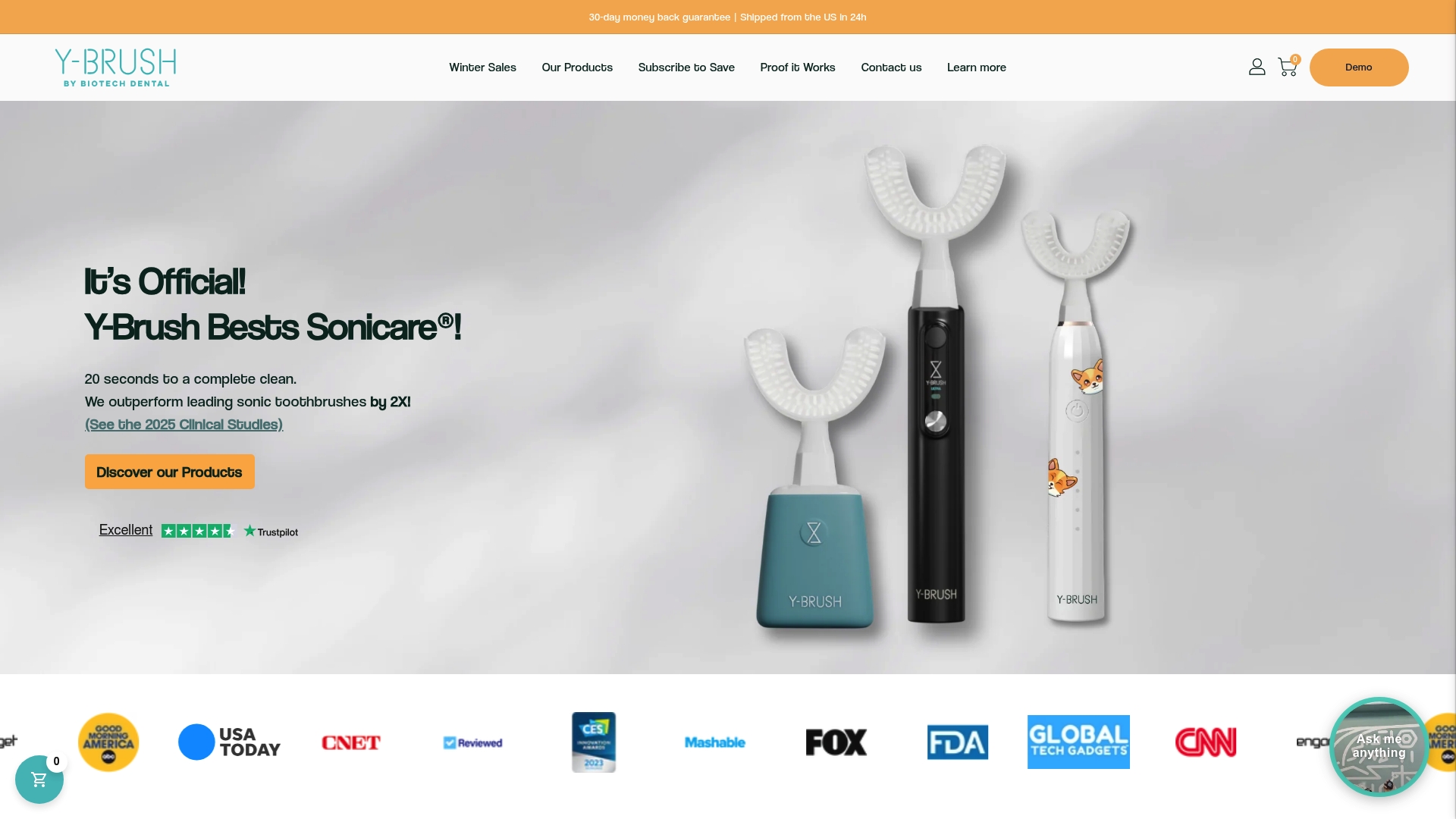
At Y-Brush, we have built our products around exactly the principles covered here: longer-lasting designs, smarter material choices, and routines that fit how you actually live. The Y-Brush Essential Sonic Toothbrush delivers a complete clean in just 20 seconds, reducing the time and product contact needed per session. For younger family members, the Y-Brush KidsBrush brings the same efficiency and gentle care to kids aged 4 to 12. Better oral health and a lighter environmental impact truly can go hand in hand.
Frequently asked questions
What makes an oral care product eco-friendly?
An eco-friendly oral care product uses sustainable materials, minimizes waste, and considers its full life cycle from production to disposal. Material choice, packaging design, and end-of-life planning all factor into a genuine sustainability rating.
Are eco-friendly toothbrushes as effective as regular ones?
Yes, provided they carry dental authority approval and are used correctly. Sustainable dentistry prioritizes balancing environmental responsibility with clinical safety, and many eco-friendly brushes meet both standards.
How can I reduce oral care waste at home?
Start by switching to refillable or recyclable products and choosing concentrated toothpaste formats like tablets. Applying the 4R framework to your routine systematically lowers your ecological footprint over time.
Does eco-friendly oral care cost more?
Some eco-friendly products carry a higher upfront price, but their longer lifespan and reduced replacement frequency often balance out the cost over months of use.
Is natural toothpaste always better for the environment?
Not always. Ingredients are only part of the picture. A life cycle assessment that accounts for packaging, shipping, and disposal often reveals a more nuanced environmental story than the label alone suggests.


