


TL;DR:
- Frequent, consistent plaque removal is essential to prevent tartar and gum disease.
- Proper technique and the right tools, like ADA-approved toothbrushes and floss, improve effectiveness.
- Professional cleanings are necessary to remove hardened tartar that home methods cannot eliminate.
Plaque is one of those problems that never really takes a day off. It starts forming on your teeth within hours of brushing, quietly building a bacterial film that, left unchecked, triggers cavities, gum disease, and persistent bad breath. Most people brush daily and still wonder why their dentist finds plaque at every visit. The answer usually comes down to technique, tools, and consistency rather than effort alone. This guide walks you through what plaque actually is, which products work best, how to build a daily removal routine that sticks, and when it’s time to call in professional help.
Table of Contents
- Understanding dental plaque and why quick removal matters
- Essential tools and products for effective plaque removal
- Step-by-step plaque removal routine: Home methods
- When home efforts aren’t enough: Tartar, professional cleanings, and special situations
- Our take: What most plaque removal guides miss
- Smarter tools for a cleaner smile: Solutions from Y-Brush USA
- Frequently asked questions
Key Takeaways
| Point | Details |
|---|---|
| Remove plaque daily | Brushing and flossing each day prevents plaque from hardening and causing dental problems. |
| Choose ADA Seal products | Use toothbrushes and toothpastes with the ADA Seal of Acceptance for proven effectiveness. |
| Don’t skip interdental cleaning | Flossing or using interdental brushes is essential to reach areas your toothbrush can’t. |
| See your dentist regularly | Only a dentist can remove tartar and help prevent serious oral health issues. |
| Personalize your routine | Adapt your oral care for braces, children, or high-risk situations based on expert guidance. |
Understanding dental plaque and why quick removal matters
Dental plaque is a sticky, colorless biofilm made up primarily of bacteria that colonize the surface of your teeth. It forms continuously, fed by the sugars and starches in everything you eat and drink. The bacteria in plaque produce acids that attack tooth enamel and irritate gum tissue, setting the stage for both decay and periodontal disease.
The timeline is what makes plaque particularly urgent to address. If plaque sits undisturbed for long enough, it mineralizes and becomes tartar, also known as calculus. Once that happens, no amount of home brushing will remove it. Understanding plaque’s role in oral health helps explain why daily removal is non-negotiable rather than optional.
“Plaque that is not removed can harden into tartar in 24 to 72 hours, and tartar can only be removed by a dental professional.”
Why the consequences stack up fast:
- Plaque acids begin attacking enamel within 20 minutes of eating
- Accumulated plaque leads to gingivitis, the earliest stage of gum disease
- Untreated gingivitis can advance to periodontitis, which damages bone
- Chronic bad breath is frequently a plaque problem, not just a diet issue
| Stage | Timeframe | What happens | Reversible at home? |
|---|---|---|---|
| Plaque formation | 0 to 24 hours | Biofilm builds on teeth | Yes, with brushing and flossing |
| Early tartar | 24 to 72 hours | Plaque begins to harden | No |
| Established tartar | 72+ hours | Fully mineralized deposit | No, professional removal needed |
| Gingivitis | Weeks to months | Gum inflammation | Yes, with improved hygiene |
The window for effective home removal is short. This is why daily consistency, not occasional thorough cleanings, is the standard dental professionals recommend.
Essential tools and products for effective plaque removal
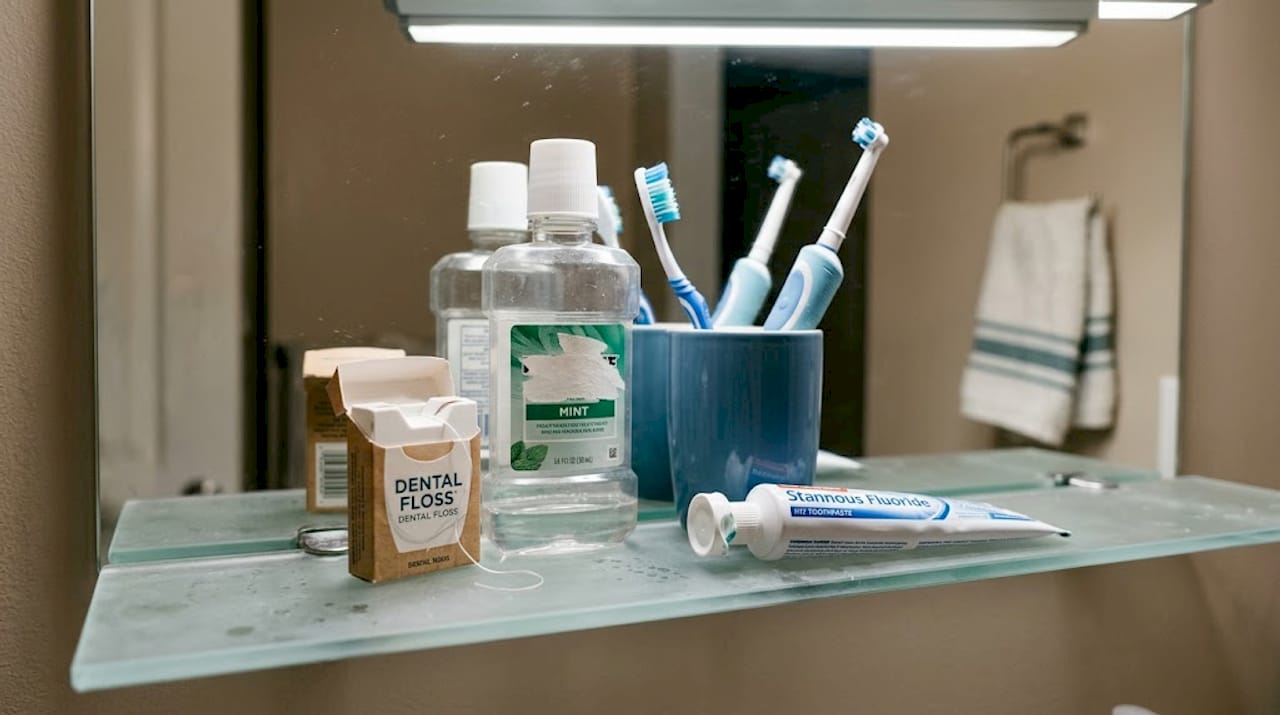
Choosing the right tools is the foundation of an effective plaque removal routine. The market offers a wide range of options, and it’s easy to feel overwhelmed. The most reliable benchmark is the American Dental Association (ADA) Seal of Acceptance, which confirms that a product has been tested for safety and effectiveness. Both manual and powered toothbrushes that carry this seal help remove plaque and reduce gingivitis.
Core tools every routine should include:
- Soft-bristled toothbrush (manual or powered) with an ADA Seal
- Fluoride toothpaste, ideally with stannous fluoride for added antibacterial action
- Dental floss or a floss pick for interdental cleaning
- Interdental brushes for wider gaps between teeth
- Antimicrobial mouthwash as a supplemental step
Understanding the differences between types of toothbrushes helps you match the tool to your specific needs. Powered toothbrushes, particularly sonic models, generate thousands of brush strokes per minute, which can disrupt plaque more efficiently than manual motion alone. That said, a manual brush used with proper technique can be equally effective for many people.
| Feature | Manual toothbrush | Powered toothbrush |
|---|---|---|
| Plaque removal | Effective with proper technique | Slightly more effective overall |
| Ease of use | Requires correct motion | Easier for inconsistent brushers |
| Cost | Low | Higher upfront, lower ongoing |
| ADA accepted | Yes | Yes |
| Best for | Motivated, technique-focused users | Busy lifestyles, inconsistent brushers |
For toothpaste, standard fluoride options work well for most people. Stannous fluoride formulas offer additional protection by reducing bacterial activity in the plaque biofilm itself. When comparing manual vs. sonic toothbrushes, sonic options tend to show a measurable advantage for people who rush through their routine.
Pro Tip: If you know you often cut brushing short, a powered toothbrush with a built-in timer removes the guesswork and consistently delivers better results than a hurried manual session.
Step-by-step plaque removal routine: Home methods
Having the right tools only matters if you use them correctly. A structured daily routine, practiced consistently, is what actually keeps plaque from accumulating between dental visits. Here is the sequence that dental research supports:
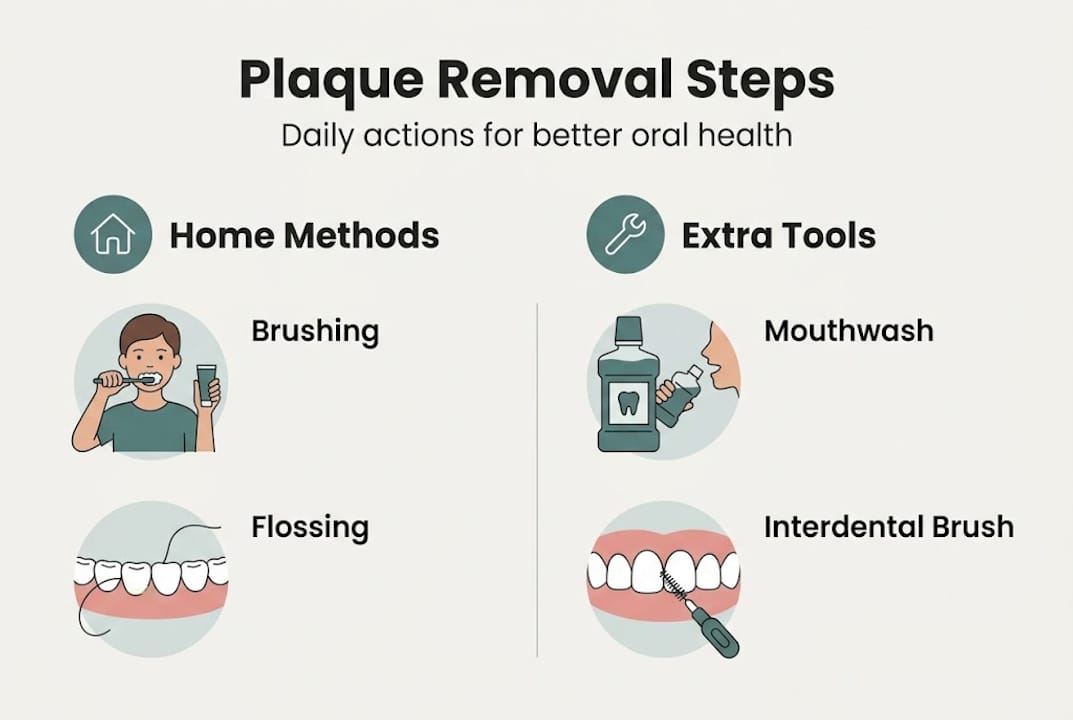
- Floss first. Use 18 inches of floss, wrap it around your middle fingers, and guide it gently between each pair of teeth using a C-shape technique. Curve the floss around each tooth and slide it beneath the gumline to dislodge plaque where the brush cannot reach.
- Brush for a full 2 minutes. Divide your mouth into four quadrants and spend 30 seconds on each. Use a soft-bristled brush at a 45-degree angle to the gumline, applying gentle circular strokes rather than hard back-and-forth scrubbing.
- Use interdental cleaners where needed. For top plaque removal tips, interdental brushes or oral irrigators work well for spaces that floss cannot fully access, especially around dental work or wider gaps.
- Rinse with an antimicrobial mouthwash. This step adds a layer of bacterial reduction after mechanical cleaning, though it does not replace flossing or brushing.
- Repeat twice daily. The key steps for busy lives involve brushing twice daily with a soft-bristled toothbrush and fluoride toothpaste, flossing daily using the C-shape technique, and scheduling professional cleanings every 6 months.
Plaque stat: Plaque can begin hardening into tartar in as little as 24 hours without brushing. Twice-daily brushing keeps that window closed.
Interdental aids, including floss, interdental brushes, and oral irrigators, are all accepted by the ADA when they are shown to remove plaque between teeth effectively. Using at least one consistently is as important as brushing itself.
Pro Tip: Set a recurring alarm or use a brushing app at the same time each morning and evening. Habit anchoring, attaching brushing to another fixed routine like coffee or bedtime, dramatically improves long-term consistency.
When home efforts aren’t enough: Tartar, professional cleanings, and special situations
Even the most disciplined home routine has limits. Once plaque hardens into tartar, it bonds to the tooth surface in a way that brushing and flossing simply cannot break. You can usually spot tartar as a yellowish or brown crust near the gumline. At that point, a dental professional is the only solution.
Research confirms that professional mechanical plaque removal combined with oral hygiene instruction produces better outcomes for plaque reduction and bleeding scores than no treatment at all. More frequent professional cleanings are linked to better results, especially for people at higher risk.
Special situations that require extra attention:
- Braces and orthodontic appliances: Standard floss is harder to navigate around brackets and wires. Powered interdental cleaners or water flossers make thorough cleaning more achievable.
- Children: Disclosing agents, which are safe dyes that temporarily color plaque, can help kids see exactly where they are missing spots and improve their technique over time. A kids brushing guide makes establishing these habits much easier early on.
- High-risk individuals: People with diabetes, dry mouth, or a history of frequent cavities may need professional cleanings every 3 to 4 months rather than the standard 6. Check routine professional cleanings for the evidence behind frequency recommendations.
“No strong evidence supports replacing mechanical plaque removal with chemical agents alone. Regular professional care remains essential for long-term oral health.”
Diet plays a supporting role as well. Crunchy vegetables like celery and carrots have a mild abrasive effect that helps clean tooth surfaces between meals. Sugary, sticky foods, on the other hand, give plaque bacteria a direct fuel source. For families looking to build sustainable habits, family oral care tips offer practical strategies that work across all age groups.
Our take: What most plaque removal guides miss
Most guides focus almost entirely on which tools to buy. That is understandable, but it misses the real reason plaque removal fails for so many people: inconsistency and skipping interdental spaces. You can own the best sonic toothbrush on the market and still develop gum disease if you never floss.
The research is clear, but behavior is the harder problem. Brushing technique and the motivation to maintain it daily matter far more than tool selection. Small environmental cues make a measurable difference. Placing floss picks on the nightstand instead of buried in a drawer, or using disclosing tablets once a week to visualize your results, shifts plaque removal from a chore into something with visible feedback.
For people with genuinely busy mornings, the most important upgrade is not a premium toothbrush. It is removing friction from the routine itself. When brushing and flossing feel effortless and automatic, they happen. Exploring efficient oral care approaches can help you find a method that fits your actual schedule rather than an idealized version of it.
Pro Tip: Pick one consistent time each day to add a disclosing tablet to your routine. The visual feedback of seeing exactly where plaque remains is one of the most powerful behavioral tools in dentistry.
Smarter tools for a cleaner smile: Solutions from Y-Brush USA
Putting all of this guidance into practice becomes significantly easier when your tools are designed to work with your habits rather than against them. Y-Brush builds oral care products around the reality that most people brush for less than a minute, and that a smarter approach can close the gap without demanding more time.
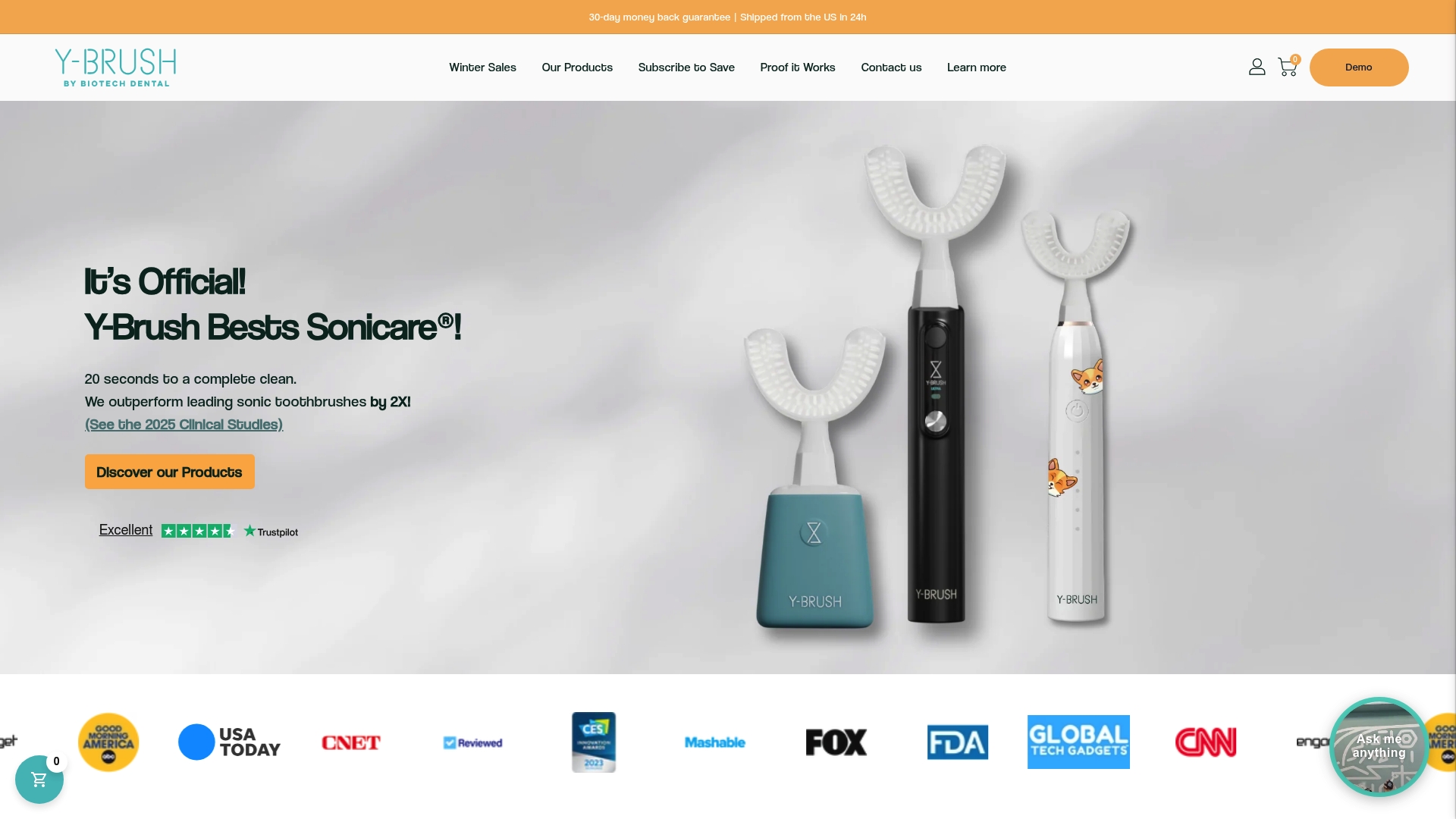
The Y-Brush Essential Sonic Toothbrush delivers a thorough clean in just 20 seconds, making it one of the most practical options for anyone who struggles to complete a full 2-minute session consistently. For younger brushers, the Y-Brush KidsBrush brings the same efficiency to children aged 4 to 12. Browse current offers to find the best available deals and start building a routine that actually gets done.
Frequently asked questions
How quickly does dental plaque turn into tartar?
Plaque hardens into tartar in as little as 24 hours if not removed through brushing and flossing, making daily cleaning essential.
What’s the best toothbrush type for plaque removal?
Both ADA-accepted manual and powered toothbrushes remove plaque effectively, though electric brushes tend to offer a slight advantage for people who rush or use inconsistent technique.
Do I need to floss if I brush thoroughly?
Yes. Floss reaches interdental spaces where no brush can, and skipping it leaves a significant portion of each tooth’s surface uncleaned.
Can I remove tartar at home once it forms?
No. Once plaque mineralizes into tartar, only a professional using specialized scaling tools can safely remove it.
Are natural toothbrushes effective for plaque removal?
Yes. Studies confirm that bamboo and neem brushes perform as well as conventional toothbrushes for plaque removal, particularly among children.


