


TL;DR:
- Consistent gum care with proper tools and routine improves gum health effectively.
- Daily brushing, interdental cleaning, and rinsing are essential for optimal gum health.
- Using the right tools for your lifestyle ensures easier and more sustainable oral hygiene practices.
Healthy gums rarely get the attention they deserve until something goes wrong. Bleeding during brushing, persistent bad breath, or that nagging sensitivity near the gumline are all signals that your daily routine may be missing critical steps. The good news is that protecting your gums does not require expensive treatments or complicated procedures. A consistent, step-by-step approach, built around the right tools and habits, can deliver meaningful results regardless of how packed your schedule is. This guide walks you through everything, from preparation to daily execution, so you can build a gum care routine that actually sticks.
Table of Contents
- Get prepared for optimal gum care
- Follow the step by step daily gum care routine
- Personalize your gum care: tools for every lifestyle
- Avoid common mistakes and troubleshoot gum care challenges
- Why step by step gum care works better than shortcuts
- Connect your gum care to the latest innovations
- Frequently asked questions
Key Takeaways
| Point | Details |
|---|---|
| Daily cleaning is critical | Consistent interdental and gum care significantly reduces risk of gum disease. |
| Choose tools for your needs | Select floss, brushes, or water flossers based on comfort, ability, or dental work. |
| Step-by-step wins | Following a simple, repeatable process leads to longer-lasting gum health than shortcuts. |
| Don’t stop if gums bleed | Mild bleeding is usually temporary and will often improve with regular gum cleaning. |
Get prepared for optimal gum care
Now that you know why simple, consistent gum care matters, let’s look at what you actually need to get started. Preparation is often the step people skip, and it is exactly why so many routines fail within the first week. When your tools are ready and within reach, following through becomes almost effortless.
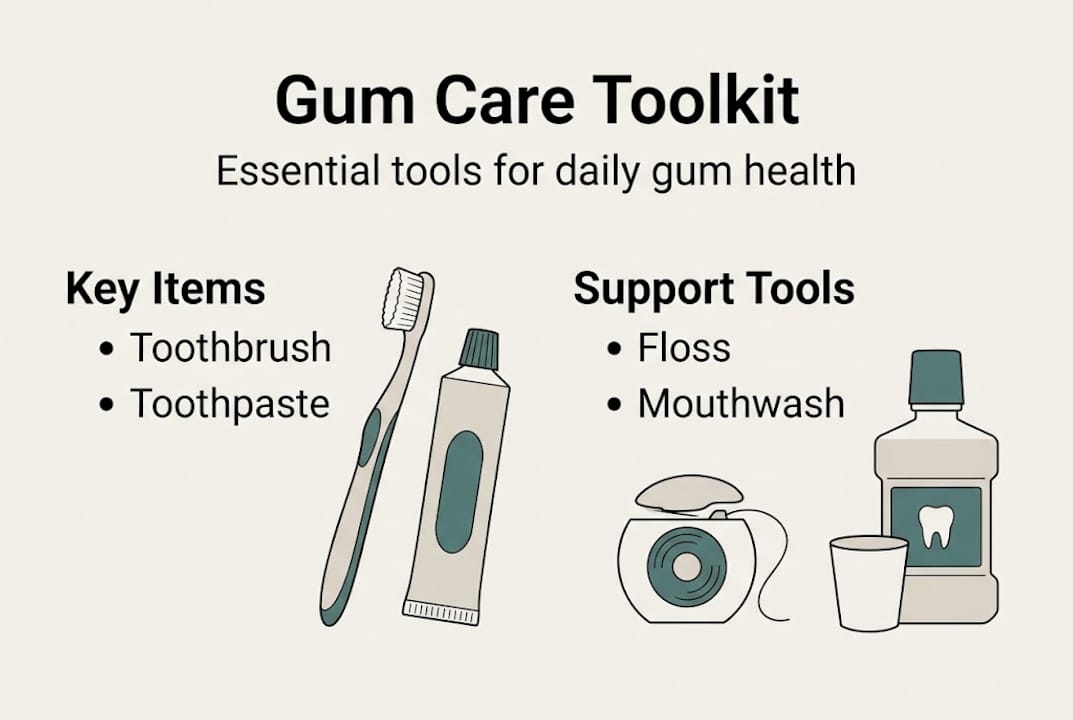
The core toolkit for effective gum care includes a few essentials. A soft-bristled toothbrush, whether manual or electric, is your foundation. Fluoride toothpaste helps strengthen enamel while you clean. Dental floss reaches the tight contacts between teeth where brushes cannot. Interdental brushes work between teeth with larger gaps. And a water flosser uses a pressurized stream of water to flush out debris along the gumline. You can learn more about gum care basics to understand which tools suit your specific situation.
Not everyone needs the same setup. The ADA recommends daily interdental cleaning using floss, brushes, or water flossers, acknowledging that different tools fit different needs. If you wear braces, a water flosser or floss threader makes cleaning around brackets far easier. If you have limited hand dexterity, an electric toothbrush with a larger handle and a water flosser can remove much of the manual effort. If you are short on time, a compact kit on your bathroom counter eliminates every excuse. Understanding how to choose the best water flosser can help you narrow down options quickly.
Quick comparison: core gum care tools
| Tool | Best for | Ease of use | Approximate cost |
|---|---|---|---|
| Dental floss | Standard spacing | Moderate | Low |
| Interdental brushes | Larger gaps, bridges | Easy | Low to moderate |
| Water flosser | Braces, sensitive gums | Very easy | Moderate to high |
| Soft toothbrush | Daily brushing base | Easy | Low |
What to keep in your kit:
- Soft-bristled toothbrush
- Fluoride toothpaste
- Floss or interdental brushes
- Water flosser (optional but highly effective)
- Antibacterial or fluoride mouthwash
Pro Tip: Place all your gum care supplies on a small tray or in a visible spot on your counter. Studies consistently show that reducing friction in a habit, meaning making it easier to start, dramatically increases the chance you will follow through each day.
Follow the step by step daily gum care routine
Once you are equipped with the right tools, you can start building a reliable daily gum care routine. Here is how to do it step by step.
Think of your routine as three core phases: brush, clean between teeth, and rinse. Each phase targets a different part of your oral environment. Together, they cover the surfaces no single tool can reach alone.
- Brush for a full two minutes. Angle your toothbrush at 45 degrees toward the gumline and use gentle circular or vibrating motions. Most people rush this step. An electric toothbrush with a built-in timer is one of the simplest ways to stay on track.
- Floss or use an interdental brush. Slide floss gently between each pair of teeth and curve it into a C-shape around each tooth. If you prefer an interdental brush, insert it slowly between teeth without forcing it. Interdental cleaning is most effective when performed daily, so consistency matters more than perfection.
- Rinse with mouthwash. An antibacterial rinse reaches areas you may have missed and helps reduce gum inflammation. Swish for 30 to 60 seconds, then do not rinse with water afterward so the active ingredients can keep working.
You can follow this routine once or twice a day. Most dental professionals recommend doing the full sequence before bed, since saliva production drops overnight and bacteria become more active. A morning brush helps clear overnight buildup. Use this daily gum care checklist to track each step as you build the habit.

Time needed per step (estimated):
| Step | Morning | Evening |
|---|---|---|
| Brushing | 2 minutes | 2 minutes |
| Interdental cleaning | Optional | 2 to 3 minutes |
| Rinsing | 30 seconds | 30 to 60 seconds |
For more guidance on sustaining long-term habits, explore effective oral care habits that fit real schedules.
Pro Tip: Floss before brushing, not after. This loosens debris and plaque between teeth so that brushing and rinsing can sweep it away more thoroughly.
Personalize your gum care: tools for every lifestyle
Not all routines look the same. The right tools depend on your teeth, your lifestyle, and any specific challenges you face day to day. Understanding your options makes it easier to stay consistent.
Interdental brushes and water flossers may be best for people with braces or dexterity challenges compared to traditional string floss. But even for those without those specific needs, the choice of tool can affect how enjoyable and sustainable the habit feels.
Comparing your interdental cleaning options:
| Tool | Key strength | Best use case | Limitation |
|---|---|---|---|
| String floss | Precise contact cleaning | Tight spaces, standard teeth | Requires dexterity |
| Interdental brushes | Easy to maneuver | Gaps, bridges, implants | Not ideal for tight contacts |
| Water flosser | Gentle, fast, thorough | Braces, sensitive gums, limited dexterity | Higher upfront cost |
For help choosing the right floss type for your situation, review the best dental floss types available. If you are leaning toward a water flosser, a detailed breakdown of water flosser advantages can help you weigh the investment.
Quick-reference guide: pick your tool by situation
- Tight tooth spacing: waxed floss or thin interdental brushes
- Braces or orthodontic appliances: water flosser or floss threader
- Limited hand strength or arthritis: water flosser or pre-threaded floss picks
- Implants or bridges: specially designed interdental brushes or water flosser
- Teenagers or beginners: floss picks for ease; see also gum care with braces
When in doubt, ask your dentist or hygienist at your next visit. They can examine your gumline, identify gaps in your current routine, and recommend the most suitable tools. What works for your neighbor may not be the right fit for your anatomy.
Avoid common mistakes and troubleshoot gum care challenges
Even well-intentioned routines can falter. Here is how to avoid common pitfalls and what to do when issues come up.
The most frequent gum care mistakes are not about missing a day. They are about repeating small errors that quietly undermine results over time.
Top mistakes to watch for:
- Brushing too hard. Aggressive scrubbing irritates gum tissue and wears down enamel. Firm pressure is never necessary with a quality toothbrush.
- Snapping floss into the gums. This causes micro-trauma and can make gums recede over time. Guide floss gently into the space instead.
- Skipping the gumline. Most people clean the visible tooth surface but forget to angle their brush toward the gum tissue where plaque accumulates most.
- Rushing the interdental step. Moving too quickly through flossing or brushing between teeth means plaque remains in place.
- Stopping when gums bleed. This is one of the most counterproductive instincts. Mild bleeding is usually a sign of gum inflammation responding to the cleaning, not a reason to stop.
“For best results, dental professionals can guide on technique and tool selection.” — ADA Interdental Cleaning Guidance
If bleeding persists after two to three weeks of consistent cleaning, that warrants a dental visit. Persistent pain, swelling, or gum recession are also signs worth discussing with a professional. You can read more about the importance of interdental cleaning and why skipping this step has real consequences.
Troubleshooting quick reference:
- Bleeding gums: continue cleaning; improve technique; consult a dentist if it lasts beyond two to three weeks
- Persistent bad breath: check for missed areas; add a tongue scraper; review mouthwash use
- Gum sensitivity: switch to a softer brush; use gentler pressure; try a sensitivity toothpaste
- Plaque buildup despite brushing: add interdental cleaning; improve brushing angle
Why step by step gum care works better than shortcuts
There is a temptation to look for the one product or trick that will handle everything. Oil pulling, charcoal powders, and single-step gadgets cycle through popularity regularly. But the science and real-world evidence point consistently in the same direction: structured, repeatable routines outperform novelty every time.
The reason is biological. Plaque reforms within 24 hours of removal. That means a thorough cleaning on Monday does not carry you through Wednesday. The benefit is in the frequency, not the intensity of any single session. Gum inflammation, which is the early stage of gum disease, responds directly to how often bacteria are removed from the gumline, not just how aggressively you address it once a week.
There is also a psychological component worth acknowledging. Step-by-step habits are easier to maintain because they reduce decision fatigue. When you know exactly what comes next, your brain stops treating oral care as a chore and starts running it on autopilot. That is where lasting results come from.
For those curious about fast, effective dental routines, the key insight is that speed and thoroughness are not opposites. The right tools and a clear sequence make both possible. And when you miss a day? Do not try to compensate with extra pressure the next time. Just return to the routine. Progress over perfection is not a motivational phrase. It is actually the most effective strategy for long-term gum health.
Connect your gum care to the latest innovations
Ready to upgrade your gum care with the latest tools or smarter routines? Building a great routine is one thing. Having tools that make it easier to stay consistent is another entirely.
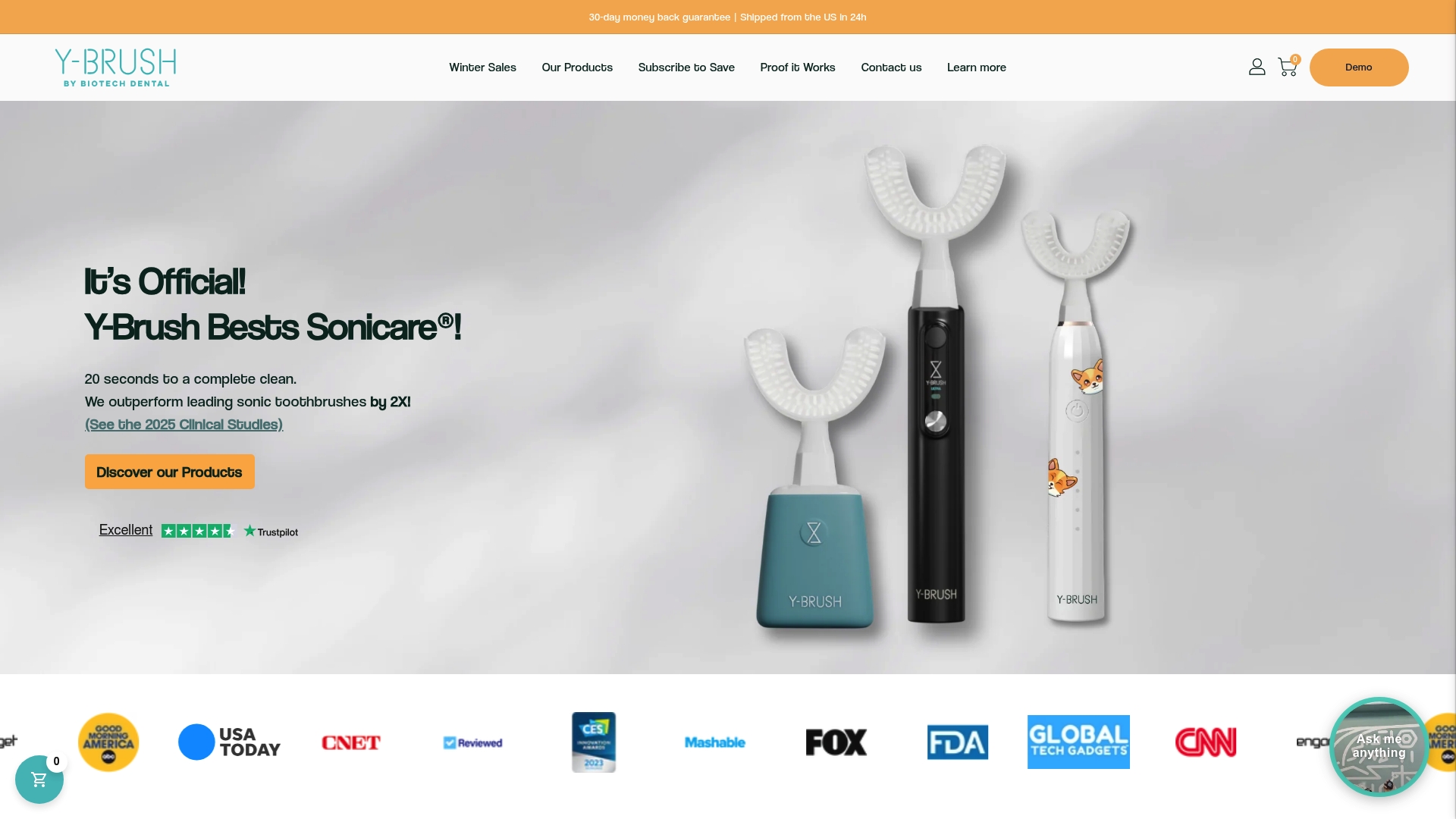
Y-Brush was designed for exactly this challenge. While most people know they should brush for two full minutes, research shows 90% fall short, averaging under one minute. The Y-Brush Essential Sonic Toothbrush delivers a thorough clean in just 20 seconds, removing that barrier entirely. Pair it with one of our membership plans to keep replacement heads and supplies on schedule without thinking about it. Explore our newest oral care products to find the right fit for your gum care goals.
Frequently asked questions
What is the ideal daily gum care routine?
The ideal routine includes brushing, interdental cleaning, and rinsing, performed once or twice daily. The ADA recommends both brushing and daily interdental cleaning for optimal gum health.
Which tool is best if I have braces or limited dexterity?
Interdental brushes or water flossers are typically easier and more effective in these situations than traditional string floss. For braces or dexterity challenges, these tools reduce manual effort significantly.
Should I stop flossing if my gums bleed?
No. Mild bleeding is common when you first start or restart interdental cleaning and usually improves with continued consistency. Bleeding is common and typically resolves as gum health improves.
How can I make gum care part of a busy routine?
Prepare your materials in advance and use time-saving tools like water flossers or sonic toothbrushes to reduce the time and effort required. The ADA supports daily cleaning using brushes, floss, or water flossers across a wide range of lifestyles and needs.


