


TL;DR:
- Most common brushing myths are scientifically debunked, emphasizing gentle pressure and proper technique to prevent enamel and gum damage. Correct use of a soft-bristle brush at a 45-degree angle, thorough coverage, and proper timing are essential for effective cleaning, while flossing and mindful habits address areas toothbrushes cannot reach. Electric brushes aid those with limited dexterity but do not automatically outperform manual brushes when used correctly.
Most common tooth brushing beliefs are clinically wrong, and following them causes real, measurable damage to your enamel and gums. The field of dental hygiene has a name for the gap between what patients practice and what evidence supports: tooth brushing misconceptions. They are widespread, they are persistent, and they are costing people their teeth. Gentle pressure with the correct technique, not harder scrubbing, is the single most important principle in effective oral hygiene. Understanding which brushing myths are false, and why, is the first step toward protecting your smile for the long term.
Are the most common brushing myths debunked by science?
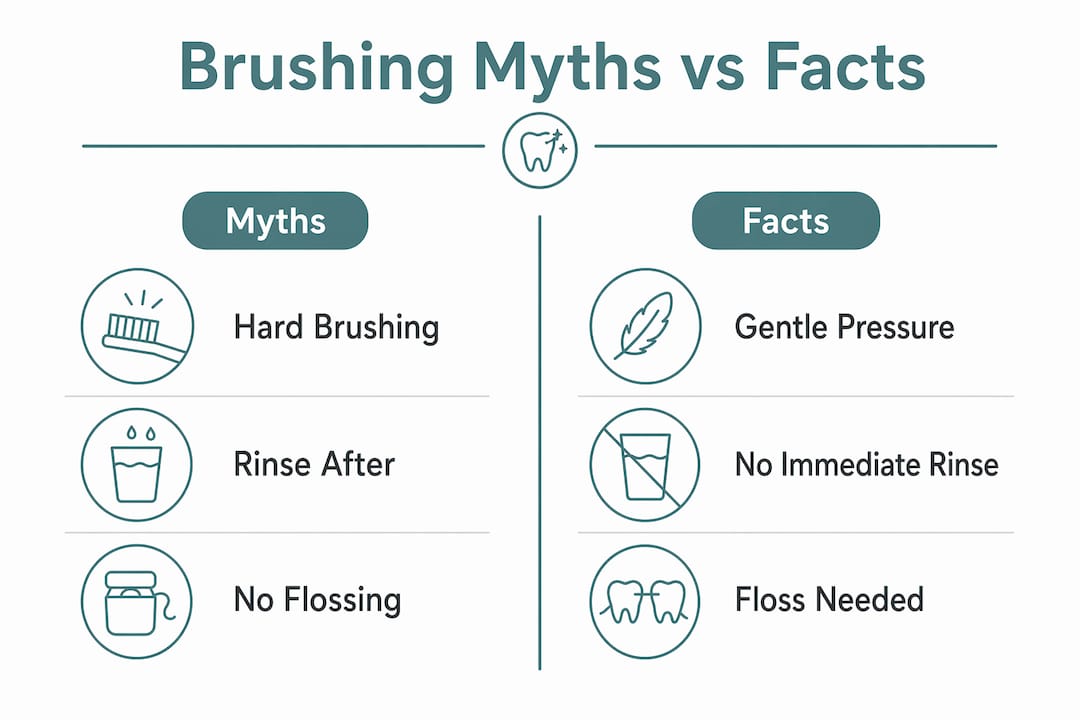
Yes. The most persistent myth in dental hygiene is that brushing harder produces a cleaner mouth. Current dental guidelines are unambiguous: gentle pressure of 2.5 to 3 N is all that is needed for effective plaque removal. Applying more force than that does not remove more biofilm. It strips enamel and causes gum recession, two forms of damage that are largely irreversible.
There is a simple diagnostic tool most people already own. Flared toothbrush bristles are a direct sign that you are pressing too hard. Bristles should retain their original shape for roughly three months of normal use. If yours fan out within weeks, your pressure is excessive. This is one of the most overlooked self-checks in daily oral care.
The fix is straightforward:
- Use a soft or extra-soft bristle brush at all times. Medium and hard bristles increase the risk of enamel wear even at moderate pressure.
- Hold your toothbrush with your fingertips, not your palm. A palm grip naturally encourages more force than the tooth surface needs.
- Apply only enough pressure to feel the bristles flex slightly against the gumline. That is the correct contact, not a scrubbing sensation.
- If your brush head shows visible bristle splaying before the three-month mark, replace it and consciously reduce your pressure.
Pro Tip: Set a reminder to photograph your toothbrush head every four weeks. If the bristles are visibly fanned before the 12-week mark, that is your signal to ease up on pressure, not just replace the brush.
The broader point is this: plaque is a soft biofilm. It does not require force to dislodge. It requires consistent, precise contact across all tooth surfaces. Shifting your mental model from “scrubbing” to “sweeping” is the practical change that prevents long-term damage.
What brushing techniques actually work for thorough cleaning?
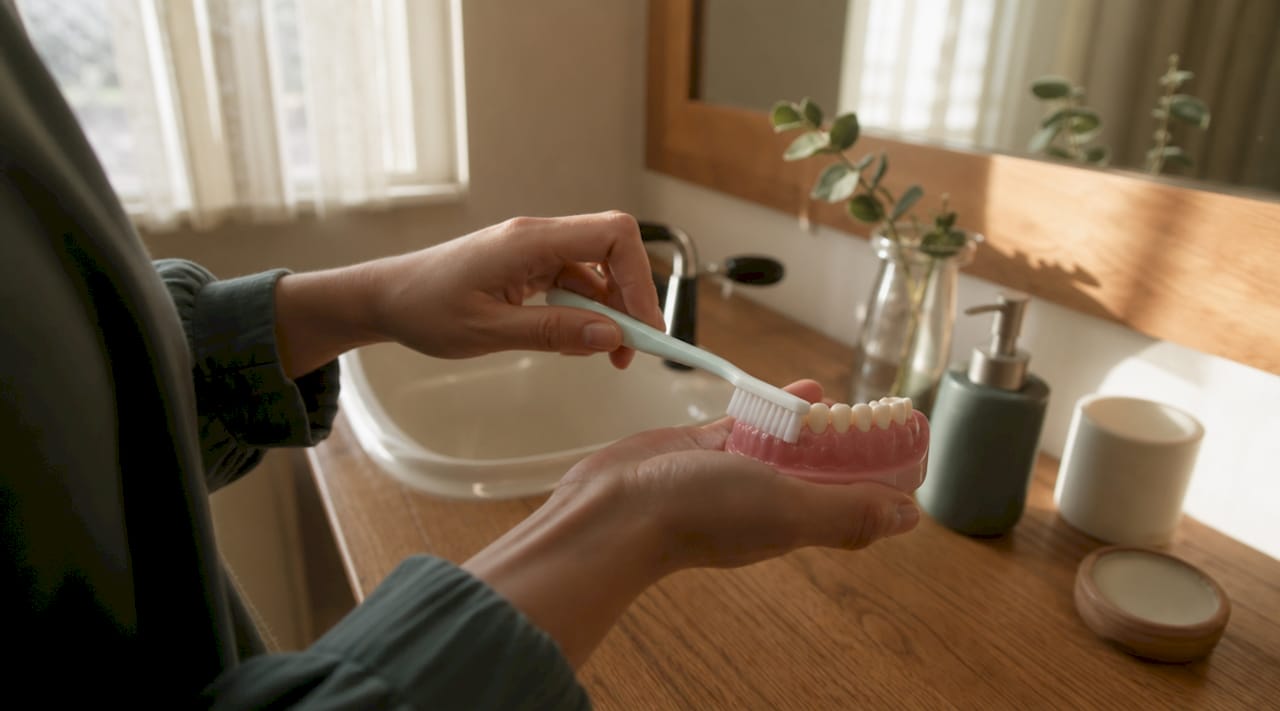
Proper brushing is a mechanical biofilm removal task that demands precision, not speed or force. The clinically recommended approach is the Modified Bass technique, which positions the brush at a 45-degree angle toward the gumline. This angle allows bristle tips to access the sulcus, the shallow groove where the gum meets the tooth, where plaque accumulates first and causes the most damage.
Follow these steps for a complete clean:
- Position the brush at 45 degrees to the gumline on the outer surfaces of your upper teeth. Use small, circular or short back-and-forth strokes.
- Move systematically from the back molars forward on both the outer and inner surfaces. Never jump around randomly.
- Tilt the brush vertically for the inner surfaces of your front teeth and use gentle up-and-down strokes with the tip of the brush head.
- Pay specific attention to posterior teeth. Neglecting back and inner tooth surfaces is a primary cause of localized decay even in people who otherwise brush consistently.
- Brush the chewing surfaces of molars with light circular pressure, then finish by brushing your tongue to reduce bacteria load.
- Time yourself. Most people brush only 40 to 60 seconds per session. That falls well short of the two-minute minimum recommended for complete plaque disruption. Twice daily at two minutes each is the clinical standard.
Coverage is as important as technique. The inner lower front teeth and the distal surfaces of the last molars are the two areas most consistently missed. Decay in these locations is a direct result of incomplete brushing patterns, not poor overall hygiene. Reviewing your brushing technique for 2026 against current dental association guidelines is worth doing even if you have brushed the same way for years.
Pro Tip: Divide your mouth into four quadrants and spend 30 seconds on each. A simple mental timer prevents the common habit of spending most of your time on the front teeth and rushing through the back.
What do timing, flossing, and rinsing myths get wrong?
Several widely held beliefs about when and how to brush actively undermine the benefits of good technique. These teeth cleaning myths are worth addressing directly because the habits they create are deeply ingrained.
- Brushing immediately after meals is harmful, not helpful. Acidic foods and drinks temporarily soften enamel. Waiting 30 to 60 minutes after consuming acidic items before brushing prevents you from abrading softened tooth surfaces. Rinsing with water right after eating is fine. Brushing is not.
- Flossing is not redundant. Brushing cleans roughly 60% of tooth surfaces. The interproximal spaces between teeth, where plaque causes cavities and early gum disease, are completely inaccessible to a toothbrush. Daily flossing is not optional supplemental care. It is the only way to address the 40% of surfaces your brush cannot reach. For more on effective plaque removal, the clinical evidence is consistent across decades of research.
- Rinsing with water after brushing reduces fluoride protection. Spitting without rinsing retains a thin fluoride film on the enamel that continues remineralizing tooth surfaces for minutes after brushing. Rinsing with water immediately washes that film away. Spit, do not rinse.
- Bleeding gums are not normal. Many people assume gum bleeding during brushing or flossing is caused by brushing too hard. The opposite is usually true. Bleeding gums signal gingival inflammation from plaque buildup. The correct response is to improve consistency and technique, not to brush less aggressively or avoid the area.
The role of timing in brushing extends beyond just the two-minute rule. When you brush, what you do immediately after, and how you sequence brushing with flossing all affect outcomes in ways most people have never been told.
Electric vs. manual toothbrush: which myths need correcting?
The debate between electric and manual toothbrushes is one of the most misunderstood areas in dental hygiene. The core misconception is that an electric toothbrush automatically produces a better clean regardless of how it is used. That is false. Electric toothbrushes aid users with dexterity challenges but do not replace good brushing technique.
| Factor | Electric toothbrush | Manual toothbrush |
|---|---|---|
| Technique requirement | Still requires correct angle and coverage | Fully dependent on user technique |
| Pressure control | Many models include pressure sensors | Relies entirely on user awareness |
| Dexterity assistance | Significant benefit for limited mobility users | No mechanical assistance |
| Brushing duration | Built-in timers support 2-minute sessions | Requires self-timing |
| Plaque removal | Comparable to manual when technique is correct | Comparable to electric when technique is correct |
The table above reflects a consistent finding in dental research: the tool matters less than the operator. A manual toothbrush used with the Modified Bass technique for two full minutes outperforms an electric brush used carelessly for 45 seconds. Where electric brushes genuinely add value is in built-in pressure sensors, which provide real-time feedback that manual brushing cannot offer, and in timers that address the documented problem of under-brushing duration. For people managing arthritis, limited grip strength, or other dexterity issues, the mechanical action of a sonic or oscillating brush is a clinically meaningful advantage.
Key takeaways
Correct brushing technique, not brushing force, determines how well you protect your enamel and prevent gum disease over the long term.
| Point | Details |
|---|---|
| Gentle pressure is clinically correct | Use 2.5 to 3 N of force with a soft-bristle brush; more pressure damages enamel and gums. |
| Technique determines coverage | The Modified Bass technique at 45 degrees reaches the gumline where plaque accumulates first. |
| Flossing covers what brushing cannot | Brushing cleans only 60% of tooth surfaces; flossing is the only way to address interproximal spaces. |
| Timing and rinsing habits matter | Wait 30 to 60 minutes after acidic foods before brushing, and spit without rinsing to retain fluoride. |
| Tool choice is secondary to technique | Electric and manual brushes produce comparable results when used with correct form and adequate duration. |
Why effective brushing is a skill, not just a habit
I have spent years reviewing how people approach their daily oral care, and the pattern is consistent: most people treat brushing as a routine to complete rather than a skill to execute. That distinction matters more than any product recommendation.
The word “habit” implies automaticity. You do it without thinking. But brushing requires discipline and precise technique for effective biofilm removal. The moment it becomes fully automatic, coverage gaps appear. You default to the same comfortable path across your front teeth and rush through the back. You apply more pressure because it feels more thorough. You rinse because it feels cleaner.
What I have found is that small, deliberate adjustments produce better long-term outcomes than any single product switch. Slowing down for 30 extra seconds, checking your bristle flare monthly, and flossing before brushing rather than after are changes that cost nothing and compound over years. Seeking feedback from a dental hygienist on your specific technique, even once a year, is more valuable than most people realize. They can identify the exact surfaces you are missing in under two minutes.
Modern tools that monitor pressure and timing are genuinely useful, not because they replace skill, but because they make the feedback loop shorter. The goal is to internalize correct technique until it becomes second nature, not to stay dependent on external cues forever.
— Joris
How Y-Brush supports correct brushing every time
Knowing the right technique is one thing. Executing it consistently, especially when you are tired or rushed, is another challenge entirely. Y-Brush was built for exactly that gap. The Y-Brush Essential Sonic Toothbrush combines soft bristles with sonic technology to deliver thorough plaque removal without requiring excessive pressure from the user. For families, the Y-Brush KidsBrush builds correct brushing habits early, with a design sized and calibrated for children aged 4 to 12. Both products support the technique principles covered in this article, making it easier to brush correctly even on the days when time is short.
FAQ
How much pressure should you use when brushing your teeth?
Dental guidelines recommend 2.5 to 3 N of pressure, roughly the force needed to feel bristles flex gently against the gumline. Applying more force than that causes enamel wear and gum recession over time.
Is flossing really necessary if you brush twice a day?
Yes. Brushing removes plaque from approximately 60% of tooth surfaces, leaving interproximal spaces completely untouched. Daily flossing is the only clinically effective way to clean those areas and prevent cavities between teeth.
Should you rinse with water after brushing?
No. Rinsing with water immediately after brushing washes away the fluoride film that continues remineralizing enamel after you spit. Spitting without rinsing retains that protective layer for longer.
When is the worst time to brush your teeth?
Brushing immediately after consuming acidic foods or drinks is the worst time. Acid temporarily softens enamel, and brushing during that window abrades the surface. Waiting 30 to 60 minutes allows enamel to reharden before brushing.
Does an electric toothbrush clean better than a manual one?
Not automatically. Electric and manual toothbrushes produce comparable plaque removal results when used with correct technique for two minutes. Electric brushes offer a meaningful advantage for users with dexterity challenges or those who benefit from built-in pressure sensors and timers.


