


Finding time for a complete brushing routine can feel like a challenge when life gets busy. Many health-conscious American adults want efficient oral care without sacrificing results. Understanding the key differences between brushing and flossing methods, along with exploring innovative tools, makes it easier to target both surface-level and hidden plaque for better dental health.
Table of Contents
- Defining Brushing and Flossing Methods
- Brushing and Flossing—Key Differences
- Benefits and Limitations of Each Practice
- Risks and Common Mistakes to Avoid
- Alternatives and Innovations in Oral Hygiene
Key Takeaways
| Point | Details |
|---|---|
| Brushing and Flossing Are Complementary | Brushing cleans tooth surfaces while flossing targets spaces between teeth, making both crucial for optimal oral health. |
| Proper Techniques Matter | Use a soft-bristled toothbrush and gentle motions for brushing; floss vertically and avoid aggressive techniques to protect gums. |
| Innovations Enhance Oral Care | New tools like water flossers and smart toothbrushes improve cleaning efficiency and user experience, tailoring to individual needs. |
| Avoid Common Mistakes | Be mindful of pressure while brushing and ensure consistent flossing to prevent potential gum damage and ensure effective cleaning. |
Defining Brushing and Flossing Methods
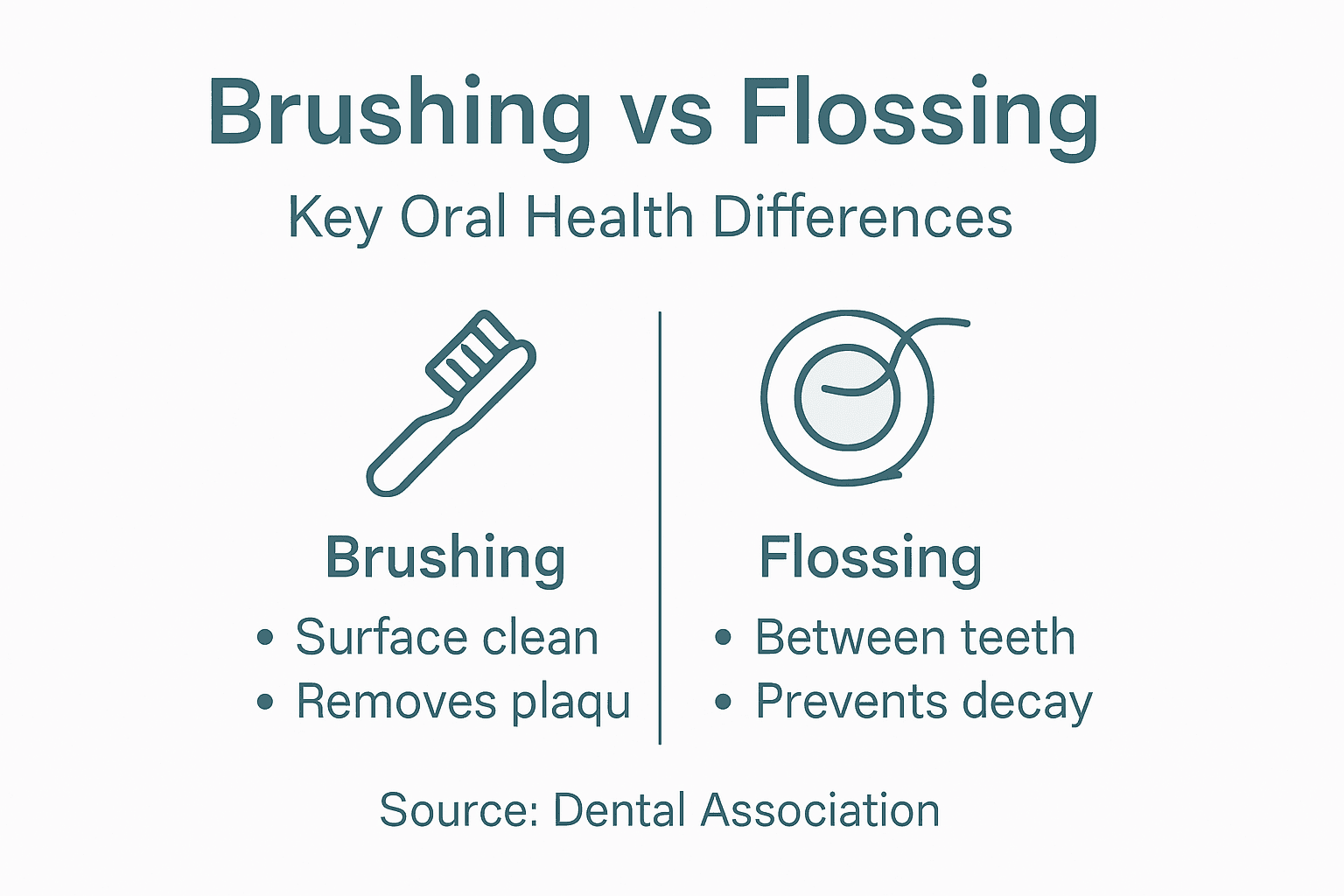
Oral hygiene fundamentally relies on two core techniques: brushing and flossing. While often discussed together, these methods serve distinctly different purposes in maintaining dental health. Brushing techniques focus on cleaning tooth surfaces, while flossing targets the critical spaces between teeth where brushes cannot reach.
Brushing involves using a toothbrush with bristles to mechanically remove plaque and food particles from tooth surfaces. The recommended approach includes:
- Using a soft-bristled toothbrush
- Applying gentle, circular motions
- Covering all tooth surfaces (outer, inner, chewing surfaces)
- Brushing for a minimum of two minutes
- Using fluoride toothpaste
Flossing, by contrast, is a precision technique designed to clean the tight interdental spaces. Dental professionals recommend using various tools like traditional string floss, floss picks, or water flossers to remove plaque and debris between teeth where toothbrushes cannot effectively clean.
Interdental Cleaning Tools:
- Traditional string floss
- Floss picks
- Interdental brushes
- Water flossers
- Soft picks
Pro tip: Combine brushing and flossing daily for comprehensive oral hygiene, spending at least two minutes brushing and 1-2 minutes carefully flossing between each tooth.
Brushing and Flossing—Key Differences
Brushing and flossing are complementary oral hygiene techniques that address different aspects of dental cleaning. While they might seem similar, each method serves a unique purpose in maintaining comprehensive oral health. Dental cleaning techniques require understanding their distinct roles in removing bacteria and preventing plaque buildup.
Key Differences in Technique:
- Brushing focuses on tooth surfaces and tongue
- Flossing targets interdental spaces
- Brushing uses broad, sweeping motions
- Flossing uses precise, vertical movements
Brushing Characteristics:
- Covers broad tooth surfaces
- Uses fluoride toothpaste
- Involves circular or back-and-forth motions
- Cleans outer, inner, and chewing tooth surfaces
- Removes surface-level plaque and food particles
Flossing Characteristics:
- Targets narrow spaces between teeth
- Uses thin string or specialized tools
- Employs vertical up-and-down motions
- Removes hidden plaque and debris
- Reaches below the gumline
Oral hygiene experts emphasize that these methods are not interchangeable but rather complementary, with each technique addressing different aspects of dental cleaning.
Both brushing and flossing are essential for complete oral health, targeting different areas that bacteria can accumulate.
Pro tip: Develop a consistent routine that incorporates both brushing and flossing, spending at least two minutes brushing and carefully flossing between each tooth to ensure comprehensive dental hygiene.

Here’s a side-by-side comparison of brushing and flossing outcomes:
| Oral Health Aspect | Brushing Alone | Flossing Alone | Combined Approach |
|---|---|---|---|
| Plaque Removal | Surface-level only | Interdental only | Complete plaque control |
| Cavity Prevention | Mostly chewing/outer surfaces | Between teeth primarily | All surfaces protected |
| Gum Health | Stimulates gums | Reduces gum inflammation | Optimal gum wellness |
| Breath Freshness | Noticeable improvement | Targets hidden odors | Maximizes fresh breath |
Benefits and Limitations of Each Practice
Oral hygiene practices like brushing and flossing each come with unique advantages and potential drawbacks. Dental health research reveals that understanding these nuances is crucial for maintaining optimal oral wellness.
Benefits of Brushing:
- Removes surface plaque effectively
- Stimulates gum circulation
- Uses fluoride to strengthen tooth enamel
- Freshens breath
- Easy to perform daily
Limitations of Brushing:
- Cannot clean between teeth
- Misses hard-to-reach areas
- Requires proper technique
- Ineffective in tight dental spaces
- Potential for damaging gums with aggressive brushing
Benefits of Flossing:
- Removes hidden plaque between teeth
- Reaches below gumline
- Prevents interdental cavities
- Reduces potential gum inflammation
- Complements brushing techniques
Limitations of Flossing:
- Requires more time and skill
- Can cause bleeding if done incorrectly
- Potentially uncomfortable initially
- Needs consistent practice
- Some people find it challenging to maneuver
Effective oral hygiene demands using both brushing and flossing as complementary practices, not competing alternatives.
Pro tip: Combine both techniques with proper form, spending equal attention to thoroughness and gentle technique to maximize oral health benefits.
Risks and Common Mistakes to Avoid
Common oral hygiene mistakes can significantly compromise dental health, potentially causing long-term damage to teeth and gums. Understanding these risks is crucial for developing an effective oral care routine.
Brushing Mistakes:
- Applying excessive pressure
- Using hard-bristled toothbrushes
- Brushing for less than two minutes
- Incorrect brushing angle
- Neglecting tongue cleaning
- Using worn-out toothbrushes
Flossing Errors:
- Aggressive flossing technique
- Skipping difficult-to-reach teeth
- Using improper floss movement
- Inconsistent flossing routine
- Not curving floss around tooth base
- Reusing the same floss section
Potential Consequences:
- Gum recession
- Tooth enamel erosion
- Increased tooth sensitivity
- Higher risk of cavities
- Potential periodontal disease
- Bleeding and inflamed gums
Dental hygiene experts emphasize the importance of gentle, precise techniques that protect gum tissue while effectively removing plaque.
Proper oral care requires technique, consistency, and a delicate balance between thoroughness and gentleness.
Pro tip: Invest in a soft-bristled toothbrush, use gentle circular motions, and practice careful flossing techniques to minimize potential damage and maximize oral health.
Alternatives and Innovations in Oral Hygiene
Dental hygiene alternatives have revolutionized traditional oral care practices, offering more personalized and efficient cleaning methods. These innovations cater to diverse needs, making comprehensive dental care more accessible than ever before.
Interdental Cleaning Alternatives:
- Dental picks
- Interdental brushes
- Water flossers
- Air flossers
- Silicone tip cleaners
- Electric water jets
Advanced Brushing Technologies:
- Sonic electric toothbrushes
- Oscillating brush heads
- Smart toothbrushes with app tracking
- Pressure-sensing mechanisms
- UV sanitizing brush heads
- Multiple cleaning mode options
Key Innovation Features:
- Improved plaque removal
- Enhanced user convenience
- Customizable cleaning modes
- Better accessibility for limited mobility
- Reduced manual technique requirements
- More comfortable cleaning experience
Dental technology experts continue developing tools that make oral hygiene more effective and user-friendly for different populations.
Modern oral care innovations transform traditional cleaning methods, making comprehensive dental hygiene more achievable for everyone.
Pro tip: Explore multiple oral hygiene tools to find the combination that best suits your individual dental needs and comfort level.
Explore how innovative tools can enhance your daily routine:
| Tool Type | Best For | Key Benefit |
|---|---|---|
| Sonic Electric Toothbrush | Deep cleaning, busy users | Maximizes plaque removal |
| Water Flosser | Braces, sensitive gums | Gentle, effective cleaning |
| Interdental Brush | Wide spaces between teeth | Easy debris removal |
| Smart Toothbrush/App | Tech-savvy, motivated users | Tracks habits, reminders |
Experience Faster and More Effective Oral Care with Y-Brush
The article highlights a common challenge faced by many people who know they should brush their teeth for a full two minutes but often fall short—most brushes last under one minute leaving key areas less clean. This gap between recommended brushing time and real-life habits leads to incomplete plaque removal and lower gum health. Y-Brush offers a revolutionary way to bridge this gap by delivering superior cleaning power in just 20 seconds while still complementing essential flossing techniques for interdental spaces.
Take control of your oral hygiene routine with Y-Brush and enjoy a fresh, plaque-free smile every day. Designed to fit seamlessly into your lifestyle, it provides the confidence of thorough tooth surface cleaning—no more rushed brushing or missed spots. Explore the benefits of this innovative toothbrush and learn how it pairs perfectly with flossing methods in maintaining complete oral health at Y-Brush. Discover how to improve your brushing routine today with Y-Brush’s faster, better way to clean and complement it by understanding the importance of proper flossing techniques. Don’t wait to boost your oral care and feel the difference now.
Frequently Asked Questions
How often should I brush and floss my teeth?
You should brush your teeth at least twice a day for two minutes each time and floss once a day to effectively remove plaque and food particles between your teeth.
What are the main differences between brushing and flossing?
Brushing focuses on cleaning the surfaces of the teeth and tongue using broad, sweeping motions, while flossing targets the tight spaces between teeth using precise, vertical movements to remove plaque and debris that brushing alone cannot reach.
Can I skip flossing if I brush my teeth regularly?
No, you should not skip flossing. Brushing alone only removes plaque from the tooth surfaces, while flossing is essential for cleaning between the teeth and below the gumline, where bacteria can accumulate and lead to cavities and gum disease.
What tools can I use for flossing besides traditional string floss?
In addition to traditional string floss, you can use floss picks, interdental brushes, water flossers, and soft picks to effectively clean between your teeth and support your oral hygiene routine.


