


TL;DR:
- Toothpaste contains active ingredients like fluoride that provide therapeutic benefits, such as cavity prevention and sensitivity reduction. Inactive ingredients, including abrasives and surfactants, influence cleaning efficacy, texture, and user comfort. Choosing toothpaste suited to your specific oral health needs ensures optimal protection and satisfaction.
Toothpaste is defined as a formulated blend of active and inactive ingredients, each assigned a specific function in protecting teeth and supporting daily oral hygiene. Understanding the role of toothpaste ingredients helps you move past marketing claims and make choices grounded in clinical evidence. The ADA requires fluoride for any toothpaste seeking an anticaries acceptance seal, which immediately tells you which ingredient carries the most regulatory weight. Beyond fluoride, a tube of toothpaste contains abrasives, surfactants, humectants, flavoring agents, and preservatives, all working together to deliver a clean, comfortable brushing experience.
What are the main active ingredients in toothpaste and their functions?
Active ingredients are the compounds that produce a direct therapeutic effect on teeth and gums. They are the reason a toothpaste can legally claim to prevent cavities, reduce sensitivity, or fight gingivitis.
Fluoride: the cornerstone active compound
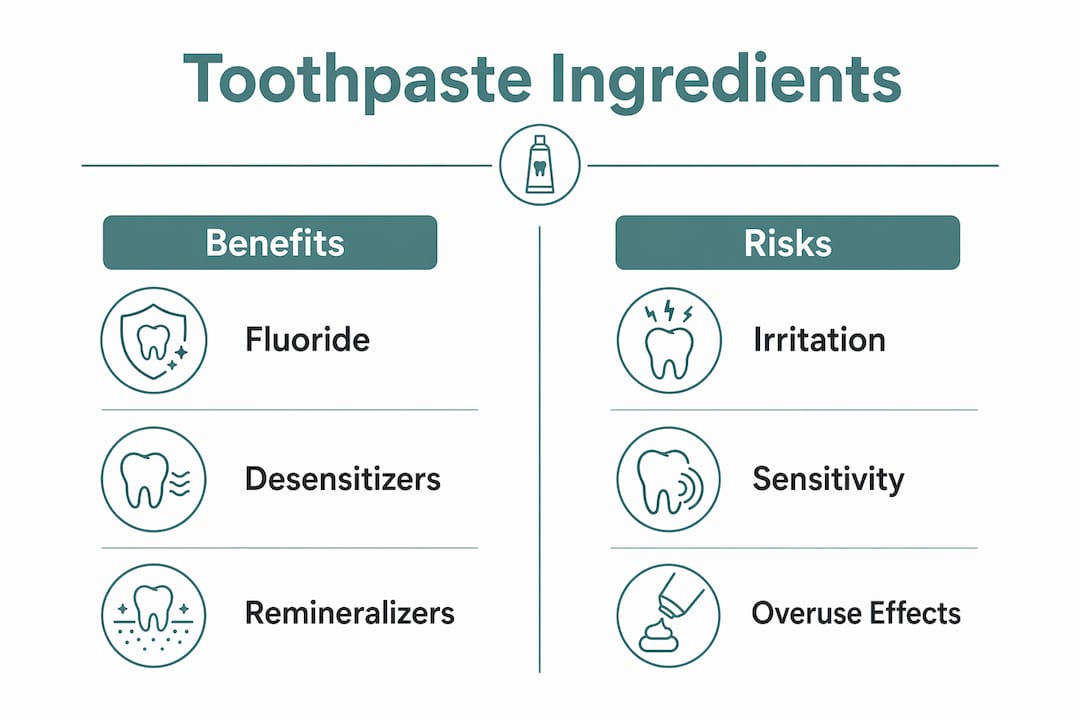
Fluoride is the most studied and most regulated active ingredient in toothpaste. Fluoride compounds deliver anticaries effects through three distinct mechanisms: remineralization of weakened enamel, inhibition of cavity-causing bacteria, and formation of fluorapatite, a harder crystalline structure that resists acid attack. The specific mechanism depends on both the fluoride compound used and its concentration. Standard over-the-counter formulas contain around 1,000 ppm of fluoride, while prescription-strength versions reach 5,000 ppm. That fivefold concentration difference is clinically meaningful for patients with high cavity risk, dry mouth, or compromised enamel.

Two fluoride compounds dominate the market. Sodium fluoride is the most common, found in brands like Colgate Cavity Protection and Crest Cavity Protection. Stannous fluoride, used in products like Crest Pro-Health and Sensodyne Pronamel, offers broader benefits: it addresses gingivitis and sensitivity in addition to cavity prevention, making it one of the most evidence-backed compounds available.
Desensitizing agents
Sensitivity relief ingredients follow two distinct pathways. Potassium nitrate works by blocking nerve signals inside the tooth, providing faster symptomatic relief. Stannous fluoride and compounds like NovaMin work by physically occluding the dentinal tubules, the microscopic channels that connect the tooth surface to the nerve. Tubule occlusion produces longer-lasting structural protection, while nerve-blocking agents address immediate discomfort without repairing the underlying exposure.
Remineralizing and antimicrobial agents
Hydroxyapatite is a newer remineralizing agent gaining traction in the U.S. market. It mimics the natural mineral composition of enamel and has shown promise in early-stage cavity prevention, particularly in European and Japanese clinical literature. Triclosan, once a common antimicrobial ingredient, was removed from most U.S. formulas following FDA scrutiny over safety and resistance concerns. Its absence has pushed formulators toward stannous fluoride and zinc compounds as antimicrobial alternatives.
Pro Tip: If you manage both sensitivity and cavity risk, look for a toothpaste that lists stannous fluoride as the active ingredient. It addresses both concerns in a single, evidence-backed compound.
How do inactive ingredients contribute to cleaning and user experience?
Inactive ingredients make up the bulk of a toothpaste tube. They determine texture, foam, shelf life, and flavor, and they directly affect how well the active ingredients reach tooth surfaces. Abrasive agents constitute 30% to 50% of toothpaste volume, making them the largest single component by weight. That proportion reflects how central mechanical cleaning is to the toothpaste components function.
Abrasives: the mechanical cleaning workhorses
Abrasives physically dislodge plaque and surface stains through friction. Hydrated silica is the gold-standard abrasive in modern formulas because it balances cleaning power with enamel safety. Calcium carbonate is a cost-effective alternative found in many basic product lines. The key safety metric is the Relative Dentin Abrasivity score, or RDA. The ADA considers an RDA below 250 safe for daily use, but dentists generally recommend staying below 70 for patients with thin enamel or exposed root surfaces. Whitening toothpastes often carry higher RDA scores, which is worth knowing before committing to daily use.
Surfactants, humectants, and thickeners compared
| Ingredient type | Primary function | Common examples | Key consideration |
|---|---|---|---|
| Surfactants | Create foam; loosen debris | Sodium lauryl sulfate (SLS), Cocamidopropyl betaine (CABP) | SLS linked to mucosal irritation in sensitive users |
| Humectants | Retain moisture; prevent drying | Glycerin, sorbitol, propylene glycol | Propylene glycol can irritate in rare cases |
| Thickeners | Stabilize texture; prevent separation | Carrageenan, cellulose gum, xanthan gum | Generally well tolerated; carrageenan debated in high doses |
| Flavoring agents | Improve taste; mask chemical bitterness | Peppermint oil, spearmint, saccharin | Essential oils can trigger reactions in sensitive individuals |
Surfactants deserve particular attention. SLS and CABP both carry potential cytotoxic and irritation effects, though CABP is generally milder. For users who experience canker sores or oral tissue sensitivity, switching to an SLS-free formula like Sensodyne Pronamel Gentle Whitening or Tom’s of Maine Sensitive can produce noticeable improvement within a few weeks.
Humectants like glycerin and sorbitol prevent the paste from drying out in the tube and contribute to the smooth, moist texture that makes brushing comfortable. Thickeners such as carrageenan and xanthan gum maintain consistency across temperature changes during shipping and storage.
Pro Tip: Check the inactive ingredients list for propylene glycol and essential oils if you have a history of oral tissue reactions. These are among the most common irritants in standard toothpaste formulas.
What are the benefits and potential risks of common toothpaste ingredients?
The importance of toothpaste ingredients becomes clearest when you weigh their documented benefits against their known risks. Most ingredients are safe for the vast majority of users. The exceptions matter most for people with specific sensitivities or oral health conditions.
Documented benefits by ingredient category
- Fluoride (1,000 ppm, standard OTC): Prevents cavities through enamel remineralization and bacterial inhibition. Suitable for most adults and children over six.
- Fluoride (5,000 ppm, prescription): Clinically indicated for high-risk patients, including those undergoing radiation therapy, orthodontic treatment, or managing chronic dry mouth.
- Stannous fluoride: Addresses gingivitis, sensitivity, and cavities simultaneously. Evidence-backed for gingivitis management, outperforming many premium-priced marketed alternatives.
- Potassium nitrate: Provides fast sensitivity relief by interrupting nerve signal transmission. Effective within two to four weeks of consistent use.
- Hydrated silica: Removes surface stains without excessive enamel wear when the RDA is kept within safe limits.
- Peroxide-based whitening agents: Chemically bleach intrinsic tooth color. Abrasive whitening removes only surface stains; peroxide is required for deeper color change. This distinction matters because many whitening toothpastes rely entirely on abrasion and cannot alter the underlying tooth shade.
Risks and limitations to understand
Highly antibacterial ingredients can damage oral tissues when used at excessive concentrations. Efficacy must be balanced with biocompatibility for safe daily use. This is why triclosan was phased out and why formulators now favor lower-concentration antimicrobials with better safety profiles.
Toothpaste choice should be tailored to individual oral health needs because inappropriate use can damage enamel or sensitive tissues over time. A high-RDA whitening paste used daily on a patient with thin enamel or gum recession creates more harm than benefit. Similarly, SLS-containing formulas used by someone prone to aphthous ulcers can prolong healing and increase recurrence frequency.
How can you choose toothpaste ingredients suited to your needs?
Matching toothpaste ingredients to your specific oral health profile is the most practical application of everything covered above. The following steps give you a structured way to evaluate any product on the shelf.
-
Assess your cavity risk first. If you have a history of frequent cavities, dry mouth, or wear orthodontic appliances, ask your dentist about prescription 5,000 ppm fluoride. For average risk, a standard 1,000 ppm sodium fluoride or stannous fluoride formula covers the requirement.
-
Identify your sensitivity type. Temporary sensitivity after whitening treatments responds well to potassium nitrate. Chronic sensitivity from exposed dentin benefits more from stannous fluoride or NovaMin, which physically seal the tubules rather than just muting the nerve signal. For more detail on sensitivity ingredient options, the mechanism matters as much as the brand name.
-
Check the RDA if whitening is a goal. Stain removal from coffee, tea, or red wine is achievable with a moderate-RDA abrasive formula. If you want color change beyond surface cleaning, you need a peroxide-based product or a professional whitening treatment. The science behind whitening makes this distinction clear.
-
Evaluate surfactant tolerance. If you experience frequent canker sores or oral tissue irritation, choose an SLS-free formula. Gentler surfactants like CABP or amino acid-based alternatives maintain cleaning efficacy without the membrane disruption associated with SLS.
-
Consult your dental professional for personalized guidance. Marketing claims on packaging are not regulated the same way as active ingredient disclosures. A dentist or dental hygienist can review your specific risk profile and recommend the best toothpaste criteria that actually match your needs.
Pro Tip: Stannous fluoride is evidence-based for gingivitis and sensitivity management. If your current toothpaste does not list it as an active ingredient and you deal with either condition, it is worth a straightforward switch before investing in a premium-priced specialty product.
Key takeaways
The most effective toothpaste is one whose active ingredients match your specific oral health risk profile, not the one with the most prominent shelf placement or the boldest packaging claim.
| Point | Details |
|---|---|
| Fluoride is non-negotiable | ADA acceptance for anticaries claims requires fluoride; standard OTC formulas contain 1,000 ppm. |
| Stannous fluoride covers more ground | It addresses cavities, gingivitis, and sensitivity simultaneously, making it the most versatile active ingredient. |
| Abrasives dominate by volume | At 30% to 50% of formula weight, abrasive type and RDA score directly affect enamel safety. |
| SLS can irritate sensitive mouths | Switching to SLS-free formulas reduces mucosal irritation and canker sore frequency for susceptible users. |
| Whitening claims require scrutiny | Abrasive whitening removes surface stains only; peroxide is required for intrinsic color change. |
What the ingredient label is actually telling you
Most consumers read the front of a toothpaste box and stop there. That is where the marketing lives. The back panel, specifically the Drug Facts section, is where the clinical reality sits. After years of reviewing oral health products and the research behind them, I find the gap between those two panels more revealing than almost anything else in consumer health.
The ingredient that frustrates me most in consumer conversations is whitening. Patients spend significantly more on whitening toothpastes expecting a shade change, and the majority of those products rely entirely on abrasion. They polish surface stains, which is genuinely useful, but they cannot alter the intrinsic color of dentin. That requires peroxide, and most whitening toothpastes contain none. The label does not lie, but it does not volunteer this distinction either.
The trend I find genuinely encouraging is the shift toward gentler surfactant systems and the growing clinical literature on hydroxyapatite. Formulators are responding to real consumer feedback about SLS sensitivity, and the evidence base for fluoride-free remineralization is building steadily. That said, I would not recommend abandoning fluoride unless a dentist has a specific clinical reason for doing so. The evidence for fluoride spans decades and multiple populations. Hydroxyapatite is promising, not proven at the same scale.
My practical advice: read the Drug Facts panel, identify the active ingredient, and match it to your actual condition. Ignore the front-of-pack claims until you have done that first.
— Joris
How Y-Brush helps you get more from every brushing session
Understanding toothpaste ingredients is only part of the equation. How you apply that toothpaste determines how much of its protective benefit actually reaches your teeth. Y-Brush was built around one straightforward reality: 90% of people brush for under a minute, well short of the two minutes needed for thorough plaque removal. The Y-Brush sonic toothbrush delivers a complete clean in 20 seconds, which means the fluoride, abrasives, and active compounds in your toothpaste get distributed across every surface, every time.
When your brushing technique is consistent and complete, your toothpaste ingredients can do exactly what they were formulated to do. Explore the Y-Brush Essential Sonic Toothbrush and see how pairing the right tool with the right formula changes what daily oral care actually delivers.
FAQ
What does fluoride do in toothpaste?
Fluoride prevents cavities by remineralizing weakened enamel, inhibiting acid-producing bacteria, and forming fluorapatite, a harder enamel structure. Standard over-the-counter toothpastes contain 1,000 ppm; prescription formulas reach 5,000 ppm for high-risk patients.
Is SLS in toothpaste safe to use daily?
SLS is safe for most users, but it can cause mucosal irritation and increase canker sore frequency in sensitive individuals. Switching to an SLS-free formula with gentler surfactants like CABP resolves irritation for most affected users without reducing cleaning effectiveness.
Can whitening toothpaste actually change tooth color?
Whitening toothpaste removes surface stains through abrasion but cannot change the intrinsic color of teeth. Only peroxide-based agents chemically bleach the underlying dentin, which is why professional whitening treatments or peroxide-containing gels produce visible shade changes that abrasive toothpastes cannot.
What toothpaste ingredient is best for sensitive teeth?
Potassium nitrate provides faster relief by blocking nerve signals, while stannous fluoride and NovaMin occlude dentinal tubules for longer-lasting structural protection. For chronic sensitivity, tubule-occluding ingredients are generally the more durable solution.
How do I know which toothpaste ingredients are right for my oral health?
Match the active ingredient to your primary concern: stannous fluoride for gingivitis or sensitivity, high-concentration fluoride for elevated cavity risk, and low-RDA abrasives for enamel protection. For gum health concerns specifically, consulting a dental professional ensures your selection is grounded in your actual clinical profile rather than marketing claims.


