


TL;DR:
- Oral care in 2026 is driven by AI diagnostics, microbiome-supportive formulations, and sustainability-focused product design.
- These trends integrate science, personalization, and environmental responsibility to reshape dental hygiene practices and product offerings.
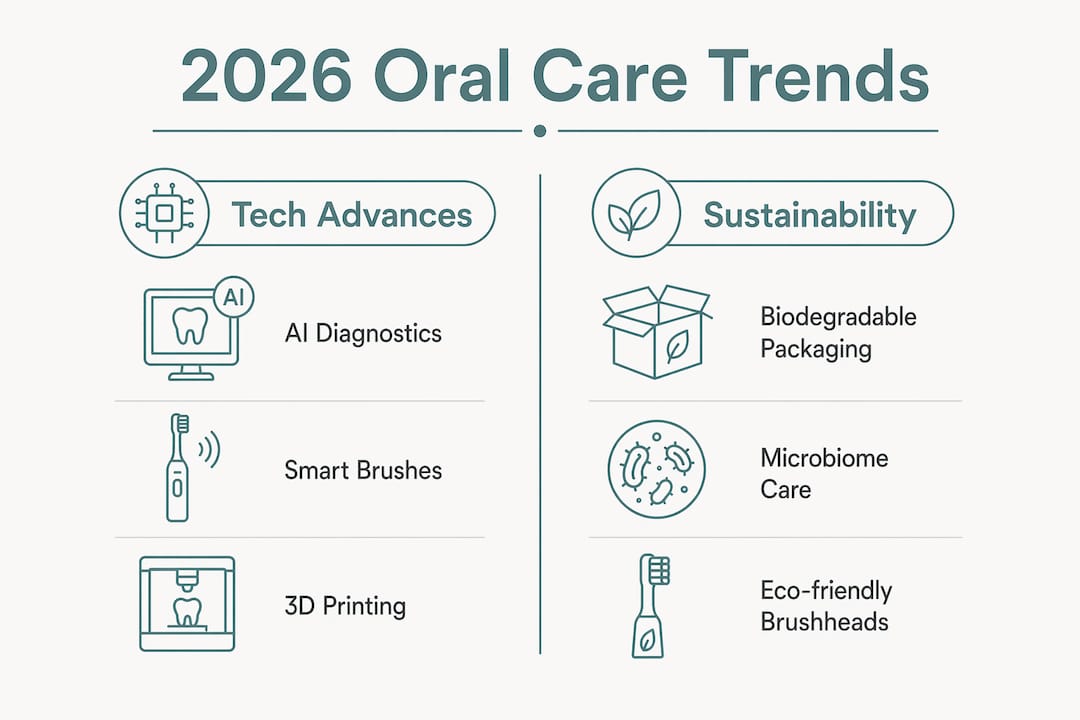
Oral care trends 2026 are defined by three forces reshaping dental hygiene: AI-powered diagnostics, microbiome-supportive formulations, and sustainability-driven product design. 91% of adults consider oral health vital to overall well-being, and 89% sought preventive care in 2025. That level of consumer engagement is pushing the global oral care market toward a projected $95.7 billion by 2036, up from $58.2 billion in 2026. For health-conscious individuals and dental professionals alike, understanding these shifts is no longer optional. The practices and products that lead in 2026 are built on personalization, science, and responsibility.
What are the top oral care trends in 2026?
The dental care trends 2026 centers on are not incremental upgrades. They represent a structural shift in how oral health is understood, delivered, and maintained. Technology, biology, and consumer values are converging in ways that affect everything from the toothbrush you hold to the schedule your dentist recommends.
Three defining forces drive this shift:
- AI and digital workflows are moving from experimental to clinical standard, with tools that detect cavities faster and more accurately than traditional visual exams.
- Microbiome science is reframing oral hygiene from germ elimination to ecosystem balance, introducing prebiotic and probiotic formulations into mainstream products.
- Sustainability is no longer a niche preference. Plastic-free packaging, biodegradable brush heads, and carbon-neutral production are now competitive requirements for oral care brands.
These trends do not operate in isolation. A health-conscious consumer buying a whitening toothpaste in 2026 is increasingly likely to choose one with prebiotic ingredients, packaged without single-use plastic, and recommended by a dentist using AI-assisted risk profiling. That convergence is what makes 2026 a genuinely pivotal year for oral hygiene trends.
How is AI transforming dental diagnostics and smart brushing?
AI-powered diagnostics are now clinical standards in US dental practices, analyzing radiographs in seconds to detect cavities and bone loss with precision that equals or outperforms experienced clinicians. The FDA has cleared multiple AI diagnostic tools under the 510(k) pathway, signaling regulatory confidence in their reliability. This matters because early detection directly reduces treatment complexity and cost for patients.

Smart toothbrushes with IoT connectivity are the consumer-facing extension of this same data-driven philosophy. These devices track brushing pressure, duration, and coverage, then deliver real-time feedback through paired apps. For professionals advising patients, innovations shaping oral care now include connected brushing tools that generate compliance data useful during clinical consultations.
3D printing and digital workflows have also matured significantly. Chairside production of crowns, surgical guides, and aligners now takes hours rather than the days previously required by external labs. Patients benefit from fewer appointments and faster restorations, while practices gain efficiency and control over quality.
Pro Tip: When evaluating AI diagnostic tools for clinical adoption, prioritize platforms with FDA 510(k) clearance and published peer-reviewed validation studies. Transparency about training data quality is the most reliable indicator of real-world accuracy.
What is microbiome-friendly oral care and why does it matter?
Microbiome-friendly oral care is defined as a product and practice approach that supports the balance of beneficial oral bacteria rather than eliminating all microbial life indiscriminately. Traditional antiseptic mouthwashes containing chlorhexidine or alcohol kill pathogens effectively but also disrupt beneficial bacterial populations. Consumers increasingly seek to nurture rather than sterilize their oral ecosystem, and the product market is responding.
The clinical evidence behind this shift is substantive. Four key ingredients are leading the prebiotic oral care category:
- Xylitol carries EFSA-approved claims for reducing tooth demineralization and inhibiting Streptococcus mutans without disrupting the broader oral microbiome.
- Arginine supports the metabolism of beneficial bacteria that produce alkaline byproducts, helping neutralize acid and reduce caries risk.
- Prebiotic fibers such as inulin selectively feed beneficial oral bacteria, promoting a more balanced microbial environment over time.
- Synbiotic formulations combining prebiotics and probiotics represent the next frontier, with early clinical trials showing promise for periodontal health management.
“Prebiotic oral care moves beyond antimicrobial mouthwashes, emphasizing balanced oral flora with ingredients like xylitol and arginine, supported by regulatory approvals and growing clinical evidence.” — The rise of prebiotics in oral care for 2026
The practical implication for consumers is straightforward. Choosing a toothpaste or mouthwash with xylitol or arginine over a standard antiseptic formula is a clinically supported decision, not just a wellness trend. Dental professionals who understand this distinction are better positioned to guide patients toward products that protect long-term oral health rather than simply masking symptoms.
How sustainability is reshaping oral care product design
Sustainable oral care is moving from niche to mainstream, with plastic-free packaging and biodegradable brush heads gaining measurable consumer preference across major retail channels. This shift is not purely consumer-led. Regulatory pressure, including PFAS bans affecting fluoropolymer coatings used in some dental floss products, is forcing formulation changes across the industry. Brands that delay adaptation face both compliance risk and market share erosion.
The table below compares conventional and sustainable oral care product attributes across key dimensions:
| Attribute | Conventional products | Sustainable alternatives |
|---|---|---|
| Packaging | Single-use plastic tubes and cases | Aluminum tubes, compostable cardboard, refillable systems |
| Brush heads | Non-recyclable nylon bristles | Biodegradable plant-based or castor oil bristles |
| Formulation | Synthetic preservatives, PFAS-adjacent compounds | PFAS-free, naturally derived preservatives |
| Production | Standard carbon footprint | Carbon-neutral or offset manufacturing |
| End-of-life | Landfill-bound | Compostable or brand take-back programs |
Colgate-Palmolive, Procter & Gamble, and Unilever are all investing in sustainable packaging lines, which signals that this is a category-wide transition rather than a fringe movement. Health-conscious consumers who prioritize eco-conscious brands alongside efficacy now have credible options from both established and independent manufacturers.
Pro Tip: When switching to sustainable oral care products, verify that biodegradable claims are backed by third-party certifications such as TÜV Austria or DIN CERTCO. Marketing language alone is not a reliable indicator of actual compostability.
How is personalized preventive care changing dental visits?
Risk-based dental recall is defined as a scheduling model that replaces universal six-month visits with individualized intervals determined by each patient’s specific caries and periodontal risk profile. Risk-based recall schedules tailored to individual risk profiles are replacing the one-size-fits-all approach that has dominated dentistry for decades. A low-risk patient with excellent home care may need annual visits, while a high-risk patient with active periodontal disease may require quarterly monitoring.
The tools enabling this model have matured considerably:
- Salivary diagnostics can now identify early biomarkers for oral cancer, periodontal inflammation, and caries risk from a simple chair-side saliva sample.
- Systemic health screening is being integrated into dental workflows, with blood pressure monitoring and diabetes risk assessment becoming standard in progressive practices.
- Digital health records with AI-assisted risk scoring allow clinicians to track changes over time and adjust recall intervals dynamically rather than reactively.
- Patient-facing apps connected to practice management software give individuals visibility into their own risk scores, increasing engagement and compliance with recommended schedules.
The financial case for patients is compelling. Fewer unnecessary visits reduce out-of-pocket costs, while earlier detection of genuine problems prevents the expensive restorative work that results from delayed diagnosis. For practices, data-driven preventive models create a growing quality gap between early adopters and traditional practices, making technology investment a competitive necessity rather than a luxury.
What product innovations are defining oral hygiene trends in 2026?
Oral care formulations are undergoing “skinification,” blending clinical efficacy with beauty, confidence, and lifestyle dimensions to meet evolving consumer expectations. This trend, borrowed from the skincare industry, means that toothpaste and mouthwash are increasingly marketed and formulated as wellness products rather than purely functional hygiene tools. Ingredients like hyaluronic acid for gum hydration and niacinamide for tissue health are appearing in premium oral care lines.
The global oral care market is growing at a 5.1% CAGR, driven by premiumization and demand for differentiated products. That growth is concentrated in specific segments: whitening toothpastes, sensitivity-specific formulas, and natural or clean-label products are all outperforming the commodity end of the market.
Health-conscious Millennials and Gen Z are the primary drivers of this premiumization. These consumers value personalized guidance and aesthetic benefits alongside clinical outcomes, which is why brands are investing in connected products that deliver both data and visible results. For professionals advising patients on personalized oral care, understanding this consumer psychology is as important as understanding the clinical evidence.
The most significant product-level shift is the move toward multifunctionality. A single toothpaste in 2026 may combine whitening actives, prebiotic ingredients, sensitivity relief, and enamel remineralization in one formula. Manufacturers respond to this demand by investing in ingredient compatibility research and expanding their product lines to address specific consumer profiles rather than a generic mass market.
Key takeaways
The oral care trends defining 2026 require both consumers and professionals to move beyond routine hygiene toward data-informed, microbiome-aware, and sustainability-conscious practices.
| Point | Details |
|---|---|
| AI diagnostics are clinical standard | FDA-cleared AI tools detect cavities with accuracy that equals experienced clinicians, making adoption a competitive necessity. |
| Microbiome care replaces germ elimination | Xylitol and arginine have regulatory backing; choosing prebiotic formulas is a clinically supported decision. |
| Sustainability is now a baseline expectation | PFAS bans and consumer preference are forcing plastic-free and biodegradable product lines across major brands. |
| Risk-based recall improves outcomes and reduces cost | Salivary diagnostics and AI risk scoring enable individualized visit schedules that prevent expensive late-stage treatment. |
| Skinification drives product premiumization | Multifunctional formulas combining whitening, sensitivity, and prebiotic benefits are outgrowing commodity oral care. |
Why 2026 feels like a turning point worth paying attention to
I have tracked oral health innovation for years, and 2026 feels qualitatively different from previous cycles of incremental product updates. The convergence of AI diagnostics, microbiome science, and sustainability is not a marketing narrative. It reflects genuine scientific maturation across three separate fields arriving at the same moment.
The microbiome shift is the one I find most significant. Dentistry spent decades optimizing for pathogen elimination, and that approach worked well enough. But the evidence for ecosystem-based care, particularly the clinical data behind xylitol and arginine, suggests we have been solving the wrong problem. Killing bacteria is not the same as maintaining oral health. That distinction will reshape product formulations and clinical protocols for the next decade.
On technology, my honest view is that the quality gap between AI-adopting practices and traditional ones will widen faster than most professionals expect. Patients who experience AI-assisted diagnostics and risk-based scheduling will not willingly return to less precise care. That creates both urgency and opportunity for practices willing to invest now.
Sustainability deserves more credit than it typically receives in dental discussions. PFAS bans and plastic-free packaging are not just ethical choices. They are regulatory realities that will force product reformulation regardless of brand preference. Getting ahead of that curve is smarter than reacting to it.
For consumers, the practical takeaway is to treat your oral care routine as a system rather than a checklist. The tools available in 2026, from smart brushes to prebiotic toothpastes to personalized recall schedules, are genuinely better than what existed five years ago. Using them well requires some intentionality, but the outcomes are measurably worth it.
— Joris
Smarter brushing starts with the right tool
The trends reshaping oral care in 2026 all point toward one principle: better results come from smarter, more consistent habits. Y-Brush is built around exactly that idea. Most people brush for under a minute, well short of the two-minute standard, but Y-Brush delivers a thorough, plaque-free clean in just 20 seconds using advanced sonic technology and a full-arch design.
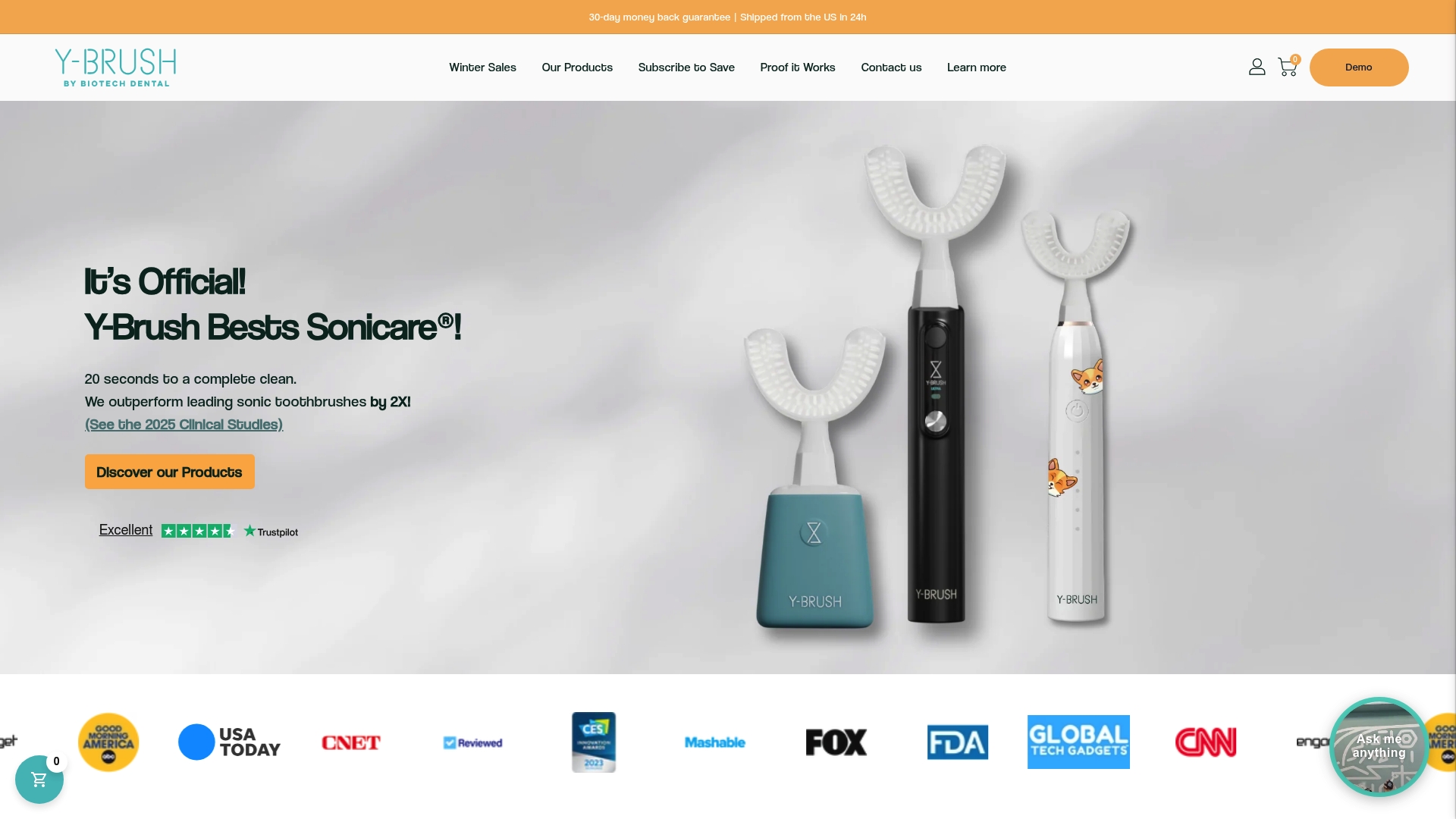
The Y-Brush Essential Sonic Toothbrush is available for adults and children, making it a practical fit for households that want to align with 2026 oral hygiene trends without overhauling their entire routine. For continuous care, Y-Brush membership plans provide regular brush head replacements and product access, keeping your routine current without the friction of reordering. Efficient brushing is the foundation every other oral health innovation builds on.
FAQ
What are the biggest oral care trends in 2026?
The leading dental care trends in 2026 are AI-powered diagnostics, microbiome-friendly formulations using ingredients like xylitol and arginine, and sustainability-driven product design including plastic-free packaging and biodegradable brush heads.
How does AI improve oral health outcomes?
AI diagnostic tools analyze dental radiographs in seconds and detect cavities with accuracy that equals or outperforms experienced clinicians. FDA 510(k)-cleared platforms are now recommended for adoption in US dental practices.
What is microbiome-friendly toothpaste?
Microbiome-friendly toothpaste uses prebiotic ingredients such as xylitol, arginine, or inulin to support beneficial oral bacteria rather than eliminating all microbial life. EFSA has approved xylitol’s claim to reduce tooth demineralization, giving these formulas a credible clinical foundation.
What is risk-based dental recall?
Risk-based recall replaces universal six-month dental visits with individualized schedules based on each patient’s caries and periodontal risk profile. Salivary diagnostics and AI risk scoring tools enable clinicians to set precise, dynamic recall intervals.
How will oral care evolve beyond 2026?
Future oral health trends point toward synbiotic formulations combining prebiotics and probiotics, deeper integration of systemic health screening into dental workflows, and fully personalized product recommendations driven by real-time salivary and microbiome data.
Recommended
- Why oral care is trending: Health, tech, and social influences – Y-Brush USA
- Oral care innovation: Smarter solutions for healthier smiles – Y-Brush USA
- Master teeth cleaning methods for a healthier smile in 2026 – Y-Brush USA
- How technology is revolutionizing oral care: 21% better results – Y-Brush USA


