


TL;DR:
- Flossing daily removes plaque from the 40% of tooth surfaces that toothbrushes cannot reach, preventing cavities and gum disease. Proper technique, such as curving floss into a C-shape along the gumline, enhances effectiveness and reduces bleeding. For optimal oral health, pair flossing with brushing using a sonic toothbrush, and choose interdental tools based on individual dental needs.
Flossing is defined as the daily practice of cleaning between teeth using dental floss or interdental tools to remove plaque and food debris that toothbrushes cannot reach. This single habit prevents cavities, gum disease, and systemic inflammation that brushing alone cannot address. Poor oral hygiene increases chronic inflammation linked to cardiovascular disease and other degenerative conditions. Dental professionals recommend flossing daily because it targets the 40% of tooth surfaces that a toothbrush bristle never contacts.
Why flossing is important for preventing gum disease and cavities
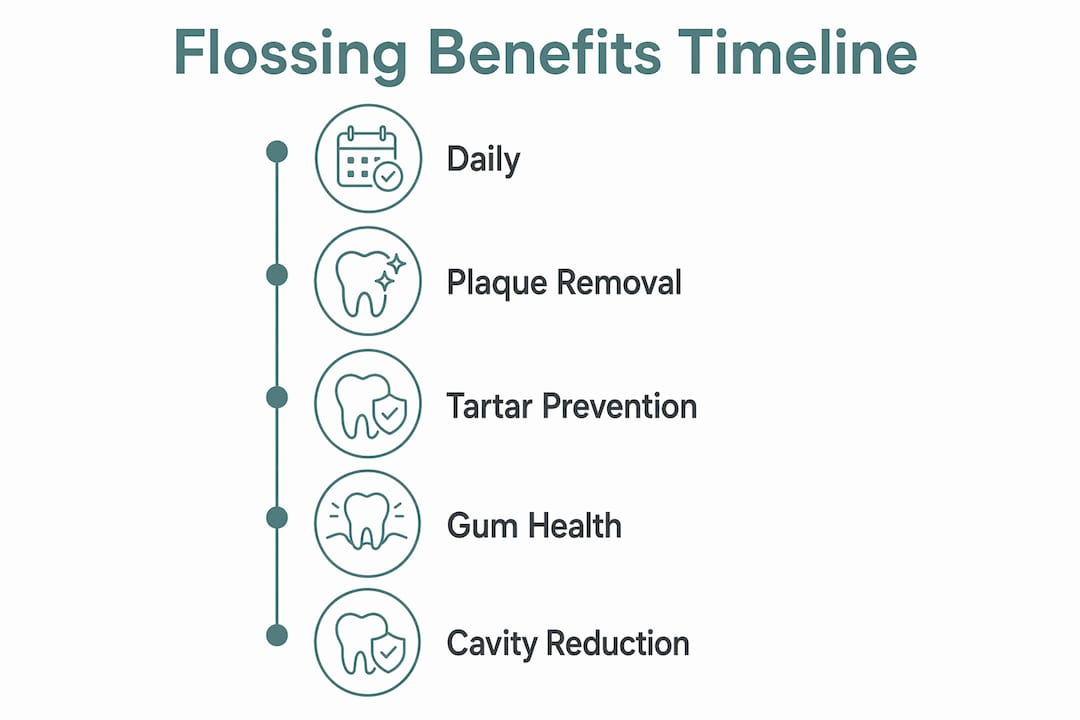
Flossing removes the bacterial biofilm, called plaque, that forms continuously in the tight spaces between teeth and along the gumline. When plaque accumulates in these interdental spaces, it triggers an immune response in the surrounding gum tissue. That response is gingivitis, the earliest stage of gum disease, characterized by redness, swelling, and bleeding. Left untreated, gingivitis progresses to periodontitis, a condition that damages tooth-supporting bone and can lead to permanent tooth loss.

The timeline for plaque hardening is faster than most people realize. Plaque hardens into tartar within 24 to 72 hours, and once it calcifies, only a dental professional can remove it. This means skipping flossing for even two or three days allows tartar to form in areas your toothbrush never touches. Regular flossing disrupts this process before it starts.
The benefits of flossing extend well beyond the mouth. Chronic gum inflammation releases inflammatory markers into the bloodstream, which research associates with increased cardiovascular risk. Flossing daily is, in effect, a low-cost intervention for whole-body inflammation management. This is one of the most underappreciated reasons to floss daily, and it shifts flossing from a cosmetic habit to a genuine health practice.
Here is what flossing specifically protects against:
- Interproximal cavities: Decay that forms between teeth where toothbrush bristles cannot clean
- Gingivitis: Gum inflammation caused by plaque accumulation along the gumline
- Periodontitis: Advanced gum disease that destroys the bone anchoring your teeth
- Tartar buildup: Hardened plaque that requires professional removal and accelerates disease
- Systemic inflammation: Chronic low-grade inflammation connected to cardiovascular and metabolic conditions
Pro Tip: Floss before brushing, not after. Flossing before brushing lifts plaque and debris from between teeth first, allowing fluoride toothpaste to penetrate those spaces more effectively during brushing.
How to floss correctly and overcome common challenges
Proper flossing technique matters as much as frequency. Many people use a sawing motion that snaps floss into the gum tissue, which causes bleeding and misses the plaque sitting along the gumline. The correct approach is methodical and gentle.
Follow these steps for effective flossing:
- Cut 18 inches of floss and wind most of it around your middle fingers, leaving about two inches to work with between your thumbs and index fingers.
- Slide the floss gently between two teeth using a zigzag motion. Never snap it into the gums.
- Curve the floss into a C-shape around each tooth and slide it up and down along the tooth surface, going just below the gumline.
- Use a fresh section of floss for each tooth to avoid transferring bacteria from one space to another.
- Repeat for every tooth, including the back surfaces of your last molars.
Bleeding during flossing is one of the most common reasons people stop. Early bleeding during flossing typically indicates inflamed gum tissue responding to plaque removal, and it usually resolves within one to two weeks of consistent flossing. Persistent bleeding beyond that point signals a need for professional dental evaluation.
Pro Tip: If standard floss is difficult to handle due to limited dexterity or a sensitive gag reflex, try floss picks, pre-threaded flossers, or a water flosser. These tools lower the barrier to consistent use without sacrificing meaningful plaque disruption.
For people who struggle with motivation, pairing flossing with an existing habit, such as brushing at night, creates a reliable behavioral anchor. The importance of dental care compounds over time, and consistency beats perfection every time.
Flossing vs. oral irrigators and other interdental cleaning methods
The interdental cleaning category includes traditional string floss, oral irrigators (also called water flossers), and interproximal brushes. Each tool works differently, and the best choice depends on your specific dental situation.
| Method | Plaque removal | Bleeding reduction | Best suited for |
|---|---|---|---|
| String floss | High for contact areas | Moderate | Most adults with standard spacing |
| Oral irrigator | Moderate, good for flushing | High around implants | Implant patients, braces wearers |
| Interproximal brush | High for wider gaps | High | Bridges, larger interdental spaces |
| Floss picks | Moderate | Moderate | Travel, limited dexterity |
Oral irrigators paired with brushing reduce bleeding around implants more effectively than floss alone. This finding from 2025 research published in Frontiers in Oral Health is significant because it confirms that tool selection should match the patient’s anatomy and hardware, not just personal preference.
For patients with standard dentition and no implants or orthodontic devices, string floss remains the most clinically validated tool for disrupting plaque at the contact point between teeth. Oral irrigators excel at flushing debris from pockets and around hardware but do not physically scrape the tooth surface the way floss does. The two tools are complementary, not interchangeable.
Consistent brushing and flossing remain the core effective self-care combination, according to a Cochrane review of behavioral interventions in gum disease management. No single new tool or technique has been shown to clearly outperform this foundational pairing.
Why flossing matters more with braces, bridges, or implants
Orthodontic appliances, dental bridges, and implants all create additional surfaces and crevices where plaque accumulates at an accelerated rate. Standard flossing technique does not work around these structures without modification, which is why many patients with braces or bridges develop decay or gum problems despite brushing regularly.
Key considerations for these groups include:
- Braces wearers: Brackets and wires trap food and plaque at every attachment point. Floss threaders or water flossers are recommended to thread floss under the archwire and clean each tooth individually. Superfloss, which has a stiff end and a spongy middle section, is another practical option.
- Bridge patients: A dental bridge spans a gap with a false tooth anchored to adjacent teeth. Floss cannot pass through the contact point as it would with natural teeth, so floss threaders or interproximal brushes are required to clean beneath the pontic (the false tooth).
- Implant patients: Peri-implant tissue is structurally different from natural gum tissue and more vulnerable to bacterial infiltration. Individualized interdental cleaning strategies, including oral irrigators and interproximal brushes, are often superior to traditional floss for controlling inflammation around implants.
For a detailed walkthrough of cleaning around orthodontic hardware, the Y-brush guide on cleaning teeth with braces covers each step clearly. The principle across all these cases is the same: more hardware means more surface area for plaque, and that demands a more deliberate interdental cleaning approach.
How to make flossing a sustainable daily habit
Building a consistent flossing habit requires removing friction, not relying on willpower. Most people who skip flossing cite time, forgetting, or discomfort as their primary barriers. Each of these is solvable with the right approach.
- Pair flossing with toothbrushing. Habit stacking works by attaching a new behavior to an existing one. Flossing immediately before or after brushing at night removes the need to remember it separately.
- Choose the right tool for your preferences. If string floss feels awkward, switch to floss picks or a water flosser. The best flossing tool is the one you will actually use consistently.
- Start with one minute. Committing to a full flossing session can feel like a barrier. Starting with just the front teeth for 60 seconds builds the habit without the pressure of perfection.
- Set a visible reminder. Placing floss on the bathroom counter next to your toothbrush creates a visual cue that is more effective than a phone alarm for most people.
- Ask your dentist for a technique demonstration. Many patients floss incorrectly for years without realizing it. A 60-second demonstration at your next checkup can correct technique and make the habit more rewarding.
Choosing the right floss type also reduces friction. Waxed floss slides more easily between tight contacts. Unwaxed floss provides more friction and may remove more plaque in wider spaces. PTFE floss (sold under brands like Oral-B Glide) is particularly effective for teeth with tight contacts or rough edges. Building effective oral care habits takes about three to four weeks of consistent repetition before the behavior becomes automatic.
Key takeaways
Flossing daily is the single most effective way to clean the 40% of tooth surfaces a toothbrush cannot reach, preventing cavities, gum disease, and systemic inflammation.
| Point | Details |
|---|---|
| Plaque hardens fast | Plaque calcifies into tartar within 24 to 72 hours, making daily flossing non-negotiable. |
| Technique determines results | Curving floss into a C-shape along the gumline removes plaque that a straight sawing motion misses. |
| Tool choice should match your anatomy | Implant and brace patients benefit more from oral irrigators or interproximal brushes than string floss alone. |
| Bleeding usually resolves | Initial gum bleeding during flossing is a healing response; persistent bleeding requires a dental visit. |
| Habit stacking builds consistency | Pairing flossing with nightly brushing is the most reliable way to make it automatic. |
The part of flossing advice nobody talks about
Most flossing advice focuses on whether you floss at all. In my experience, the more important question is whether you floss correctly. I have spoken with people who floss every single day and still develop interproximal cavities because they snap the floss straight down between teeth and pull it back out without ever curving it around the tooth surface. They technically floss. They get almost none of the benefit.
The C-shape technique is not a minor detail. It is the entire mechanism. Floss that does not hug the tooth and slide below the gumline is not disrupting the plaque that causes disease. It is just moving food particles around.
The second thing I would push back on is the idea that flossing is optional if you use a water flosser. Oral irrigators are excellent tools, particularly for implant patients and anyone with braces. But they flush. They do not scrape. For patients with standard dentition, string floss physically disrupts the biofilm in a way that water pressure alone does not replicate. Use both if you can. If you have to choose, match the tool to your specific dental situation rather than defaulting to whichever one feels easier.
The broader point is this: flossing dental health outcomes are determined by consistency and technique together. One without the other produces mediocre results. Get both right, and you will notice the difference at your next cleaning.
— Joris
Complete your oral care routine with Y-brush
Flossing cleans between your teeth. Your toothbrush handles the rest, and the quality of that brush matters. Y-brush sonic toothbrushes deliver a clinically effective clean in just 20 seconds, making it easier to stay consistent with the brushing half of your routine. The Y-brush Essential Sonic Toothbrush uses sonic vibration technology to remove plaque from tooth surfaces and along the gumline, complementing the interdental work your floss does. When you pair thorough flossing with a sonic toothbrush that actually fits your schedule, you cover every surface, every day, without the friction that causes most people to cut corners.
FAQ
Why is flossing important if I brush twice a day?
Brushing cleans the front, back, and chewing surfaces of teeth but cannot reach the tight spaces between them. Flossing targets those interdental areas where plaque accumulates and causes cavities and gum disease.
How often should you floss for good dental health?
Dental professionals recommend flossing once daily. Consistent daily flossing prevents plaque from hardening into tartar, which forms within 24 to 72 hours and can only be removed by a dental professional.
Why do my gums bleed when I floss?
Bleeding gums during flossing typically indicate inflamed tissue responding to plaque removal. This usually resolves within one to two weeks of consistent flossing. Persistent bleeding signals a need for professional dental evaluation.
Is a water flosser as effective as string floss?
Water flossers are effective at flushing debris and reducing bleeding, particularly around implants and braces. However, string floss physically disrupts plaque biofilm at the tooth contact point in a way that water pressure alone does not fully replicate.
When is the best time to floss?
Flossing at night before bed is most effective because it removes the day’s accumulated plaque and food debris before they sit undisturbed overnight. Flossing before brushing also allows fluoride from toothpaste to reach the cleaned interdental spaces.


