


TL;DR:
- Oral wellness encompasses physical, psychological, and social well-being, extending beyond disease absence. Maintaining daily habits like brushing, flossing, and regular dental visits promotes overall systemic health and confidence. Addressing barriers such as access, misinformation, and motivation enhances long-term oral health outcomes.
Oral wellness is defined as the state of having healthy teeth, gums, and mouth that enable comfortable eating, speaking, social interaction, and confidence without pain or embarrassment. The World Health Organization and FDI World Dental Federation both recognize that oral health extends beyond the absence of disease to include functional, psychological, and social well-being. That broader framing matters because nearly 3.7 billion people globally suffer from oral diseases, most of which are preventable. Programs like Health through Oral Wellness® (HOW) from Northeast Delta Dental already operationalize this wider definition through patient-centered, risk-based preventive care.
What is oral wellness, and how does it differ from oral health?
Oral wellness, oral health, and oral hygiene are related but distinct concepts. Confusing them leads to incomplete care strategies and missed opportunities for prevention.

Oral health is the traditional clinical term. It describes the presence or absence of disease, pain, and functional ability. A dentist diagnosing cavities or periodontal disease is working within the oral health framework. The definition is useful but narrow. It tells you whether something is wrong, not whether you are truly thriving.
Oral hygiene refers to the daily behaviors that support oral health. Brushing, flossing, and rinsing with fluoride mouthwash are oral hygiene practices. They are the inputs; oral health is the output.
Oral wellness is the broadest of the three. It captures the full lived experience of your mouth, including how your oral condition affects your confidence, your willingness to smile, your ability to participate socially, and your mental health. A 2025 Frontiers article argues that conventional oral health definitions fall short of capturing these psychosocial dimensions, particularly for minority populations and individuals with complex identities.
Here is a quick breakdown of how the three concepts relate:
- Oral hygiene: What you do every day (brushing, flossing, rinsing)
- Oral health: The clinical state of your teeth, gums, and mouth
- Oral wellness: The full physical, psychological, and social experience of your oral condition
Pro Tip: If you only track oral health by whether you have cavities, you are missing the bigger picture. Ask yourself whether your mouth lets you eat, speak, and engage socially without discomfort or self-consciousness. That is the oral wellness standard.
Why oral wellness matters for your overall health
The connection between your mouth and the rest of your body is not theoretical. It is supported by a growing body of research linking oral disease to systemic conditions including cardiovascular disease, diabetes, and respiratory illness. Holistic approaches linking oral wellness and systemic health improve understanding of chronic disease connections and patient outcomes.
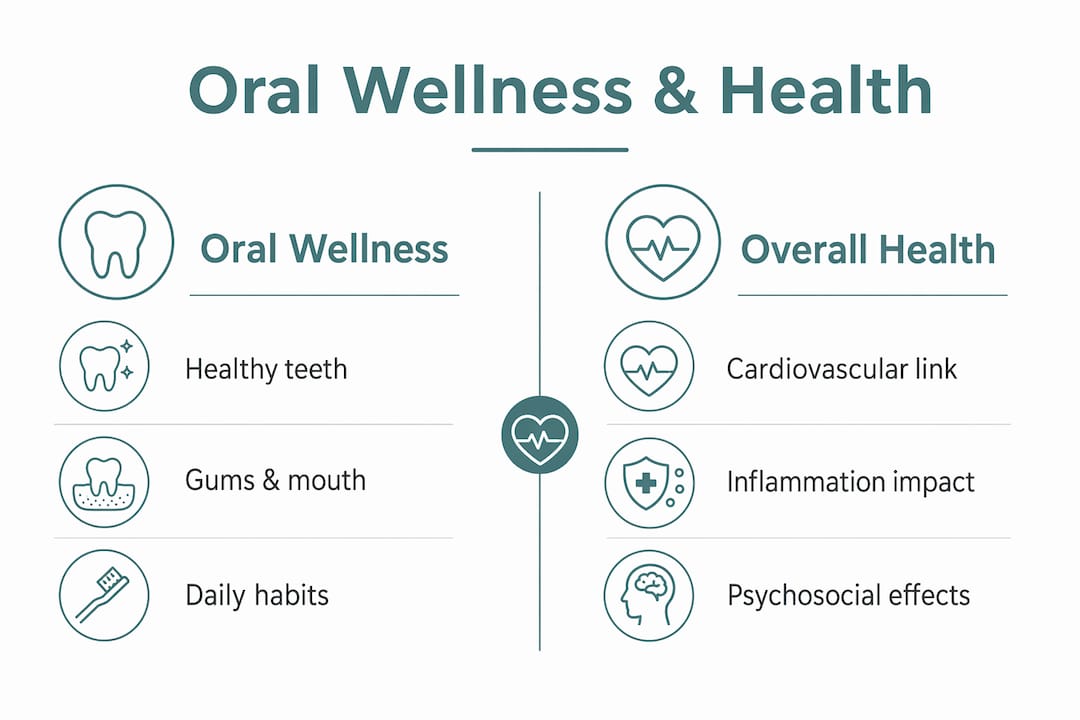
Chronic oral inflammation, particularly from untreated periodontal disease, creates pathways for bacteria and inflammatory markers to enter the bloodstream. This contributes to arterial inflammation and can worsen blood sugar control in people with diabetes. The relationship is bidirectional. Poor systemic health also accelerates oral disease progression.
The psychosocial dimension is equally significant. A 2026 Delta Dental consumer survey found that 91% of US adults consider oral health key to overall well-being, with 81% linking oral health directly to mental health. Among Gen Z, that figure rises to 94%. These numbers reflect a cultural shift: people no longer separate their smile from their sense of self.
The table below summarizes the key connections between oral wellness and systemic health:
| Systemic condition | Oral wellness connection |
|---|---|
| Cardiovascular disease | Periodontal bacteria contribute to arterial inflammation |
| Type 2 diabetes | Gum disease worsens blood sugar regulation |
| Mental health | Oral discomfort and appearance affect confidence and social participation |
| Respiratory illness | Oral bacteria can be aspirated and worsen lung infections |
| Pregnancy outcomes | Periodontal disease is linked to preterm birth and low birth weight |
Global health policy is catching up to this evidence. The WHO now emphasizes integrating oral health into universal health coverage and primary care systems, recognizing that prevention and integration are the most effective tools for reducing the worldwide burden of oral disease.
How to maintain oral wellness: evidence-based daily practices
Maintaining oral wellness does not require an elaborate routine. It requires consistency with a small set of clinically proven habits, applied correctly and regularly. The oral microbiome plays a central role in this process, and daily care directly shapes its balance.
Here are the core practices, in order of impact:
- Brush twice daily for two full minutes. Use a fluoride toothpaste and cover all tooth surfaces. The challenge is that most people brush for under one minute, which leaves significant plaque behind. A sonic toothbrush, such as the Y-Brush Essential, delivers consistent mechanical action that compensates for technique gaps.
- Clean between teeth daily. Floss, interdental brushes, or water flossers remove plaque from areas a toothbrush cannot reach. Skipping this step leaves roughly 40% of each tooth surface uncleaned.
- Use a fluoride mouthwash. Rinsing with a fluoride mouthwash after interdental cleaning adds a protective layer against caries-causing bacteria.
- Schedule dental checkups every six months. Regular dental checkups combined with daily brushing and interdental cleaning are the most proven habits for long-term oral wellness. Professional cleanings remove calcified tartar that no home routine can address.
- Reduce sugar and acidic food intake. Oral diseases share modifiable risk factors including excess sugar consumption, tobacco use, and alcohol. Reducing sugar frequency, not just quantity, cuts the acid attack cycles that erode enamel.
- Ask about personalized preventive programs. The Health through Oral Wellness® program from Northeast Delta Dental includes fluoride treatments, sealants, and coaching tailored to individual risk profiles. Structured programs like this outperform generic advice because they match interventions to your specific vulnerabilities.
For people with busy schedules, building these habits into existing routines is the most reliable strategy. Pair brushing with an existing morning or evening anchor habit. Keep floss visible on the bathroom counter rather than stored in a drawer. Small environmental cues drive consistent behavior far more reliably than motivation alone.
Pro Tip: If two minutes of brushing feels difficult to sustain, Y-Brush’s 20-second full-mouth cleaning approach removes the time barrier entirely. Explore fast oral care routines designed for people who need effective results without the clock-watching.
Common challenges in oral wellness and how to overcome them
Even people who understand the importance of oral wellness face real barriers. Identifying those barriers clearly is the first step toward addressing them.
- Cost and access. Dental care remains expensive and unevenly distributed. The UK’s 2023 Adult Oral Health Survey reveals that social disparities and quality-of-life impacts from oral conditions are concentrated in lower-income populations. Community health centers, dental school clinics, and sliding-scale providers offer lower-cost alternatives worth researching in your area.
- Misinformation about products. The oral care market is saturated with products making exaggerated claims. Whitening strips, charcoal toothpastes, and oil pulling have varying levels of evidence behind them. Fluoride toothpaste and mechanical plaque removal remain the gold standard, supported by decades of clinical research.
- Motivation and habit formation. Most people know what they should do. The gap is between knowledge and consistent action. Tracking tools, habit-stacking techniques, and accountability from a dental hygienist all improve follow-through rates.
- Avoiding the dentist due to anxiety. Dental anxiety affects a significant portion of adults and leads to delayed care that allows small problems to become expensive ones. Practices offering sedation options, transparent communication, and patient-centered care models reduce this barrier meaningfully.
- Underestimating gum health. Gum disease is the leading cause of adult tooth loss, yet it progresses silently in its early stages. Bleeding gums during brushing are not normal. They signal inflammation that requires attention, not avoidance.
Addressing these challenges often means working with a dental professional to build a care plan tailored to your specific risk factors, lifestyle, and budget. A family-focused approach to oral care for all ages can also help households build shared habits that reinforce each other.
Key takeaways
Oral wellness is a multidimensional state that requires daily hygiene habits, regular professional care, and attention to the psychological and social dimensions of your oral health.
| Point | Details |
|---|---|
| Oral wellness vs. oral health | Oral wellness includes psychological and social well-being, not just absence of disease. |
| Systemic health link | Periodontal disease connects to cardiovascular disease, diabetes, and mental health outcomes. |
| Core daily habits | Brush twice daily, clean between teeth, and use fluoride mouthwash consistently. |
| Professional care frequency | Schedule dental checkups every six months for cleanings and early problem detection. |
| Barrier awareness | Cost, access, and motivation are the top barriers; targeted programs and tools help overcome them. |
Why I think we’ve been defining oral wellness too narrowly
I have spent years reading dental research and talking with people about their oral care habits, and one pattern stands out consistently. Most people define oral wellness as “no cavities and no pain.” That definition is not wrong, but it leaves out the part that actually drives behavior: how your mouth makes you feel about yourself.
The 2025 Frontiers research on expanding oral health definitions resonated with me precisely because it named something clinicians have observed for years. A person can have technically healthy teeth and still avoid smiling in photos, decline social invitations, or feel self-conscious in professional settings because of how their mouth looks or feels. That is an oral wellness failure, even if no disease is present.
The practical implication is this: your oral care routine should be motivated by more than fear of the dentist. It should be connected to how you want to show up in your life. When people frame oral wellness as a contributor to confidence, social ease, and long-term systemic health, they maintain habits far more reliably than when they frame it as disease prevention alone.
My honest recommendation is to schedule a preventive care appointment before you have a problem, not after. Ask your dentist to assess your individual risk profile and build a routine around it. And invest in tools that actually fit your lifestyle, because a routine you skip is worth nothing.
— Joris
Upgrade your oral wellness routine with Y-Brush
Y-Brush was built for the reality that 90% of people brush for under one minute, leaving plaque behind despite their best intentions. The Y-Brush Essential Sonic Toothbrush delivers a clinically effective clean in just 20 seconds, covering all tooth surfaces simultaneously with its full-arch design. For families, the Y-Brush KidsBrush builds strong oral wellness habits in children aged 4 to 12. Those seeking a premium experience can explore the Y-Brush Ultra for enhanced performance. Every model is designed to meet you where you already are, making consistent oral wellness achievable regardless of how your day unfolds.
FAQ
What is the oral health definition according to WHO?
The WHO defines oral health as a state of being free from chronic mouth and facial pain, oral and throat cancer, oral sores, birth defects, gum disease, tooth decay, and tooth loss, as well as other diseases and disorders that affect the oral cavity. It explicitly includes functional and social well-being, not just absence of disease.
How does oral wellness differ from oral hygiene?
Oral hygiene refers to the daily practices you perform, such as brushing and flossing, while oral wellness describes the broader outcome: a mouth that functions comfortably and supports your confidence and social participation. Hygiene is the input; wellness is the result.
What are the most important oral care tips for daily maintenance?
The most effective daily habits are brushing twice with fluoride toothpaste, cleaning between teeth with floss or interdental brushes, and rinsing with fluoride mouthwash. Pairing these with effective oral care habits and biannual dental checkups covers the full prevention spectrum.
What contributes to oral wellness beyond brushing?
Diet, stress management, tobacco avoidance, and regular professional care all contribute to oral wellness. Reducing sugar frequency, avoiding tobacco, and addressing dental anxiety early prevent the conditions that undermine long-term oral health.
How often should you visit a dentist to maintain oral wellness?
Dental professionals recommend checkups approximately every six months for most adults. Higher-risk individuals, including those with diabetes, gum disease, or a history of frequent cavities, may benefit from more frequent visits tailored to their specific risk profile.
Recommended
- Oral hygiene explained: Efficient routines for healthier smiles – Y-Brush USA
- What Your Dentist Wishes You Knew About Oral Health – Y-Brush USA
- Why oral care is trending: Health, tech, and social influences – Y-Brush USA
- Dental health checklist 2026: essential steps for healthier smiles – Y-Brush USA


