


TL;DR:
- Interdental cleaning removes plaque from spaces a toothbrush cannot reach, preventing gum disease and cavities.
- Choosing the correct size and type of tool, especially interdental brushes, enhances effectiveness, especially for wider spaces.
- Consistent use of well-fitted tools and proper technique significantly improves oral health, regardless of personal preference.
Interdental cleaning is defined as the practice of removing plaque and food debris from the spaces between your teeth where a toothbrush cannot reach, using specialized tools such as dental floss, interdental brushes, wooden picks, or oral irrigators. These spaces, called interdental spaces, account for a significant portion of your total tooth surface area. Brushing alone leaves them largely untouched. The American Dental Association and DentalHealth.org both recognize daily interdental cleaning as a non-negotiable component of complete oral hygiene. If you want to protect your gums and prevent cavities, cleaning between your teeth is not optional.
Why interdental cleaning is essential for oral health
Plaque accumulates primarily in interdental spaces and below the gumline, making these areas the primary origin point for gingivitis and periodontitis. A standard toothbrush cleans the facial and lingual surfaces of teeth effectively but physically cannot access the tight contacts between teeth. That structural limitation means that without interdental aids, a meaningful portion of your tooth surfaces go uncleaned every single day.
The consequences compound quickly. Plaque left between teeth hardens into tartar within 24 to 72 hours, and tartar cannot be removed by brushing or any home tool. Once tartar forms, it creates a rough surface that accelerates further plaque attachment. Gingivitis, the earliest stage of gum disease, is directly caused by this cycle of plaque buildup in areas brushing misses.
The clinical evidence is direct: interdental cleaning reduces gingival inflammation and lowers the risk of both cavities and advanced periodontal disease. Beyond oral health, research continues to associate periodontal disease with systemic conditions including cardiovascular disease and diabetes. Cleaning between your teeth is not just about a brighter smile. It is a measurable contribution to your overall health.
“Brushing cleans facial and lingual surfaces well but misses interdental areas, necessitating the use of interdental aids.” — IP International Journal of Periodontology and Implantology
The importance of interdental cleaning is also reflected in how dental professionals approach patient education. Dentists and hygienists consistently rank interdental hygiene as the most commonly neglected part of a home care routine. Starting the habit now prevents the kind of damage that requires professional intervention later.
What are the main interdental cleaning methods?
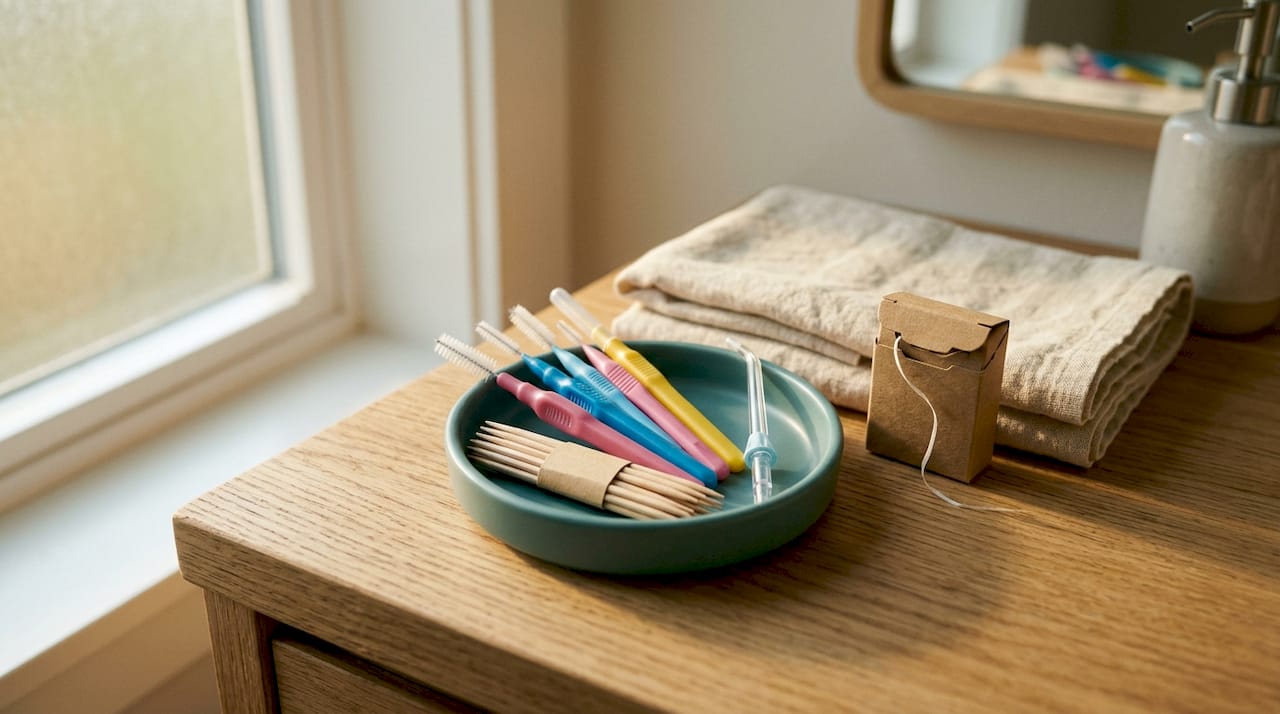
The range of interdental cleaning tools available in 2026 is broader than most people realize. Each tool targets a specific type of interdental space, user dexterity level, or clinical condition. Understanding the differences helps you choose what actually works for your mouth.
| Tool | Best for | Key advantage | Limitation |
|---|---|---|---|
| Dental floss | Tight contacts, no recession | Reaches very narrow spaces | Requires dexterity; technique-dependent |
| Interdental brushes | Wider spaces, recession, braces | Clinically proven plaque removal | Not suitable for very tight contacts |
| Wooden sticks | Mild plaque, on-the-go use | Convenient and portable | Limited reach; less effective overall |
| Oral irrigators | Braces, implants, sensitive gums | Flushes debris and bacteria | Does not replace mechanical cleaning |
| Floss picks | Limited dexterity users | Easy single-handed use | Less control than traditional floss |
Dental floss remains the most widely recommended tool for tight interdental contacts where no recession exists. Interdental brushes are small, bottle-brush-shaped tools that come in multiple sizes and are particularly effective when there is visible space between teeth. Oral irrigators such as those made by Waterpik use a pressurized water stream to flush debris and bacteria from between teeth and below the gumline. They work well as a complement to mechanical cleaning, especially for people with braces or dental implants.
Pro Tip: If you are unsure which tool fits your interdental spaces, ask your dentist or hygienist to measure your gaps at your next appointment. Choosing the wrong size brush is the single most common reason people feel interdental cleaning is not working for them.
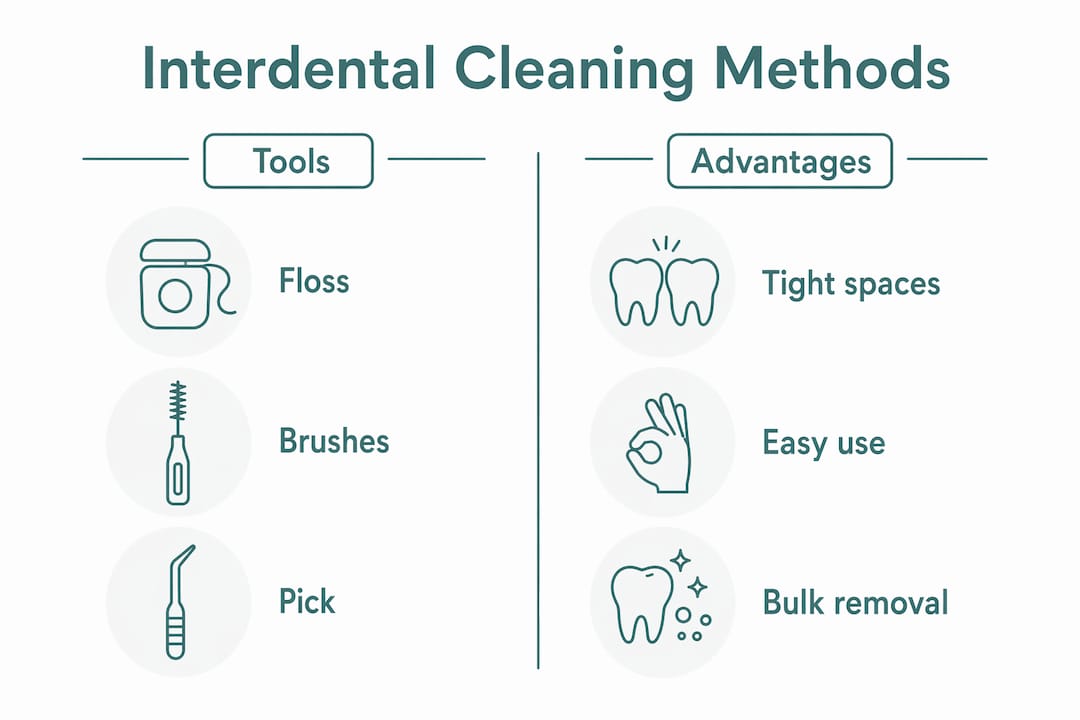
Wooden sticks and oral irrigators complement brushes and floss in specific cases but are not standalone solutions. The goal is to match the tool to the space, not to use whatever is most convenient.
Which interdental cleaning method is most effective?
The clinical evidence now clearly favors interdental brushes over floss for most adults, particularly those with any degree of gum recession or wider interdental spaces. A 2025 study published in PMC found that interdental brushes outperform floss and wooden sticks for reducing gingival inflammation and plaque when properly adapted to the interdental space. That finding carries a critical qualifier: proper fit determines the outcome.
The mechanical efficacy of an interdental brush depends primarily on fit rather than brand. A brush that is too small slides through the space without contacting the tooth surfaces adequately. A brush that is too large causes gum trauma without improving cleaning. Calibration using a colorimetric probe to match brush size to interdental space is a promising clinical method, though its practical benefits in home use still require further validation.
| Cleaning method | Plaque reduction | Gingival inflammation | Ease of use |
|---|---|---|---|
| Interdental brushes | High (when fitted) | Significant reduction | Moderate to high |
| Dental floss | Moderate | Moderate reduction | Low to moderate |
| Wooden sticks | Low to moderate | Mild reduction | High |
| Oral irrigators | Moderate | Moderate reduction | High |
The ADA recommends floss as the traditional gold standard, but also acknowledges that interdental brushes are often easier for people with braces, dexterity limitations, or larger interdental spaces. For very tight contacts with no recession, floss remains the only tool that can physically access the space. The practical answer is that most adults benefit from using both: brushes for spaces where they fit, and floss for tight contacts where they do not.
Pro Tip: Start with the smallest interdental brush size that enters the space with light resistance. If you feel sharp pain or the brush bends significantly, size down. Comfort and contact are both required for the tool to work.
You can explore how brushing compares to flossing in terms of overall oral health outcomes to build a more complete picture of your routine.
How to properly use interdental cleaning tools daily
Consistency and technique together determine whether interdental cleaning actually protects your oral health. Using a tool incorrectly, even daily, can cause gum trauma without delivering the plaque removal you need.
Using interdental brushes:
- Select the correct size brush. It should pass between your teeth with light resistance, never forced.
- Insert the brush gently at a slight angle, following the natural curve of the gumline.
- Move the brush back and forth two to three times in each space.
- Rinse the brush under water between teeth and replace it when the bristles are visibly worn or bent, typically after one to two weeks.
Using dental floss:
- Cut approximately 18 inches of floss and wind most of it around your middle fingers, leaving about two inches to work with.
- Slide the floss gently between teeth using a zigzag motion. Never snap it into the gum.
- Curve the floss into a C-shape around each tooth and slide it gently below the gumline.
- Use a clean section of floss for each tooth contact.
Cleaning between teeth before brushing is recommended by NHS guidelines and DentalHealth.org because it removes debris first, allowing fluoride toothpaste to penetrate the interdental surfaces more effectively afterward. This sequencing is a small change that measurably improves fluoride delivery.
Mild bleeding when you first start is normal and expected. Bleeding typically subsides within one to two weeks as gum inflammation resolves with consistent cleaning. Persistent bleeding beyond two weeks, or bleeding that is heavy, warrants a dental consultation. It may indicate gingivitis that requires professional treatment before home care alone can resolve it.
Pro Tip: Keep your interdental brushes next to your toothbrush, not in a separate drawer. Proximity is the single biggest predictor of whether people actually use them every day.
For a complete daily oral hygiene framework, the oral hygiene checklist from Y-Brush covers how interdental cleaning fits into a full routine.
Choosing the right interdental cleaning tools for your needs
The best interdental cleaning tool is the one you can use consistently with correct technique. That principle, endorsed by the ADA, shifts the focus from clinical superiority to personal sustainability. A perfect tool used twice a week delivers worse outcomes than a good-enough tool used every day.
Several factors determine which tool or combination of tools is right for you:
- Gap size: Tight contacts with no recession require floss. Visible spaces between teeth are better served by interdental brushes.
- Dexterity: People with arthritis or limited hand mobility often find interdental brushes or floss picks easier to handle than traditional floss.
- Orthodontic appliances: Braces create additional plaque traps around brackets and wires. Oral hygiene with braces requires tools that can navigate around hardware, making orthodontic floss threaders or oral irrigators particularly useful.
- Gum recession: Gum recession and orthodontics change the size and shape of interdental spaces, which directly affects which brush size fits correctly. A tool that worked two years ago may no longer be the right fit.
- Personal preference: Motivation matters. If you find floss frustrating to handle, switching to interdental brushes or a water flosser increases the likelihood you will clean between your teeth at all.
A patient-centered approach to interdental cleaning, supported by clinical consensus, emphasizes customizing tools and routines based on individual clinical indicators and personal preference. This is not a one-size-fits-all practice. Your dentist can assess your interdental spaces, measure recession, and recommend specific brush sizes or tool combinations based on what your mouth actually needs.
Pro Tip: If you use both brushes and floss, use the brush first to remove the bulk of debris, then follow with floss in any tight contacts the brush cannot access. This combination approach covers the full range of interdental spaces most effectively.
Key takeaways
Interdental cleaning is the single most neglected component of home oral hygiene, and consistent daily use of the right tool for your specific interdental spaces is the most direct way to reduce gum disease risk.
| Point | Details |
|---|---|
| Definition and purpose | Interdental cleaning removes plaque from spaces a toothbrush cannot reach, preventing gingivitis and cavities. |
| Tool selection matters | Interdental brushes outperform floss for most adults, but floss remains necessary for tight contacts with no recession. |
| Fit determines effectiveness | A brush that is too small or too large fails to clean properly; use the smallest size that passes with light resistance. |
| Clean before brushing | Cleaning between teeth before brushing improves fluoride toothpaste penetration into interdental surfaces. |
| Consistency beats perfection | The best tool is the one you use every day with correct technique, regardless of clinical rankings. |
Why I think most people are solving this problem backwards
By Joris
Most people who ask me about interdental cleaning are already motivated. They want to do it right. The problem is that they start with the tool rather than the space. They buy a pack of interdental brushes in a single size, find that some teeth feel fine and others feel wrong, and then conclude that interdental brushes are not for them.
What I have found, working through this topic in depth, is that the sizing conversation is the one that changes everything. The mechanical efficacy of an interdental brush depends on fit, not brand, not bristle material, not price. A correctly sized brush in a space creates contact with the tooth surface. An incorrectly sized brush just moves air around. That is the whole story.
I also think the “floss vs. brush” debate distracts people from the more useful question, which is: what does your specific mouth need? Most adults have a mix of tight contacts and wider spaces. That means the answer is almost always both tools, used in the right places. Framing it as a competition leads people to pick one and underserve half their mouth.
The other thing worth saying directly: bleeding gums when you start are not a reason to stop. They are a sign that the tissue is inflamed and needs exactly what you are doing. Stopping because of early bleeding is the most common reason people never build the habit. Push through the first two weeks with gentle technique, and the bleeding resolves as the gum health improves.
— Joris
Complete your oral hygiene routine with Y-Brush
Interdental cleaning protects the spaces between your teeth, but the surfaces of your teeth need just as much attention. Y-Brush delivers a clinically effective clean across all tooth surfaces in just 20 seconds, making it the practical complement to your interdental routine. For people who already struggle to brush for a full two minutes, Y-Brush removes that barrier entirely without compromising results. Explore Y-Brush membership plans to find the option that fits your lifestyle, or check out the Y-Brush Essential Sonic Toothbrush if you are ready to upgrade your brushing routine today. A complete oral hygiene routine covers both surfaces and spaces.
FAQ
What is interdental cleaning exactly?
Interdental cleaning is the practice of removing plaque and food debris from the spaces between teeth using tools such as floss, interdental brushes, or oral irrigators. These spaces cannot be reached by a standard toothbrush.
How often should you clean between your teeth?
The ADA recommends cleaning between teeth at least once daily. Most dental guidelines suggest doing it before brushing to improve fluoride toothpaste penetration into interdental surfaces.
Are interdental brushes better than floss?
Clinical evidence shows interdental brushes outperform floss for reducing plaque and gingival inflammation when properly fitted. Floss remains the better choice for very tight contacts where no gum recession exists.
Is bleeding normal when I start cleaning between my teeth?
Mild bleeding when you first begin is normal and indicates existing gum inflammation. It should subside within one to two weeks of consistent, gentle cleaning. Persistent or heavy bleeding requires a dental consultation.
Do I need interdental cleaning if I brush twice a day?
Yes. Brushing cleans the outer and inner surfaces of teeth but cannot access interdental spaces. Without interdental cleaning, a significant portion of each tooth’s surface remains unclean regardless of how thoroughly you brush.


