


TL;DR:
- Sensitivity toothpaste is formulated to reduce tooth pain by targeting the biological causes of dentin sensitivity through specific active ingredients. It requires consistent use over several weeks to build protection, with immediate relief possible from fast-acting options like arginine. Persistent or worsening sensitivity warrants a dental evaluation to address underlying conditions beyond toothpaste remedies.
That sharp jolt when you sip hot coffee or bite into ice cream is not just annoying. It is your teeth telling you something specific is wrong. Sensitivity toothpaste explained simply is this: it is a clinically formulated product designed to reduce that pain by targeting the biological cause, not just masking it. But here is what most people get wrong. They expect immediate relief, switch products after three days, and conclude nothing works. The reality is more nuanced and far more useful to understand. This article breaks down how sensitivity toothpaste works, which ingredients matter, and how to use it effectively.
Table of Contents
- Key Takeaways
- Sensitivity toothpaste explained: what it is and how it works
- Comparing active ingredients: timelines and best uses
- How to choose, use, and get the most from sensitivity toothpaste
- Broader habits that affect how well sensitivity toothpaste works
- My take on what most people get wrong
- Pair your toothpaste with the right toothbrush
- FAQ
Key Takeaways
| Point | Details |
|---|---|
| Not an instant fix | Sensitivity toothpaste requires consistent twice-daily use for 2 to 4 weeks before most people notice sustained relief. |
| Active ingredients differ | Potassium nitrate, stannous fluoride, arginine, and nano-hydroxyapatite each target sensitivity through distinct biological mechanisms. |
| Application technique matters | Applying toothpaste directly to sensitive spots before brushing can accelerate onset of relief. |
| Consistency is non-negotiable | Stopping use or switching to regular toothpaste quickly erases the protective effects built up over time. |
| Dentist visit still needed | If pain persists beyond four weeks or worsens, an underlying condition like gum disease or a cavity likely requires professional treatment. |
Sensitivity toothpaste explained: what it is and how it works
Tooth sensitivity happens when dentin, the layer beneath your tooth enamel, becomes exposed. Dentin contains thousands of microscopic channels called tubules that connect directly to the nerve at the center of your tooth. When hot, cold, sweet, or acidic substances reach these tubules, fluid inside them moves and stimulates the nerve, creating that sharp, shooting pain. Understanding this mechanism is the foundation for understanding what sensitivity toothpaste actually does.
What is sensitivity toothpaste, at its core? It is a toothpaste formulated with specific active ingredients that either block those dentin tubules physically or calm the nerve response itself. Standard toothpastes focus mainly on cleaning and cavity prevention. Sensitivity formulas add a therapeutic layer on top of that cleaning function.
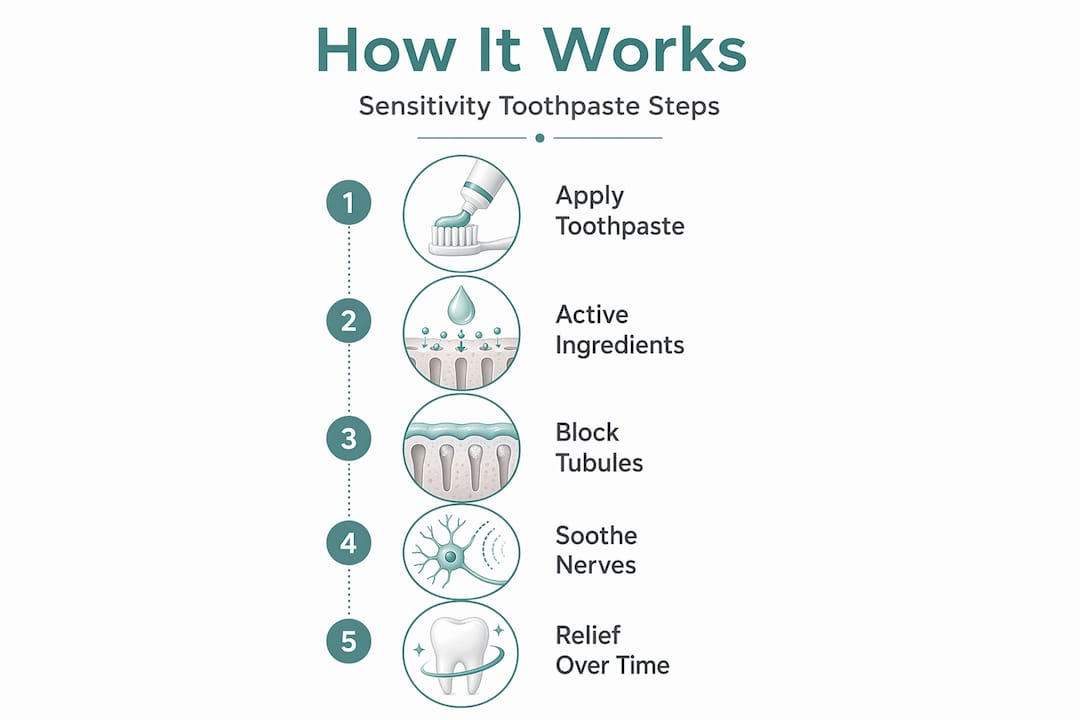
The two primary mechanisms work as follows. The first is nerve desensitization. Ingredients like potassium nitrate penetrate the dentin tubules and surround the nerve fibers, reducing their ability to fire pain signals. The second is tubule occlusion. Ingredients like stannous fluoride, arginine combined with calcium carbonate, and nano-hydroxyapatite physically seal or plug the open tubules, blocking the fluid movement that triggers pain.
Key active ingredients found in sensitivity toothpastes include:
- Potassium nitrate (5%): Calms the nerve directly by reducing its excitability over time
- Stannous fluoride (0.454%): Forms a mineral barrier over tubules and provides antibacterial protection
- Arginine + calcium carbonate (8% arginine): Plugs tubules rapidly, often within hours
- Nano-hydroxyapatite: A fluoride-free mineral that fills tubules biomimetically, mimicking natural tooth structure
Pro Tip: Check the “active ingredients” section on any sensitivity toothpaste label. If you do not see at least one of the above, the product likely offers minimal therapeutic benefit for sensitivity.
Comparing active ingredients: timelines and best uses
Not all sensitivity toothpaste ingredients work the same way or at the same speed. Choosing the right formula depends on what is driving your sensitivity in the first place. Here is a practical breakdown.
| Ingredient | Mechanism | Onset of Relief | Best For |
|---|---|---|---|
| Potassium nitrate | Nerve desensitization | 2 to 4 weeks | Chronic, nerve-based sensitivity |
| Stannous fluoride | Tubule sealing + antibacterial | 1 to 2 weeks | Sensitivity from gum disease or acid erosion |
| Arginine + calcium carbonate | Rapid tubule plugging | Minutes to hours | Fast relief, spot application |
| Nano-hydroxyapatite | Biomimetic remineralization | 2 to 4 weeks | Fluoride-free preference, enamel rebuilding |
Potassium nitrate is the clinical gold standard for chronic nerve sensitivity. It requires patience. A Cochrane meta-analysis supports its efficacy, but the two to four week window is firm. Do not judge it before then.
Stannous fluoride deserves attention beyond just sensitivity relief. Because it also delivers antibacterial effects, it is a strong choice when your sensitivity stems from gum recession caused by gum disease or from acid erosion softening the tooth surface. It forms a mineral barrier over exposed dentin while simultaneously reducing bacterial load in the mouth.
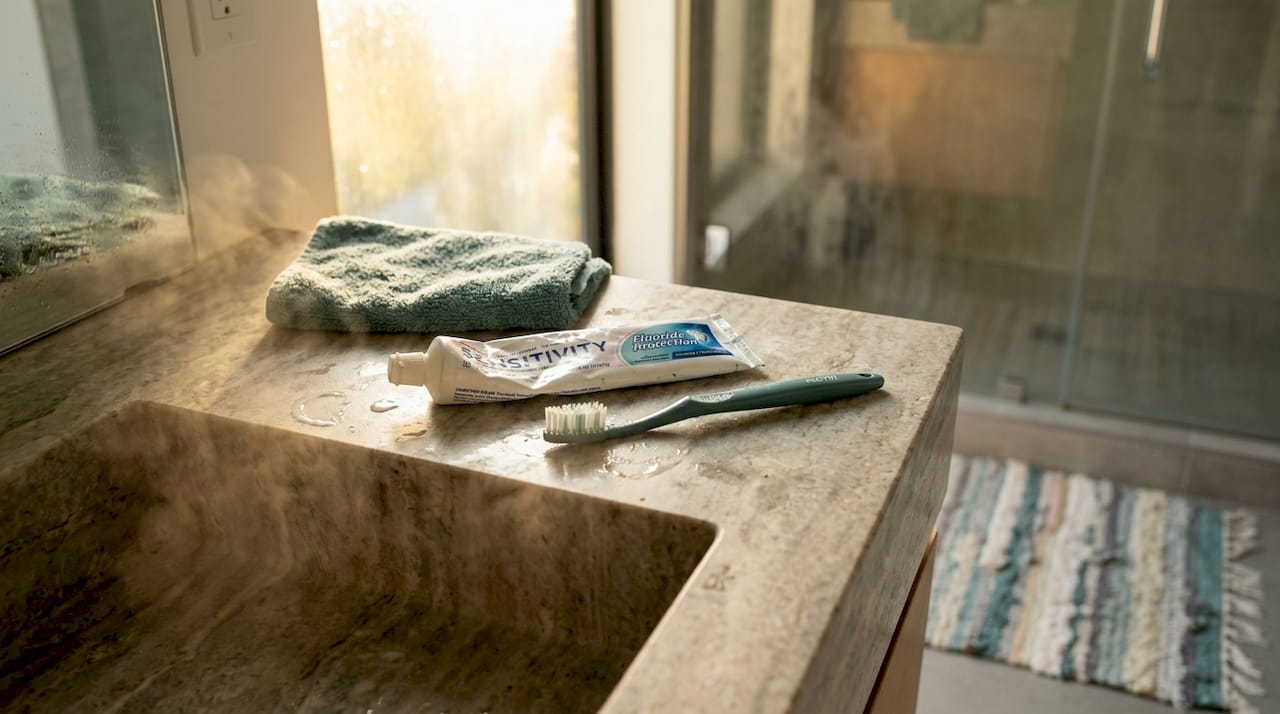
Arginine paired with calcium carbonate offers the fastest tubule sealing, sometimes within minutes to hours of use. This makes it particularly useful for people who need immediate relief and cannot wait weeks for results. The tradeoff is that the seal it creates may not be as durable long-term compared to some other formulas, so consistent daily use remains critical.
Nano-hydroxyapatite fills dentin tubules by mimicking the mineral composition of natural tooth enamel. It is a strong option for people avoiding fluoride, whether due to personal preference or specific health considerations. It also supports enamel remineralization, making it one of the more protective options available.
One important note on matching ingredient to cause: choosing the right active ingredient depends heavily on the trigger. Potassium nitrate suits chronic nerve-based sensitivity well. Stannous fluoride works better when gum disease or acid erosion is involved. Arginine formulas excel at fast, on-demand relief.
Pro Tip: If you are not sure what is causing your sensitivity, start with a stannous fluoride formula. It covers multiple causes at once, including both nerve response and bacterial factors.
How to choose, use, and get the most from sensitivity toothpaste
Selecting the right product is only half the job. How you use it determines how well it works.
-
Match the formula to your trigger. If your sensitivity follows a dental cleaning or whitening treatment, an arginine formula for fast relief makes sense. If sensitivity has been present for months, potassium nitrate or stannous fluoride is a better long-term fit. For guidance on toothpaste selection criteria, take time to evaluate your specific situation before buying.
-
Brush twice daily, every day. This is not optional. Maximum benefits typically arrive after six to eight weeks of consistent use. Most people see meaningful relief within two to four weeks. Using the toothpaste only occasionally produces little to no lasting effect.
-
Do not rinse immediately after brushing. Spitting out excess toothpaste is fine, but rinsing with water washes away the active ingredients before they can do their job. Leave the residue in contact with your teeth for as long as possible, especially overnight.
-
Apply directly to sensitive spots before brushing. For targeted, faster relief on a single sensitive tooth, apply a pea-sized amount directly onto the affected area. The recommended leave-on time for spot application is one to three minutes before you begin your regular brushing routine.
-
Avoid high-abrasion whitening toothpastes. Whitening toothpastes can worsen sensitivity by abrading enamel further. If whitening matters to you, look specifically for products that combine sensitivity protection with gentle whitening agents, usually those containing potassium nitrate or stannous fluoride alongside low abrasive levels.
-
See a dentist if symptoms persist. If pain continues after two to four weeks of consistent use or becomes severe, underlying conditions like cavities, gum disease, or significant enamel erosion may be responsible. These require professional treatment, not just a different toothpaste.
Pro Tip: Use your sensitivity toothpaste as your final step before bed. Overnight contact with the teeth gives active ingredients the longest uninterrupted window to work.
Broader habits that affect how well sensitivity toothpaste works
Sensitivity toothpaste does not operate in isolation. The habits surrounding your brushing routine significantly affect how well the product performs and how long relief lasts.
-
Use a soft-bristled or electric toothbrush with a pressure sensor. Electric toothbrushes with pressure sensors are particularly recommended for people with sensitive teeth. Overbrushing with a hard-bristled brush removes gum tissue over time, exposing more dentin and making sensitivity worse, not better. A gentle sonic toothbrush with automatic pressure detection removes that guesswork entirely.
-
Modify your diet and timing around acidic foods. Acidic drinks like citrus juice, soda, and wine temporarily soften enamel. Brushing immediately afterward accelerates enamel wear. Wait at least 30 minutes after consuming acidic food or drink before brushing to let your saliva remineralize the surface first.
-
Consider a fluoride rinse for added protection. For people with severe sensitivity or significant enamel thinning, daily fluoride toothpaste with 1,000 to 1,500 ppm fluoride content is strongly recommended. Adding a fluoride mouth rinse on top of that provides an additional protective layer, especially for people prone to acid erosion or decay.
-
Address gum recession with the right toothpaste choice. Gum recession exposes the root surface of your teeth, which lacks enamel entirely. Root surfaces are far more sensitive to temperature and pressure. If recession is your primary issue, look for a formula specifically noted for receding gums, as these often combine desensitizing ingredients with gum-supporting compounds.
-
Do not rotate back to standard toothpaste. The protective effect diminishes quickly when you stop using sensitivity toothpaste or swap back to a regular formula. Think of sensitivity toothpaste as ongoing maintenance, not a short-term treatment you complete and then move on from.
My take on what most people get wrong
I have seen the same pattern repeat itself countless times. Someone picks up a sensitivity toothpaste, uses it for a week, feels no dramatic change, and writes it off as ineffective. Then they go back to their regular toothpaste and wonder why the pain returns or worsens.
The misconception runs deep. People treat sensitivity toothpaste like a painkiller, expecting relief within hours or a day. But it is a maintenance product. It builds protection gradually, the same way a sunscreen does not repair sunburn overnight but prevents further damage when applied consistently.
In my experience, the most overlooked piece of advice is this: think about why your teeth are sensitive before choosing a product. Someone grinding their teeth at night (bruxism) needs a different approach than someone with post-whitening sensitivity. Sensitivity toothpaste for teeth grinding is a relevant concern because grinding wears down enamel progressively, and no toothpaste alone can reverse that damage if the grinding continues unaddressed. A night guard paired with a desensitizing toothpaste is the more complete solution.
What I find most telling is how many people reach for a new toothpaste before seeing a dentist. If your sensitivity appeared suddenly, changed in character, or is localized to one specific tooth, that is a signal worth investigating professionally. A toothpaste cannot fix a cracked tooth or a cavity, and using one as a substitute delays real treatment.
— Joris
Pair your toothpaste with the right toothbrush
Using the right sensitivity toothpaste is a strong first step. Pairing it with a toothbrush that protects rather than aggravates your enamel takes your results to a different level entirely. Y-Brush designs sonic electric toothbrushes specifically built for people who want thorough, gentle cleaning without the guesswork. The Y-Brush Essential Sonic Toothbrush delivers a full clean in just 20 seconds with gentle sonic technology that is suitable for sensitive gums and teeth. For those wanting more advanced features, the Y-Brush Ultra offers premium sonic performance. Y-Brush also offers membership plans for replacement brush heads, so your routine stays consistent without interruption.
FAQ
What does sensitivity toothpaste actually do?
Sensitivity toothpaste either blocks open dentin tubules physically or calms the nerve inside the tooth using active ingredients like potassium nitrate, stannous fluoride, or arginine. It reduces the pain triggered by hot, cold, sweet, or acidic stimuli.
How long does sensitivity toothpaste take to work?
Relief timelines vary by ingredient. Arginine-based formulas may offer relief within minutes to hours, stannous fluoride within one to two weeks, and potassium nitrate within two to four weeks of consistent twice-daily use.
Can you use sensitivity toothpaste every day long-term?
Yes. Sensitivity toothpaste is designed for daily, ongoing use. The protective effects diminish quickly if you switch back to a regular toothpaste, so consistent long-term use is both safe and recommended.
Is sensitivity toothpaste safe for teeth grinding?
Sensitivity toothpaste can help manage the discomfort from enamel wear caused by grinding, but it does not stop the grinding itself. Pairing a desensitizing toothpaste with a dental night guard addresses both the symptom and the cause more effectively.
When should you see a dentist instead of relying on sensitivity toothpaste?
If sensitivity persists after four weeks of consistent use, worsens, or is localized to a single tooth, professional evaluation is necessary. Underlying issues like cavities, gum disease, or enamel erosion require dental treatment, not just a different toothpaste.


