


TL;DR:
- Most people unknowingly make small yet impactful oral care mistakes, such as rinsing after brushing or delaying toothbrush replacement. Correcting these habits—like minimizing rinsing, waiting after acidic foods, and timely replacing toothbrush heads—significantly improves dental health. Using effective tools, like guided electric toothbrushes, can help establish and maintain proper oral hygiene routines effortlessly.
Most people believe their brushing routine is solid. Two minutes, twice a day, fluoride toothpaste, done. But oral care mistakes don’t announce themselves. They hide in small habits: the post-brush rinse you’ve done since childhood, the toothbrush head you haven’t swapped in six months, the floss you snap down instead of glide. These are the kinds of common dental errors that quietly erode enamel, inflame gums, and lead to expensive dental visits. This guide breaks down the most impactful mistakes in teeth cleaning and gives you the practical corrections to fix them today.
Table of Contents
- Common oral care mistakes to avoid
- Comparison of common oral care mistakes and their impact
- A fresh look at oral care: Why subtle habits matter
- Explore effective oral care tools to avoid mistakes
- Frequently asked questions
Common oral care mistakes to avoid
Most people make small but significant mistakes in home dental care that lead to cavities and gum disease. The frustrating part is that most of these errors feel harmless in the moment. You’re brushing. You’re flossing. You’re doing the right things, or so it seems. But the how and the when matter just as much as the act itself.
Here are the foundational oral hygiene blunders that affect the majority of American adults:
- Brushing too hard. Aggressive pressure doesn’t mean a deeper clean. It wears down enamel and recedes gums, creating sensitivity over time.
- Not brushing long enough. The average brush lasts under 60 seconds. Plaque in the back molars and along the gumline stays put without adequate time and coverage.
- Using incorrect brushing motion. Horizontal scrubbing misses the gumline entirely. Plaque accumulates in exactly the spots a back-and-forth motion skips.
- Neglecting the tongue. Bacteria on the tongue surface contribute directly to bad breath and redeposit on teeth immediately after brushing.
- Flossing incorrectly or skipping it. Popping floss between teeth and pulling it straight back out doesn’t clean the interdental (between-tooth) space. It just checks a box.
- Brushing immediately after acidic foods. Coffee, citrus, and soda temporarily soften enamel. Brushing within minutes of consumption accelerates erosion.
- Keeping your toothbrush too long. Frayed, softened bristles lose their mechanical ability to dislodge plaque. Most people hold onto brushes far past their useful life.
Building effective oral care habits starts with identifying which of these dental care pitfalls apply to your current routine. Let’s go deeper on each one.
Mistake #1: Rinsing your mouth after brushing
This is one of the most universal oral hygiene blunders, and almost no one knows they’re making it. After brushing, most people rinse with water or mouthwash, spit, and move on. That rinse immediately washes away the fluoride coating that toothpaste leaves behind, which is precisely what strengthens and remineralizes enamel over the next several hours.
Fluoride’s benefit is maximized when contact time is extended and immediate rinsing is minimized. Dentists are clear on this: spitting without rinsing leaves a protective fluoride layer on teeth for prolonged protection.
What to do instead:
- Spit out the excess toothpaste thoroughly. That’s it.
- Don’t rinse with water. Don’t immediately follow with mouthwash.
- If you use mouthwash, use it at a separate time, such as after lunch, not right after brushing.
- When brushing children’s teeth, supervise closely to ensure they spit rather than swallow. Young children who swallow toothpaste regularly are at risk for fluorosis, a condition that affects tooth enamel development.
Learning more about why not rinsing after brushing is one of those corrections that costs you nothing and pays off every single day.
Pro Tip: Try pairing toothbrushing with a different activity, like reviewing your calendar or checking your phone, so you’re not rushing to the faucet out of habit.
For added enamel protection, pairing a no-rinse brushing routine with a quality fluoride toothpaste strengthens the overall system.
Mistake #2: Not replacing your toothbrush or electric brush head timely
Bristles don’t send you a notification when they stop working. That’s the problem. By the time visible fraying appears, your brush head has been underperforming for weeks. Replacing electric toothbrush heads every 3 to 4 months is essential because bristle wear reduces plaque removal effectiveness even before obvious degradation is visible.
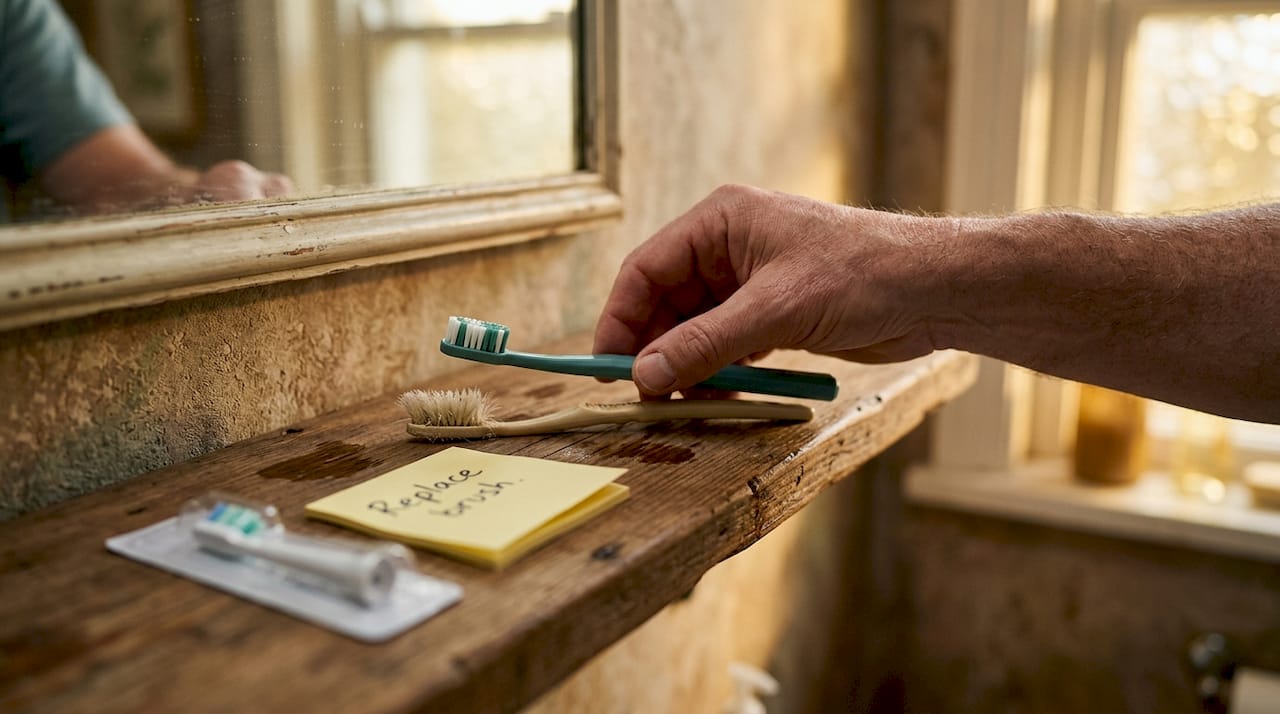
Beyond cleaning ability, worn brush heads harbor bacteria in the degraded bristle fibers. This contributes to gum inflammation and persistent bad breath, two problems people often blame on other causes.
Key replacement guidelines to follow:
- Replace every 3 to 4 months on a schedule, not based on visual appearance alone.
- Replace immediately after any illness, including colds and flu. Bacteria and viruses can survive on bristles and reintroduce infection.
- Set a phone reminder or use the subscription model many electric toothbrush brands offer. Consistent toothbrush replacement tips make adherence automatic rather than intentional.
- Look for brush heads with color-fade indicators that shift when replacement is due. These remove the guesswork entirely.
Understanding when to replace your toothbrush is one of the simpler gum care mistakes to fix, and one that delivers immediate returns in cleaner teeth and fresher breath.
Pro Tip: If you can’t remember the last time you replaced your brush head, replace it today. That’s the surest sign it’s overdue.
| Scenario | Recommended replacement timing |
|---|---|
| Normal use (healthy adult) | Every 3 to 4 months |
| After illness (cold, flu, strep) | Immediately |
| Visible fraying or splaying | Immediately, regardless of timeline |
| Child’s toothbrush | Every 2 to 3 months (children brush harder) |
| Travel toothbrush | Every 3 months or after each trip |
Mistake #3: Improper brushing and flossing technique
Bad brushing habits and flossing errors are responsible for more dental care pitfalls than most people realize. You can brush twice a day for two minutes and still leave significant plaque behind if the motion is wrong. Horizontal brushing and incorrect flossing miss plaque at gum lines and between teeth, the two most cavity-prone areas in your mouth.
Correct brushing technique, step by step:
- Hold the brush at a 45-degree angle to the gumline.
- Use small circular or gentle back-and-forth strokes, not wide horizontal sweeps.
- Apply light pressure. The bristles should contact the gumline without bending dramatically.
- Brush every surface: outer, inner, and chewing surfaces of all teeth.
- Brush your tongue from back to front to remove bacteria.
Correct flossing technique:
- Use 18 inches of floss, winding most around your middle fingers to keep a fresh section for each tooth.
- Slide the floss gently between teeth using a zigzag motion. Never snap it down.
- Curve the floss into a “C” shape around each tooth and slide it slightly below the gumline.
- Move it up and down against the side of the tooth, then repeat on the adjacent tooth.
These oral care techniques apply whether you use manual or electric tools. Pairing proper motion with the right equipment amplifies results considerably. Resources on proper brushing techniques can also reinforce these habits with additional visual guidance.
Mistake #4: Brushing immediately after eating acidic foods
Timing matters in dental hygiene in ways most consumers never consider. Acidic foods and drinks, including citrus, coffee, soda, and wine, temporarily soften tooth enamel through a process called demineralization. Your saliva naturally works to neutralize those acids and restore enamel hardness, but it needs time.
Brushing immediately after acidic foods damages softened enamel. Waiting at least 30 minutes allows saliva to neutralize acids and remineralize the surface before mechanical brushing occurs. This isn’t a fringe opinion. It’s the consistent recommendation from dental professionals across the country.
What to do during that 30-minute window:
- Rinse your mouth with plain water to dilute and remove residual acid.
- Chew sugar-free gum containing xylitol to stimulate saliva production.
- Avoid fruit juice, sparkling water, or sports drinks, which extend the acidic exposure period.
This is one of those mistakes in teeth cleaning that feels counterintuitive. Brushing right after breakfast seems like the responsible choice. But for enamel health, patience after acidic meals is actually the more protective move.
Comparison of common oral care mistakes and their impact
To help you prioritize what to fix first, here’s a side-by-side look at each mistake, the risk it creates, and the correction that addresses it.
| Mistake | Potential harm | Recommended correction | Ease of correction |
|---|---|---|---|
| Rinsing after brushing | Removes fluoride, reduces enamel protection | Spit only, no water rinse | Very easy |
| Brushing too hard | Enamel erosion, gum recession, sensitivity | Use light pressure, soft bristles | Easy |
| Not brushing long enough | Plaque buildup, cavities | Use a timed brush or phone timer | Easy |
| Wrong brushing motion | Missed gumline plaque | Switch to circular, 45-degree angle | Moderate |
| Skipping or misusing floss | Interdental decay, gum disease | Learn correct C-shape technique | Moderate |
| Brushing after acidic foods | Enamel erosion | Wait 30 minutes, rinse with water | Easy |
| Not replacing brush heads | Bacteria buildup, reduced cleaning | Replace every 3 to 4 months | Very easy |
| Neglecting tongue | Bad breath, bacterial redeposit | Brush tongue daily | Very easy |
A fresh look at oral care: Why subtle habits matter
Most articles on how to improve oral hygiene list the same broad mistakes: brush twice a day, floss daily, see your dentist. That’s sound advice, but it misses the behavioral layer where most problems actually live.
Consider the fluoride rinse habit. Nearly everyone rinses after brushing because it feels cleaner. No toothpaste residue, fresh mouth, done. But fluoride works best when contact time is maximized and immediate rinsing is avoided. The sensation of cleanliness actually works against the chemistry of protection. That’s a counterintuitive truth that most dental hygiene messaging doesn’t communicate clearly enough.
The same applies to brush head replacement. Electric toothbrush heads degrade before any visible sign appears. Consumers hold onto them because the brush still feels functional. But the bristle stiffness that drives plaque removal has already declined significantly. The brush is going through the motions without delivering the result.
What we find most compelling is that neither of these fixes requires more time, effort, or money in any significant way. Not rinsing saves you three seconds. Replacing brush heads on a calendar costs a few dollars every few months. Yet the cumulative impact on enamel health, gum condition, and cavity prevention is real and measurable.
There’s also the question of children’s oral health. Supervised brushing habits for kids, specifically teaching them to spit rather than swallow toothpaste, and ensuring they hold the brush correctly, establishes the mechanics that will serve them for decades. These aren’t minor parenting details. They’re the foundation of lifelong oral health.
Neglecting oral health rarely announces itself early. The decay and disease that result from these overlooked habits build quietly over months and years. Correcting the subtle ones, the toothbrush replacement habits, the no-rinse routine, the 30-minute post-meal wait, is where meaningful long-term improvement actually comes from.
Explore effective oral care tools to avoid mistakes
Correcting these habits becomes much easier when your tools are built around them. The right electric toothbrush does more than just buzz in your hand. It guides timing, signals pressure, and reminds you when maintenance is due.
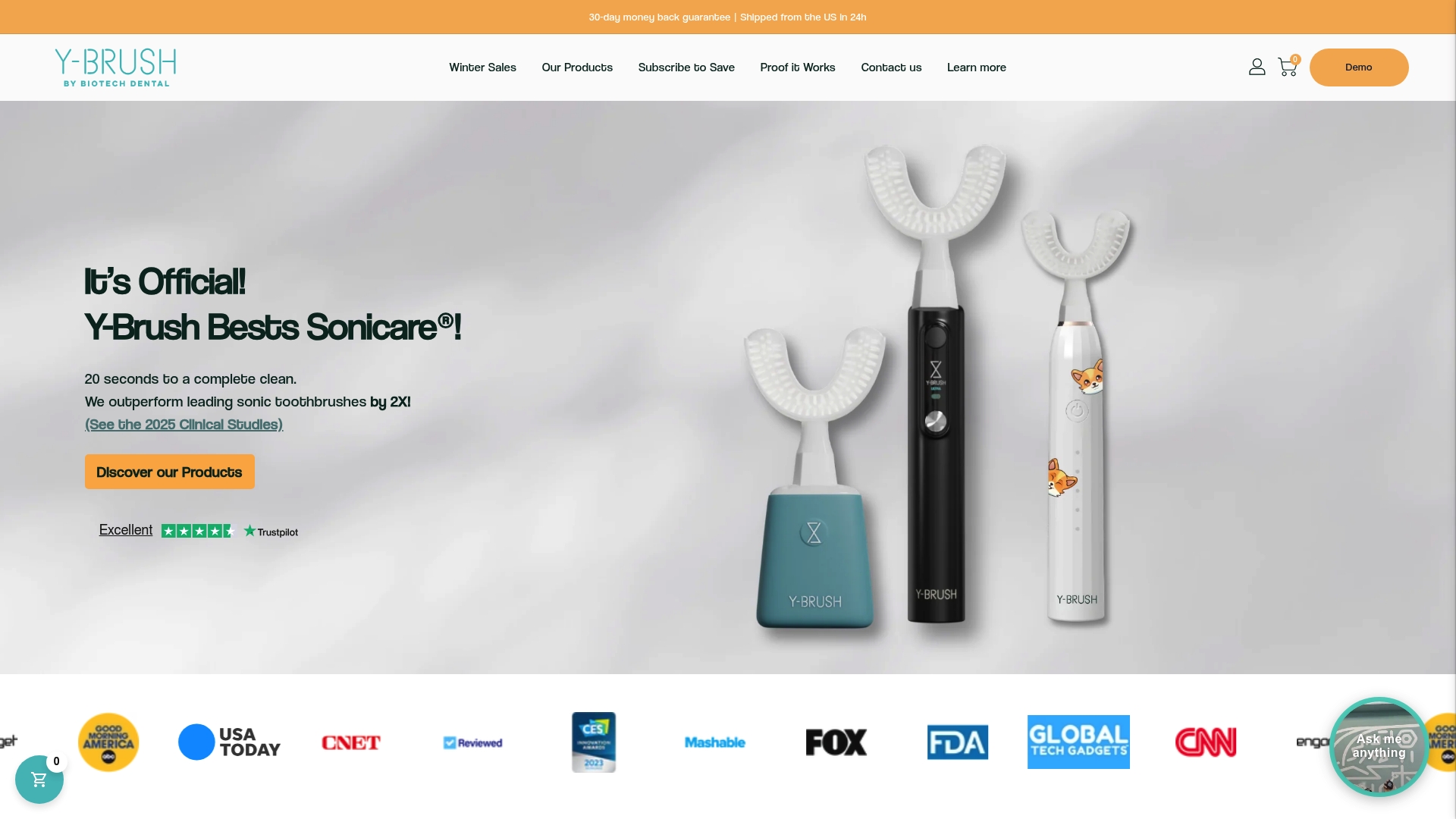
The Y-Brush Essential Sonic Toothbrush is designed for exactly this kind of practical improvement. Built-in timers eliminate guesswork on duration, and the brush’s design encourages correct angulation without requiring technique memorization. For younger brushers, the Y-Brush KidsBrush makes supervised brushing easier for parents while building correct habits in children early. And for anyone who consistently forgets to replace their brush head, Y-Brush membership plans deliver replacement heads on schedule so the guesswork is completely removed. Better tools make better habits automatic.
Frequently asked questions
Why is it important not to rinse your mouth after brushing?
Rinsing immediately after brushing washes away fluoride from toothpaste, which is critical for strengthening enamel and preventing cavities. Maximizing fluoride contact time means spitting out excess paste and skipping the water rinse entirely.
How often should I replace my electric toothbrush head?
You should replace your electric toothbrush head every 3 to 4 months to maintain effective cleaning and reduce bacterial buildup. Replacing brush heads on schedule is essential because wear occurs before visible fraying appears.
Can brushing too hard damage my teeth?
Yes, brushing too hard can wear down enamel and irritate gums, causing sensitivity and increasing the risk of decay. Aggressive brushing damages both tooth enamel and gum tissue, and light, consistent pressure is always the better approach.
Is it okay to brush right after eating?
It’s best to wait at least 30 minutes after eating acidic foods before brushing, allowing saliva to neutralize acids and protect enamel. Waiting after acidic meals prevents brushing from eroding temporarily softened enamel and causing long-term damage.


