


TL;DR:
- The 20 second brushing method offers a quick, effective plaque removal option for people with limited time. It is best suited for busy adults, young children, and anyone rebuilding their oral hygiene habits. Proper tools, technique, and consistency are essential for maximizing its benefits and maintaining oral health.
The 20 second brushing method is a time-compressed oral care approach designed to deliver effective plaque removal when a full two-minute session is not possible. Global dental guidelines, including those from the American Dental Association, recommend brushing for 2 minutes twice daily as the standard for adequate plaque disruption. Yet the average brushing duration falls between 40 and 60 seconds, well short of that target. Pediatric dentistry has long used a 20–30 second brushing window as a behavioral entry point for toddlers, proving that short sessions can serve a real clinical purpose. This article examines how the 20 second method works, when it is appropriate, and how to execute it correctly.
What is the 20 second brushing method and who is it designed for?
The 20 second brushing method divides the mouth into two zones: upper teeth and lower teeth, with 10 seconds dedicated to each. The goal is not to replace a thorough two-minute routine but to provide a clinically informed fallback for moments when time is genuinely limited. Think of it as the dental equivalent of a quick rinse before a full shower. It is not ideal, but it is far better than skipping entirely.
This method is best suited for three groups of people:
- Busy adults who travel frequently, work irregular hours, or face mornings with no margin for a full routine
- Young children who resist longer brushing sessions. Pediatric dentists recommend short brushing windows to reduce behavioral resistance and build the habit before extending duration
- Anyone rebuilding a lapsed oral hygiene routine, where consistency matters more than perfection at the start
The tools you use determine how much plaque a 20 second session actually removes. A standard manual toothbrush covers one or two teeth at a time, making full-mouth coverage in 20 seconds nearly impossible. U-shaped toothbrushes, like those made by Y-brush, contact all tooth surfaces simultaneously using thousands of bristles and sonic vibrations. That design makes a 20 second clean genuinely achievable. For building dental routines in children, the right tool is especially important.
Pro Tip: If you use a manual toothbrush for a quick session, focus exclusively on the front surfaces and gumline of your upper and lower teeth. Those areas accumulate the most visible plaque and are easiest to reach in limited time.
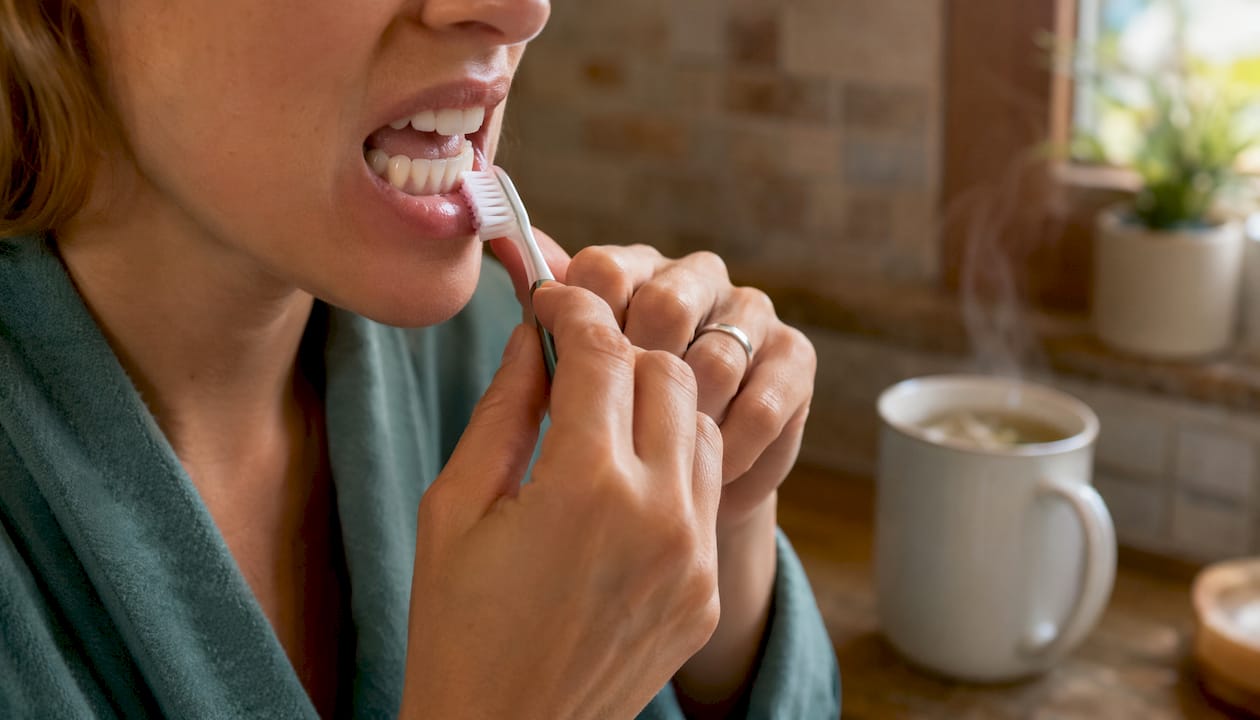
How does the 20 second method compare to traditional 2-minute brushing?
The two-minute standard exists for a specific reason. The Modified Bass technique, which is the clinical gold standard for plaque removal, requires 10–15 seconds of vibration per tooth segment. Applying that across all four quadrants of the mouth produces the two-minute benchmark. Skipping time means skipping coverage.
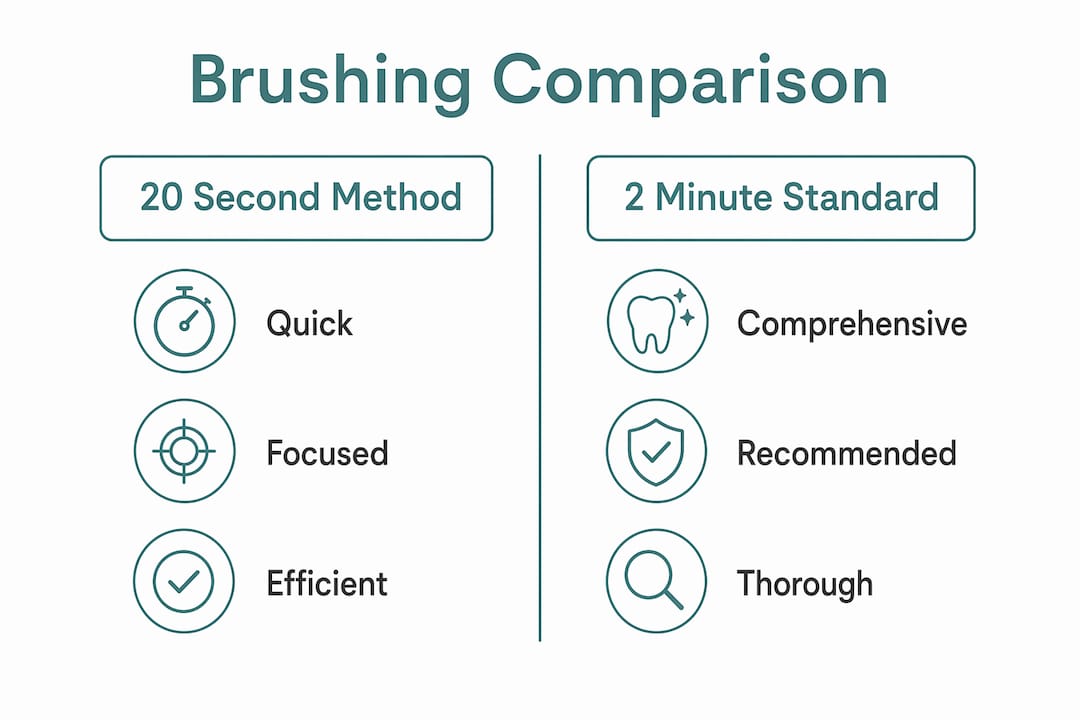
That said, the relationship between brushing time and plaque removal is not perfectly linear. Plaque removal efficiency drops significantly below 120 seconds, but brushing beyond four to five minutes introduces its own risks, including gum recession and enamel abrasion. The sweet spot is two minutes with correct technique.
| Brushing duration | Method type | Plaque removal | Risk level |
|---|---|---|---|
| 20 seconds | U-shaped full-arch brush | Moderate, surface-level | Low if technique is correct |
| 20 seconds | Manual toothbrush | Minimal, partial coverage | Moderate (missed areas) |
| 60 seconds | Manual or electric | Partial | Low |
| 2 minutes | Modified Bass technique | High, comprehensive | Very low |
| 4+ minutes | Any | Diminishing returns | Moderate (enamel/gum risk) |
Technique quality matters as much as time. Proper 45-degree angulation and mechanical disruption of plaque at the gumline outperform longer sessions done carelessly. A 20 second session with correct angulation and a full-arch brush beats two minutes of aimless scrubbing. The 2-minute guideline is a baseline, not a ceiling, and individual oral health needs can shift that target up or down.
What tools do you need for an effective quick brushing session?
The right equipment closes the gap between a 20 second session and a clinically meaningful clean. Without the right tools, a quick brushing technique is little more than a gesture.
- U-shaped sonic toothbrush: Contacts all tooth surfaces at once. Y-brush uses 18,000 bristles and sonic vibrations to cover the full arch in a single placement. This is the only tool that makes a 20 second clean genuinely effective.
- Fluoride toothpaste: Fluoride actively strengthens enamel and fights decay. Use a pea-sized amount for adults, a rice-sized amount for children under three.
- Timer: Without a timer, most people underestimate elapsed time. Using a timer or electric toothbrush alerts improves adherence to target brushing durations. A smartphone timer costs nothing.
- Floss or interdental brush: Brushing alone, at any duration, does not clean between teeth. Flossing once daily is non-negotiable regardless of brushing time.
- Alcohol-free mouthwash: Adds fluoride exposure and reaches areas bristles miss. Use after brushing, not before.
| Tool | Purpose | Recommended frequency |
|---|---|---|
| U-shaped sonic brush | Full-arch plaque removal in 20 seconds | Twice daily |
| Fluoride toothpaste | Enamel protection and cavity prevention | Every session |
| Timer or app | Accurate session duration | Every session |
| Floss or interdental brush | Interproximal plaque removal | Once daily |
| Alcohol-free mouthwash | Supplemental fluoride and bacteria reduction | Once daily |
Pro Tip: Keep your toothbrush and timer on the bathroom counter, not in a drawer. Reducing friction in your routine increases the chance you actually follow through, especially on rushed mornings.
For busy professionals managing oral care, pairing a full-arch brush with a consistent timer habit is the single most effective upgrade available.
Step-by-step guide to the 20 second brushing method
Follow these steps precisely. Each one compensates for the reduced time by maximizing the efficiency of every second.
-
Wet the brush and apply toothpaste. Use a pea-sized amount of fluoride toothpaste. Wetting the bristles softens them slightly and helps distribute paste evenly across the arch.
-
Position the brush at a 45-degree angle to the gumline. This is the core principle of the Modified Bass technique, adapted for speed. The angle directs bristles under the gum margin, where plaque accumulates and causes the most damage.
-
Place the brush on your upper teeth. If using a U-shaped brush, insert it so it contacts all upper surfaces simultaneously. If using a standard brush, start at the back molars on one side.
-
Apply gentle, consistent pressure and activate vibration or short strokes. Do not scrub. The motion should be a short back-and-forth vibration, not a wide sweep. Wide sweeping motions push plaque around rather than disrupting it.
-
Hold for 10 seconds on the upper arch. Count silently or use a timer. Focus on maintaining the 45-degree angle throughout. If using a standard brush, move from back to front in small sections, spending roughly two seconds per section.
-
Move to the lower teeth and repeat for 10 seconds. Reposition the brush at the gumline of the lower arch. Maintain the same angle and motion. Prioritize the lower front teeth, which accumulate tartar fastest.
-
Spit and rinse briefly. Do not rinse with water immediately after brushing if your toothpaste contains fluoride. A brief spit preserves the fluoride film on your teeth, extending its protective effect.
-
Follow with floss or mouthwash if time allows. Even 30 additional seconds of flossing adds significant value. The timed electric toothbrush guide from Y-brush explains how to pair timing tools with this routine for maximum consistency.
The entire sequence takes 20–30 seconds. Practiced daily, it builds the muscle memory and habit structure that makes longer sessions easier to adopt over time.
Common mistakes that undermine a quick brushing technique
Speed creates specific failure points. Knowing them in advance prevents the most common errors that make a quick session ineffective.
- Skipping the gumline: Most people brush tooth surfaces and ignore the margin where teeth meet gums. That margin is where periodontal disease begins. Angle the brush correctly every single time.
- Using too much pressure: Harder is not better. Aggressive pressure abrades enamel and pushes gums back over time. Light, consistent pressure with the correct angle does more work.
- Covering only the front teeth: The back molars are the most cavity-prone teeth in the mouth. A quick session that ignores them is not a clean. It is a cosmetic rinse.
- No timing aid: Without a clock, 20 seconds feels like a minute and a minute feels like 20 seconds. Always time the session.
- Relying on this method exclusively: A 20 second session is a supplement, not a substitute. Consistent 2-minute brushing with a simple technique produces better long-term oral health than any shortcut used in isolation.
If you notice persistent bleeding gums, visible plaque buildup, or tooth sensitivity after several weeks of quick brushing, your routine needs adjustment. These are signs that the method alone is not meeting your oral health needs. Orthodontic patients and those with periodontal disease may require 3–4 minutes of brushing per session to achieve adequate cleaning given the complexity of their dental anatomy.
Expectant mothers face similar considerations. Hormonal changes during pregnancy increase gum sensitivity and the risk of gingivitis, making thorough brushing especially important. Resources like healthy habits for expectant mothers address how to adapt oral care routines during pregnancy without compromising effectiveness.
Key Takeaways
The 20 second brushing method delivers meaningful plaque removal only when paired with correct technique, the right tools, and consistent daily practice.
| Point | Details |
|---|---|
| Method definition | The 20 second method splits brushing into 10 seconds per arch, upper and lower. |
| Tool dependency | A U-shaped full-arch brush makes 20 second coverage clinically viable; a manual brush does not. |
| Technique over time | Correct 45-degree angulation removes more plaque than longer sessions done carelessly. |
| Clinical limits | This method supplements but does not replace the 2-minute standard for most adults. |
| Consistency wins | A short session done daily outperforms a perfect session done occasionally. |
My honest take on quick brushing methods
I have spent years watching people abandon good oral hygiene habits not because they do not care, but because the standard advice does not fit their lives. Telling a parent of three young children or a professional with a 5:30 AM flight to brush for two minutes twice daily is technically correct and practically useless if they simply will not do it.
The 20 second method is not a clinical recommendation. It is a behavioral bridge. The real goal is to keep people in the habit of brushing at all, because a consistent short session beats a perfect session that happens three times a week. I have seen that pattern play out repeatedly, and the research on simpler routines and long-term adherence confirms it.
Where I draw the line is when people use speed as a permanent excuse rather than a temporary accommodation. If you are brushing for 20 seconds every day because life is genuinely hectic, that is a reasonable adaptation. If you are doing it because you never built the two-minute habit, that is a problem worth solving. The right tool, like a full-arch sonic brush, can make two minutes feel like 20 seconds anyway. That is the real opportunity here.
— Joris
Y-brush: built for people who need a real clean in less time
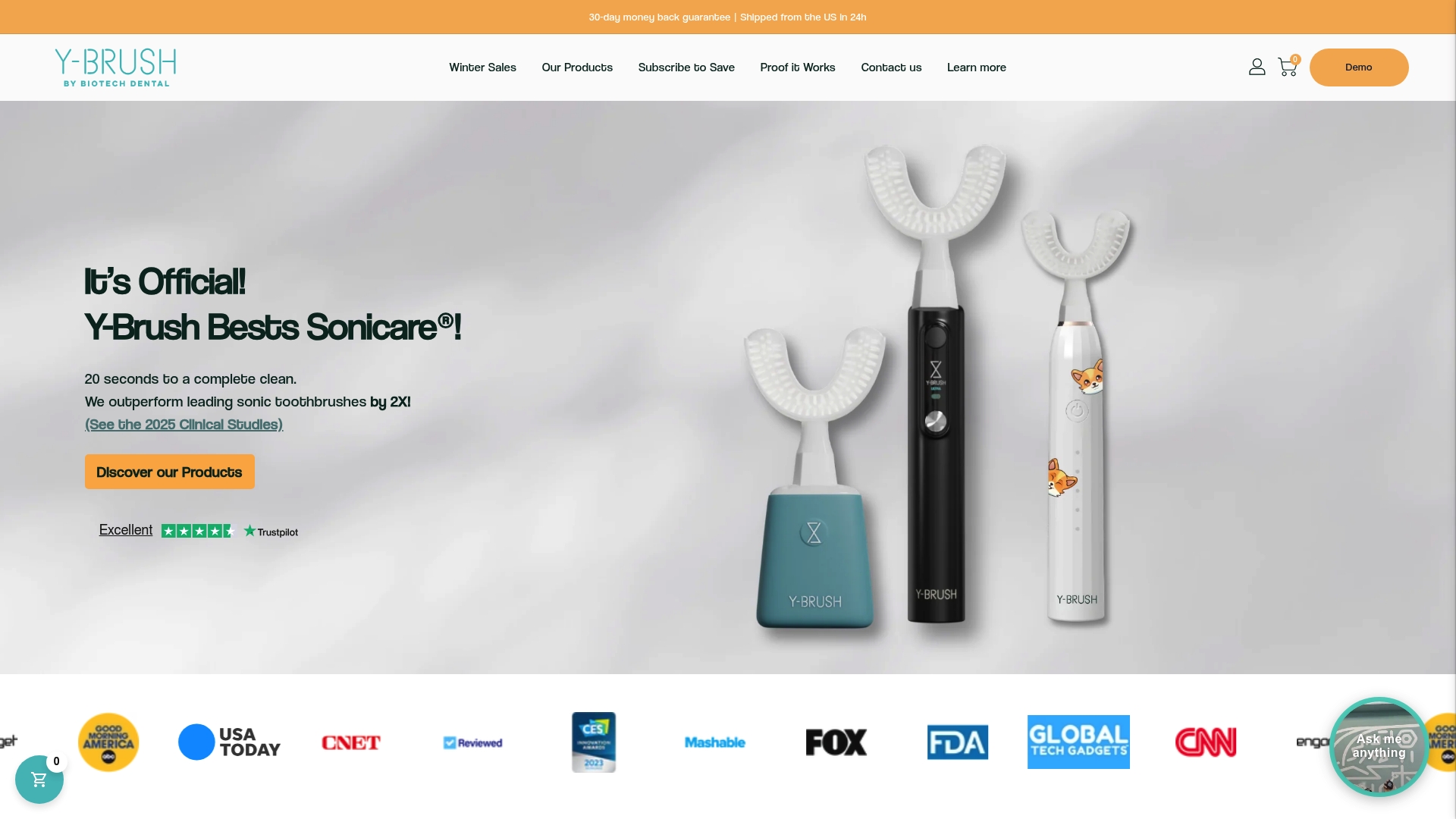
Y-brush was built around a simple observation: most people know they should brush for two minutes, and most people do not. The Y-brush Essential Sonic Toothbrush uses a U-shaped design with 18,000 bristles and sonic vibrations to clean every tooth surface simultaneously in just 20 seconds. No quadrant-by-quadrant guesswork, no timer anxiety. For children, the Y-brush KidsBrush applies the same full-arch approach in a size and format designed for ages 4 through 12. Both products make the quick brushing technique work the way it is supposed to, giving you a clinically meaningful clean without the time commitment that most routines demand.
FAQ
What is the 20 second brushing method?
The 20 second brushing method is a quick oral care technique that dedicates 10 seconds to the upper teeth and 10 seconds to the lower teeth, using correct angulation and pressure to remove surface plaque efficiently.
Can 20 seconds of brushing actually clean your teeth?
With a U-shaped full-arch brush and correct 45-degree angulation, 20 seconds can remove meaningful surface plaque. A manual toothbrush cannot achieve full-mouth coverage in that time.
Who should use a 20 second brushing technique?
Busy adults, young children building brushing habits, and anyone in a time-constrained situation benefit most. Pediatric dentists recommend short brushing windows for toddlers to reduce resistance and establish routine.
Is the 20 second method safe for daily use?
Yes, when done with light pressure and correct technique. Aggressive pressure at any duration risks enamel abrasion and gum recession, so gentle, consistent contact is the priority.
When should I use the full 2-minute standard instead?
The 2-minute standard applies for most adults as the daily baseline. Orthodontic patients and those with periodontal disease may need 3–4 minutes. Use the 20 second method as a supplement on constrained days, not as a permanent replacement.


