


TL;DR:
- Premium sonic toothbrushes can last up to 70 days on a single charge, making them highly practical. Standard models typically provide 16 to 30 days of battery life, suitable for everyday use. Investing in longer battery life reduces charging frequency and improves convenience for travelers and busy users.
The best sonic toothbrush with the longest battery life combines powerful plaque removal with an extended run time that eliminates the need for frequent recharging. A sonic toothbrush, the industry term for a brush that vibrates at high frequency to create fluid cleaning action, now comes in models that last anywhere from 16 days to a remarkable 70 days on a single charge. Battery life is no longer a minor spec. For travelers, busy professionals, and anyone who wants consistent oral care without interruption, it is one of the most practical features to evaluate. This guide covers the benchmarks, features, and buying considerations that matter most in 2026.
What battery life benchmarks should you expect from top sonic toothbrushes?
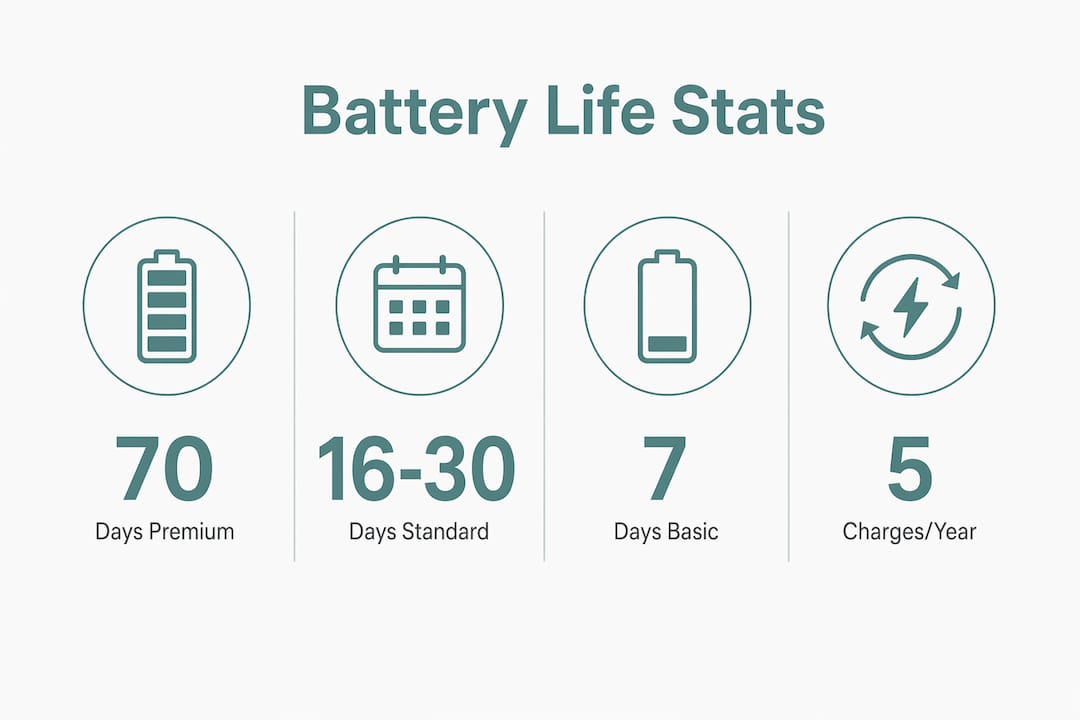
Battery life in sonic toothbrushes varies more than most buyers realize. Premium models reach up to 70 days on a single full charge. That figure represents the top end of the market and signals a meaningful shift in what long battery life electric toothbrushes can deliver.
Standard models tell a different story. Mainstream sonic toothbrushes deliver 16–30 days of battery life with twice-daily use. That range covers the majority of well-reviewed models and represents a reasonable baseline for most buyers.
At the lower end, battery life can drop to around 7 days in basic models, while premium options push past 40 days. The gap between entry-level and top-rated sonic toothbrushes is wide enough to matter for anyone who travels frequently or simply dislikes charging routines.
| Battery Tier | Typical Duration | Best For |
|---|---|---|
| Basic models | ~7 days | Budget buyers, home-only use |
| Standard models | 16–30 days | Everyday users, occasional travel |
| Premium models | 40–70+ days | Frequent travelers, low-maintenance users |
The 70-day benchmark is not just a marketing figure. It means a buyer could charge once in january and not charge again until mid-march. That kind of reliability changes how you think about oral care as part of a daily routine.
Pro Tip: Before buying, calculate how many charges per year a model requires. A 70-day battery means roughly five charges per year versus 52 charges for a 7-day model. That difference adds up in convenience and cord clutter.
Which sonic toothbrush features influence battery performance?
Vibration speed is the defining characteristic of any sonic toothbrush. Sonic brushes operate at 30,000–40,000 strokes per minute, generating fluid dynamics that clean beyond direct contact points. That speed requires a capable battery, which is why lithium-ion cells have become the standard in quality models. Lithium-ion holds a charge longer and degrades more slowly than older nickel-metal hydride batteries.
The features a toothbrush includes directly affect how long the battery lasts per charge. Here are the key ones to evaluate:
- Built-in 2-minute timer: A standard feature in top-rated sonic toothbrushes. It draws minimal power and supports the American Dental Association’s recommended brushing duration.
- Pressure sensor: Pressure sensors prevent gum damage and enamel wear, particularly for people who brush aggressively. The sensor adds a small power draw but delivers real health protection.
- Multiple cleaning modes: Whitening, sensitive, and gum care modes are common. Each mode adjusts vibration intensity, which affects battery consumption. Using a lower-intensity mode extends run time per charge.
- Bluetooth connectivity and app integration: These features add convenience for some buyers but draw additional power continuously. For buyers focused on maximizing battery life, skipping app-connected models is a practical choice.
Experts recommend prioritizing essential features like a timer and pressure sensor over complex add-ons for sustained oral health benefits. A brush with a solid motor, a reliable timer, and a pressure sensor covers the fundamentals without draining the battery on features most people rarely use.
Brushing technique also matters here. Fluid dynamics cleaning depends on correct use, not on pressing harder. A pressure sensor reinforces good technique, which means the brush works as designed and the battery is not wasted compensating for poor habits.
How to balance battery life with cost and charging convenience
Long battery life often comes at a higher upfront price. That trade-off is worth examining carefully before purchase.
- Evaluate the total cost of ownership. Replacement brush head costs significantly impact long-term expenses. Proprietary heads from premium brands can cost $10–$15 each, and dentists recommend replacing them every three months. Over five years, head replacements often exceed the original handle price.
- Check the charging method. USB-C charging and travel cases improve portability and reduce the friction of keeping a brush charged on the road. Models that charge via USB-C work with the same cable as most phones and laptops, which simplifies packing.
- Match battery life to your travel frequency. A buyer who travels two weeks per year does not need a 70-day battery. A buyer who travels monthly does. Paying a premium for battery capacity you will not use is not a sound investment.
- Factor in warranty and battery replacement policies. Lithium-ion batteries degrade over time. A model with a two-year warranty and a replaceable battery holds its value longer than one that requires full replacement when the battery fades.
- Consider membership or subscription plans. Some brands offer replacement head subscriptions that reduce per-unit costs. Y-brush membership plans bundle heads and accessories at a lower recurring cost, which changes the long-term math.
Replacement head costs over five years often outweigh the initial purchase price. Buyers who focus only on the sticker price of the handle miss the bigger financial picture.
What routines maximize sonic toothbrush battery lifespan?
Battery lifespan and battery life per charge are two different things. Lifespan refers to how many years the battery performs well. Charge life refers to how long it lasts between charges. Both matter.
Avoiding overcharging extends lithium-ion battery lifespan and keeps the brush performing reliably over years of use. Most modern sonic toothbrushes include overcharge protection, but leaving a brush on its charging base continuously for months still stresses the battery cells.
Common mistakes that shorten battery life include:
- Storing the brush in extreme heat, such as a car glove compartment or a sunny windowsill
- Letting the battery fully drain to zero repeatedly before recharging
- Using the charging case as a permanent dock rather than a travel tool
- Ignoring firmware updates on app-connected models, which sometimes include battery management improvements
Signs of battery degradation include noticeably shorter run times, reduced vibration intensity at full charge, and the brush shutting off before the 2-minute timer completes. When these appear, the battery is nearing the end of its useful life.
Pro Tip: Before a trip, charge the brush to 100% and then unplug it. Do not leave it on the charger during travel. A full charge stored off the base holds better than a battery kept at constant trickle charge.
How does long battery life improve travel and daily oral care?
Extended battery life minimizes travel charging hassles and reduces the risk of arriving at a destination with a dead brush and no charger. That is a small inconvenience in isolation but a real disruption to oral hygiene consistency over time.
The real-world benefit of a long battery life electric toothbrush shows up in specific scenarios:
- Weekend trips: A 30-day battery means no charger needed for any trip under a month.
- International travel: Voltage compatibility issues disappear when the brush only needs charging once every several weeks.
- Busy morning routines: A brush that does not need daily charging is one less thing to think about.
- Shared households: When multiple people share a charging station, a longer battery life reduces competition for the outlet.
- Camping or off-grid stays: A 70-day battery covers most outdoor trips without any charging infrastructure at all.
Consistency in oral hygiene is the underlying goal. A brush that dies mid-trip or runs low on power mid-cycle undermines the routine. Long battery life removes that variable entirely.
Key Takeaways
The best sonic toothbrush with the longest battery life balances a 30,000–40,000 stroke-per-minute motor, lithium-ion power, and a charge duration of at least 30 days to deliver reliable, low-maintenance oral care.
| Point | Details |
|---|---|
| Battery life benchmarks | Premium models reach 70 days; standard models deliver 16–30 days with twice-daily use. |
| Essential features | Prioritize a 2-minute timer and pressure sensor over app connectivity for better battery efficiency. |
| Total cost of ownership | Replacement brush heads often cost more than the handle over five years; factor this in early. |
| Charging best practices | Avoid continuous trickle charging and full battery drain to extend lithium-ion lifespan. |
| Travel advantage | A 30+ day battery eliminates the need to pack a charger for most trips. |
Why battery life deserves more weight than most buyers give it
Most buyers spend their research time comparing vibration speeds and cleaning modes. Battery life gets treated as a footnote. That is a mistake I have seen play out repeatedly.
A brush with a 70-day battery and solid fundamentals outperforms a feature-heavy model with a 10-day battery in real-world use. The reason is simple: consistency. A brush you actually use every day beats a technically superior brush that sits uncharged on the counter. Battery anxiety, the low-grade irritation of checking whether your brush has enough charge, is a real friction point that disrupts routines.
My recommendation is to set a floor of 30 days minimum battery life when evaluating any top-rated sonic toothbrush. Below that threshold, charging becomes a weekly task that competes with other habits. Above it, the brush fades into the background and just works.
The cost argument for premium battery models also holds up over time. A brush that lasts five years with a strong battery and replaceable heads costs less per year than a cheaper model replaced every two years. Do the math before defaulting to the lowest price on the shelf.
One more thing: do not let app connectivity sway you unless you will genuinely use it. Bluetooth features drain the battery and add complexity without improving plaque removal. The sonic toothbrush features that matter most are the ones that run quietly in the background: a reliable motor, a consistent timer, and a battery that does not demand your attention.
— Joris
Y-brush: sonic cleaning built for real life
Y-brush was built around a simple truth: most people brush for under a minute, even though two minutes is the standard. The Y-brush Essential and Y-brush Ultra address that gap with a 20-second full-mouth clean and a battery designed to stay out of your way.
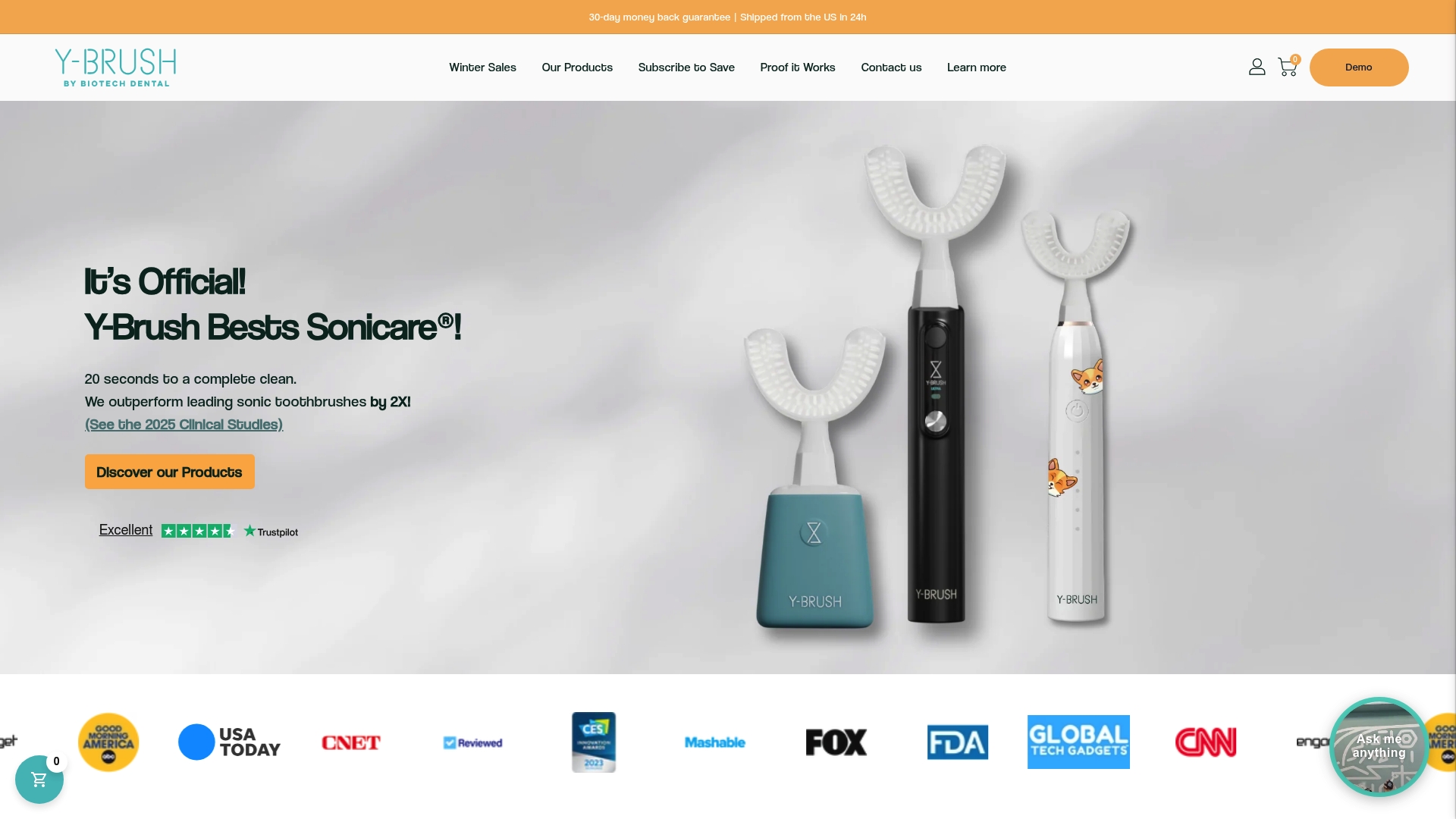
The Y-brush Essential sonic toothbrush delivers reliable sonic cleaning with a battery built for extended use, so charging never interrupts your routine. The Y-brush Ultra adds advanced features for buyers who want premium performance without sacrificing run time. Both models are designed for people who want effective oral care that fits how they actually live, not how they think they should live.
FAQ
What is the longest battery life in a sonic toothbrush?
The longest battery life currently available in a high-performing sonic toothbrush reaches up to 70 days on a single full charge. Most premium models fall in the 40–70 day range.
How long do standard sonic toothbrushes last on one charge?
Standard sonic toothbrushes typically deliver 16–30 days of battery life with twice-daily use. Basic models may last as few as 7 days.
Does using more cleaning modes drain the battery faster?
Yes. Higher-intensity modes draw more power per brushing session, which reduces the total number of sessions per charge. Using a sensitive or low-intensity mode extends battery run time.
What charging method is best for travel?
USB-C charging is the most travel-friendly option because it uses the same cable as most phones and laptops. Travel charging cases add an extra layer of convenience for frequent travelers.
How do I know when my sonic toothbrush battery is degrading?
The clearest signs are shorter run times between charges, reduced vibration intensity at full charge, and the brush shutting off before the 2-minute cycle ends. When these appear consistently, the battery is nearing the end of its useful life.


