


Most adults brush their teeth for less than a minute, despite knowing they should brush for two full minutes. In fact, 90% of people fall short of the recommended brushing duration, leaving them vulnerable to plaque buildup and gum disease. Fast toothbrushing technology offers a solution that fits seamlessly into busy lifestyles while maintaining clinical effectiveness. This guide explores what fast toothbrushing is, the science validating its results, common myths holding people back, and practical tips for integrating this approach into your daily routine.
Table of Contents
- Understanding Fast Toothbrushing: Definition and Mechanism
- Scientific Evidence on Effectiveness of Fast Toothbrushing
- Common Misconceptions About Brushing Speed and Technique
- Technology Behind Fast Toothbrushing Devices
- Comparing Fast Toothbrushing to Traditional Brushing
- Practical Guidelines for Busy Adults to Integrate Fast Toothbrushing
- Summary: Balancing Speed and Oral Health with Fast Toothbrushing
- Explore Y-Brush: The Fast Toothbrushing Solution for Busy Adults
- Frequently Asked Questions About Fast Toothbrushing
Key Takeaways
| Point | Details |
|---|---|
| Fast toothbrushing uses technology to clean teeth effectively in about 20 seconds | Clinical studies confirm these devices match the plaque removal of 2 minute manual brushing |
| 90% of adults brush under 1 minute versus the recommended 2 minutes | Manual fast brushing without proper devices increases plaque retention and gum disease risk |
| Sonic technology delivers up to 31,000 pulses per minute to disrupt plaque biofilm | Devices eliminate most manual brushing errors by cleaning multiple surfaces simultaneously |
| Busy adults see 60% higher brushing compliance with fast brushing devices | Validated devices offer time savings without sacrificing oral health outcomes |
Understanding Fast Toothbrushing: Definition and Mechanism
Fast toothbrushing represents a technological shift in how we approach oral hygiene. Traditional brushing requires sequential cleaning of each tooth surface, taking two minutes or more to complete thoroughly. Most people lack the time or patience to maintain this standard consistently.
Fast toothbrushing devices solve this problem by cleaning multiple tooth surfaces at once. Mouthpiece style devices position bristles against upper and lower teeth simultaneously, reducing total brushing time to about 20 seconds. This approach addresses the core challenge: most adults brush for less than a minute anyway, so traditional methods already fail in real world conditions.
The mechanism differs fundamentally from manual brushing:
- Simultaneous contact with all tooth surfaces eliminates sequential brushing
- High frequency vibrations disrupt plaque biofilm across entire mouth at once
- Preset timing ensures consistent duration every session
- Reduced reliance on user technique minimizes cleaning errors
These devices recognize that compliance matters more than theoretical ideals. If 90% of people rush through brushing anyway, providing a device that cleans effectively in that shortened timeframe makes practical sense. The technology meets users where they actually are, not where dental guidelines wish they would be.
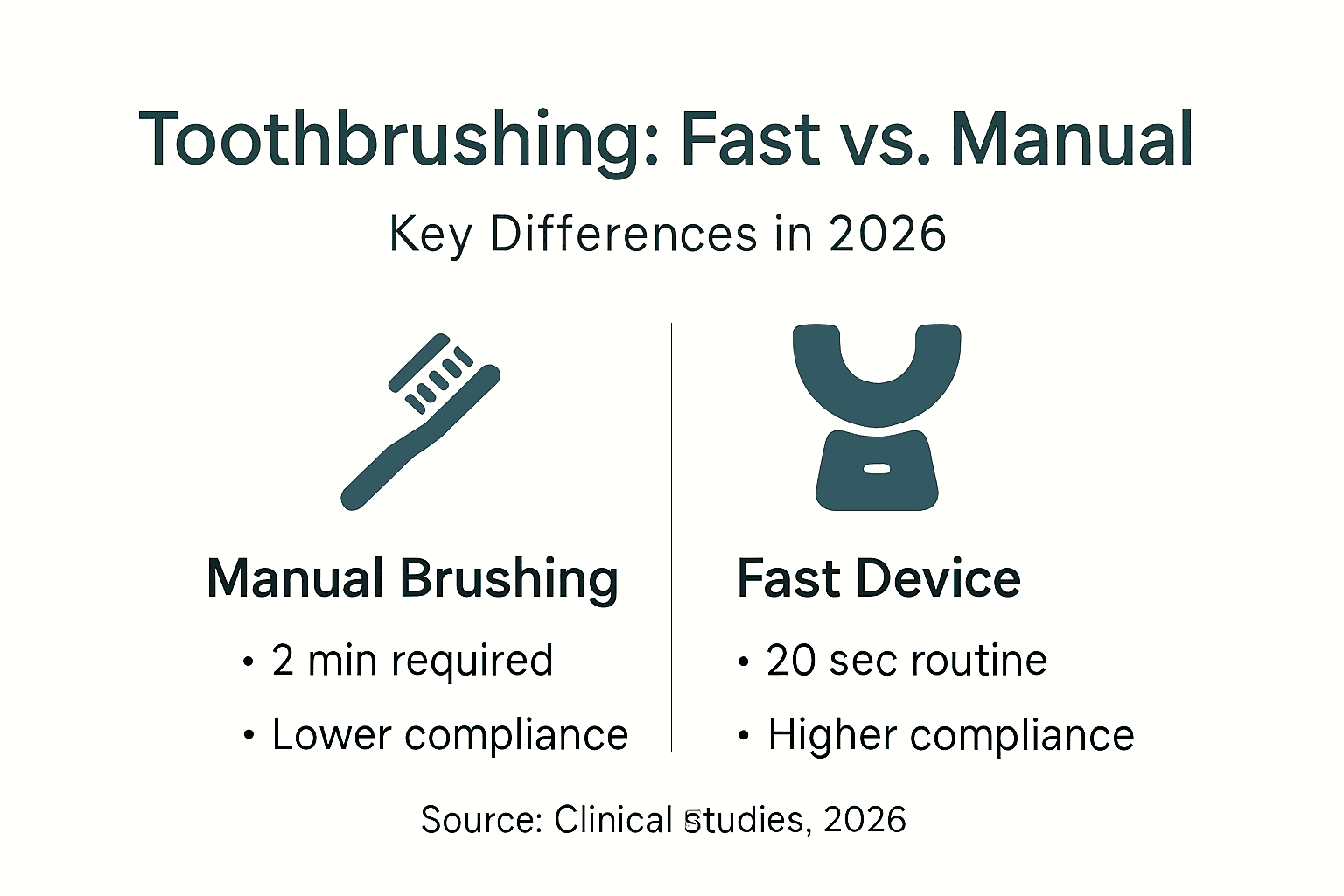
For busy adults juggling work, family, and personal commitments, fast toothbrushing offers a realistic path to better oral health. The time savings add up quickly, recovering nearly 10 minutes per week compared to traditional brushing. That may seem small, but consistency over months and years creates meaningful lifestyle benefits.
Scientific Evidence on Effectiveness of Fast Toothbrushing
Clinical research validates the effectiveness of fast toothbrushing when done with proper devices. A study published in the National Center for Biotechnology Information found no significant difference in plaque index reduction between 20 second Y-Brush use and 2 minute manual brushing. This head to head comparison demonstrates that technology can compress brushing time without compromising results.
The evidence becomes even more compelling when examining what happens with inadequate brushing duration. Research shows 40% increase in gingivitis risk with brushing under 1 minute versus 2 minutes when using manual techniques. Poor brushing duration correlates strongly with higher rates of cavities and gum disease.
Key findings from clinical trials include:
- Fast toothbrushing devices achieve equivalent plaque reduction to traditional methods
- Manually rushing through brushing leaves significantly more plaque behind
- Proper device use overcomes time limitations without health tradeoffs
- Gum health markers remain stable with validated fast brushing technology
Understanding the importance of brushing duration helps explain why device assisted fast brushing succeeds where rushed manual brushing fails. The technology compensates for shortened time through simultaneous cleaning action.
These results challenge the assumption that more time always equals better cleaning. What matters is thorough contact between bristles and tooth surfaces, effective plaque disruption, and consistent daily compliance. Fast toothbrushing devices achieve all three objectives while respecting the reality of modern schedules.
The clinical validation gives busy adults confidence to adopt this approach. You are not sacrificing oral health for convenience. You are using evidence based technology to maintain the same standard of care in a fraction of the time.
Common Misconceptions About Brushing Speed and Technique
Many people believe faster brushing automatically means less effective cleaning. This misconception stems from comparing apples to oranges: rushed manual brushing versus device assisted fast brushing. The two approaches produce very different outcomes.
Sonic toothbrushes use approximately 31,000 pulses per minute to break up plaque. Manual brushing, even when done carefully for two full minutes, involves maybe 300 total strokes. The sheer volume of mechanical action from sonic technology compensates for reduced time.
Common myths about brushing speed include:
- Belief that all fast brushing reduces cleaning quality regardless of method
- Assumption that manual technique always outperforms automated devices
- Misconception that spending more time inherently produces better results
- Fear that new technology cannot match traditional approaches
Manual brushing carries an error rate approaching 50% due to inconsistent technique, missed areas, and inadequate pressure. Getting insights on automatic toothbrush effectiveness reveals how devices eliminate most of these variables through standardized cleaning patterns.
Pro Tip: Rushing through manual brushing increases risks significantly, but using a validated fast brushing device actually reduces errors compared to traditional methods. The distinction matters enormously for your oral health outcomes.
Devices clean multiple surfaces simultaneously, making direct time comparisons misleading. Twenty seconds of comprehensive contact across all teeth can remove as much plaque as two minutes of sequential manual brushing. The physics of simultaneous versus sequential action explains this apparent paradox.
Understanding these distinctions helps you evaluate fast toothbrushing accurately. The question is not whether faster is better, but whether the right technology enables effective cleaning in less time. Clinical evidence says yes.
Technology Behind Fast Toothbrushing Devices
Fast toothbrushing devices leverage innovative design to achieve rapid, comprehensive cleaning. Mouthpiece models like Y-Brush position bristles to contact all tooth surfaces at once, eliminating the need to brush each tooth individually. This fundamental design shift makes 20 second cleaning cycles possible.
Sonic technology forms the heart of these devices. High frequency vibrations create fluid dynamics that disrupt plaque biofilm beyond where bristles physically touch. This extends the cleaning effect across tooth surfaces and between teeth, compensating for the shortened contact time.
Key technological features include:
- Ergonomic mouthpiece design fitting upper and lower dental arches simultaneously
- Sonic motors delivering 31,000+ vibrations per minute for plaque disruption
- Timer functions ensuring consistent 20 second cleaning duration
- Soft bristle arrays positioned to reach all tooth surfaces including back molars
The technology behind automatic toothbrushes eliminates technique dependent variables that plague manual brushing. You simply position the device correctly and let the technology work.
Using these devices involves straightforward steps:
- Apply toothpaste to the mouthpiece bristles
- Position device over upper teeth and activate sonic pulses
- Let device run for 10 seconds on upper arch
- Reposition to lower teeth for another 10 seconds
- Rinse mouth and device when complete
Pro Tip: The mouthpiece does the work for you, but proper positioning matters. Take a moment to ensure bristles contact all tooth surfaces before activating the sonic function.
User benefits extend beyond time savings. Consistent cleaning patterns reduce the risk of missing spots that manual brushing often overlooks. The preset timer prevents cutting sessions short. The overall experience becomes more predictable and reliable, which translates to better long term oral health outcomes.
Comparing Fast Toothbrushing to Traditional Brushing
Understanding the practical differences between traditional and fast toothbrushing helps you make informed decisions about your oral care routine. Each approach has distinct characteristics affecting time investment, effectiveness, and ease of use.

| Feature | Traditional Manual | Fast Device | Manual Rushed |
|---|---|---|---|
| Duration | 2+ minutes | 20 seconds | Under 1 minute |
| Technique Error Rate | ~50% | <10% | >60% |
| Plaque Removal | Effective if done correctly | Clinically equivalent | Poor, 40% more retention |
| User Compliance | Low, 90% brush under target | High, 60% improvement | Moderate but ineffective |
| Cost | Low upfront, high long term dental | Higher device cost, lower dental | Low upfront, highest dental |
The comparison reveals important nuances. Traditional manual brushing works well in theory, but real world compliance remains dismal. Most people simply will not brush for two full minutes twice daily, no matter how much dentists recommend it.
Key differences to consider:
- Time commitment varies dramatically, with fast devices saving 90+ seconds per session
- Technique errors plague manual brushing but get eliminated by device design
- Clinical outcomes match between proper traditional and fast device brushing
- Rushing manual brushing creates worst case scenario for oral health
Expert opinions on 20 second brushing acknowledge that technology changes the equation. What was impossible with manual methods becomes achievable with proper devices.
The cost analysis deserves attention too. Fast toothbrushing devices cost more upfront, typically $70 to $120 for quality models. However, improved oral health reduces dental treatment costs over time. Preventing even one cavity or gum disease treatment session covers the device investment several times over.
For busy adults, the tradeoff boils down to valuing your time appropriately. If saving 10 minutes per week matters to your lifestyle, and clinical outcomes remain equivalent, fast toothbrushing devices offer compelling value. The technology meets professional oral care standards while respecting your schedule constraints.
Practical Guidelines for Busy Adults to Integrate Fast Toothbrushing
Adopting fast toothbrushing successfully requires more than just buying a device. Follow these practical guidelines to maximize effectiveness while fitting oral care into your packed schedule.
Choose scientifically validated devices for your fast brushing routine. Not all products deliver equivalent results, so look for clinical testing data supporting effectiveness claims. Y-Brush and similar brands publish research demonstrating their devices match traditional brushing outcomes.
Implementation tips for busy adults:
- Keep your device visible on the bathroom counter as a visual reminder
- Brush immediately after breakfast and before bed to establish routine
- Replace brush heads every three months to maintain cleaning effectiveness
- Clean the device weekly to prevent bacterial buildup
- Travel with your device to maintain consistency away from home
Studies show 60% increase in brushing compliance with fast brushing device adoption among busy adults. The reduced time commitment removes a major barrier to consistent oral care, especially during hectic mornings or late evenings when you are exhausted.
Developing a fast oral care routine for busy professionals starts with committing to daily consistency. Even 20 seconds twice daily delivers better results than sporadic two minute sessions that happen only occasionally.
Pro Tip: Pair your fast toothbrushing with another daily habit like making coffee or setting your alarm. This habit stacking technique dramatically improves long term compliance.
Avoid the temptation to rush through manual brushing without a proper device. This creates the worst possible outcome: insufficient cleaning in inadequate time. Either invest in validated fast brushing technology or commit to traditional two minute manual sessions. The middle ground of rushed manual brushing serves no one well.
Check your daily oral hygiene checklist to ensure you are covering all bases. Fast toothbrushing handles the brushing component efficiently, but you still need flossing and optional mouthwash for comprehensive care.
Maintaining device hygiene extends its lifespan and protects your oral health. Rinse the mouthpiece thoroughly after each use, allow it to air dry completely, and deep clean weekly with antibacterial solution. These simple steps prevent bacterial colonization that could undermine your oral care efforts.
Summary: Balancing Speed and Oral Health with Fast Toothbrushing
Fast toothbrushing devices deliver cleaning results equivalent to traditional two minute manual brushing, backed by clinical evidence and real world testing. The technology addresses the core problem: most adults already brush for less than a minute anyway, so providing effective cleaning in that realistic timeframe makes practical sense.
Proper use of validated devices and correct technique remains essential to maintaining oral health. Not all fast brushing approaches work equally well. Rushing through manual brushing without proper technology leads to poor outcomes, while scientifically tested devices like Y-Brush achieve professional standards in 20 seconds.
Busy adults can save significant time without sacrificing hygiene by adopting evidence based fast toothbrushing systems. The 90 second savings per session adds up to over 10 hours annually, time you can redirect toward other priorities while maintaining excellent oral health.
Overcoming misconceptions about brushing speed opens the door to rethinking your oral care routine. Faster does not mean worse when proper technology compensates for reduced time through simultaneous cleaning action and sonic disruption of plaque biofilm.
Fast toothbrushing provides an effective solution fitting modern time constraints and lifestyle realities. The approach meets you where you actually are, delivering clinical effectiveness within the schedule constraints of real life rather than idealized dental recommendations most people cannot maintain consistently.
Explore Y-Brush: The Fast Toothbrushing Solution for Busy Adults
Y-Brush offers clinically validated mouthpiece and sonic devices that clean all tooth surfaces in just 20 seconds. Our products are specifically designed for busy adults in the United States who demand both efficiency and proven effectiveness from their oral care routine.
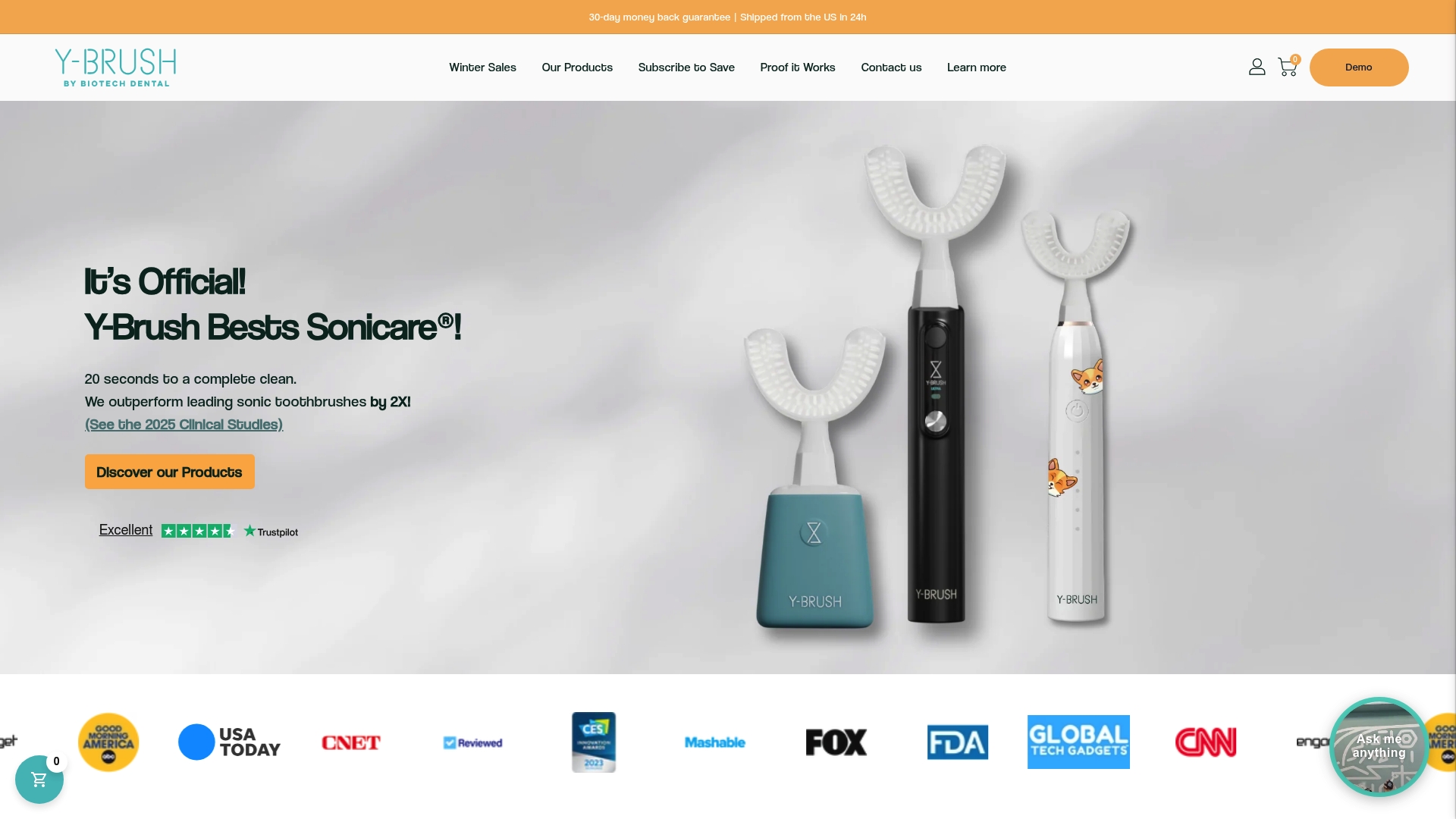
Our devices are clinically proven to maintain optimal oral health while drastically cutting brushing time. The Y-Brush Essential Sonic Toothbrush delivers 31,000 sonic vibrations per minute, matching the plaque removal of traditional two minute brushing in a fraction of the time.
Discover the latest Y-Brush innovations bringing cutting edge oral care technology to your bathroom. From improved mouthpiece designs to enhanced sonic motors, we continuously evolve our products based on user feedback and clinical research.
Learn more about advanced toothbrush technology and how it transforms daily oral hygiene. Understanding the science behind fast toothbrushing helps you make confident decisions about your dental health routine.
Frequently Asked Questions About Fast Toothbrushing
What devices enable fast toothbrushing?
Mouthpiece style devices like Y-Brush clean all teeth simultaneously in about 20 seconds using sonic technology. These devices position bristles against upper and lower dental arches at once, eliminating sequential brushing. Quality sonic toothbrushes also enable faster effective cleaning compared to manual brushes.
Is fast toothbrushing safe long term?
Yes, clinical studies demonstrate fast toothbrushing with validated devices maintains oral health equivalent to traditional methods over extended periods. The key is using scientifically tested products rather than rushing through manual brushing. Long term safety data supports daily use without adverse effects on teeth or gums.
Can I use fast toothbrushing without a device?
No, rushing through manual brushing without proper technology leads to 40% more plaque retention and significantly higher gum disease risk. Fast toothbrushing only works effectively with devices designed for simultaneous multi-surface cleaning. Manual brushing requires the full two minutes to achieve adequate results.
How often should I replace brush heads for fast toothbrushing devices?
Replace brush heads every three months to maintain optimal cleaning effectiveness, similar to traditional toothbrushes. Worn bristles lose their ability to disrupt plaque biofilm efficiently. Set a quarterly reminder to ensure consistent replacement timing.
Does fast toothbrushing eliminate the need for flossing?
No, fast toothbrushing devices clean tooth surfaces effectively but do not replace flossing for interdental cleaning. You still need to floss daily to remove plaque and food particles between teeth where brush bristles cannot reach. Fast toothbrushing saves time on the brushing component while flossing remains essential for comprehensive oral hygiene.
Recommended
- Membership Plans | Y-Brush – Y-Brush USA
- Y-Brush USA | Brush thoroughly, anywhere, anytime | 30-Day Money Back
- Can You Really Brush Your Teeth in 20 Seconds? What the Experts Are Sa – Y-Brush USA
- Kids Brushing Guide: Achieve Superior Dental Health Fast – Y-Brush USA
- How to Master Immersive Tech Innovation 2026: 5 Surprising Secrets - Amlogy AR|VR


