


TL;DR:
- Electric toothbrushes outperform manual brushes and promote better oral health through structured, timed routines.
- A two-minute brushing session with a timer ensures consistent plaque removal and reduces gingivitis risk.
- Prioritizing timers and pressure sensors over smart features encourages habit formation and effective daily brushing.
Most people genuinely believe they’re brushing well enough. They pick up their toothbrush, scrub for what feels like a reasonable amount of time, and move on. But research tells a different story: electric toothbrushes outperform manual brushes by 21% in plaque removal and 11% in gingivitis reduction, and powered brush users average about 2.5 minutes compared to just 1.5 minutes for manual users. The real issue isn’t effort. It’s structure. A timed electric toothbrush gives busy people exactly that structure, turning a rushed habit into a clinically effective routine without demanding more of your day.
Table of Contents
- Why brushing time matters: Science-backed efficiency
- How timed electric toothbrushes work and key features
- Oscillating vs. sonic: Which is more effective for you?
- Making the most of your timed electric toothbrush routine
- What most guides miss: Lasting habits over tech specs
- Find your timed electric toothbrush: Efficient solutions for busy people
- Frequently asked questions
Key Takeaways
| Point | Details |
|---|---|
| 2-minute timer power | A timed electric toothbrush ensures you brush for the evidence-based 2 minutes, optimizing plaque and gum health. |
| Smart features boost consistency | Built-in timers and reminders help busy people establish and maintain better oral hygiene habits. |
| Both brush types work | Oscillating and sonic models both outperform manual brushes when used with correct technique and timing. |
| Habit beats technology | Consistency in routine matters more than high-tech features for long-term dental health gains. |
Why brushing time matters: Science-backed efficiency
The two-minute recommendation from dentists isn’t arbitrary. It reflects real evidence about how long it takes to adequately clean all tooth surfaces when using proper technique. Yet most people fall well short of that target, often without realizing it. Time feels elastic when you’re half-awake or rushing out the door.
Here’s what the research confirms: 2 minutes is sufficient for most people, and brushing for 3 minutes or longer adds minimal additional benefit. This is a key insight. You don’t need to brush longer. You need to brush consistently for the right amount of time, every single session.
Key benefits of timed brushing include:
- Consistent plaque removal across all four quadrants of the mouth
- Reduced risk of gingivitis through regular, adequate cleaning
- Better adherence to the recommended duration, especially for users with demanding schedules
- Reduced over-brushing, which can wear down enamel and irritate gum tissue
The electric toothbrush timer advantages go beyond simple reminders. Timers create a structured framework that removes guesswork entirely. You don’t have to count in your head or glance at a clock. The brush tells you exactly when you’ve hit your target.
Statistic to know: Powered toothbrush users brush an average of 2.5 minutes per session versus 1.5 minutes for manual users. That one-minute difference, compounded across twice-daily brushing, adds up to meaningful improvements in long-term oral health outcomes.
For people managing packed mornings and late evenings, efficient teeth cleaning tips often start with one simple upgrade: switching to a brush that handles the timing for you. When the device takes responsibility for duration, you free up mental bandwidth for everything else on your plate.
Pro Tip: If you find yourself cutting sessions short, try brushing before you check your phone in the morning. The two-minute window feels much shorter when it’s not competing with notifications.
Understanding timing in brushing also helps you see why consistency beats occasional long sessions. Brushing for five minutes once a day is far less effective than brushing for two minutes twice a day. Frequency and duration work together, and timers make both easier to maintain.
How timed electric toothbrushes work and key features
A timed electric toothbrush does more than vibrate or rotate. The built-in timer is the centerpiece feature, and it typically works in two ways. First, it tracks the total session duration, alerting you when two minutes are up. Second, many models include a QuadPacer, a feature that signals every 30 seconds to prompt you to move to the next quadrant of your mouth.
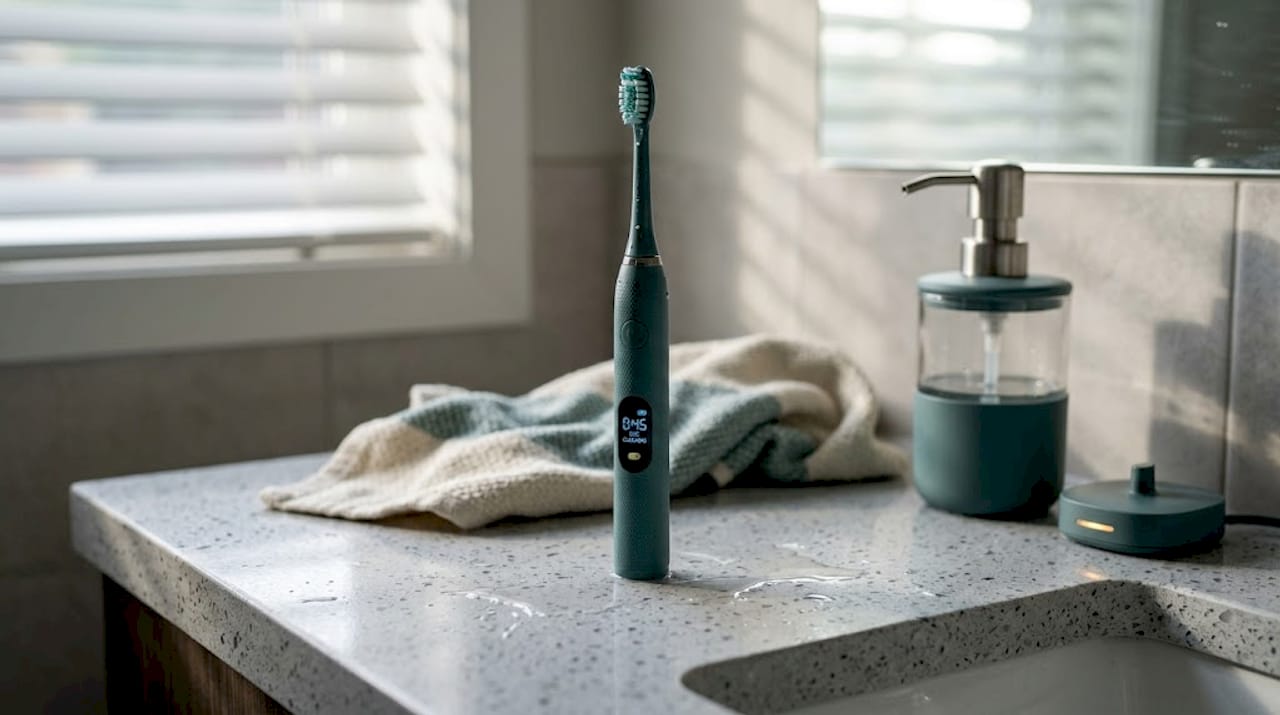
Timers and QuadPacer technology ensure efficient two-minute sessions without clock-watching, promoting the consistency that’s vital for plaque control. When paired with pressure sensors, they also protect your gums and enamel from the damage caused by brushing too hard, a habit that’s surprisingly common among motivated brushers.
Core features worth understanding:
- Built-in timer: Tracks total brushing duration; most models alert at the two-minute mark
- QuadPacer: Signals every 30 seconds to prompt even coverage across all four mouth quadrants
- Pressure sensor: Alerts you when you’re pressing too hard, reducing risk of enamel wear and gum recession
- Multiple brushing modes: Options like sensitive, whitening, or gum care modes let you customize intensity
- App integration: Bluetooth-connected brushes sync with smartphone apps to track brushing habits over time
- Brushing trackers: Some models record session length, pressure data, and coverage maps for review
Beyond the basics, advanced toothbrush technology has introduced features like real-time feedback through connected apps, AI-guided brushing maps, and even UV sanitizers for brush heads. These additions can genuinely motivate tech-enthusiastic users to stay consistent.
That said, smart features like apps and tracking enhance motivation but are not essential for effective brushing. Entry-level models starting around $50 deliver the core timer and pressure-sensing features that drive real results. For most busy individuals, a reliable timer and a comfortable brush head matter far more than a full suite of smart capabilities.
Pro Tip: If you travel frequently, check whether your preferred model has a travel case and dual-voltage charging. These small details make a big difference in keeping your routine intact when you’re away from home.
Following efficient brushing steps becomes much easier when your brush is doing the heavy lifting on timing and technique feedback. The technology exists to simplify your routine, not complicate it.
Oscillating vs. sonic: Which is more effective for you?
Two main types of timed electric toothbrushes dominate the market: oscillating-rotating and sonic. Understanding the practical differences helps you choose the right tool for your mouth and your lifestyle.
Oscillating-rotating brushes, like those in the Oral-B iO series, use a small round head that spins and pulsates to dislodge plaque. Sonic brushes, like the Philips Sonicare line, use high-frequency vibrations to drive fluid and bristles along the gum line. Both are significantly more effective than manual brushing.
Oscillating-rotating brushes show superiority over sonic models in randomized controlled trials and meta-analyses, with greater reductions in the Modified Gingival Index and bleeding sites after four weeks of use. However, the Cochrane review notes the short-term edge is small and its clinical significance remains unclear.
| Feature | Oscillating-rotating | Sonic |
|---|---|---|
| Plaque removal | Slight edge in clinical trials | Excellent, slightly behind in RCTs |
| Gum health | Marginally better in short-term studies | Strong performance with consistent use |
| Brush head shape | Small, round | Elongated, traditional shape |
| Sensation | Mechanical, pulsating | Gentle vibration, fluid dynamics |
| Best for | Plaque-focused users, tight spaces | Sensitivity-prone users, natural feel |
| Entry-level price | ~$50 | ~$50 |
“While oscillating-rotating edges sonic in studies, both are superior to manual brushing. Prioritize ADA Seal, user preference, and battery life over minor performance differences.” — Best Electric Toothbrushes, According to Dentists
The electric toothbrush effectiveness data makes one thing clear: the gap between oscillating and sonic is far smaller than the gap between either type and a manual brush. Choosing based on comfort, brush head preference, and battery life will serve you better than chasing marginal clinical differences.
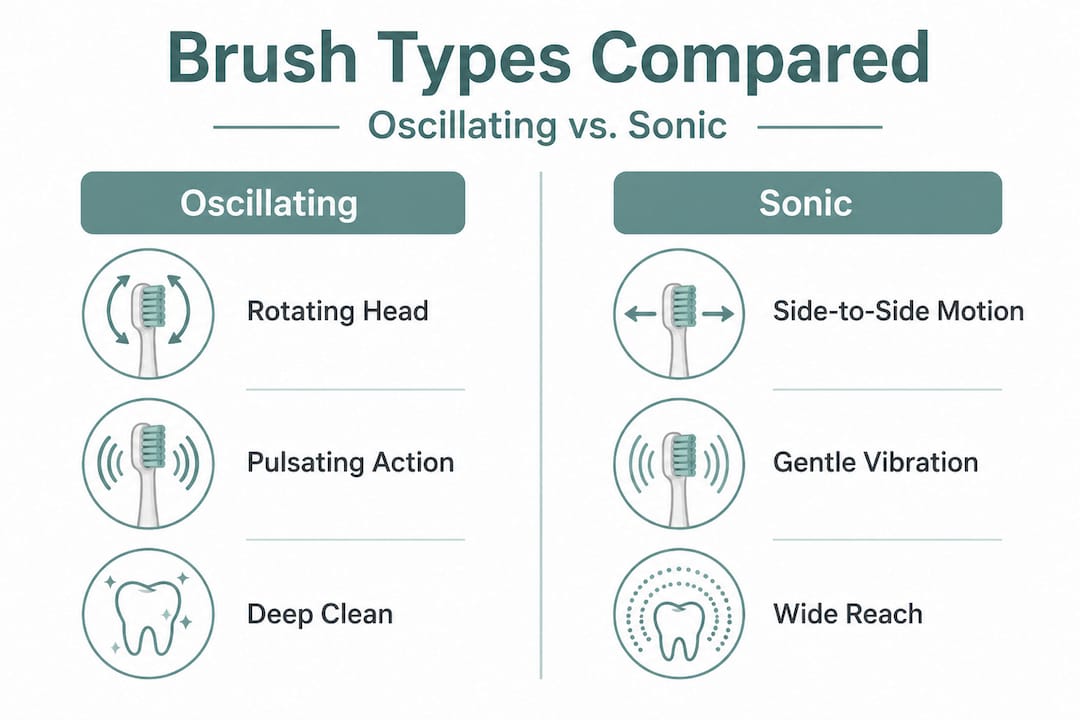
For most busy users, the best brush is the one you’ll actually use consistently. If a sonic brush feels more natural and keeps you brushing for the full two minutes, it’s the better choice for you, regardless of what the aggregate trial data says.
Making the most of your timed electric toothbrush routine
Owning a timed electric toothbrush is only the first step. Building a routine around it is what produces lasting results. Here’s a practical, step-by-step approach that fits into even the most demanding schedules.
Step-by-step two-minute routine:
- Apply a pea-sized amount of fluoride toothpaste to the brush head
- Place the brush at a 45-degree angle to the gum line before turning it on
- Start in the upper right quadrant and let the QuadPacer guide your transitions every 30 seconds
- Apply gentle, consistent pressure and let the brush do the work
- Move through upper left, lower left, and lower right quadrants in sequence
- Brush the inner surfaces of all teeth and finish with a light pass over the tongue
- Rinse and place the brush on its charging stand immediately after use
Oral care for busy lifestyles depends on removing friction from the routine. Keeping your brush charged and accessible is just as important as the brushing technique itself.
| Model | Type | Modes | Battery life | Price |
|---|---|---|---|---|
| Oral-B Pro 1000 | Oscillating | 3 | 10 days | ~$50 |
| Philips Sonicare 4100 | Sonic | 2 | 14 days | ~$50 |
| Oral-B iO Series 4 | Oscillating | 4 | 14 days | ~$100 |
| Philips Sonicare ProtectiveClean 6100 | Sonic | 3 | 14 days | ~$100 |
Benchmark models like the Oral-B Pro 1000 and Philips Sonicare 4100 both come in at around $50, offer ADA-accepted performance, and include pressure sensors, making them strong starting points for anyone new to powered brushing.
Pro Tip: Check out electric toothbrush charging advice to extend your battery’s lifespan. Overcharging lithium-ion batteries can reduce their capacity over time, so charging to full and then unplugging is generally better than leaving the brush on the stand continuously.
Following consistent toothbrushing tips also means replacing your brush head every three months or sooner if the bristles show visible wear. A worn brush head loses cleaning effectiveness regardless of how sophisticated the handle is.
What most guides miss: Lasting habits over tech specs
Most buying guides focus almost entirely on features, oscillation frequency, pressure sensor sensitivity, app compatibility, and battery ratings. Those details matter, but they’re not what separates people who genuinely improve their oral health from those who buy a quality brush and still end up with plaque buildup and gum problems six months later.
The real differentiator is habit formation. A brush with a two-minute timer only works if you pick it up twice a day, every day. That sounds obvious, but it’s where most people quietly fail. Life gets busy. Routines slip. The brush sits on the counter fully charged, unused.
What timers actually do, beyond tracking duration, is reduce the cognitive load of brushing. When you don’t have to think about how long you’ve been going, the act becomes more automatic. Automation is the foundation of habit. The role of timing in brushing is ultimately about removing barriers to consistency, not just measuring seconds.
We’ve seen this pattern repeatedly: people who upgrade to a timed electric brush report not just better clinical outcomes, but a stronger sense of control over their oral health. That psychological shift matters. When brushing feels structured and effective, you’re more likely to protect the investment by staying consistent.
The uncomfortable truth is that no toothbrush, regardless of price or feature set, can compensate for skipped sessions. A $30 brush used twice daily beats a $300 brush used sporadically. Tech specs set the ceiling for what’s possible. Your habits determine whether you ever reach it.
Find your timed electric toothbrush: Efficient solutions for busy people
The science is clear, the routine is straightforward, and the right tool makes all the difference for people who want results without adding time to their day.
Y-Brush was built specifically for this reality. When 90% of people brush for under a minute, the answer isn’t just a better timer. It’s a fundamentally different approach to oral care that delivers a superior clean in far less time. The Y-Brush Essential Sonic Toothbrush combines ADA-accepted sonic technology with user-friendly design, making it easy to build a consistent routine that actually fits your life. For those who want the most advanced option, the Y-Brush Ultra Sonic Toothbrush delivers even greater performance with a design engineered around efficiency. Explore both options and find the one that matches your schedule, your preferences, and your commitment to lasting oral health.
Frequently asked questions
How does a timed electric toothbrush improve brushing habits?
Timers ensure you brush for the recommended duration, increasing consistency and plaque control without needing to watch the clock. Powered brush users average 2.5 minutes per session versus 1.5 minutes for manual users, largely because the device structures the session for them.
Is oscillating or sonic better for timed brushing?
Oscillating-rotating brushes have a small short-term edge in clinical studies, but both types work well if used consistently for two minutes. The best choice depends on personal comfort and which type you’ll use most reliably.
What features should busy users prioritize?
Timers and pressure sensors are the most important features for busy users, followed by good battery life and a comfortable brush head shape that encourages daily use.
Do smart toothbrush features like apps really matter?
Smart app features can boost motivation for some users, but they are not essential for effective brushing. A reliable timer and pressure sensor deliver the core benefits most people need.
Is 2 minutes enough or should I brush longer?
Research confirms that 2 minutes is sufficient for most people, with brushing for 3 minutes or longer adding minimal additional benefit to plaque removal or gum health outcomes.
Recommended
- What Are The Optimal Charging Times For Maximizing Your Electric Tooth – Y-Brush USA
- Steps for efficient brushing: save time with superior oral care – Y-Brush USA
- How to clean teeth in less time: efficient oral care – Y-Brush USA
- How Does An Electric Toothbrush With A Timer Improve Your Daily Brushi – Y-Brush USA


