


TL;DR:
- Stepwise rapid brushing divides the mouth into four quadrants, each brushed for 30 seconds using the Modified Bass technique to ensure complete plaque removal within two minutes. Proper tools like a soft-bristled or electric toothbrush with timers and fluoride toothpaste are essential, and technique accuracy is more important than brushing duration. Consistently brushing twice daily, especially at night, with correct technique and minimal rinsing maximizes oral health protection.
Stepwise rapid brushing is defined as a timed, systematic method of cleaning your teeth by dividing your mouth into four quadrants and applying the Modified Bass technique to each section for 30 seconds, achieving complete plaque removal within two minutes. Most people never reach that target. Average brushing time falls between 45 and 70 seconds, which means plaque survives in the areas that need attention most. This guide gives you the exact sequence, tools, and timing to fix that without adding a single extra minute to your morning routine.
What tools do you need for stepwise rapid brushing?
The right setup makes the difference between a rushed, incomplete clean and one that actually works. You do not need expensive equipment, but you do need the right combination of brush, paste, and technique before you start.
Toothbrush selection matters more than most people realize. A soft-bristled toothbrush is the standard recommendation for adults because medium and hard bristles increase the risk of gum recession and enamel wear over time. Electric toothbrushes with built-in quadrant timers and pressure sensors take the guesswork out of both timing and force, making them particularly well suited to the stepwise method.
Toothpaste with fluoride is non-negotiable. Fluoride strengthens enamel and continues to protect your teeth for hours after brushing, provided you do not rinse it away immediately. Choose a paste with at least 1,000 ppm fluoride for adults, and 1,350 to 1,500 ppm if your dentist has flagged higher cavity risk.
Here is what to prepare before you begin:
- Soft-bristled toothbrush or an electric model with a quadrant timer and pressure sensor
- Fluoride toothpaste at the appropriate concentration for your age and risk level
- A timer if your brush does not have one built in. A phone timer set to 30-second intervals works perfectly.
- Pencil grip on the handle. Hold the brush the way you hold a pen, not a screwdriver. This naturally limits the pressure you apply and protects your gums.
- Wait 30 minutes after acidic food or drink before brushing. Acidic intake softens enamel temporarily, and brushing too soon causes abrasion rather than cleaning.
Pro Tip: Set your phone timer to four consecutive 30-second alerts before you start. This removes the mental effort of counting and lets you focus entirely on technique.
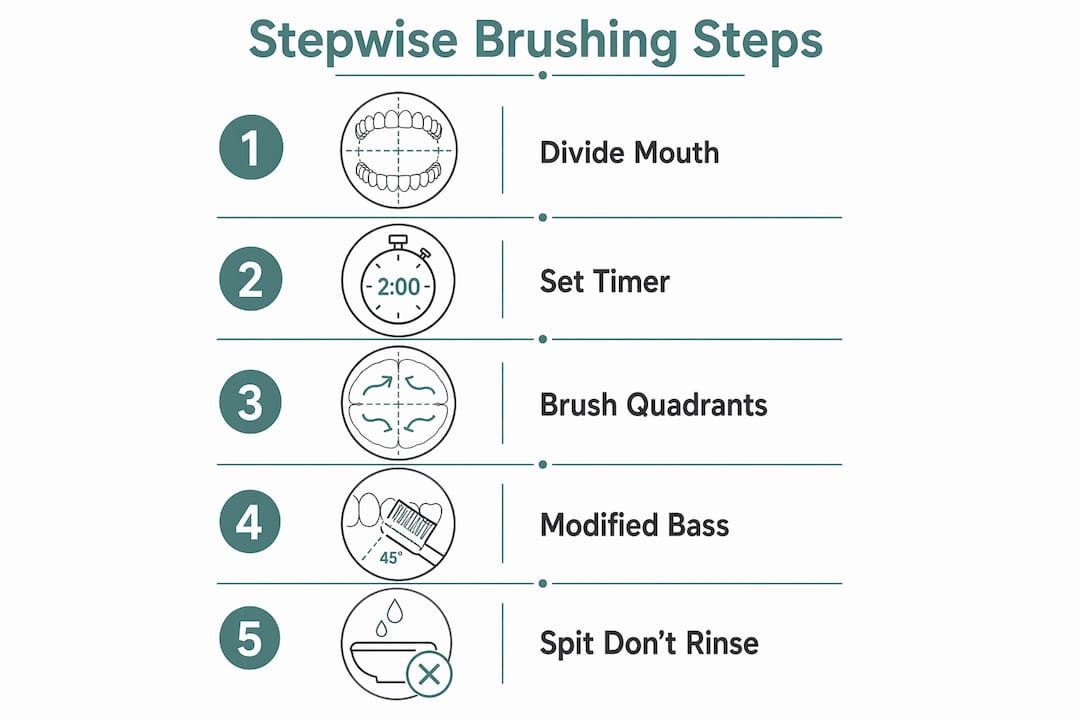
After brushing, spit out the toothpaste but do not rinse with water. Rinsing immediately washes away the fluoride that would otherwise keep protecting your enamel for hours.
How to perform the stepwise brushing technique step by step
The quadrant timing method divides your mouth into four sections: upper right, upper left, lower left, and lower right. Spending exactly 30 seconds on each section produces the full two-minute session that dental guidelines endorse. The sequence below covers every surface without backtracking or guessing.
-
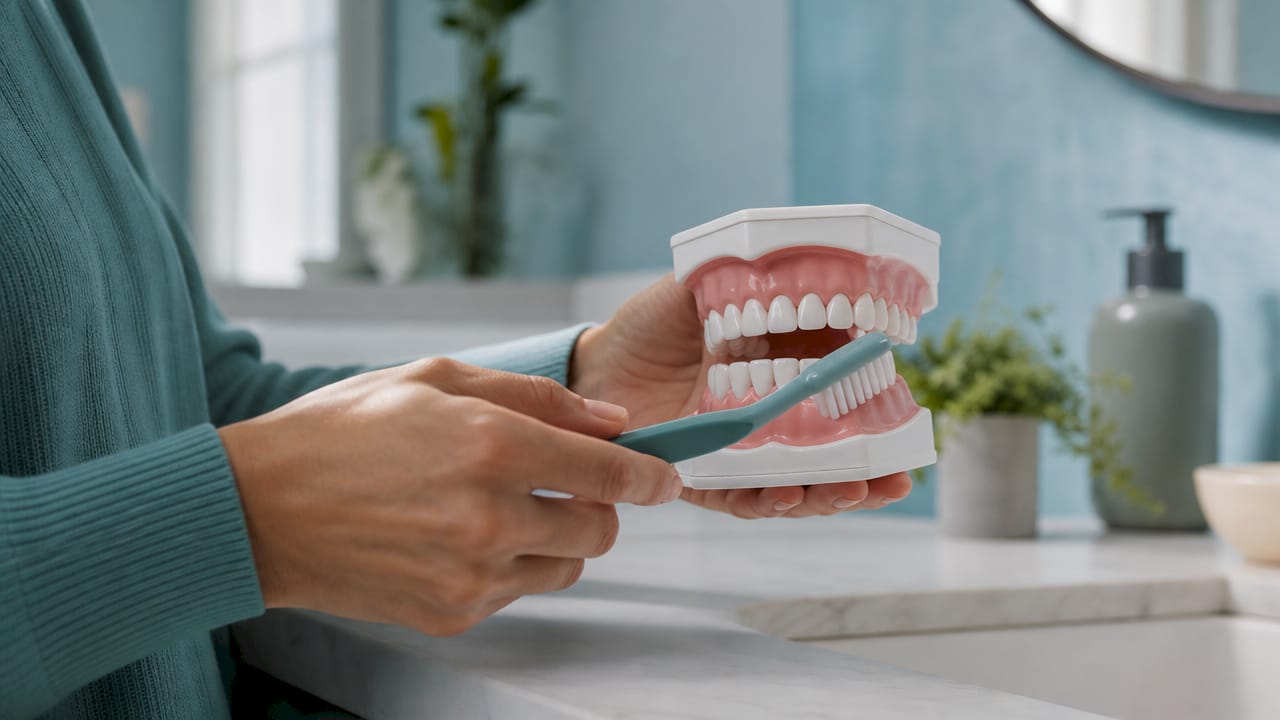
Start at the upper right outer surface. Position the brush at a 45-degree angle toward the gumline. This is the core of the Modified Bass technique. The bristles should contact both the tooth surface and the edge of the gum simultaneously.
-
Use small vibratory or circular strokes. Move the brush in short back-and-forth vibrations or tight circles roughly the width of two teeth. Do not scrub horizontally across the full arch. Horizontal scrubbing misses the gumline and accelerates enamel wear.
-
Work through the outer surfaces of all four quadrants. Spend 30 seconds per quadrant on the outer (cheek-facing) surfaces before moving to the inner surfaces. This keeps your timing consistent and prevents you from rushing one area to compensate for another.
-
Switch to the inner surfaces. The inner surfaces of the lower front teeth collect the most tartar buildup of any area in the mouth. Tilt the brush vertically and use the front edge of the head with short up-and-down strokes to reach these surfaces effectively.
-
Finish with the chewing surfaces. Use a gentle back-and-forth motion across the flat tops of your molars and premolars. These surfaces trap food debris in grooves, so short scrubbing strokes are appropriate here.
-
Brush your tongue lightly. A single gentle forward sweep removes bacteria that contribute to bad breath. Do not press hard. The tongue surface is sensitive and does not require force to clean.
Pro Tip: If you lose track of which quadrant you are on, always restart at the upper right. Consistency in your starting point builds muscle memory faster than any other habit.
The Modified Bass technique is the most clinically supported method for removing plaque at the gumline, which is where gum disease begins. Mastering the 45-degree angle is the single most impactful adjustment most people can make to their existing routine. For more on building an efficient brushing routine, the fundamentals of timing and technique apply regardless of which brush you use.
Common pitfalls that reduce brushing effectiveness
Even people who follow a stepwise approach make mistakes that quietly undermine their results. Recognizing these errors is the fastest way to improve your oral hygiene without changing anything else about your routine.
-
Cutting the session short. The most common error is stopping before two minutes. Because most people underestimate brushing time, a session that feels complete often clocks in under 60 seconds. A timer removes this variable entirely.
-
Pressing too hard. Aggressive pressure does not remove more plaque. It damages the gum tissue and wears down enamel over time. Light pressure is all that is needed to disrupt the soft biofilm that forms on teeth between meals. The pencil grip described in the preparation section is the most reliable way to stay within a safe force range.
-
Skipping the inner back surfaces. The inner surfaces of the upper molars are the most commonly neglected area in self-reported brushing studies. These surfaces are harder to reach and easy to skip when rushing. Slowing down at the inner quadrant transitions prevents this.
-
Rinsing with water after brushing. This one surprises most people. Rinsing washes away the fluoride film that continues protecting enamel after you put the brush down. Spit, do not rinse.
-
Brushing immediately after acidic food. Orange juice, coffee, and carbonated drinks temporarily soften enamel. Brushing within 30 minutes of consuming them causes micro-abrasions. Wait, then brush.
-
Using a worn toothbrush. Bristles that are frayed or splayed cannot reach the gumline effectively. Replace your toothbrush every three months, or sooner if the bristles show visible wear.
“The goal of rapid brushing is not to rush. It is to use your time so precisely that nothing gets missed.”
How do electric toothbrushes enhance the stepwise method?
Electric toothbrushes do not replace technique, but they do make consistent technique significantly easier to achieve. For anyone who struggles with timing, pressure control, or reaching back teeth, the right electric model closes the gap between what you intend to do and what actually happens.
| Feature | Manual toothbrush | Electric toothbrush |
|---|---|---|
| Quadrant timing | Requires external timer | Built-in 30-second alerts |
| Pressure control | Relies entirely on user | Pressure sensor stops or alerts when force is too high |
| Stroke consistency | Varies with fatigue or distraction | Consistent oscillation or sonic vibration throughout |
| Reach on back teeth | Depends on wrist angle and grip | Smaller head and vibration compensate for limited dexterity |
| Plaque removal | Effective with correct technique | Clinically proven advantage for users with inconsistent manual technique |
Electric toothbrushes with timers improve brushing compliance and reduce technique errors, particularly for people with busy schedules or limited hand dexterity. The built-in quadrant signal removes the cognitive load of tracking time, which means you can focus entirely on angle and coverage. For a detailed breakdown of how automatic brushes compare on cleaning effectiveness, the cleaning vs. speed question is worth understanding before you invest.
Pro Tip: If you use an electric toothbrush, let the brush do the work. Guide it slowly across each surface rather than scrubbing. The vibration frequency does the disrupting.
Sonic toothbrushes, which operate at high-frequency vibrations, are particularly effective at dislodging plaque in areas the bristles do not directly contact, including just below the gumline. This makes them a natural complement to the Modified Bass technique, which targets exactly that zone. For a curated list of the top timed electric options available in 2026, Y-Brush has compiled a practical comparison.
When and how often should you practice this method?
Frequency and timing are as important as technique. Brushing correctly once a day delivers far less protection than brushing correctly twice a day at the right times.
-
Brush twice daily without exception. Morning and evening sessions together prevent the plaque accumulation that leads to tartar, cavities, and gum disease.
-
Prioritize the nighttime session above all others. Saliva production decreases significantly during sleep, which means bacteria attack tooth surfaces more aggressively overnight. Going to bed with plaque on your teeth is the highest-risk scenario in daily oral hygiene.
-
Brush before breakfast or wait 30 minutes after eating. Brushing before breakfast removes the overnight bacterial buildup before you add food. If you prefer to brush after eating, wait at least 30 minutes to allow saliva to re-harden softened enamel.
-
Floss once daily, ideally before your nighttime brushing session. Flossing removes debris from between teeth that no brush can reach, and doing it before brushing means the fluoride from your toothpaste can access those cleaned interdental spaces.
-
Use a fluoride mouthwash at a different time than brushing. If you use mouthwash, do not use it immediately after brushing. Use it at a separate time, such as after lunch, to extend fluoride exposure throughout the day.
-
Track your consistency for the first two weeks. Habit formation research consistently shows that the first 14 days determine whether a new routine sticks. A simple checkmark on a calendar after each session is enough to build accountability.
Key takeaways
Stepwise rapid brushing works because it combines precise quadrant timing, the Modified Bass technique, and controlled pressure to remove plaque completely in exactly two minutes.
| Point | Details |
|---|---|
| Two-minute target | Divide your mouth into four quadrants and spend 30 seconds on each to reach the full recommended duration. |
| Modified Bass technique | Hold the brush at 45 degrees to the gumline and use small vibratory strokes to clean where gum disease starts. |
| Light pressure only | Use a pencil grip to prevent gum recession and enamel wear caused by excessive brushing force. |
| Skip the rinse | Spit out toothpaste but do not rinse with water, so fluoride continues protecting enamel after brushing. |
| Nighttime session is critical | Saliva drops during sleep, making the evening brush your most important daily oral hygiene action. |
Why technique beats duration every time
I have spent years looking at how people actually brush versus how they think they brush, and the gap is consistently larger than anyone expects. Most people are confident they brush for close to two minutes. Most people are wrong by about half. The quadrant method fixed this for me personally before I ever started recommending it to others.
What surprised me most was how much the pencil grip changed things. Switching from a full-hand grip to a fingertip hold felt awkward for the first three days and then became automatic. My gums stopped being sensitive within two weeks. That single adjustment, not a new toothbrush or a new paste, was the turning point.
The learning curve for the Modified Bass technique is real but short. The 45-degree angle feels unnatural at first because most people brush parallel to the tooth surface rather than angling into the gumline. Give it five sessions. By the sixth, it clicks. The technique matters more than the timer, more than the brush brand, and more than the toothpaste. Get the angle right and the rest follows. For anyone serious about maximizing plaque removal without overhauling their entire routine, the quadrant method is the most practical place to start.
— Joris
Y-Brush makes stepwise rapid brushing effortless
Y-Brush builds sonic toothbrushes specifically for people who want a clinically effective clean without spending extra time figuring out technique.
The Y-Brush Essential Sonic Toothbrush delivers consistent sonic vibration with built-in timing cues that align perfectly with the quadrant method, so you never lose track of where you are in your session. For families, the Y-Brush KidsBrush brings the same timed, pressure-aware approach to children aged 4 to 12, building good habits from the start. Both models remove the guesswork from rapid brushing and put effective plaque removal within reach for every schedule and lifestyle.
FAQ
What is stepwise rapid brushing?
Stepwise rapid brushing is a systematic method of brushing that divides the mouth into four quadrants and dedicates 30 seconds to each, using the Modified Bass technique to remove plaque efficiently within a two-minute session.
How long should each quadrant take when brushing?
Each quadrant should receive exactly 30 seconds of brushing time. Four quadrants at 30 seconds each produces the full two-minute duration that dental guidelines recommend for effective plaque removal.
Should you rinse after brushing your teeth?
No. Spitting out toothpaste without rinsing keeps fluoride on your enamel longer, extending its protective effect. Rinsing immediately after brushing removes the fluoride before it can do its job.
Is an electric toothbrush necessary for this method?
An electric toothbrush is not required, but models with quadrant timers and pressure sensors make the stepwise method significantly easier to execute correctly. A manual brush with an external timer and a pencil grip produces equally good results when technique is consistent.
When is the best time to brush using this method?
The nighttime session is the most critical because saliva decreases during sleep, leaving teeth more vulnerable to bacterial attack. Brush before breakfast or at least 30 minutes after eating in the morning.


