


TL;DR:
- Consistent, two-minute brushing using the Modified Bass technique twice daily is essential for effective plaque removal. Flossing before bed and fluoride toothpaste with 1350-1500 ppm enhance oral health by targeting areas brushing cannot reach and strengthening enamel. Proper technique and routine, reinforced by professional cleanings, are more impactful than expensive tools or products alone.
Plaque-free brushing is the systematic removal of the sticky bacterial biofilm that forms on teeth and along the gumline every single day. This biofilm, known clinically as dental plaque, hardens into tartar within 24 to 72 hours if left undisturbed, setting the stage for tooth decay, gum disease, and eventual tooth loss. A solid tutorial for plaque-free brushing covers four non-negotiable components: correct technique, adequate timing, consistent flossing, and fluoride toothpaste. Get all four right, and you protect your teeth far more effectively than any single product alone can.
How long and how often should you brush for plaque-free results?
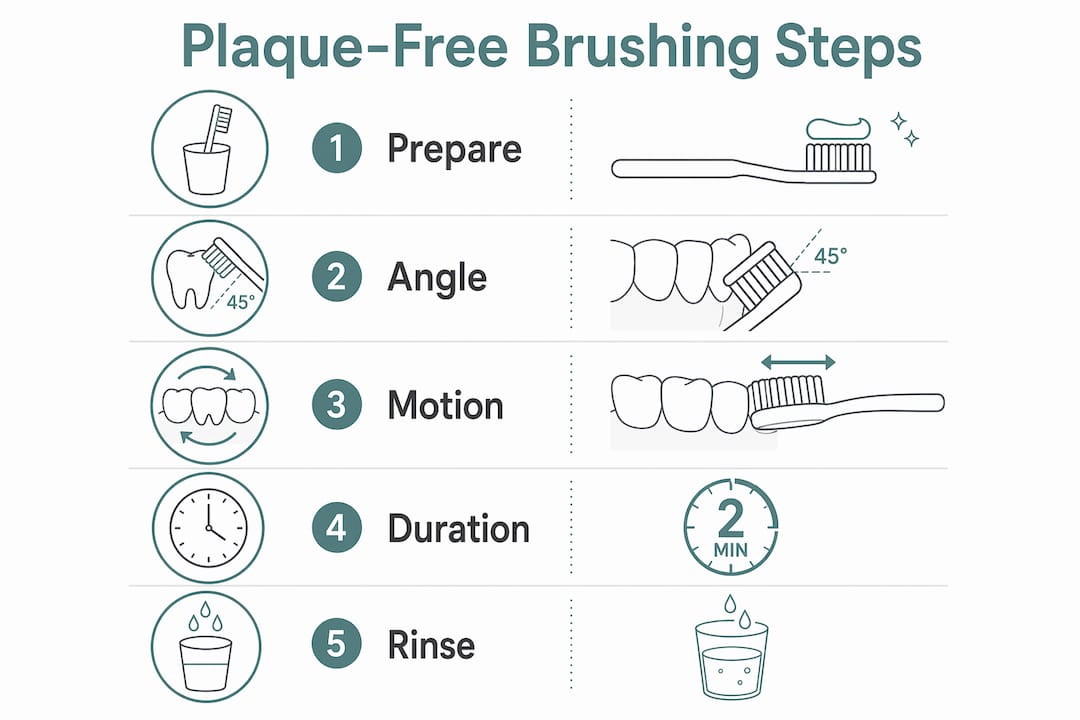
Duration is the most underestimated variable in plaque control. Brushing for two minutes removes 26% more plaque than brushing for 45 seconds, and extending to three minutes removes 55% more. That single data point explains why a rushed 30-second scrub leaves most of your mouth coated in biofilm regardless of which toothbrush you use.
Brush twice daily, morning and night, with no exceptions. Night brushing is more important than morning brushing because saliva flow decreases during sleep, removing the mouth’s natural defense against acid and bacteria. Skipping the evening session leaves plaque undisturbed for eight or more hours in a low-saliva environment, which accelerates enamel erosion overnight.
To use your two minutes well, divide your mouth into four quadrants: upper right, upper left, lower right, and lower left. Spend 30 seconds on each. This structure prevents the common habit of over-brushing the front teeth while neglecting back molars.
- Brush outer surfaces of all teeth in each quadrant
- Brush inner surfaces, especially lower front teeth where plaque builds fastest
- Brush chewing surfaces with short back-and-forth strokes
- Finish with a light brush along the tongue to reduce bacteria load
After brushing, spit out the toothpaste but do not rinse with water. Rinsing washes away the fluoride film that continues strengthening enamel for minutes after you stop brushing. This single habit change costs nothing and meaningfully extends fluoride contact time.
Pro Tip: Set a two-minute timer on your phone or use a toothbrush with a built-in timer. Most people dramatically underestimate how long they are actually brushing until they measure it.
What brushing techniques effectively remove plaque?
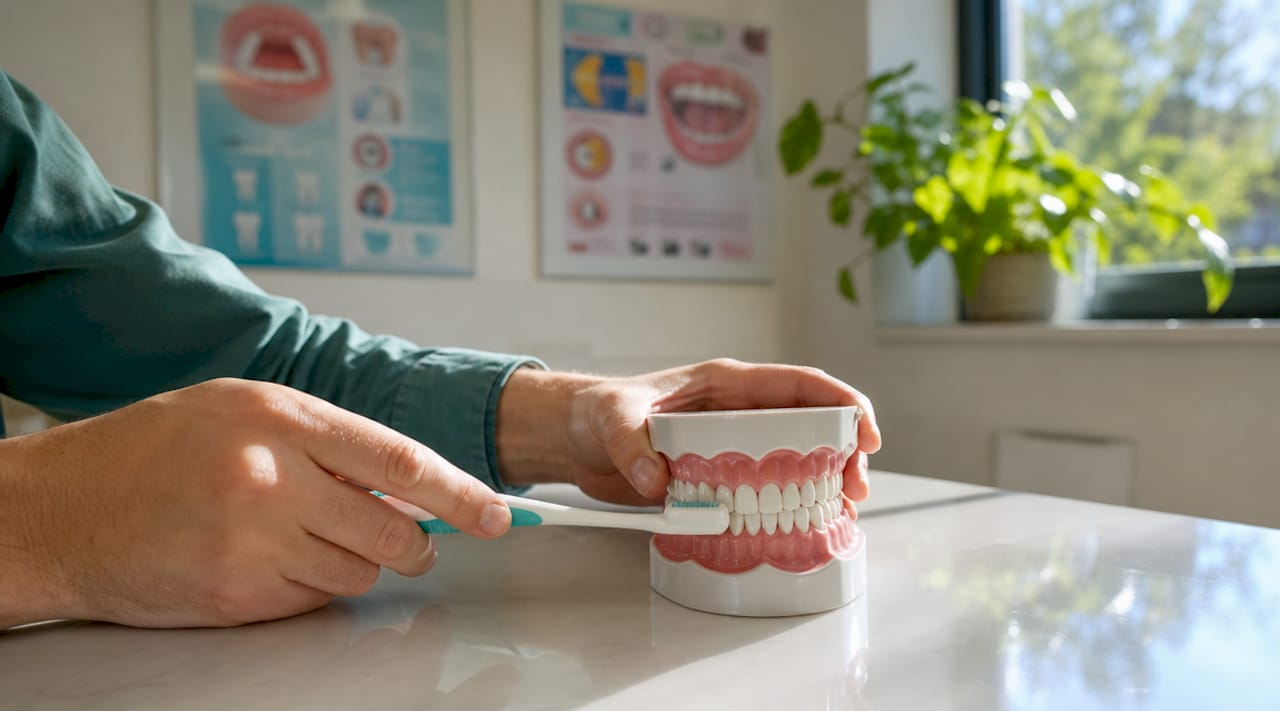
Technique is where most people lose the most ground. The Modified Bass technique is the clinically preferred method for plaque removal, and a 2026 randomized controlled trial confirmed it reduces plaque more effectively than both the Fones circular method and the horizontal scrub technique. Understanding why it works makes it easier to apply consistently.
Here is how to execute the Modified Bass technique step by step:
- Hold your toothbrush at a 45-degree angle to the gumline, not perpendicular to the tooth surface.
- Position the bristles so they point toward the gum, allowing the tips to slide just beneath the gumline where plaque accumulates most aggressively.
- Apply light pressure and use short vibratory strokes, moving the brush back and forth about half a tooth’s width at a time.
- After completing the vibratory motion on each section, sweep the brush away from the gum toward the biting edge to clear loosened plaque.
- Move systematically around the mouth, covering outer surfaces, inner surfaces, and chewing surfaces before finishing.
The gumline focus is what separates Modified Bass from less effective methods. Plaque that sits at or just below the gumline is the primary driver of gingivitis and early gum disease. Brushing only the visible tooth surface misses this critical zone entirely.
| Technique | Angle | Motion | Best for |
|---|---|---|---|
| Modified Bass | 45 degrees to gum | Short vibratory strokes | Adults, gum health |
| Fones (circular) | Perpendicular | Large circular strokes | Young children |
| Horizontal scrub | Perpendicular | Back-and-forth | Not recommended for adults |
On the question of power versus manual brushes, the evidence is more nuanced than most marketing suggests. A 2026 RCT comparing powered and manual brushes found no significant overall difference in plaque removal outcomes. Manual brushes even showed better results for some groups, reinforcing that consistent technique matters more than brush type. Choose whichever tool you will use correctly and consistently.
Pro Tip: Practice the 45-degree angle in front of a mirror for the first week. Most people default to a flat, perpendicular hold without realizing it, which reduces gumline contact significantly.
Why is flossing essential alongside brushing for plaque control?
Brushing, no matter how well executed, physically cannot reach the contact points between teeth. Flossing removes interdental plaque that toothbrushes cannot access, closing the single biggest gap in most people’s oral hygiene routines. Skipping floss means leaving roughly 35% of each tooth’s surface uncleaned every day.
Correct flossing technique matters as much as frequency. Use an 18-inch length of string floss, winding most of it around your middle fingers so your index fingers and thumbs can guide a fresh section between each tooth. The key motion is forming a C-shape around each tooth with the floss, hugging the tooth surface and sliding gently just below the gumline before using vertical up-and-down strokes to lift plaque out.
- Use string floss as your primary tool. It provides the most control and coverage.
- Floss picks are a secondary option for travel or limited dexterity, but they do not allow the C-shape motion as effectively.
- Floss before brushing at night so that loosened interdental debris gets swept away during the brushing step that follows.
- Use a fresh section of floss for each tooth to avoid redistributing bacteria from one contact point to another.
Pro Tip: If your gums bleed when you floss, that is a sign of inflammation from existing plaque buildup, not a reason to stop. Consistent daily flossing typically resolves bleeding within one to two weeks as gum health improves.
What tools and products support plaque-free brushing?
The right tools amplify good technique. The wrong ones, used with poor technique, change very little. Here is what the evidence actually supports for effective brushing for healthy teeth.
| Tool or Product | Recommendation | Why it matters |
|---|---|---|
| Toothbrush bristles | Soft or extra-soft | Firm bristles abrade enamel and irritate gums without improving plaque removal |
| Fluoride toothpaste | 1350–1500 ppm fluoride | Prevents cavities and strengthens enamel at this concentration |
| Brush head replacement | Every 2–3 months | Worn bristles lose contact precision and reduce cleaning effectiveness |
| Plaque disclosing tablets | Optional, periodic use | Visualize missed zones, though technique fundamentals have greater impact |
| Electric toothbrush | Optional | Useful for those who struggle with manual technique consistency |
Fluoride concentration deserves specific attention. Many whitening and “natural” toothpastes fall below the 1350 ppm threshold, which means they clean surfaces but provide minimal enamel protection. Check the label before purchasing. The Oral Health Foundation’s 2026 brushing guidance is explicit: 1350 to 1500 ppm is the clinically supported range for adults.
Plaque disclosing tablets, available from most pharmacies, use a food-safe dye to stain remaining plaque pink or blue after brushing. They are a powerful feedback tool, especially when learning new technique. A 2026 Springer trial found that disclosing agents alone do not significantly improve outcomes beyond good technique training, but using them once a week to audit your own brushing reveals blind spots that are otherwise invisible.
Pro Tip: Use a disclosing tablet once a week for the first month of adopting a new brushing routine. The visual feedback is far more motivating and precise than any verbal instruction.
How to troubleshoot common brushing mistakes that reduce plaque removal
Most brushing errors fall into three categories: too much pressure, incomplete coverage, and inconsistent routine. Each one is correctable once you know what to look for.
Brushing too hard is the most common mistake, and it is counterproductive. Plaque is a soft biofilm that requires only gentle contact to dislodge. Heavy pressure does not remove more plaque. It accelerates enamel abrasion and gum recession, both of which are largely irreversible. If your bristles splay outward within weeks of buying a new brush, you are pressing too hard.
Incomplete coverage is the second major issue. Back molars, the inner surfaces of lower front teeth, and the gumline behind the last molars are the zones most consistently missed. A systematic brushing order solves this. Start at the same tooth every session and move in the same direction every time. Consistency in order builds muscle memory that prevents skipping zones.
- Use a two-minute timer to prevent cutting sessions short
- Follow a fixed quadrant order: upper right, upper left, lower left, lower right
- Check inner surfaces of lower front teeth specifically, as most people miss these entirely
- If bleeding or sensitivity persists after two weeks of correct technique, schedule a dental appointment
“Patients who struggle with plaque control almost always have a technique or timing problem, not a product problem. The right coaching session with a hygienist can correct years of ineffective brushing in under 20 minutes.” — University of Utah Health, 2026 dentist guide
Regular professional cleanings remove tartar that has already hardened beyond what brushing can address. No home routine, however disciplined, replaces a twice-yearly visit to a dental hygienist for scaling and polishing.
Key takeaways
Plaque-free brushing requires two minutes of Modified Bass technique twice daily, consistent flossing before bed, and fluoride toothpaste at 1350 to 1500 ppm. Every other variable is secondary to these three.
| Point | Details |
|---|---|
| Duration drives results | Brushing for two minutes removes 26% more plaque than a 45-second session. |
| Modified Bass is the gold standard | A 45-degree bristle angle with vibratory strokes targets the gumline where plaque causes the most damage. |
| Floss before brushing at night | String floss removes interdental plaque that no toothbrush can physically reach. |
| Fluoride concentration matters | Use toothpaste with 1350–1500 ppm fluoride and skip the post-brush water rinse. |
| Technique beats technology | Consistent method and timing outperform brush type in clinical plaque removal outcomes. |
What I have learned about achieving plaque-free brushing
After years of observing oral hygiene habits and reviewing the clinical literature, the pattern is clear: people who achieve consistently plaque-free results are not using the most expensive tools. They are using the right technique, at the right time, without skipping days.
The Modified Bass method sounds simple on paper, but most people need two to three weeks of deliberate practice before it becomes automatic. That transition period is where most people give up or revert to old habits. My honest observation is that the biggest obstacle to plaque-free brushing is not knowledge. It is the gap between knowing what to do and building the daily repetition that makes it effortless.
I also think the dental industry underemphasizes night brushing relative to morning brushing. Morning brushing feels more socially necessary, so it gets done. But the overnight window, when saliva drops and bacteria multiply unchecked, is where most enamel damage accumulates. Prioritize the evening session above all others.
Finally, no home routine is complete without professional oversight. A hygienist can identify calculus deposits, gum recession, and technique errors that are invisible to the untrained eye. Schedule cleanings twice a year, and treat them as a diagnostic tool, not just a polish. The plaque removal tips that make the biggest difference long-term are the ones you refine with professional feedback, not just articles.
— Joris
Upgrade your brushing routine with Y-Brush
Knowing the right technique is step one. Having a tool that supports it consistently is step two. Y-Brush was built for people who understand the value of a thorough clean but live in the real world where two full minutes twice a day rarely happens. The Y-Brush system delivers full-mouth coverage in 20 seconds, designed to meet the clinical standard without the time barrier that stops most people from brushing correctly.
If you are ready to complement your plaque removal brushing techniques with technology built around your actual schedule, explore the Y-Brush oral care system and see how a smarter approach to brushing fits into your daily routine. For families looking for a solution that works for every age, the Big Smile Little Smile bundle covers everyone from kids to adults with one consistent approach to plaque control.
FAQ
Can brushing alone eliminate plaque completely?
Brushing removes plaque from outer, inner, and chewing surfaces, but it cannot reach the contact points between teeth. Flossing is required to address interdental plaque, making the combination of both habits the only complete approach.
How long should each brushing session last?
Each session should last two full minutes. Clinical evidence shows that two-minute brushing removes 26% more plaque than sessions under one minute, making duration one of the highest-impact variables in plaque control.
What is the best brushing technique for plaque removal?
The Modified Bass technique is the most clinically supported method. It uses a 45-degree bristle angle and short vibratory strokes along the gumline, targeting the zone where plaque causes the most damage to gum tissue.
Should I rinse after brushing?
Spit out toothpaste but avoid rinsing with water. Rinsing removes the fluoride film that continues to strengthen enamel after brushing ends, reducing the protective benefit of your toothpaste.
How often should I replace my toothbrush?
Replace your toothbrush or brush head every two to three months. Worn bristles lose their ability to maintain proper contact with tooth surfaces and the gumline, reducing plaque removal effectiveness regardless of technique.


