


Interdental brushes and water flossers are the two at-home tools with the strongest track record for cleaning between teeth without traditional floss, while hardened tartar cannot be removed at home and needs a dentist. The American Dental Association treats daily interdental cleaning as essential, and network meta-analysis evidence backs interdental brushes and water jets as top performers. Soft picks and dental tape fill in for specific gaps between teeth, and a fast, thorough brush like Y-Brush rounds out the routine.
TL;DR:
- Interdental brushes are most effective for wider gaps and managing gum disease, but proper sizing and gentle technique are crucial for success.
- Water flossers are suitable for people with braces, implants, bridges, or limited hand dexterity, and some models are ADA accepted for safety and effectiveness.
- Hardened tartar bonds to teeth and requires professional removal; attempting to scrape it off at home can damage enamel and gums.
- Daily interdental cleaning with the right tool can control soft plaque, but tartar buildup needs a dentist’s ultrasonic or manual cleaning for complete removal.
- Consistent use of interdental brushes or water flossers, along with good brushing habits, is more impactful than relying on a single method or infrequent routines.
Table of Contents
- Plaque versus tartar: why some deposits need a dentist
- What the research says about floss alternatives
- Practical alternatives and who they suit
- How to use these tools correctly and add them to a daily routine
- When at-home care isn’t enough: red flags and professional removal
- Author and brand perspective: how Y-Brush and clinical advice fit together
- Choosing one method and sticking with it
- Y-Brush as a direct at-home solution
- Sources
- FAQ
Plaque versus tartar: why some deposits need a dentist
Plaque is a soft, sticky biofilm that forms on teeth within hours of eating. Left undisturbed, it starts absorbing minerals from saliva and can harden into tartar, also called calculus, in as little as a few days. Once that happens, the deposit bonds directly to enamel and no longer responds to a toothbrush or an interdental brush. The Cleveland Clinic describes tartar as hardened plaque that adheres to teeth and generally requires a professional cleaning to remove. Trying to scrape it off with a fingernail, a metal pick, or a kitchen tool can gouge enamel and irritate gum tissue without actually clearing the buildup.
A few signs suggest plaque has already hardened into tartar:
- A rough, gritty texture along the gumline that brushing does not smooth out
- Yellow, brown, or gray deposits visible near the base of the teeth
- Gums that bleed easily even with gentle brushing
- Persistent bad breath that toothpaste does not resolve
What the research says about floss alternatives
A network meta-analysis of interproximal cleaning methods compared floss, interdental brushes, and water-jet devices for reducing gum inflammation. Interdental brushes performed best at reducing gingival inflammation in the pooled trials, followed by water-jet devices, and floss frequently landing lower in the comparative rankings. That does not mean floss stopped working. It means brushes and irrigators tended to outperform it in head-to-head comparisons, particularly where the interdental space was wide enough to fit a brush properly.
The evidence has limits worth naming:
- Many of the trials ran for only a few weeks, so long-term outcomes are less certain
- Certainty ratings for several outcomes fall in the low-to-moderate range rather than high
- Results depend heavily on correct sizing and technique, which studies do not always control for
The practical takeaway matters more than the ranking itself. A related systematic review of interdental brushes and adjuncts notes that adherence drives outcomes more than any theoretical edge one tool has over another. A good routine that a person actually sticks with will beat a technically superior method used twice a week.
Practical alternatives and who they suit
Here is where the choice gets personal. Anatomy, dexterity, and daily habits all shape which tool fits best.
- Interdental brushes work well for wider gaps and for people managing gum disease, since the bristled head reaches into spaces a floss strand slides past. Sizing matters: a hygienist can measure the embrasure space and recommend a diameter, and the brush should slide in with light pressure, not force.
- Water flossers (oral irrigators) suit people with braces, implants, bridges, or limited hand dexterity. Some models, including the Waterpik countertop family water flosser, carry the ADA Seal of Acceptance for safety and effectiveness when used as directed.
- Soft picks and floss picks offer a quick way to clear debris between meetings or after a meal, though they generally cover less surface area than a properly sized interdental brush.
- Dental tape helps in very tight contacts where a brush cannot fit, offering a flatter profile than standard floss.
Skip improvised scraping tools and wooden toothpicks. Both risk pushing debris deeper into the gumline or injuring soft tissue instead of clearing plaque.
Pro Tip: If a brush feels tight or forces you to jam it between teeth, size down. Snug is fine, painful is not.
How to use these tools correctly and add them to a daily routine
Clean between teeth before brushing, not after. Loosening plaque first lets fluoride toothpaste reach surfaces the brush alone would miss, according to NIDCR’s oral hygiene guidance. Follow with two minutes of brushing using fluoride toothpaste. A fast, thorough brush helps here, since people who find brushing tedious tend to cut it short.
- Interdental brush: choose a size that fits snugly, angle it toward the gum slightly, and move it in and out gently without forcing it.
- Water flosser: start on a low pressure setting, aim the tip at the gumline at a 90-degree angle, and pause briefly at each space before moving on.
- Soft picks: slide gently between teeth at the gumline, angling toward the tooth surface rather than jabbing straight in.
A few habits make this stick:
- Keep the interdental brush or flosser next to your toothbrush so the routine is one motion, not two decisions
- Set a fixed time, like right after dinner, so cleaning becomes automatic rather than optional
- If gums bleed for more than a week of consistent use, check technique with a hygienist rather than stopping
When at-home care isn’t enough: red flags and professional removal
Some signs mean it’s time to call a dentist rather than try another home tool:
- Visible hardened, chalky buildup near the gumline
- Bleeding that continues for more than a week despite consistent cleaning
- Gum recession or teeth that look longer than they used to
- Bad breath that persists despite brushing and interdental cleaning
- Any tooth that feels loose
Professional cleanings remove tartar using hand scalers and ultrasonic devices that vibrate deposits loose from enamel, a level of force and precision that home tools cannot safely replicate. The CDC’s infection-control standards reflect why this work stays in a clinical setting: the instruments require sterilization and training to use without damaging gum tissue. Most people benefit from a cleaning every six months, though a dentist may recommend more frequent visits for anyone prone to heavier buildup.
Author and brand perspective: how Y-Brush and clinical advice fit together
The best interdental method is the one a patient will do every day.
This principle guides how Joris, writing on behalf of Y-Brush, approaches oral care content: prioritize what people will actually use over what looks best on paper. The brand states that their brush’s Y-shaped head delivers a complete clean in a short time, a claim they make about their own design. A fast brushing step matters because it protects the time and motivation left over for interdental cleaning, which no toothbrush, however well designed, replaces. Pairing a quick brush with a properly sized interdental brush or water flosser addresses both surfaces and the spaces between them.
Choosing one method and sticking with it
Pick the interdental tool that fits your gaps and your patience, then give it two weeks before judging results. Gums often bleed less and feel firmer by day 14 if the technique is right. If bleeding continues, or if a brush feels wrong no matter the size, that’s a cue to check in with a hygienist rather than switch tools every few days out of frustration.
— Joris
Y-Brush as a direct at-home solution
A thorough clean starts with the brushing half of the routine, and some brushes are designed to clean all tooth surfaces quickly, which can suit those whose brushing routines tend to be shorter than recommended. It’s built to complement interdental cleaning, not replace it: when your teeth have tight or wide contacts that call for a brush, pick, or flosser, that step still belongs in your day.
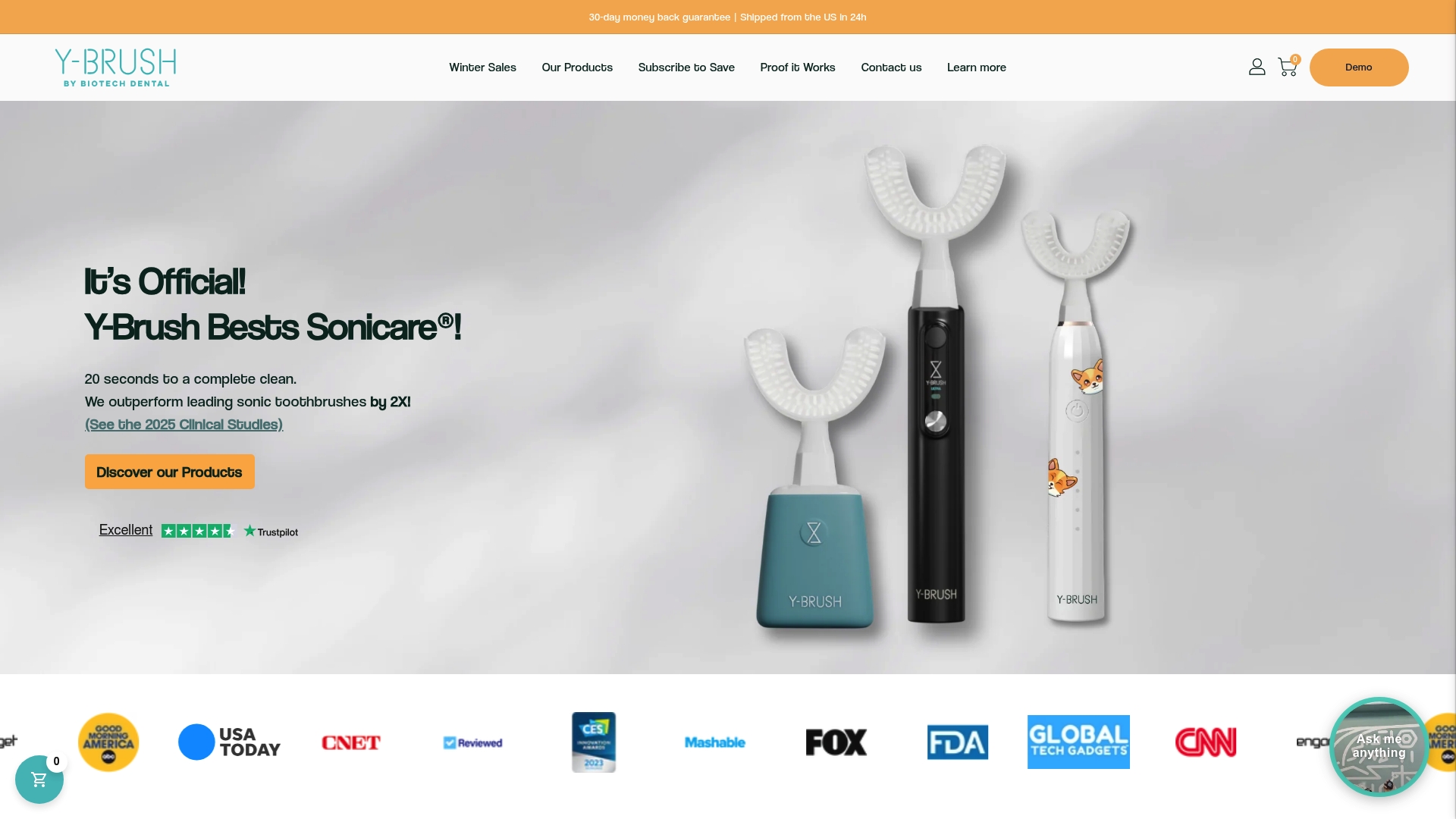 Readers ready to try it can compare the Core Plan, Pro Plan, and Pro+2 Plan and pick the option that matches how often they want replacement heads shipped.

Sources
This article draws on guidance from the ADA, NIDCR, a peer-reviewed network meta-analysis, and the Cleveland Clinic. For anything specific to your mouth, a dentist or hygienist remains the best judge.
This article is general information, not a substitute for advice from a qualified doctor. Consult a qualified healthcare professional about your own circumstances before acting on anything here.
- Oral hygiene | National Institute of Dental and Craniofacial Research (NIDCR)
- A network meta-analysis of interproximal oral hygiene methods in the reduction of clinical indices of inflammation
- Dental Floss/Interdental Cleaners | American Dental Association
- Tartar | Cleveland Clinic
FAQ
Can I scrape off hardened plaque at home?
No. Hardened plaque, known as tartar, bonds to enamel and resists brushing or picking. Attempting to scrape it off risks damaging enamel and gum tissue, and the Cleveland Clinic advises professional removal instead.
What kills plaque and tartar?
Daily brushing with fluoride toothpaste and interdental cleaning control soft plaque before it hardens, following NIDCR’s guidance on twice-daily brushing and daily interdental cleaning. Once plaque hardens into tartar, only a dentist’s scaling instruments remove it.
Can hardened tartar fall off on its own?
Tartar occasionally chips or flakes off in small pieces, but it does not reliably or completely fall away on its own. The Cleveland Clinic notes it typically requires a professional cleaning to fully remove.
What kills plaque naturally without floss?
Interdental brushes and water flossers are the two non-floss tools with the strongest evidence for reducing plaque and gum inflammation, according to a network meta-analysis of interproximal cleaning methods. Consistent daily use matters more than which specific tool you pick, as long as it’s sized and used correctly.


