


TL;DR:
- Attaching brushing to an existing daily cue and using a timed routine help ensure consistency. Most people brush under one minute, so systems that remove friction and establish habits improve regularity. A 20-second sonic routine combined with automatic head delivery makes daily brushing faster and more reliable.
The most reliable way to stick to a brushing schedule is to attach brushing to an existing daily cue, use a timed routine (two full minutes or a 20-second full-mouth sonic routine), and remove friction with automatic replacement-head delivery. That formula works for adults and parents alike.
According to Y-brush internal data, 90% of people brush under the recommended two minutes — most sessions clock in under one minute. The gap between knowing and doing is almost always a systems problem, not a motivation problem.
Start today with three actions:
- Pick one existing daily cue (after your morning shower, before your evening TV show) and commit to brushing right after it.
- Choose a timed routine: two minutes with a quadrant timer, or a 20-second full-mouth sonic session.
- Set up automatic replacement-head delivery so a worn brush never becomes an excuse.
Table of Contents
- What does a reliable brushing schedule actually look like?
- Why do people skip or rush brushing?
- Proven strategies to make brushing a lasting habit
- How do you brush effectively without sacrificing quality?
- Which tools make it easier to stay consistent?
- How do you help children stick to a brushing schedule?
- What should you do if you fall off your brushing schedule?
- Y-brush makes it easier to stay on schedule
- Key Takeaways
- Why the 20-second full-mouth routine deserves more credit than it gets
- Sources and further reading
What does a reliable brushing schedule actually look like?
A solid daily routine is simpler than most people expect. The NHS recommends brushing twice a day with fluoride toothpaste for about two minutes, with the evening session being the most important. The ADA adds that bristles should be replaced regularly, or sooner if they fray.
| Element | Recommendation |
|---|---|
| Brushing frequency | Twice daily (morning + night) |
| Duration | About two minutes total, divided by quadrants |
| Fluoride toothpaste | Suitable fluoride toothpaste for children’s and adults’ needs |
| After acidic food/drink | Wait before brushing to protect enamel |
| Replacement head interval | Replace when bristles fray or after some months |
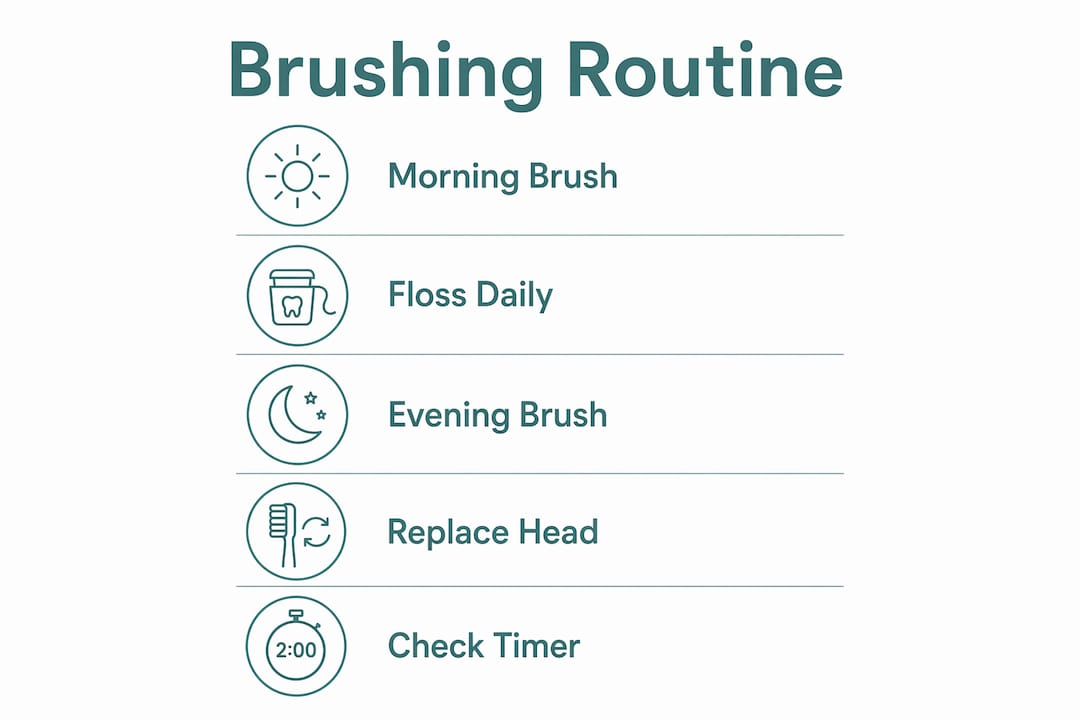
Your daily oral hygiene checklist should include morning brush, floss once daily (evening works well), evening brush, and a quick tongue pass. That’s the complete picture.
Why do people skip or rush brushing?
Most brushing lapses come down to a short list of predictable obstacles. Recognizing yours is the first step to fixing it.
- Forgetfulness. No cue, no habit. Without a trigger tied to an existing routine, brushing simply doesn’t happen.
- Time pressure. Two minutes feels long when you’re running late. This is exactly where a 20-second sonic workflow (like the Y-brush approach) becomes a practical answer for busy mornings.
- Boredom. Standing still for two minutes with nothing to focus on is harder than it sounds, especially for children.
- Unclear technique. When people aren’t sure they’re brushing correctly, motivation drops. Uncertainty breeds avoidance.
- Kids’ resistance. Children resist brushing because it feels imposed, not chosen. Autonomy and novelty change that dynamic quickly.
- Travel friction. Packing a charger, a case, and replacement heads adds enough hassle that routines collapse on the road.
- Enamel concerns after acidic foods. Some people skip brushing after orange juice or coffee because they’ve heard it damages enamel. The right answer is to wait, not skip.
Each barrier has a specific fix. The strategies below address them one by one.
Proven strategies to make brushing a lasting habit
The core formula: habit stacking + a consistent cue + a small initial commitment + a micro-reward. Habits become automatic when tied to existing routines and practiced consistently for 8–12 weeks.
- Choose your cue. Pick something you already do without thinking: finishing your shower, setting your phone on the charger, or sitting down to watch TV. Brushing follows immediately after.
- Pick your timed routine. Two minutes with a quadrant timer covers the clinical standard. If mornings are chaotic, a 20-second full-mouth sonic session keeps the habit alive without breaking your schedule.
- Set visible reminders. A phone alarm labeled “brush now” works. So does placing your toothbrush on your pillow before bed. Make the cue impossible to miss.
- Use accountability. Tell a partner, track a streak in a habit app, or use a simple paper calendar with checkmarks. Visible progress is a powerful motivator.
- Attach a micro-reward. A favorite podcast episode, a skincare step you enjoy, or even just a mental “done” check. Small rewards reinforce the loop.
- Track for 8–12 weeks. Research on habit formation shows this is the window where behaviors shift from deliberate to automatic. Don’t judge the habit before that window closes.
Pro Tip: Use disclosing tablets once a week to stain any remaining plaque and verify your coverage. The visual feedback keeps technique sharp and motivation high — especially useful when the habit feels routine.
For travel, pack a pre-charged brush and a single replacement head in a small case. Reducing the setup time to under 30 seconds removes the most common travel excuse.
How do you brush effectively without sacrificing quality?
Technique determines whether your two minutes (or 20 seconds) actually deliver a clean mouth. The ADA’s proper brushing technique starts with one non-negotiable: place the brush at a 45-degree angle to the gumline, then move in short, tooth-wide strokes across all surfaces.
“Angle the bristles at 45 degrees toward the gumline and brush 30 seconds per quadrant for best plaque removal.” — Dr. Jiang, Harvard Medical School, via Harvard Health
For a standard two-minute session, that breaks down as 30 seconds per quadrant: upper right, upper left, lower right, lower left. Brush outer surfaces, inner surfaces, and chewing surfaces. Finish with a tongue pass.
- After a fast 20-second sonic session, run your tongue across all tooth surfaces. Smoothness signals clean; any gritty texture means a spot was missed.
- Brushing without toothpaste occasionally and feeling for smoothness is a simple self-check that sharpens technique over time.
- If you’ve had coffee, juice, or anything acidic, wait about one hour before brushing. Acid temporarily softens enamel; saliva re-hardens it over time. Brushing too soon accelerates wear.
Many people also overlook common brushing mistakes like pressing too hard or skipping inner surfaces. Gentle pressure and consistent coverage matter more than speed.
Which tools make it easier to stay consistent?
The most effective combination is a timed toothbrush, a visible reminder system, and an automatic replacement-head subscription. Electric toothbrushes and subscription replacement heads reduce both physical and decision friction, making it easier to brush consistently and maintain brush performance.
- Sonic electric toothbrushes with built-in timers remove the need to count or watch a clock. The timer is the habit cue.
- Simple two-minute sand timers or phone alarms work for manual brushers who want a low-tech solution.
- Habit-tracking apps (Streaks, Habitica, or a basic phone reminder) add accountability without complexity.
- Replacement-head subscription plans solve the most overlooked friction point: a worn brush that nobody replaced. Auto-delivery means the brush always performs.
Pro Tip: Place your replacement heads in a visible spot near the sink. When you see a fresh head waiting, you’re far less likely to keep using a frayed one past its effective life.
| Tool | Primary benefit | Recommended cadence |
|---|---|---|
| Sonic toothbrush with timer | Removes counting burden | Daily, twice per day |
| Replacement brush head | Maintains cleaning performance | Every 3 months |
| Habit-tracking app | Builds streak accountability | Daily check-in |
| Disclosing tablets | Visual plaque verification | Weekly or as needed |
For busy professionals, oral care tips that prioritize low-setup tools make the biggest difference in long-term consistency.
How do you help children stick to a brushing schedule?
For ages 2–6, parents should brush for the child. From ages 6–10, supervise and correct. By age 10 and up, encourage independence while still checking in periodically.
- Brush together. Children copy what they see. Modeling the routine is the single most effective teaching tool.
- Use a sticker chart. A seven-day chart with one sticker per successful session gives kids a visible win to work toward.
- Try a two-minute song or timer. A favorite song that runs exactly two minutes turns brushing into something to finish, not endure.
- Let them choose. Picking their own brush color or toothpaste flavor gives children a sense of ownership over the routine.
- Use disclosing tablets for feedback. The colored stain shows kids exactly where they missed, making technique correction feel like a game rather than a correction.
| Age range | Parent role | Replacement head interval |
|---|---|---|
| 2–6 years | Brush for the child | Every 3 months |
| 6–10 years | Supervise and guide | Every 3 months |
| 10–12 years | Encourage independence | Every 3 months |
Pro Tip: The Y-brush KidsBrush is designed for ages 4–12 and delivers a complete clean in 20 seconds, which dramatically reduces the resistance kids show toward longer brushing sessions.
What should you do if you fall off your brushing schedule?
Three steps: acknowledge the lapse without guilt, pick one small action to do tonight, and reset your streak tracker tomorrow morning.
- Accept it and move on. Missing one or two sessions doesn’t undo your progress. All-or-nothing thinking is the habit’s biggest enemy.
- Do one small action tonight. Even a 30-second brush is better than skipping again. Lowering the bar restarts the loop.
- Reset your reminders and check your subscription. A lapse often signals that a cue broke down or a replacement head ran out. Fix the system, not just the behavior.
Next week, rebuild momentum by returning to your original cue and tracking a new seven-day streak. Visible progress after a restart is motivating precisely because it’s earned again.
Pro Tip: Set a recurring monthly calendar reminder to check your replacement head. A worn brush is one of the quietest habit-breakers — you don’t notice the decline until the routine already feels less satisfying.
Y-brush makes it easier to stay on schedule
A 20-second full-mouth clean removes the biggest excuse most people have: no time. Y-brush’s patented Y-shaped brush head covers all tooth surfaces simultaneously via sonic vibrations, delivering a clinically effective clean that fits even the most compressed morning.
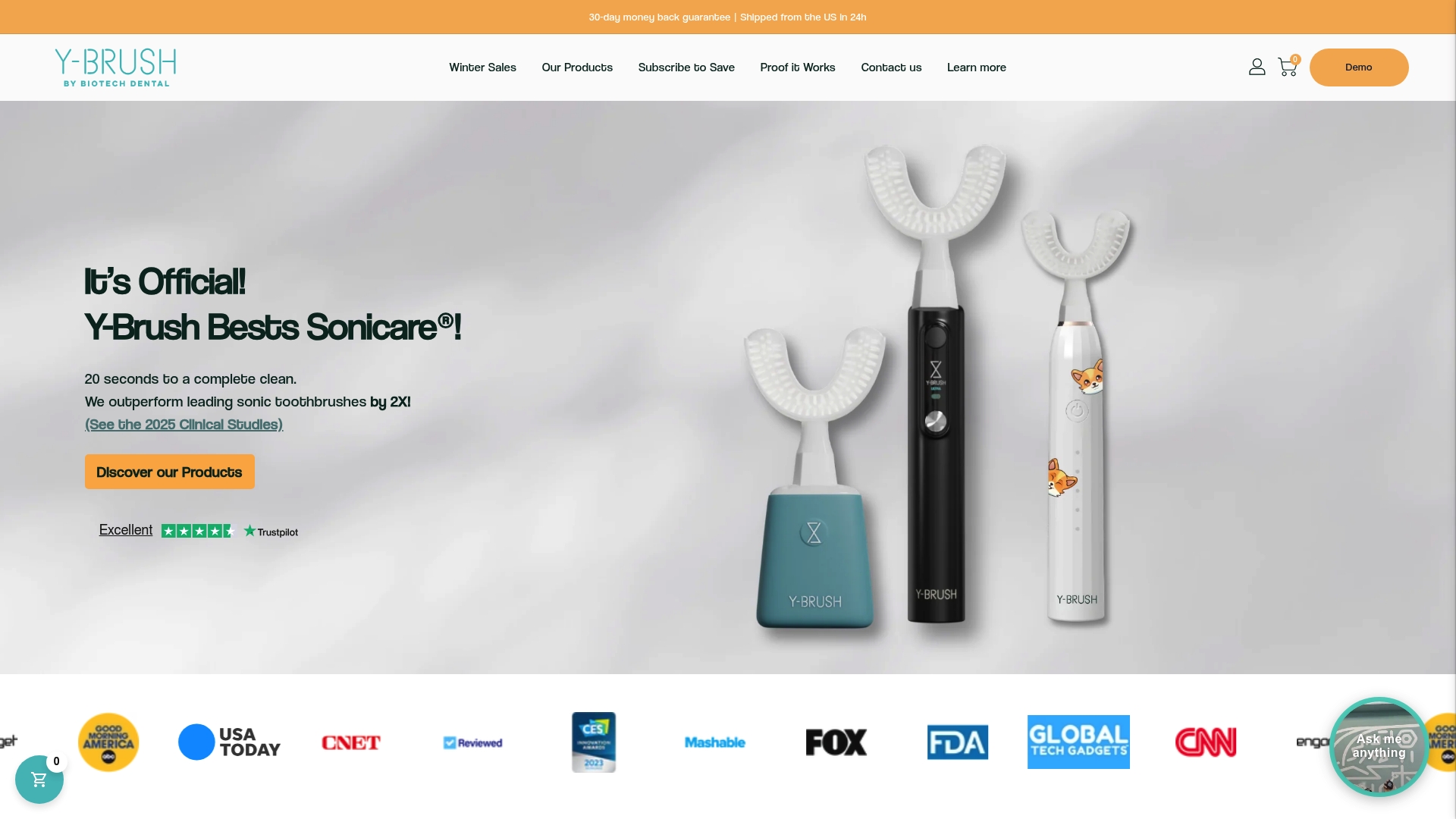
The Y-brush lineup covers every member of the household:
- Y-Brush Essential Sonic Toothbrush — the core adult option for daily use, built around the 20-second workflow.
- Y-Brush KidsBrush Sonic Electric Toothbrush (ages 4–12) — sized and timed for children, making the two-minute resistance problem disappear.
- Y-Brush Ultra Sonic Toothbrush — the premium option for users who want higher performance and faster results.
- Replacement head subscription plans — auto-delivery every three months so the brush always performs at full capacity.
Integrate Y-brush at your existing cue point (after your shower, before bed) and the habit stacks naturally. The subscription handles the one maintenance task most people forget. See the full Y-brush lineup and find the right fit for your routine.
Key Takeaways
Sticking to a brushing schedule comes down to one formula: a consistent cue, a timed routine you’ll actually complete, and a system that removes friction before it becomes an excuse.
| Point | Details |
|---|---|
| The core habit formula | Attach brushing to an existing cue and practice consistently for 8–12 weeks to make it automatic. |
| Recommended duration | Brush twice daily for 2 minutes total, 30 seconds per quadrant, or use a 20-second full-mouth sonic routine. |
| The 90% gap | 90% of people brush under the recommended 2 minutes — a timed brush or sonic option closes that gap. |
| Kids need structure | Ages 2–6 require parent-led brushing; ages 6–10 need supervision; 10+ can build independence. |
| Y-brush reduces friction | The Y-Brush Essential, KidsBrush, and Ultra models deliver a 20-second full-mouth clean with subscription head delivery. |
Why the 20-second full-mouth routine deserves more credit than it gets
Most brushing advice treats two minutes as a moral standard rather than a clinical one. The evidence behind it is real: 30 seconds per quadrant, 45-degree angle, consistent coverage. But the advice ignores a basic behavioral truth. A routine that people actually complete every day outperforms a perfect routine they skip three times a week.
The 20-second full-mouth sonic routine isn’t a shortcut for people who don’t care about their teeth. It’s a systems answer for people whose schedules make two-minute compliance genuinely difficult. When the barrier to entry drops, frequency goes up, and frequency is what drives long-term oral health outcomes. That’s the argument Y-brush is making, and the data on brushing frequency supports it.
The full two-minute routine still has its place: when you have the time, when you’re teaching a child, when you want to verify technique with a disclosing tablet. Use both. Let the fast option keep the habit alive on hard days, and use the longer session to stay sharp on technique. That combination is more durable than either approach alone.
Sources and further reading
- Harvard Health: What’s the right way to brush your teeth? — Dr. Jiang’s 45-degree angle and quadrant timing guidance.
- NIDCR / NIH: Oral Hygiene — disclosing tablet recommendations and general oral hygiene standards.
- Mayo Clinic: Brushing your teeth — how often and when? — guidance on waiting one hour after acidic foods.
- NHS: How to keep your teeth clean — twice-daily brushing and fluoride toothpaste recommendations.
- DentalPedia: Establishing Healthy Oral Hygiene Habits — habit formation timeframe (8–12 weeks) and fluoride cavity-reduction data.
- ADA MouthHealthy: Brushing Your Teeth — proper brushing technique and replacement interval guidance.
- Ringway Dental: Top myths about brushing and flossing debunked — supplemental context on common brushing misconceptions.
- Y-brush — product claims, 20-second workflow data, and subscription plan details.


