


TL;DR:
- Waiting 30 to 60 minutes after acidic foods helps enamel reharden and prevents erosion during brushing. If you cannot wait, rinsing with water or chewing sugar-free gum neutralizes acid and protects teeth. Proper technique and timing are essential for long-term enamel health and cavity prevention.
After acidic foods or drinks, wait 30–60 minutes before brushing. For a neutral meal like a sandwich or pasta, a shorter wait is acceptable, though brushing immediately is rarely necessary. If you can’t wait at all, rinse with plain water or chew sugar-free gum to neutralize acid and clear debris until it’s safe to brush.
- Wait after soda, citrus juice, coffee, sports drinks, or fruit before brushing
- Rinse with water (swish for 20–30 seconds) as your first move when brushing isn’t possible
- Chew sugar-free gum with xylitol to stimulate saliva and help restore mouth pH
- Brush for two full minutes using a soft-bristled brush and fluoride toothpaste, or use Y-brush’s 20-second sonic clean when time is tight (note: the two-minute duration aligns with professional guidelines).
The ADA recommends brushing at least twice daily using a fluoride toothpaste to reduce plaque and caries risk effectively.
Table of Contents
- Why timing matters for enamel protection
- How long should you wait? A food-by-food guide
- What to do right after eating when you can’t brush
- Step-by-step brushing technique after a meal
- Tools that make post-meal cleaning practical
- Special cases where standard advice isn’t enough
- Key Takeaways
- The case for protecting enamel before it’s gone
- Y-brush makes the 20-second clean worth taking seriously
- Useful sources
Why timing matters for enamel protection
Every time you eat or drink something acidic, the pH in your mouth drops. That temporary acid challenge softens the mineral surface of enamel through a process called demineralization. Saliva gradually neutralizes the acid and allows enamel to reharden, but that process takes time. Brushing during the softened window doesn’t just remove plaque; it can physically scrub away enamel that hasn’t had a chance to recover.
“After acidic foods or drinks, saliva needs time to neutralize mouth pH and allow enamel to reharden. Brushing too soon can increase enamel wear — dental guidance consistently recommends waiting roughly 30–60 minutes after acidic exposure before brushing.” — Mayo Clinic
Dentists and major dental organizations align on this point. The concern isn’t a single brushing session; it’s the cumulative enamel loss that builds over months and years of brushing at the wrong moment. Protecting enamel now means fewer sensitivity issues and less erosion down the road.
How long should you wait? A food-by-food guide
The recommended wait time before brushing depends on the acidity of your meal or drink. Highly acidic foods and drinks require a longer wait, while neutral foods require less time before brushing. Water or milk can be brushed immediately after without waiting.
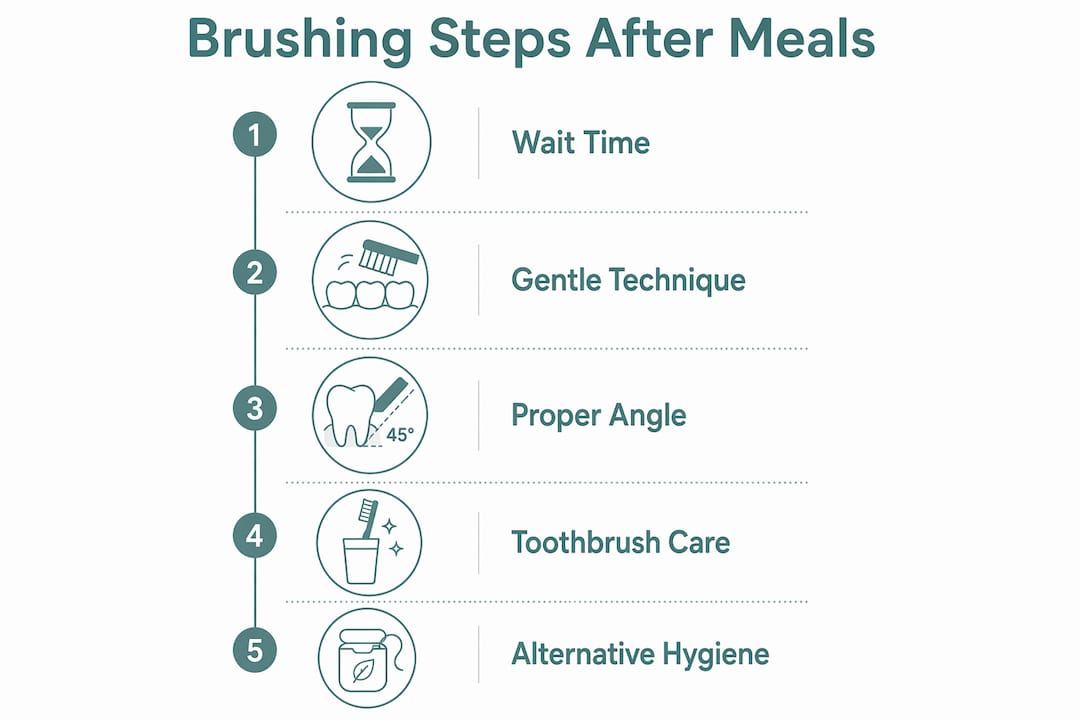
A few factors can shift these ranges. Frequent sipping of acidic drinks throughout a meal extends the acid exposure window, so the clock resets with each sip. High sugar content adds a bacterial acid load on top of the dietary acid. Readers with naturally thinner enamel or existing sensitivity should lean toward the longer end of each range.
The guidance from Dentaly reinforces this conservative approach: waiting after acidic or sugary food, brushing gently, and spitting rather than rinsing are the three behaviors that protect enamel most consistently.
What to do right after eating when you can’t brush
Brushing isn’t always possible at lunchtime or right after a snack. That’s fine. A few evidence-backed steps keep your mouth in good shape until you can brush properly.
- Rinse with plain water. Swish vigorously to dilute acid, raise mouth pH, and dislodge loose food particles. It won’t replace brushing, but it meaningfully reduces the acid load on enamel.
- Chew sugar-free gum. Look for gum containing xylitol. Chewing stimulates saliva flow, which is your mouth’s natural acid buffer. Aim for two to five minutes of chewing after eating. Avoid gum with sugar, which feeds the bacteria that produce more acid.
- Skip vigorous brushing. If you do brush before the wait time is up, use the lightest possible pressure. Aggressive scrubbing on softened enamel causes the most damage.
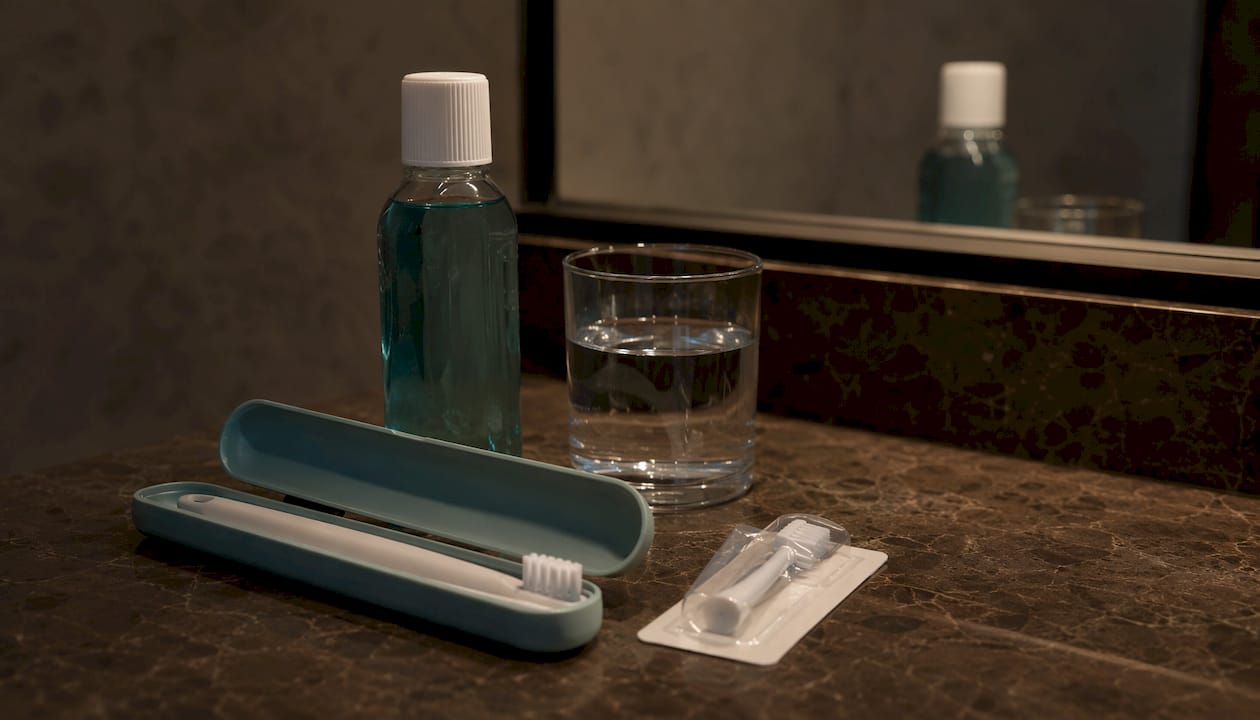
Pro Tip: Keep a small bottle of fluoride mouth rinse and a travel toothbrush at your desk or in your bag. Using a fast oral care routine at work is far easier when the tools are already there.
The FDI consensus on toothbrushing confirms that a plain-water rinse is a practical, evidence-supported bridge when brushing isn’t immediately available.
Step-by-step brushing technique after a meal
Once you’ve waited the appropriate time, follow these steps for a clean that protects enamel and delivers fluoride where it counts.
- Rinse first (optional). If you haven’t already, swish with water to clear loose debris before you start.
- Load a soft-bristled brush. Apply a pea-sized amount of fluoride toothpaste. Soft bristles are non-negotiable after eating; medium or hard bristles increase abrasion risk on enamel that may still be recovering.
- Angle at 45° toward the gumline. Position bristles where the tooth meets the gum. This is where plaque and calculus accumulate most. According to Harvard Health, the bristles should never be perpendicular to the tooth surface.
- Use gentle circular motions. Small, controlled circles move debris up and away from the gumline without pressing hard into enamel.
- Brush for two full minutes. Divide your mouth into four quadrants — upper left, upper right, lower left, lower right — and spend 30 seconds on each. If two minutes feels long, Y-brush’s Y-shaped sonic head covers all surfaces simultaneously in 20 seconds.
- Brush your tongue. Bacteria collect on the tongue surface and contribute to plaque and odor. A few gentle passes clear them effectively.
- Spit, don’t rinse. This is one of the most overlooked steps. The FDI consensus is clear: spitting out excess toothpaste and avoiding an immediate water rinse preserves fluoride concentration on the tooth surface, supporting remineralization.
- Floss at least once daily. Brushing cleans tooth surfaces; floss reaches the contact points between teeth where a brush can’t go.
Pro Tip: Replace your toothbrush or brush head every three to four months, or sooner if bristles are splayed. Worn bristles lose their ability to maintain the 45° angle and clean the gumline effectively.
The ADA’s brushing guidance supports soft bristles and proper angulation as the two most critical technique variables for consistent plaque removal.
Tools that make post-meal cleaning practical
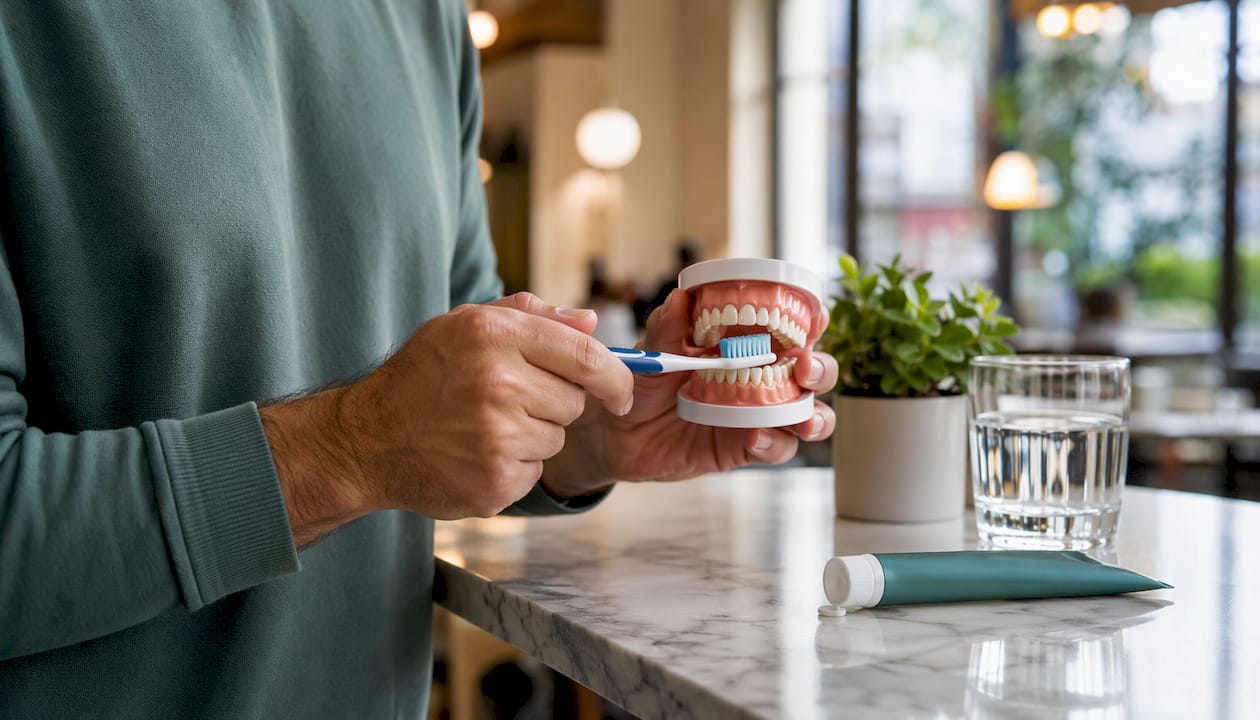
The right equipment makes it easier to follow through on good habits, especially when you’re busy.
- Soft-bristled electric toothbrush. Sonic-powered brushes maintain consistent motion and help users hold the recommended 45° angle without thinking about it. The ADA notes that sonic and Y-shaped heads deliver effective full-mouth cleaning when paired with correct technique.
- Y-brush. Y-brush’s patented Y-shaped sonic head covers all tooth surfaces at once, completing a full clean in 20 seconds. For readers who struggle to fit a two-minute session into a busy day, this is a practical, technique-aligned option. Disclosure: Y-brush is the publisher of this article. Learn more about sonic toothbrush technology and how it supports efficient cleaning.
- Travel-size fluoride toothpaste. A small tube in your bag means you’re never without the most important ingredient in post-meal care.
- Floss picks. Single-use picks are faster to use than traditional floss for on-the-go cleaning between teeth.
- Portable fluoride mouth rinse. Use it at a separate time from brushing (not immediately after) to add a fluoride boost without washing away the toothpaste fluoride you just applied.
Pro Tip: For oral care tips built around a busy schedule, a consistent 20-second sonic routine beats an inconsistent two-minute one every time.
Special cases where standard advice isn’t enough
Most people can follow the guidance above without issue. A few situations call for a more tailored approach.
- Severe enamel erosion. If a dentist has already identified significant erosion, standard fluoride toothpaste may not be sufficient. Prescription-strength fluoride or protective varnish applications may be recommended.
- Recent dental work. Crowns, veneers, bonding, and composite restorations require specific care instructions from your dentist. Abrasive toothpaste or aggressive brushing near restoration margins can cause premature wear.
- Implant-supported restorations. Cleaning around implants and implant-supported arches requires specialized technique. A detailed implant maintenance checklist can help you understand what’s different about caring for these restorations.
- Active tooth sensitivity. Sensitivity that persists after meals or during brushing may signal exposed dentin or enamel loss. A dentist can identify the cause and recommend desensitizing treatments.
- Frequent acid reflux or GERD. Stomach acid reaching the mouth is far more erosive than dietary acid. People with reflux should discuss a protective protocol with their dentist before applying standard post-meal brushing advice.
- Disordered eating history. Repeated exposure to stomach acid from purging causes rapid enamel loss. Dental management in these cases requires coordination with a healthcare provider.
If any of these apply to you, schedule a dental visit and mention your post-meal brushing habits specifically. Your dentist can assess your enamel condition and recommend a protocol suited to your situation.
Key Takeaways
Waiting 30–60 minutes after acidic foods before brushing is the single most protective habit you can build for long-term enamel health.
| Point | Details |
|---|---|
| Wait after acidic foods | Allow 30–60 minutes after soda, citrus, coffee, or wine before brushing to let enamel reharden. |
| Act immediately with water or gum | Rinse with plain water for 20–30 seconds or chew sugar-free xylitol gum when brushing must wait. |
| Use correct technique | Angle bristles at 45°, use gentle circles, brush for two minutes, or use Y-brush’s effective 20-second routine with proper technique, and spit without rinsing afterward. |
| Spit, don’t rinse | Skipping the post-brush rinse preserves fluoride on the tooth surface and supports remineralization. |
| Y-brush for time-pressed routines | Y-brush’s Y-shaped sonic head delivers a full clean in 20 seconds, aligned with the 45° technique principle, and is validated as an effective alternative to the two-minute standard. |
The case for protecting enamel before it’s gone
Most brushing advice focuses on frequency, and frequency matters. But the timing question after meals is where a lot of well-intentioned habits quietly cause damage. Brushing right after a glass of orange juice or a soda feels productive. It isn’t. The acid has already softened the enamel surface, and the brush does the erosion’s work for it.
The practical reality is that most people won’t wait a full hour after every meal. That’s fine. A water rinse takes ten seconds. Sugar-free gum fits in a pocket. These aren’t compromises; they’re smart interim steps that keep enamel safe until brushing is appropriate. And when you do brush, the technique details — the 45° angle, the light pressure, the “spit, don’t rinse” rule — are what separate a session that actually protects teeth from one that just feels like it does.
Y-brush makes the 20-second clean worth taking seriously
Knowing the right brushing steps after meals is one thing. Having a tool that makes following through realistic is another. Y-brush’s Y-shaped sonic head covers every tooth surface simultaneously, delivering a complete, plaque-removing clean in 20 seconds. That’s not a shortcut; it’s a design built around how people actually live.
The technique principles in this article — 45° coverage, consistent sonic contact, soft bristle pressure — are built into how Y-brush works. For adults who skip brushing because two minutes feels impossible after lunch, or parents trying to build a consistent routine for their kids, Y-brush offers a practical, enamel-safe option. Disclosure: Y-brush is the publisher of this article and sells the product described. See the Y-brush Essential Sonic Toothbrush for full product details and ordering information.
Useful sources
- Mayo Clinic — Brushing your teeth: How often and when? — Primary clinical source for wait-time guidance and enamel remineralization science.
- American Dental Association — Home Oral Care — ADA guidance on brushing frequency and the two-minute benchmark.
- American Dental Association — Toothbrushes — ADA recommendations on bristle type, brush selection, and sonic/electric options.
- FDI Consensus on Toothbrushing (Chairside Guide) — International dental federation consensus on “spit, don’t rinse,” fluoride retention, and interim measures.
- Harvard Health — What’s the right way to brush your teeth? — Clinician-reviewed technique guidance including the 45° angle and circular motion method.
- Dentaly — How to brush your teeth properly — Consumer-facing guide aligning with professional technique and post-meal timing advice.
- ABC News — What dentists say about brushing before or after breakfast — Clinician perspectives on meal timing and when waiting is most critical.


