


Most people know they should brush for two full minutes, yet 90% fall short, averaging under a minute per session. This gap between knowledge and practice leads to preventable plaque buildup, gingivitis, and cavities. You’re busy, and fitting effective oral care into your packed schedule feels impossible. The good news? An efficient brushing workflow can deliver superior results without adding time to your routine. This guide shows you exactly how to prepare, execute, and verify your brushing technique using evidence-based methods and smart tools that fit seamlessly into your life.
Table of Contents
- Preparing For Efficient Brushing: Tools And Setup
- Executing The Brushing Workflow Step-By-Step
- Troubleshooting Common Brushing Mistakes And How To Avoid Them
- Verifying Results And Maintaining Your Efficient Brushing Routine
- Explore Efficient Brushing Solutions With Y-Brush
- Frequently Asked Questions About Efficient Brushing Workflow
Key takeaways
| Point | Details |
|---|---|
| Electric brushes deliver better results | Oscillating-rotating brushes reduce plaque by 11-21% and gingivitis by 6-11% compared to manual options. |
| Two minutes twice daily is essential | Proper technique at a 45-degree angle for the full duration ensures comprehensive plaque removal regardless of brush type. |
| Technology enhances efficiency | Timers, apps, and quadrant pacers help you maintain coverage and duration without guesswork or clock-watching. |
| Workflow optimization saves time | Structured preparation, execution, and verification steps improve outcomes while fitting naturally into busy schedules. |
Preparing for efficient brushing: tools and setup
Before you start brushing, gathering the right tools transforms a rushed routine into an effective one. Your toothbrush choice matters significantly. Oscillating-rotating electric toothbrushes outperform manual options in clinical studies, making them ideal for time-conscious individuals seeking maximum impact. These brushes use rapid back-and-forth movements combined with rotation to disrupt plaque more thoroughly than manual bristles can achieve.
Pair your brush with fluoride toothpaste, the gold standard recommended by dental professionals for strengthening enamel and preventing decay. Skip trendy charcoal or whitening formulas during your daily routine; save those for occasional use. Fluoride delivers proven cavity protection that alternative ingredients can’t match.
Technology amplifies efficiency. Brushing timers, whether built into your electric toothbrush or downloaded as smartphone apps, eliminate the need to estimate duration. Many electric models include quadrant pacers that vibrate every 30 seconds, signaling when to move to the next section of your mouth. This feature ensures even coverage without mental tracking.
Set up your brushing area strategically. Keep toothbrush, toothpaste, floss, and mouthwash within arm’s reach on your bathroom counter. Eliminate distractions by closing the door and silencing notifications. A dedicated, organized space reduces friction and makes the routine automatic.
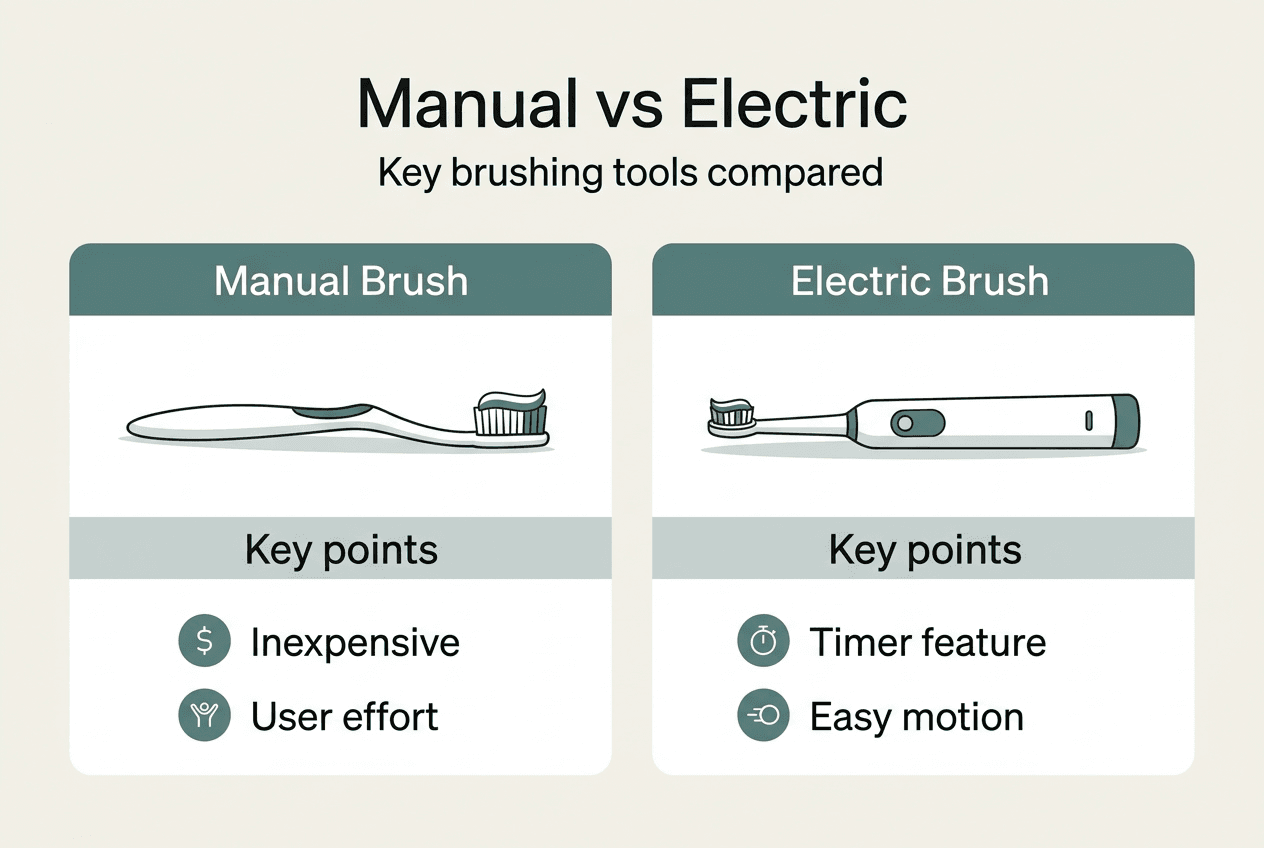
Comparison: Manual vs oscillating-rotating electric toothbrush
| Feature | Manual Toothbrush | Oscillating-Rotating Electric |
|---|---|---|
| Plaque removal | Baseline effectiveness | 11-21% more effective |
| Gingivitis reduction | Standard results | 6-11% better outcomes |
| Technique dependency | Requires precise manual motion | Automated movement aids consistency |
| Cost | Low upfront, ongoing replacement | Higher initial, similar long-term |
| Portability | Highly portable | Requires charging, less portable |
For readers curious about manual vs sonic toothbrush comparison, oscillating-rotating models consistently show superior plaque and gingivitis control in peer-reviewed research.
Pro Tip: Invest in an electric brush with a built-in two-minute timer and 30-second quadrant alerts. These features eliminate guesswork and ensure you’re hitting every zone without checking your phone or counting in your head.
Executing the brushing workflow step-by-step
With your tools ready, execution becomes straightforward. Follow this systematic approach to maximize cleaning efficiency while respecting your time constraints.
-
Wet your brush and apply a pea-sized amount of fluoride toothpaste. Too much paste creates excessive foam that can make you feel finished before you actually are. A small amount provides adequate fluoride coverage without overwhelming your mouth.
-
Start with outer tooth surfaces, positioning bristles at a 45-degree angle to your gumline. This angle allows bristles to clean both the tooth surface and the critical gum pocket where plaque accumulates. If using an electric brush, let the oscillations do the work; don’t scrub back and forth.
-
Move methodically through each quadrant: upper right, upper left, lower left, lower right. Spend 30 seconds per section. Oscillating-rotating brushes in Daily Clean mode significantly reduce gingival inflammation within just one week when used with proper technique. Use gentle pressure; the brush’s motion, not force, removes plaque.
-
Transition to inner tooth surfaces using the same 45-degree approach. These areas often get neglected because they’re harder to see and reach. Tilt the brush vertically for front teeth if needed. Then address chewing surfaces with the brush perpendicular to the tooth, ensuring bristles reach into grooves where food particles hide.
-
Maintain the full two-minute duration using your timer or app. Brushing at a 45-degree angle for two minutes twice daily remains essential regardless of brush type. Cutting sessions short sacrifices effectiveness, leaving plaque behind to harden into tartar.
Consistency matters more than perfection. Following the same sequence every time builds muscle memory, reducing the mental effort required and making the routine feel automatic rather than burdensome.
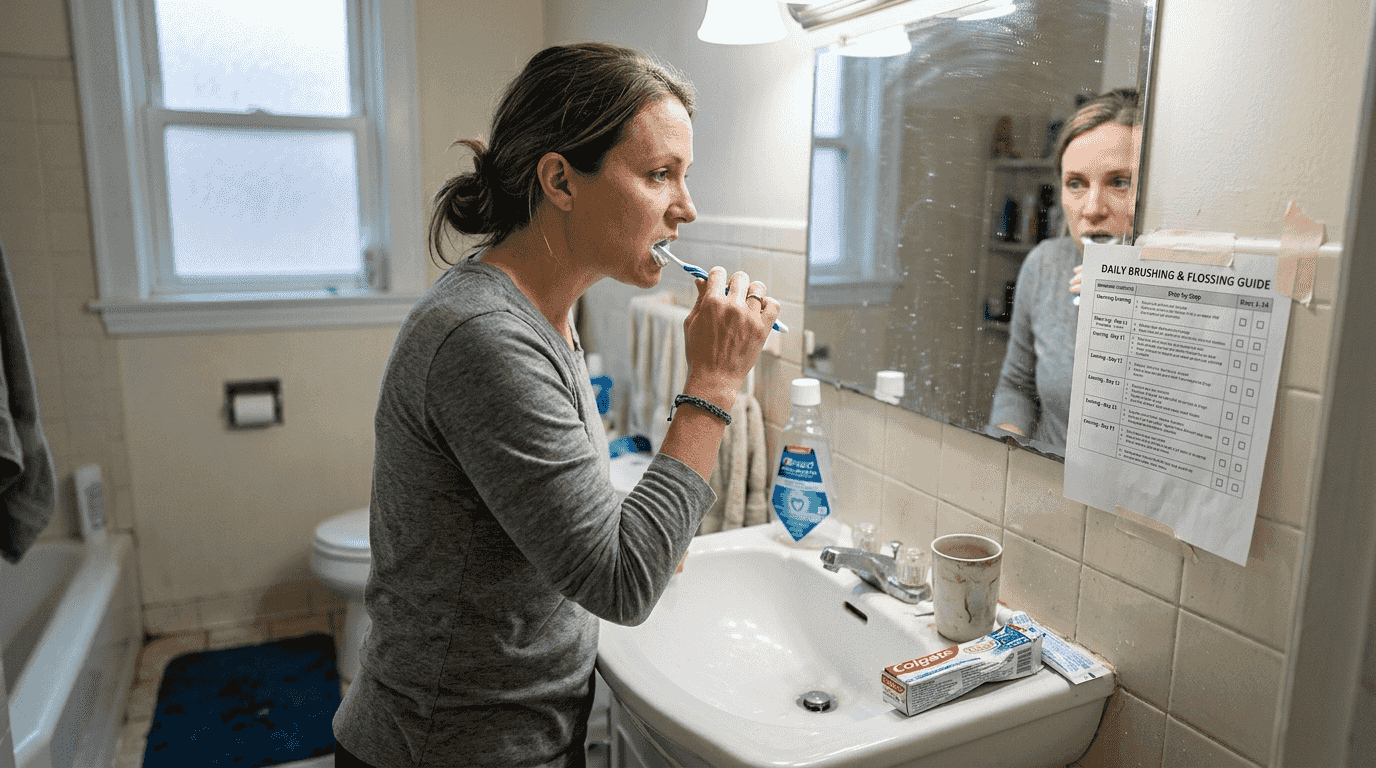
For detailed guidance on angle and motion, explore how to master brushing techniques for optimal coverage. The steps for efficient brushing break down each phase with visual clarity.
Pro Tip: Download a brushing app like Brush DJ to add music and quadrant pacing to your routine. The app plays a two-minute song and signals when to switch zones, making the process feel less tedious and more engaging.
Troubleshooting common brushing mistakes and how to avoid them
Even with the right tools and technique, common errors undermine results. Recognizing and correcting these pitfalls ensures your workflow delivers maximum benefit.
Rushing remains the most frequent mistake. When you cut sessions to 60 or 90 seconds, you leave plaque behind that hardens into tartar within 24 to 72 hours. Tartar requires professional removal and contributes to gum disease. Commit to the full two minutes by using a timer; there’s no shortcut that maintains effectiveness.
Skipping inner surfaces and gumlines creates hidden problem areas. These zones accumulate bacteria rapidly because they’re harder to clean and often forgotten. Make a conscious effort to angle your brush toward the gumline on every tooth, not just the visible front surfaces.
Applying excessive pressure damages gums and wears down enamel over time. You might think harder scrubbing equals better cleaning, but it actually causes recession and sensitivity. With electric brushes, the oscillations handle the work; your job is gentle guidance. Many models include pressure sensors that alert you when you’re pushing too hard.
Neglecting to replace brush heads every three months reduces cleaning power. Frayed, worn bristles can’t effectively disrupt plaque and may harbor bacteria. Set a calendar reminder or subscribe to automatic replacement deliveries to maintain optimal performance.
The best toothbrush is the one you can use correctly, confidently, and consistently.
This wisdom highlights that technique and adherence matter more than equipment alone. An expensive electric brush used incorrectly delivers worse results than a manual brush used properly.
- Check your pressure: If your gums bleed regularly or feel tender, you’re likely brushing too hard. Ease up and let the bristles glide rather than dig.
- Audit your coverage: Run your tongue over your teeth after brushing. Smooth surfaces indicate thorough cleaning; rough or fuzzy spots reveal missed areas.
- Track your time honestly: Don’t estimate; use a timer every session until two minutes feels natural.
For comprehensive error prevention, review how to avoid common brushing mistakes with specific fixes for each issue.
Verifying results and maintaining your efficient brushing routine
Verification ensures your workflow delivers real improvements rather than just going through motions. Tracking progress and maintaining motivation prevent backsliding into rushed, ineffective habits.
Modern technology makes verification simple. Brushing apps like Brush DJ provide session summaries showing duration, coverage, and consistency over time. Using apps significantly improves plaque index scores, especially for individuals with braces or other dental appliances. These tools transform abstract recommendations into concrete, measurable actions.
Many premium electric toothbrushes connect to smartphone apps via Bluetooth, offering real-time feedback on pressure, missed zones, and brushing patterns. This data reveals blind spots you might not notice otherwise, allowing targeted improvement.
Regular dental visits provide professional verification. Your hygienist can assess plaque levels, gum health, and cavity development, confirming whether your home routine achieves clinical standards. Schedule cleanings every six months and ask specific questions about areas needing attention.
Brushing assessment methods comparison
| Method | Benefits | Limitations |
|---|---|---|
| Self-assessment (tongue test) | Immediate, no cost, builds awareness | Subjective, misses hidden areas |
| Brushing apps | Objective tracking, trend analysis, reminders | Requires smartphone, learning curve |
| Professional dental exams | Expert evaluation, comprehensive health check | Only biannual, delayed feedback |
| Smart toothbrush sensors | Real-time guidance, personalized insights | Higher cost, device dependency |
Maintaining habits requires intentional systems. Set smartphone alerts for morning and evening brushing times. Place your toothbrush in a visible location that triggers the routine automatically. Link brushing to existing habits like morning coffee or bedtime reading; this association strengthens consistency.
Reward systems work surprisingly well for adults. After 30 consecutive days of two-minute sessions, treat yourself to something meaningful. Tracking streaks in an app provides visual motivation and a sense of accomplishment.
Consult your oral hygiene checklist regularly to ensure you’re covering all essential elements beyond brushing, including flossing and rinsing.
Pro Tip: Enable daily smartphone notifications at your chosen brushing times with a simple message like “2-minute clean.” This gentle prompt prevents forgetting during hectic days and reinforces the habit until it becomes automatic.
Explore efficient brushing solutions with Y-Brush
Implementing an efficient workflow becomes even easier with tools designed specifically for busy lifestyles. Y-Brush offers electric toothbrushes engineered to deliver superior cleaning in minimal time, perfectly aligned with the techniques covered in this guide.
The Y-Brush Essential Sonic Toothbrush provides powerful sonic technology with built-in timers and multiple cleaning modes. It’s ideal for individuals seeking proven plaque removal without complexity. The Y-Brush Ultra Sonic Toothbrush takes efficiency further with advanced pressure sensors, extended battery life, and premium brush heads designed for thorough gumline cleaning.
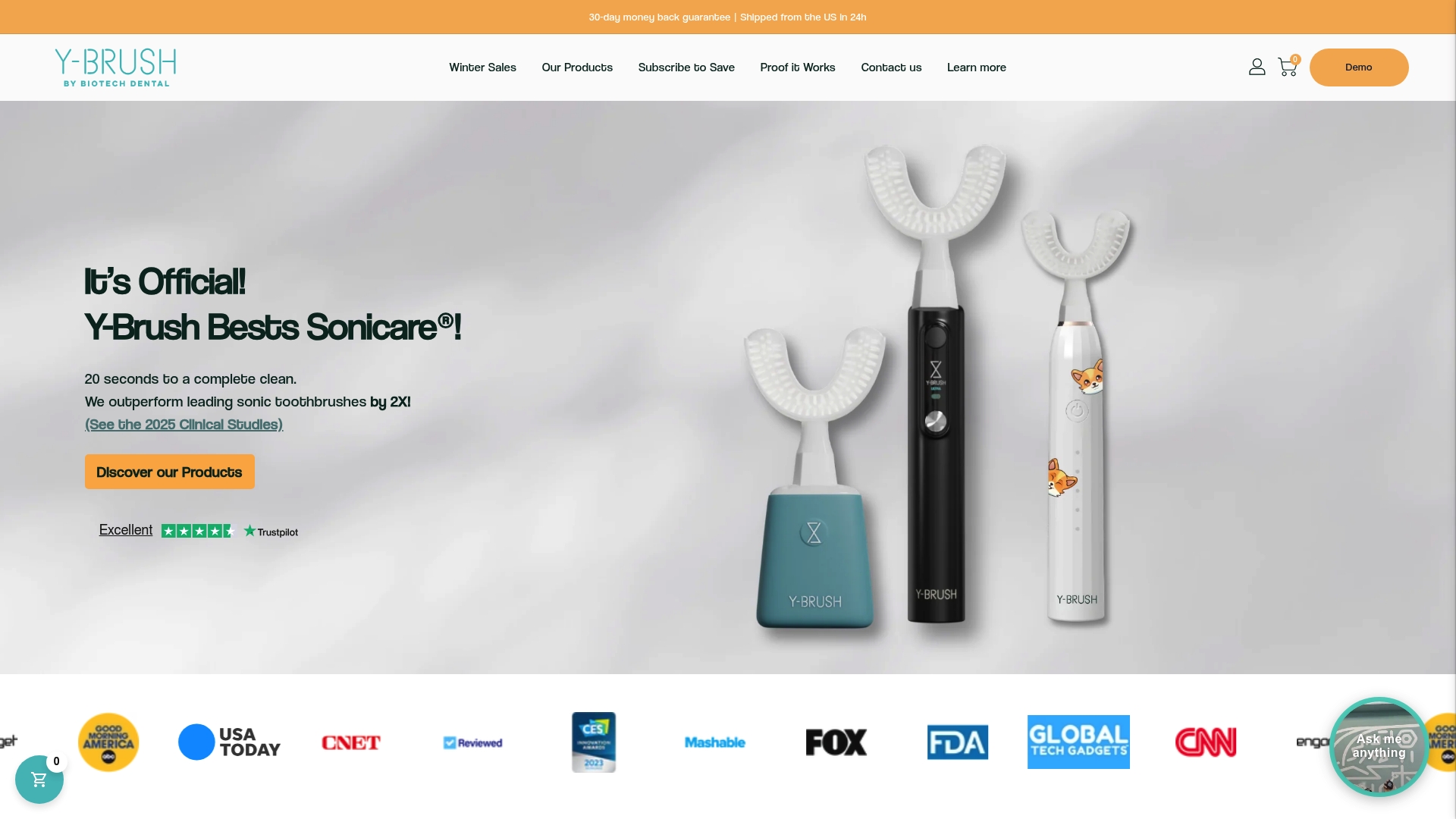
Both models integrate seamlessly into the workflow outlined above, with features that eliminate guesswork and ensure consistent two-minute sessions. Ergonomic handles reduce hand fatigue, making proper technique easier to maintain throughout the full duration.
Y-Brush membership plans deliver replacement brush heads automatically every three months, removing another barrier to optimal oral health. Members receive exclusive benefits including priority support and product discounts, making long-term maintenance effortless.
- Built-in two-minute timers with 30-second quadrant alerts
- Multiple intensity settings for personalized comfort
- Rechargeable batteries lasting up to two weeks per charge
- Compact travel cases for maintaining routines away from home
- Compatible with various brush head styles for specific needs
These features support every phase of your efficient brushing workflow, from preparation through verification, helping you achieve healthier teeth without adding time to your day.
Frequently asked questions about efficient brushing workflow
How long should my efficient brushing take each session?
Each session should last exactly two minutes, twice daily. This duration allows adequate time to thoroughly clean all tooth surfaces, gumlines, and hard-to-reach areas. Using a timer eliminates guesswork and ensures you’re not cutting sessions short, which leaves plaque behind to harden into tartar.
Can I use manual brushes with this workflow effectively?
Yes, manual brushes work with this workflow if you maintain proper technique and duration. However, oscillating-rotating electric brushes reduce plaque by 11-21% more effectively than manual options. For maximum efficiency with minimal effort, electric brushes offer clear advantages, especially for busy individuals.
What if I have limited dexterity or arthritis?
Electric toothbrushes significantly reduce the physical effort required for effective cleaning. The automated oscillations handle the scrubbing motion, so you only need to guide the brush along your teeth. Look for models with wider, ergonomic handles that are easier to grip. Consult optimal brushing techniques for adaptive strategies.
How do apps help with efficient brushing?
Brushing apps provide timers, quadrant pacing, and session tracking that ensure consistent two-minute cleanings. Apps like Brush DJ improve plaque index scores by making the routine more engaging and measurable. They transform an abstract recommendation into concrete, trackable behavior, increasing adherence and effectiveness.
When should I replace my electric toothbrush head?
Replace brush heads every three months or sooner if bristles appear frayed or discolored. Worn bristles lose their cleaning effectiveness and may harbor bacteria. Many electric toothbrushes feature indicator bristles that fade when replacement is needed. Setting a quarterly calendar reminder or subscribing to automatic deliveries ensures you never miss this critical maintenance step.
How can I avoid missing spots during my routine?
Follow the same quadrant sequence every session to build muscle memory. Start upper right, move to upper left, then lower left, and finish lower right. Use your tongue to check for smooth surfaces immediately after brushing; rough or fuzzy areas indicate missed spots. Review common brushing mistakes to identify and correct coverage gaps.


