


Protecting enamel comes down to two moves: cut how often your teeth face acid, and give saliva what it needs to remineralize enamel between exposures. Fluoride reinforces that process; timing and diet decide how much repair work saliva actually gets to do.
Start with this checklist today:
- Brush twice daily with a fluoride (or nano-hydroxyapatite) toothpaste, and spit rather than rinse afterward.
- Wait at least 30 minutes before brushing after anything acidic, like soda, citrus, or wine.
- Chew sugar-free gum with xylitol for about 20 minutes after meals to restart saliva flow.
- Bundle sugary or acidic foods into mealtimes instead of grazing on them throughout the day.
- Keep your twice-yearly dental checkup, and go sooner if you notice new sensitivity or visible pitting.
If you already see translucent edges on your front teeth, sudden cold sensitivity, or a rough spot on a molar, that is your enamel telling you something changed. See a dentist before it changes further.
Key Takeaways
Protecting enamel requires reducing acid frequency, supporting saliva production, using fluoride correctly, and treating underlying medical or lifestyle risk factors together, not in isolation.
| Point | Details |
|---|---|
| Reduce exposure frequency | Bundle acidic and sugary foods into mealtimes instead of grazing throughout the day. |
| Time your brushing | Wait 30 to 60 minutes after acidic food or drink before brushing to avoid abrading softened enamel. |
| Stimulate saliva after meals | Chew xylitol gum for about 20 minutes to restart your mouth’s natural buffering and mineral delivery. |
| Watch for warning signs | New sensitivity, pitting, or visible color change means it’s time to see a dentist, not wait it out. |
| Support the routine with the right tools | A consistent brushing habit, like the 20-second routine from Y-brush, paired with fluoride toothpaste helps you stay on top of the mechanical side of enamel care. |
Table of Contents
- How to Protect Enamel Starts With Understanding What It Actually Is
- What Causes Enamel Loss and the Signs That Tell You It’s Happening
- A Daily Routine That Actually Protects and Strengthens Enamel
- Which Products Actually Help, and What to Check on the Label
- When to See a Dentist and What Professional Treatments Look Like
- Why Saliva Is Your Best Natural Defense Against Erosion
- Medical Conditions and Habits That Quietly Erode Enamel
- Consistency Beats Intensity When It Comes to Enamel
- A Faster Way to Make Your Brushing Routine Stick
- Sources
How to Protect Enamel Starts With Understanding What It Actually Is
Enamel is the hard, mineralized outer layer covering each tooth, and it exists for one job: shielding the softer dentin and the nerve-rich pulp underneath from mechanical wear, temperature, and acid. It’s the hardest substance your body produces, but hardness isn’t the same as invincibility.
Here’s the fact that should drive every decision in this article: enamel cannot regenerate. Unlike skin or bone, it has no living cells once it forms, so once a section wears away or dissolves, it’s gone for good. What can happen, though, is remineralization of early, microscopic damage, where minerals redeposit into the enamel surface before a visible lesion or cavity forms.
Two things make that repair possible. Saliva buffers acid and delivers calcium and phosphate back to the tooth surface, acting as your mouth’s built in defense system around the clock. Topical fluoride, whether from toothpaste, a rinse, or a dentist’s varnish, speeds that same mineral deposition and makes the resulting enamel more acid resistant than it was before. Prevention and early intervention are the only tools you have, because there’s no do over once the damage sets in.
What Causes Enamel Loss and the Signs That Tell You It’s Happening
Most enamel erosion traces back to a short list of repeat offenders, and recognizing them is half the battle.
- Acidic foods and drinks: soda, citrus fruit, wine, sports drinks, and vinegar-based dressings soften enamel on contact.
- Frequent sugar exposure: oral bacteria convert sugar into acid, and the more often you snack, the longer your mouth sits in an acidic state.
- GERD or frequent vomiting: stomach acid is far stronger than anything in your diet and is a documented driver of erosion.
- Dry mouth: certain medications, radiation treatment, and simple mouth breathing all reduce saliva, removing your main buffering defense.
- Bruxism: nighttime or stress-related grinding wears enamel down mechanically, independent of diet.
- Abrasive brushing or chewing hard objects: pressing too hard with a stiff brush, or habitually chewing ice or pen caps, physically scrapes enamel away.
Watch for these signs of enamel already in trouble: sensitivity to hot, cold, or sweet foods that wasn’t there before; teeth that look slightly translucent or grayish at the edges; pitting or a rough, uneven texture you can feel with your tongue; and yellowing or faster staining, since thinning enamel exposes the more yellow dentin beneath it.
A little sensitivity after a cold drink is normal. Sudden, sharp sensitivity, a visible chip, a new pit, or teeth that seem to be changing color quickly are not. Book a dental visit rather than waiting to see if it resolves on its own.
A Daily Routine That Actually Protects and Strengthens Enamel
The core routine hasn’t changed much in decades, but the timing details are where most people get it wrong. Brush twice a day with a fluoride or nano-hydroxyapatite toothpaste, floss once daily, and keep your twice-yearly dental checkup on the calendar. The habit that quietly matters most, though, is what dentists call “spit, don’t rinse”: after brushing, spit out excess toothpaste but skip the water rinse, since that extends fluoride’s contact time with enamel and measurably improves remineralization.
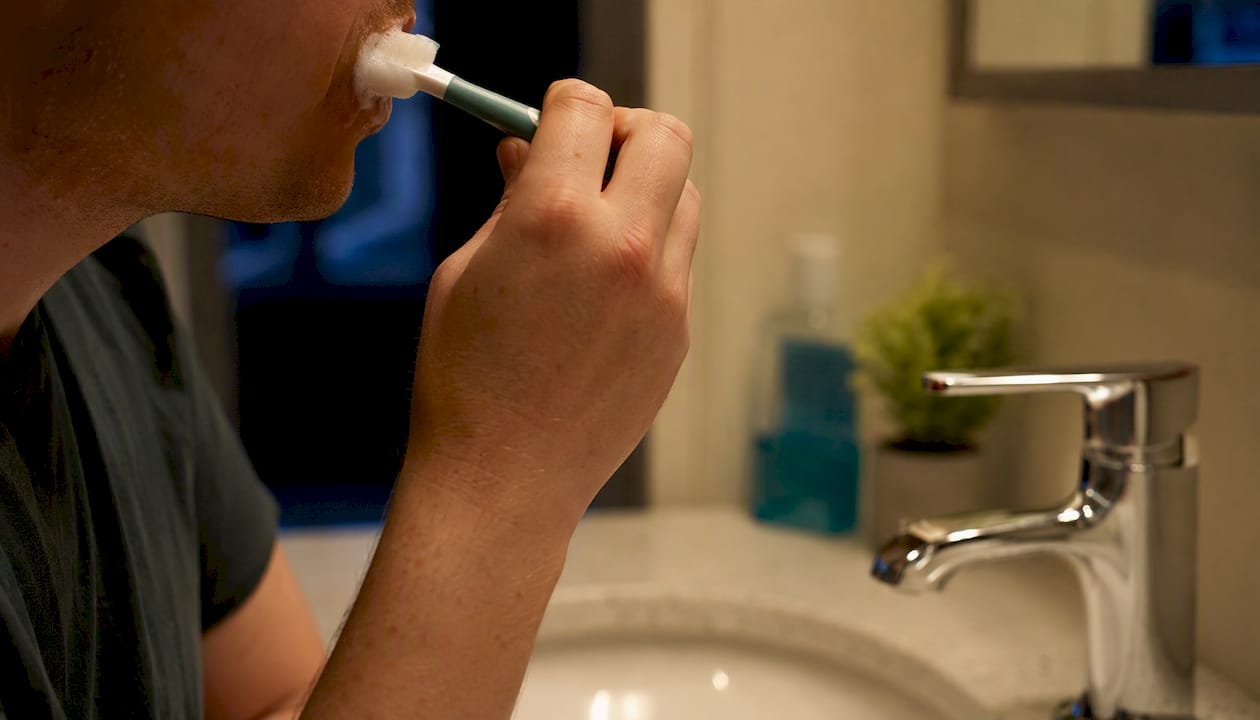
Timing around acidic exposure matters just as much as the brushing itself. For our full breakdown of brushing steps after meals, the short version is this: wait 30 to 60 minutes after acidic food or drink before you brush, because the enamel surface is temporarily softened during acid exposure, and brushing too soon just abrades it further. Avoid snacking between meals when you can, and skip eating within three hours of bedtime, since saliva flow drops overnight and gives acid more uninterrupted time to work.
Pro Tip: Sip water alongside acidic drinks like coffee or wine to help dilute the acid, and if you drink soda occasionally, use a straw to reduce direct contact with your front teeth.
| Habit | Why it protects enamel | When to do it |
|---|---|---|
| Spit, don’t rinse | Extends fluoride contact time on the enamel surface | Immediately after brushing |
| Wait before brushing | Lets softened enamel reharden before mechanical contact | 30–60 minutes after acidic food or drink |
| Chew xylitol gum | Restarts saliva flow and lowers acid-producing bacteria | About 20 minutes after meals |
| Bundle acidic foods | Reduces total time teeth spend under acid attack | Group into mealtimes, not between-meal snacks |
| Finish with dairy | Cheese and milk help neutralize acid and add calcium | End of meals when possible |
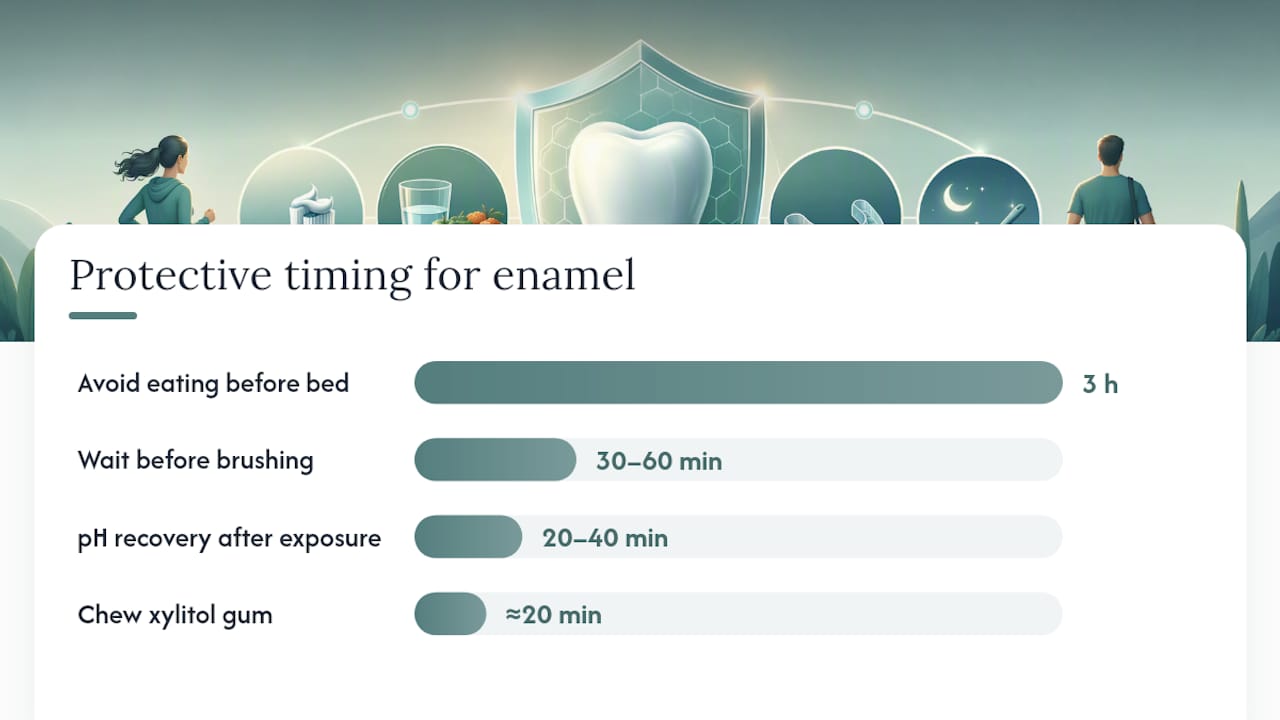
Each sugar or acid exposure drops your mouth’s pH for roughly 20 to 40 minutes, which is why frequency matters more than total quantity. Eating a candy bar in one sitting costs you 30 minutes of acidic pH. Grazing on the same candy over three hours can keep your mouth acidic almost the entire time. For more on foods that work in your favor, our guide to the best foods for healthy teeth covers options that support remineralization rather than undermine it.
On the “avoid” list: charcoal toothpaste and high-abrasivity whitening pastes used daily, both of which polish away enamel faster than they whiten. Limit how often citrus and soda make an appearance, and treat them as occasional, not routine.
Which Products Actually Help, and What to Check on the Label
Not every toothpaste or mouthwash on the shelf earns its claims, so knowing what to look for saves you from paying for marketing instead of results.
- Fluoride toothpaste: most drugstore formulas run 1,100 to 1,500 ppm fluoride, which is adequate for most adults; dentists can prescribe 5,000 ppm formulas for patients at high risk of decay.
- Fluoride mouthwash: adds a second daily dose of topical fluoride, useful for people who eat or drink frequently throughout the day.
- Sugar-free gum with xylitol: stimulates saliva mechanically while xylitol itself reduces cariogenic bacteria, making it one of the few snacks that actively helps rather than harms.
- Remineralizing products like CPP-ACP (MI Paste): deliver bioavailable calcium and phosphate directly to weakened enamel, often recommended for patients recovering from orthodontic treatment or acid damage.
- Soft-bristled toothbrushes and electric brushes with pressure sensors: reduce the mechanical abrasion that heavy-handed brushing with a medium or hard brush causes over years of use.
When you’re reading labels, check for RDA, or Relative Dentin Abrasivity, and aim under roughly 70 for everyday use. Anything marketed as “extra whitening” or “deep clean” often runs well above that, which is fine occasionally but not as your daily driver. Look for the word “fluoride” or “nano-hydroxyapatite” on the active ingredients line, not just implied on the front label.
If you prefer to avoid fluoride, whether for personal preference or a medical reason your dentist flags, nano-hydroxyapatite toothpaste is a legitimate, evidence-backed alternative that performs comparably in remineralization studies. It’s not a fringe substitute; it’s a real clinical option worth discussing at your next cleaning.
When to See a Dentist and What Professional Treatments Look Like
Home care handles prevention and early repair. Once damage has progressed, you need a dentist, and waiting rarely makes the fix simpler or cheaper.
See a dentist if sensitivity is persistent or getting worse, if you notice a visible chip or pit, if your teeth are changing color faster than seems normal, or if you know you have a contributing condition like reflux or a history of frequent vomiting. Those cases need both dental treatment and, often, a conversation with a physician about the underlying cause.
In-office treatment usually starts with professional fluoride varnish or gel, a much higher concentration than anything available over the counter. Applied at dental visits, typically every three to six months for high-risk patients, it can produce measurable strengthening of early lesions within a few weeks. For enamel that’s already lost structure, dentists move to restorative options: bonding for small chips and worn edges, veneers or crowns for more extensive loss, and sealants applied to the chewing surfaces of at-risk molars to prevent decay from getting a foothold in the first place.
Fluoride varnish buys you weeks-scale improvement on early damage. Bonding, veneers, and crowns aren’t repairing enamel biologically; they’re restoring function and appearance once biological repair is no longer possible. Knowing which category you’re in changes the urgency of that dental visit.
Why Saliva Is Your Best Natural Defense Against Erosion
Saliva does three jobs that no toothpaste can replace on its own: it buffers acid back toward a neutral pH, it delivers the calcium and phosphate enamel needs to remineralize, and it physically clears away food particles and bacteria before they cause more damage. Anyone dealing with chronic dry mouth is fighting enamel loss with one hand tied behind their back, regardless of how good their toothpaste is.
The strongest lever you have here is chewing gum, specifically gum sweetened with xylitol rather than sugar substitutes generally. Xylitol gum can boost saliva flow up to roughly ten times normal resting rates, and dental protocols commonly recommend 6 to 10 grams of xylitol daily, spread across three to five exposures timed right after meals. That’s not a huge amount. Most sugar-free gum sticks contain half a gram to a gram of xylitol, so two or three pieces after each meal gets you into that range without much effort.
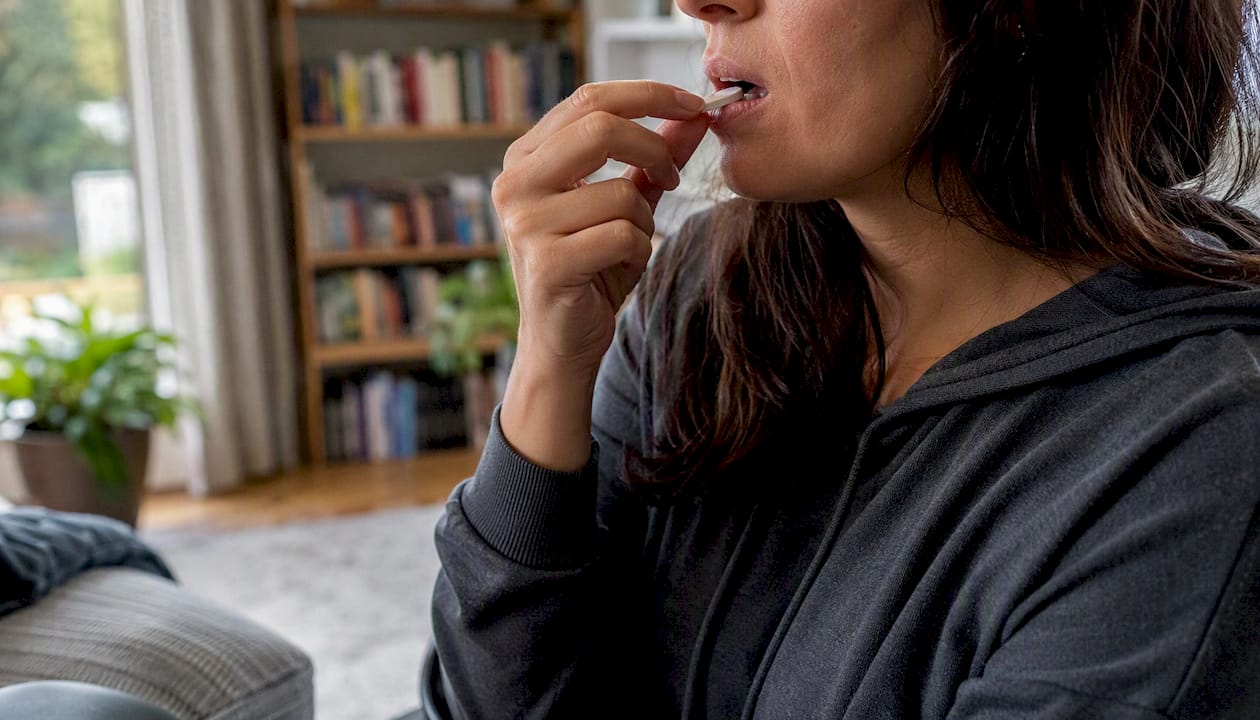
Pro Tip: Chew xylitol gum for about 20 minutes right after eating, not hours later. That window is when acid levels are highest and saliva can do the most good.
If dry mouth is a persistent problem for you, whether from medication, mouth breathing at night, or a medical condition, it’s worth flagging to both your dentist and your prescribing physician. Saliva substitutes and prescription saliva stimulants exist for a reason, and they’re underused simply because most people never mention the symptom out loud.
Medical Conditions and Habits That Quietly Erode Enamel
Some of the biggest enamel risks have nothing to do with what you’re brushing with, and everything to do with what’s happening elsewhere in your body.
- GERD and acid reflux: stomach acid reaching the mouth repeatedly is one of the most aggressive causes of erosion, often affecting the backs of upper teeth first.
- Eating disorders involving frequent vomiting: stomach acid exposure here tends to be severe and requires coordinated dental and medical care.
- Dry mouth from medications, radiation, or chronic mouth breathing: removes your natural buffering system and accelerates almost every other risk factor on this list.
- Bruxism (teeth grinding): often stress-related or linked to sleep issues, and it wears enamel down mechanically rather than chemically.
- Heavy alcohol use and smoking: both dry out the mouth and, in the case of alcohol, some beverages add direct acid exposure too.
If any of these apply to you, the fix usually isn’t a better toothpaste. Treating reflux with your physician, seeking support for an eating disorder, or reviewing a medication list for dry-mouth side effects addresses the actual cause. Your dentist can manage the enamel side, fluoride varnish, a night guard for grinding, saliva substitutes for dry mouth, but the underlying medical issue usually needs its own provider. Until that treatment takes full effect, lean harder on the saliva-support and timing habits covered earlier; they’re your best mitigation in the meantime.
Consistency Beats Intensity When It Comes to Enamel
The research on enamel protection all points to the same uncomfortable truth: none of this works as a one-time fix. Fluoride varnish, xylitol gum, spit-don’t-rinse, waiting after acidic drinks, none of it does much if you do it once and then forget about it for six months. Enamel damage accumulates in small increments, and so does protection.
What surprises people most is how much of this comes down to timing rather than product choice. Two people can use the exact same toothpaste, and the one who waits 30 minutes after their morning orange juice before brushing will fare noticeably better over a decade than the one who brushes immediately. The habit costs nothing extra. It just requires knowing it matters.
That’s also where the tools you use daily start to count. A toothbrush that’s easy to reach for, and that you’ll actually use both times a day without cutting corners, does more for your enamel over a year than an expensive product you use inconsistently. Pairing a reliable brushing habit with the right toothpaste, whether fluoride or nano-hydroxyapatite, and the behavioral changes above is what actually moves the needle. None of these pieces work as well in isolation as they do stacked together, and for more on building that stacked routine, our guide to effective oral care habits walks through it in more depth.
A Faster Way to Make Your Brushing Routine Stick
Most enamel-protection habits described above depend on one unglamorous requirement: brushing thoroughly, twice a day, without fail. That’s exactly where a lot of people quietly fall short, not from lack of knowledge but from lack of time. Y-brush’s patented Y-shaped head is built to deliver a full clean in 20 seconds using sonic vibrations, which removes the biggest excuse for rushing or skipping a session, especially at night when saliva flow naturally drops and enamel needs the extra protection most.
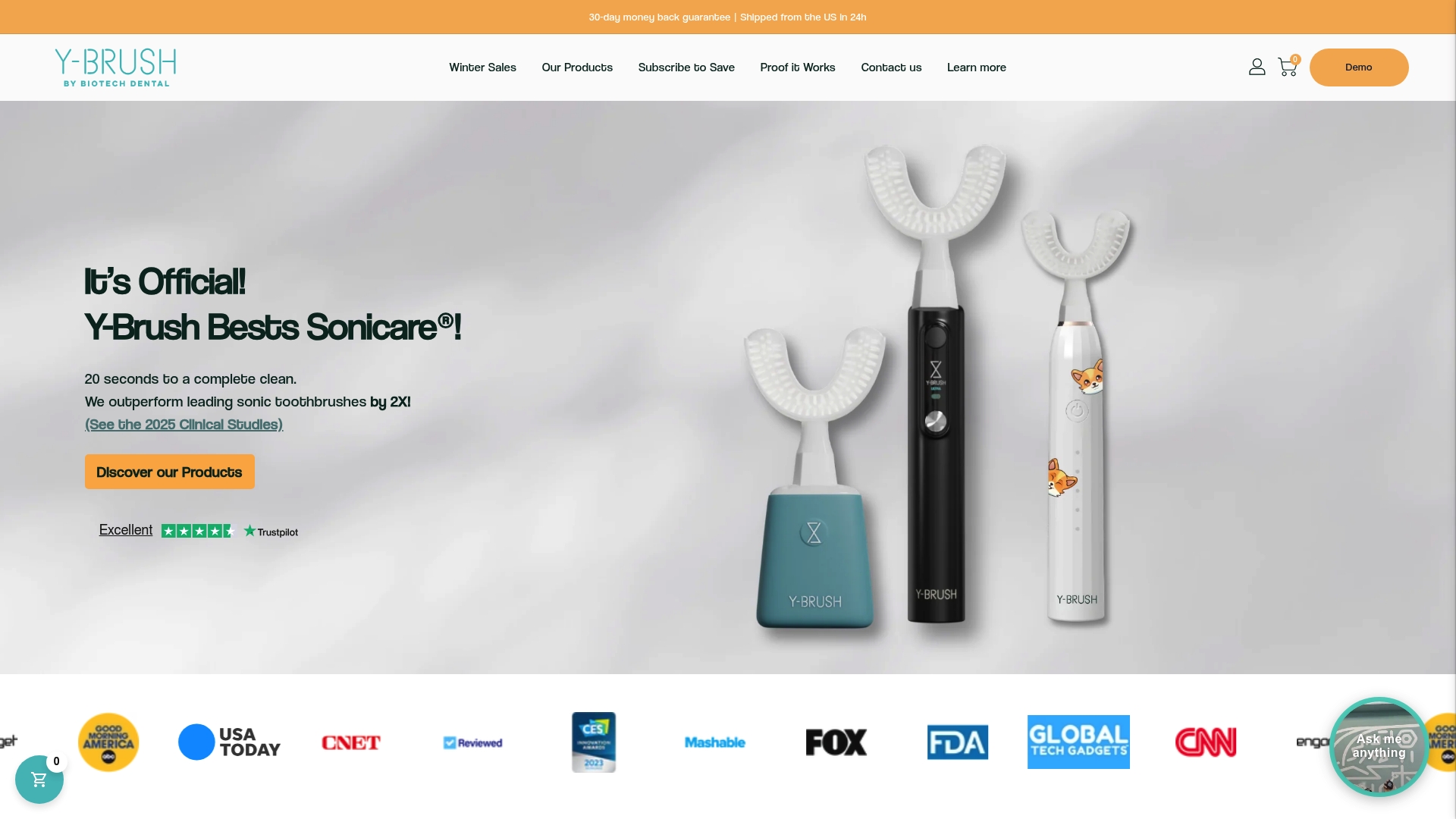
To be clear, no toothbrush replaces the fluoride toothpaste, timing rules, and saliva-support habits covered in this guide. Mechanical plaque removal is one piece of the puzzle, not the whole picture. But a fast, consistent brushing tool makes it far easier to actually stick to the twice-daily habit that everything else in this article depends on, and pairing it with a fluoride or nano-hydroxyapatite paste covers both the mechanical and chemical sides of enamel care. If you’re ready to simplify that part of your routine, take a look at the Y-brush Essential Sonic Toothbrush and see whether it fits into your daily setup.
Sources
For deeper clinical detail beyond this guide, these sources cover the causes, prevention strategies, and remineralization science referenced throughout the article: the Cleveland Clinic’s overview of tooth erosion, WebMD’s explanation of enamel erosion and restoration, the ADA’s guidance on chewing gum and oral health, Delta Dental’s prevention tips for enamel erosion, and Florida Special Care Dentistry’s clinical breakdown of enamel erosion causes. Nothing here substitutes for a personalized exam, so bring any specific concerns to your own dentist.
This article is general information, not a substitute for advice from a qualified doctor. Consult a qualified healthcare professional about your own circumstances before acting on anything here.
- Cleveland Clinic — Tooth erosion: Stages, causes & treatment
- ADA — Chewing gum (oral health topic)
- OralHealthHQ — How to Remineralize Teeth — Science, Protocol & Timeline (2026)
- Dentist Decoded — 10 science-backed ways to strengthen tooth enamel
- WebMD — Tooth enamel: Erosion and restoration


