


Yes: hard bristles combined with aggressive brushing raise the risk of gum abrasion, bleeding, and recession over time. The American Dental Association recommends soft bristles because soft bristles clean effectively while putting far less strain on the gumline. If you currently use a medium or hard brush, or press down firmly out of habit, switch to soft bristles today and ease up on pressure. Technique matters as much as the brush itself.
TL;DR:
- Pressing too hard during brushing exceeds 1.8 newtons, increasing the risk of gum abrasion and recession, especially when combined with abrasive toothpaste.
- The American Dental Association recommends switching to soft bristles for effective cleaning with minimal gum damage, as stiff brushes offer only marginal plaque removal benefits.
- Early signs of damage include bleeding, redness, and tooth sensitivity, while visible recession and gum notches indicate more advanced harm requiring professional evaluation.
- Using a powered toothbrush with a controlled sonic head, like Y-Brush, can help reduce excessive force and protect gum tissue during daily cleaning.
- Proper technique involves gentle pressure, a 45-degree angle, and a two-minute routine twice daily, with regular brush head replacement every three to four months.
Table of Contents
- How hard bristles and aggressive brushing physically harm gums and tooth roots
- What authoritative bodies and clinical studies say about bristle stiffness and gum damage
- How to recognize damage from hard brushing and when to get professional help
- Exactly how to brush safely without wearing down your gums
- Can gums regrow? What recovery and treatment actually involve
- A two-week plan to stop overbrushing and ease gum pain
- Why gentle technique matters more than bristle choice alone
- A gentler way to brush: what Y-Brush offers
- Sources
- FAQ
How hard bristles and aggressive brushing physically harm gums and tooth roots
Abrasion and recession are related but distinct problems. Abrasion is the mechanical wearing away of tooth structure or gum tissue from friction, while recession is the gradual apical migration of the gum margin that exposes the root surface underneath. Stiff bristles concentrate more force into a smaller area at the gumline, and that concentrated pressure is what turns ordinary brushing into a source of damage.
The gum tissue along the neck of the tooth is thin and covered by keratinized epithelium that offers some protection, but it is not built to withstand repeated scraping from rigid filaments. Over months and years, that friction can strip away tissue, expose the root, and leave a visible notch right at the gumline. A PLOS ONE study found that dentin loss correlates strongly with the amount of force applied and with brush design, not bristle stiffness alone. Abrasive toothpaste compounds the problem: a whitening paste combined with a stiff brush and heavy pressure accelerates tissue and enamel loss far faster than any one factor alone.
- Abrasion wears down tissue or tooth surface through friction and can often heal if caught early.
- Recession is the loss of gum height at the margin and tends to be cumulative rather than self-correcting.
- Force matters more than most people assume, sometimes more than the bristle type itself.
- Toothpaste abrasivity combined with hard bristles multiplies the risk, especially on already-exposed roots.
Forces above roughly 1.8 newtons correlate with increased cemental abrasion, according to experimental research on bristle stiffness and brushing force. You do not need a force gauge to apply this: if your gums blanch white or your brush head splays within weeks, you are almost certainly pressing too hard regardless of which bristle type you use.
What authoritative bodies and clinical studies say about bristle stiffness and gum damage
The American Dental Association recommends a soft-bristled toothbrush as the standard choice for daily care, citing effective plaque removal with less risk of gingival abrasion. The CDC adds an important reassurance: gingivitis, the earliest stage of gum disease, is reversible with consistent, gentle oral hygiene, though untreated cases can progress to periodontitis and eventual tooth loss.
Clinical trials back up the caution around hard bristles. A randomized trial comparing manual toothbrushes with different bristle stiffness found that hard-bristled brushes improved plaque scores but also increased gingival lesions and bleeding at follow-up compared with soft or medium bristles. That trade-off, slightly better plaque removal against a real increase in tissue trauma, is why dental guidance leans firmly toward soft bristles for daily use.
- Hard bristles can raise plaque removal marginally while increasing gingival lesions and bleeding.
- Powered brushes often match or exceed manual brushing on safety for existing recession.
- Recession is rarely caused by one factor alone; technique, anatomy, and disease all play a role.
A 36-month randomized controlled study found that powered toothbrush users showed a mean recession change of negative 0.10 millimeters, compared to positive 0.17 millimeters for manual brush users, according to research on gingival recession in susceptible subjects. In that study, manual brushing was identified as a contributing risk factor for recession progression. A related review of observational and intervention studies points out that recession is multifactorial: age, periodontal disease, tooth position, and brushing trauma all interact, so stiffness alone rarely tells the whole story.
How to recognize damage from hard brushing and when to get professional help
Early damage looks subtle: gums that bleed when you floss, mild redness along the gumline, or tenderness that wasn’t there a few months ago. As damage progresses, you may notice visible gum recession, a return of tooth sensitivity to cold drinks or sweets, or a distinct notch where the tooth meets the gum.
- Check in the mirror for uneven gum height or a visible line where enamel gives way to a yellower root surface.
- Run floss gently along the gumline and note any bleeding, which often signals inflammation before recession is visible.
- Test for sensitivity with cold water or a sweet food, since exposed roots react faster than healthy enamel.
- Book a dental exam if bleeding persists, root exposure is visible, sensitivity is increasing, or nothing improves after two weeks of gentler brushing.
A dentist assessing this will typically measure probing depths, record recession at specific teeth, and score abrasion patterns to see whether the cause is mechanical, disease-related, or both. From there, most cases start with conservative steps before anything more invasive is considered. Our guide on receding gums walks through these signs in more detail.
Exactly how to brush safely without wearing down your gums
Getting technique right removes most of the risk that hard bristles introduce in the first place. The changes below take a few days to feel normal.
- Choose soft bristles. “Soft” on a package means thinner, more flexible nylon filaments that bend against the tooth rather than scraping across it.
- Control your pressure. Hold the brush with three fingers instead of a full fist grip, and aim for gentle contact that never turns your gums white.
- Angle at 45 degrees. Point the bristles toward the gumline at roughly 45 degrees and use short, tooth-width strokes or let a powered brush’s built-in motion do the work.
- Brush for two full minutes, twice daily, covering every surface, including the tongue-side of your back teeth where plaque tends to build up unnoticed.
- Pick a low-abrasivity toothpaste if you have exposed roots or sensitivity, and set aside whitening pastes until your gums have settled.
- Replace your brush every three to four months, or sooner if the bristles splay, since worn filaments lose their flex and redirect force straight into the gumline.
Pro Tip: If your bristles look flattened or frayed before the three-month mark, that’s usually a sign you’re pressing too hard, not that you need a firmer brush.
Our step-by-step brushing tutorial breaks each of these steps down further if you want a daily routine to follow.
Can gums regrow? What recovery and treatment actually involve
Superficial abrasions from overbrushing can heal once you correct your technique, but established gum recession does not reliably reverse on its own. Once the gum margin has migrated down the root, tissue rarely grows back to its original position, which is why dental guidance treats prevention as the more dependable path.
- Desensitizing toothpaste and fluoride varnish can ease root sensitivity while you monitor whether recession is stable or worsening.
- Improved hygiene and regular checkups help confirm that early lesions are healing rather than progressing.
- Connective tissue grafts and other grafting procedures are the main clinical options for covering exposed roots and reducing sensitivity once recession is significant.
- A periodontal evaluation determines which conservative or surgical route fits your specific case.
Grafting can restore coverage and comfort, but it involves surgery, recovery time, and cost that gentle technique avoids entirely. If you’re noticing early signs now, addressing them before they become permanent is the more reliable option.
A two-week plan to stop overbrushing and ease gum pain
Start today: switch to a soft-bristled brush, set aside abrasive or whitening toothpaste, and time yourself brushing for two full minutes.
- Days 1 to 3: rinse with warm salt water if gums feel tender, and skip anything acidic or very hot while tissue settles.
- Days 4 to 14: run a daily pressure check, floss once a day, keep timing your brushing, and note whether sensitivity is easing or not.
- Stop conservative measures and call a dentist if bleeding or sensitivity hasn’t improved by the two-week mark.
Pro Tip: A controlled electric brush with a set vibration pattern can reduce how much manual force you apply, since the device does the scrubbing motion instead of your wrist. If you’re considering one, check a product’s specifications or ask your dentist whether it fits your gum condition. Our sensitivity guide covers what to expect when switching to a powered device.
Why gentle technique matters more than bristle choice alone

Bristle stiffness gets most of the attention, but pressure and consistency do more of the damage over time. A soft brush used with a heavy hand can still injure gum tissue, while a well-controlled technique on either bristle type tends to protect it. The habit worth building is control, not just the label on the packaging.
Adopt the two-week plan above, and if bleeding, sensitivity, or recession persist, see a dentist rather than waiting it out.
— Joris
A gentler way to brush: what Y-Brush offers
If pressure control is the real issue, a device that limits how much force reaches your gums can help more than willpower alone. Y-Brush uses a patented Y-shaped head with sonic vibrations to clean all tooth surfaces in 20 seconds, which means less time spent pressing a brush against your gumline and more consistent coverage without extra scrubbing.
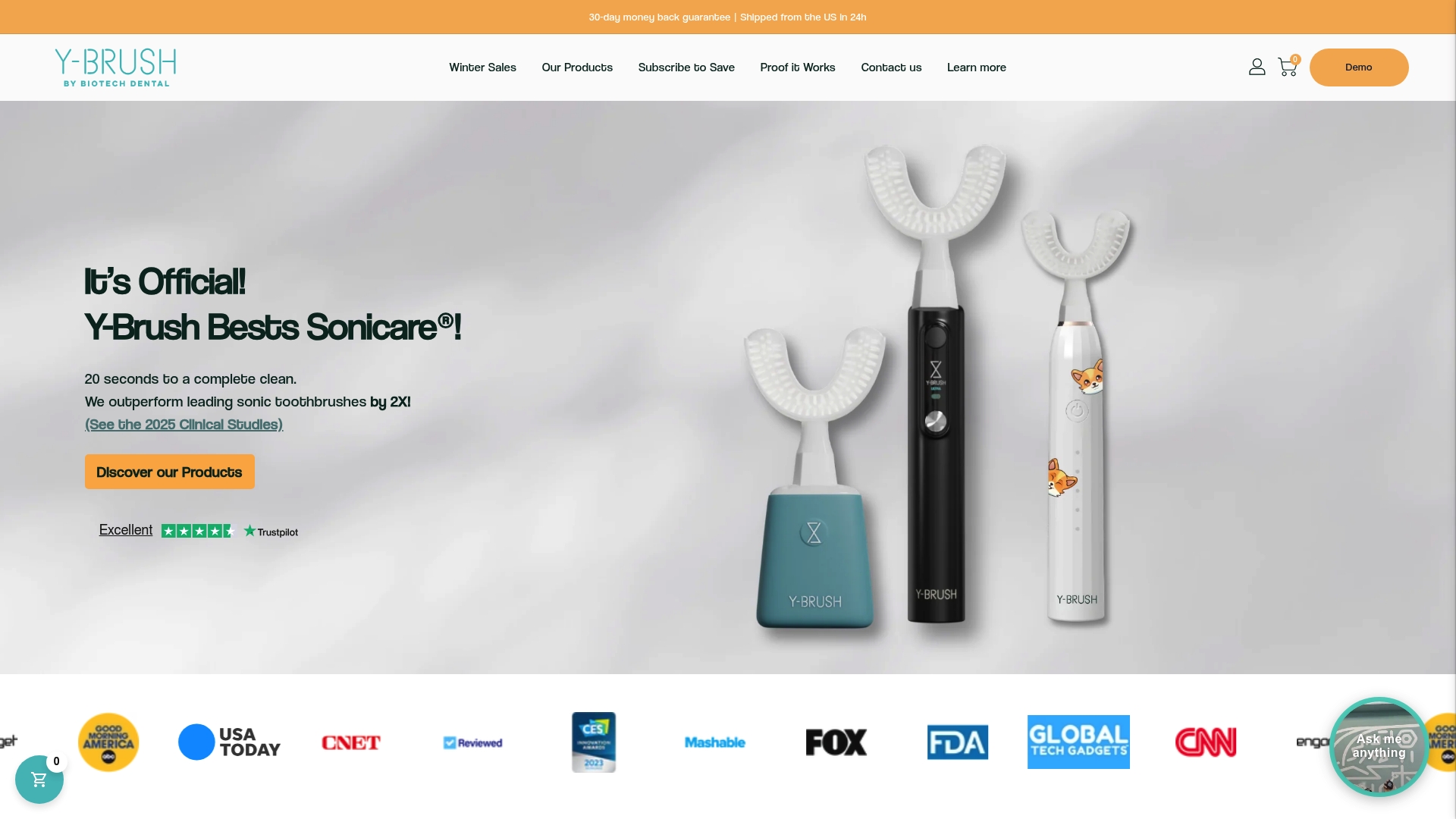
- Y-Brush Toothbrushes use the Y-shaped head design to reach all surfaces at once instead of relying on manual back-and-forth strokes.
- Replacement Brush Heads keep bristles fresh on the recommended schedule without guesswork.
- Membership plans deliver refills automatically; current prices and plan details are available on the Y-Brush website.
If you brush too hard out of habit, a controlled sonic device removes some of that variable from the equation. Browse the Y-Brush toothbrush collection to find the plan that fits your routine.
This article is general information, not a substitute for advice from a qualified doctor. Consult a qualified healthcare professional about your own circumstances before acting on anything here.
Sources
- Toothbrushes | American Dental Association
- Gum disease | CDC
- Effect of a powered and a manual toothbrush in subjects susceptible to gingival recession: A 36-month randomized controlled clinical study
- Influence of bristle stiffness and brushing force on dentin abrasion
- Gingival abrasion and recession: evidence from observational and intervention studies (PMC review)
FAQ
Can gums recover from hard brushing?
Superficial abrasion from overbrushing can heal once you switch to gentler technique, but established gum recession does not typically grow back on its own. Consistent, gentle care can stop further damage and, per the CDC, reverse early gingivitis before it becomes permanent.
What happens if you brush too hard on your gums?
Brushing too hard can abrade the gum tissue, cause bleeding and redness, and over time push the gum margin down to expose the tooth root. A PLOS ONE study found that brushing force is a key driver of dentin loss and tissue abrasion, with higher forces causing more damage depending on brush design and toothpaste abrasivity.
What’s the worst thing for receding gums?
Combining heavy brushing pressure with a stiff-bristled brush and an abrasive toothpaste is one of the more damaging combinations for already-receding gums. Untreated gum disease also drives recession, since inflammation weakens the tissue that holds the gum margin in place, according to the CDC.
Can hard bristles cause gingivitis?
Hard bristles alone don’t cause gingivitis, since gingivitis stems from plaque buildup rather than bristle stiffness. However, a trial on manual toothbrushes with different bristle stiffness found that hard bristles increased gingival lesions and bleeding scores, which can aggravate existing inflammation.


