


Short answer: usually no. Dental insurance plans typically don’t cover electric toothbrushes, and IRS rules generally exclude them from HSA or FSA reimbursement. Manufacturer warranties address defects, not routine replacement. Check your plan’s Evidence of Coverage for rare exceptions, and know that medically necessary purchases require clinical documentation before an administrator will even consider them.
TL;DR:
- Most dental insurance plans exclude electric toothbrushes because they are personal items and not billable procedures, often citing “personal hygiene items” as an exclusion.
- IRS Publication 502 states that routine electric toothbrushes are not qualified medical expenses unless used for a diagnosed condition, with plan administrators requiring specific documentation for coverage.
- Manufacturer warranties typically cover defects and battery failures within one to two years but do not include replacement heads or consumable accessories.
- Claims for coverage or reimbursement are frequently denied due to lack of clinical documentation, late submissions, or purchase before pre-approval, making pre-approval vital.
- Without a documented medical condition, out-of-pocket payment is usually the only option, and subscription plans for toothbrushes can help manage recurring costs effectively.
Table of Contents
- Why dental insurance usually won’t buy an electric toothbrush
- HSA/FSA eligibility: what the IRS says and how administrators decide
- Manufacturer warranties and repairs: how to register claims and what to expect
- When coverage or reimbursement is possible: medical-necessity and plan exceptions
- How to check your plan, document a claim, and what to expect financially
- Comparison of insurance coverage for electric toothbrushes versus manual toothbrushes
- Coverage specifics for electric toothbrush replacement parts and accessories
- Impact of dental insurance plan types (HMO, PPO, etc.) on electric toothbrush coverage
- Common reasons claims for electric toothbrush coverage are denied and how to avoid them
- A practical takeaway for readers weighing coverage versus buying now
- A subscription option for readers paying out of pocket
- Sources
- FAQ
Why dental insurance usually won’t buy an electric toothbrush
Dental insurance is designed around procedures and preventive visits, not the tools you use at home. Plans typically enumerate covered services (cleanings, exams, fillings, crowns) and set annual maximums, and dental insurance rarely extends to durable personal items that a patient owns and keeps. An electric toothbrush falls into that gap: it supports oral health but isn’t a billable procedure a dentist performs in an office.
That structure means the fine print in your plan documents matters more than what your dentist recommends. Before assuming a toothbrush purchase qualifies for anything, check a few specific plan features.
- Annual maximums: many plans cap total reimbursable benefits per year, which can affect whether unusual claims even get reviewed.
- Covered services list: this section names procedures and supplies explicitly; if toothbrushes aren’t listed, they’re excluded by omission.
- Exclusions language: look for phrases like “personal hygiene items” or “over-the-counter products,” which signal a hard exclusion rather than a gray area.
An Evidence of Coverage document that lists “durable medical equipment for a diagnosed condition” as a covered category is the rare exception worth flagging to your administrator.
HSA/FSA eligibility: what the IRS says and how administrators decide
The starting point for any tax-advantaged account question is IRS Publication 502, which governs what counts as a qualified medical expense. The publication treats personal-use items, including toothbrushes and toothpaste, as nondeductible personal expenses unless they’re used primarily to prevent or treat a diagnosed physical or mental condition.
A federal publication, not a plan brochure, sets the baseline rule here. Publication 502 explicitly lists toothbrushes as an example of a personal expense that doesn’t qualify, which is the clearest signal available that routine electric toothbrush purchases won’t clear HSA or FSA reimbursement on their own.
There’s a second layer beyond the IRS rule: your plan administrator’s own discretion. Even when a purchase might arguably qualify under a medical exception, the administrator decides what documentation is sufficient to approve it. That’s a separate hurdle from the tax code itself, and both have to align for reimbursement to succeed.
Documentation that may persuade an administrator includes:
- A letter of medical necessity from a licensed clinician stating the diagnosis and why the device is primarily therapeutic.
- Clinical notes tied to a specific condition, not a general recommendation for better hygiene.
- A written pre-approval request submitted before purchase, which avoids spending HSA or FSA funds on a claim that gets denied later.
Realistically, most submissions without a documented condition are denied. Policy groups like the Consumer Healthcare Products Association have pushed to expand oral-care eligibility for FSAs and HSAs, which signals ongoing advocacy but not a current entitlement. For a deeper look at how this plays out in practice, see our explainer on HSA eligibility for electric toothbrushes.
Manufacturer warranties and repairs: how to register claims and what to expect
A warranty is a manufacturer’s promise to fix or replace a defective unit, and it operates on a completely different track from insurance or tax-account reimbursement. Warranties typically cover manufacturing defects and battery failures that occur within a defined period, often one to two years depending on the brand. They don’t cover normal wear, lost brush heads, or damage from dropping the handle.
To use a warranty, register the product soon after purchase and keep your receipt and serial number on hand. Most major brands maintain support pages where you enter this information to start a claim.
- Register the product on the manufacturer’s site shortly after buying it, using the serial number printed on the handle or packaging.
- Keep your original receipt, since most support teams require proof of purchase date to confirm the unit is still under warranty.
- Contact support directly with photos of the defect and a description of when the issue started, which speeds up the review.
Expect a replacement or repair timeline measured in days to a few weeks, depending on the brand’s shipping process. Warranty claims are almost always faster and simpler than pursuing insurer reimbursement for the same failure.
When coverage or reimbursement is possible: medical-necessity and plan exceptions
A narrow set of situations can shift the odds in your favor. Patients with limited dexterity from arthritis, a diagnosed neuromuscular condition, or recovery from oral surgery sometimes qualify for coverage because the device serves a defined medical purpose rather than general hygiene.
If you believe your situation fits, the path looks like this:
- Get a clinician’s letter that names the diagnosis and explains why an electric toothbrush is primarily medical care in your case.
- Connect the device to the condition in writing, rather than describing it as a general upgrade to your routine.
- Submit the letter to your plan administrator along with any relevant procedure or diagnosis codes your clinician provides.
Pro Tip: Ask your clinician to write the letter before you buy the toothbrush, since some administrators only approve requests submitted in advance.
Set your expectations accordingly. A dentist’s recommendation supports clinical guidance on brushing and toothbrush care, but it doesn’t create payor policy, and administrators routinely deny claims that lack a specific diagnosis tied to the purchase.
How to check your plan, document a claim, and what to expect financially
Start with your plan’s own paperwork rather than guessing.
- Read the definitions and exclusions sections of your Evidence of Coverage, plus your FSA or HSA administrator’s eligible items list.
- Call your plan administrator or HR benefits team and ask directly whether an electric toothbrush purchase qualifies under any listed exception.
- Gather your receipt, serial number, and any clinician letter before submitting, since incomplete documentation is a common cause of delay.
If your claim is denied, expect to pay out of pocket for the toothbrush itself, typically in the range most retailers list for electric models, while relying on the manufacturer’s warranty for any hardware failure.
Comparison of insurance coverage for electric toothbrushes versus manual toothbrushes
Neither electric nor manual toothbrushes are typically covered by dental insurance, and the IRS treats them the same way under Publication 502: both are personal-use items unless tied to a documented medical condition. The price difference is what makes people search for coverage in the first place. A manual toothbrush costs little enough that reimbursement was never worth pursuing, while an electric model’s higher upfront cost makes the question feel more urgent.
That price gap doesn’t change the underlying rule. Plan administrators don’t apply a different standard to electric models just because they cost more, and no dental plan reviewed here distinguishes between the two categories in its exclusions language. The practical difference shows up after purchase, not before it: electric toothbrushes come with manufacturer warranties covering motor and battery defects, while manual toothbrushes have no warranty structure at all because there’s no electronic component to fail.
So the real comparison isn’t about coverage, since both start from the same exclusion. It’s about what happens when something breaks. A manual toothbrush that wears out gets replaced for a few dollars with no paperwork. An electric toothbrush with a battery or motor issue inside its warranty window gets repaired or replaced by the manufacturer at no cost, which is the closest thing to financial protection either product category offers.

Coverage specifics for electric toothbrush replacement parts and accessories
Replacement brush heads sit in an even less favorable position than the handle itself. Dental plans that exclude the toothbrush almost always exclude replacement heads too, since they’re consumable accessories rather than medical supplies. The IRS treats them the same way it treats the toothbrush: a personal-use item under Publication 502 unless tied to a documented condition.
Warranties add another layer of nuance here. Most manufacturer warranties cover the handle’s motor and battery but explicitly exclude brush heads, chargers, and travel cases as consumable or wear items. That means even a fully warrantied toothbrush will still require out-of-pocket spending on replacement heads every few months, since dentists commonly recommend swapping heads on a regular schedule.
Subscription models exist specifically to smooth out this recurring cost rather than to create an insurance substitute. A subscription doesn’t change the tax or insurance status of the purchase, but it does turn an unpredictable expense into a fixed one, which is a different kind of financial planning than pursuing reimbursement.
Impact of dental insurance plan types (HMO, PPO, etc.) on electric toothbrush coverage
Plan structure affects how you access dental care, but it doesn’t change whether a toothbrush is covered. HMO-style dental plans typically require you to use an in-network provider and follow a defined list of covered procedures, while PPO plans offer more flexibility in choosing providers but still work from a similar list of billable services. Neither structure includes personal hygiene products in its covered-services list, because the distinction that matters here is procedure versus product, not network type.
Indemnity plans, which reimburse a percentage of costs regardless of provider, follow the same pattern: they pay toward procedures a dentist performs, not items a patient buys for home use. The plan type mostly determines your copay structure, your annual maximum, and which providers count as in-network, none of which touches the toothbrush question directly.
The one place plan type matters is in how quickly you can get an answer. HMO plans, with their narrower provider networks and often simpler benefit structures, can sometimes make it faster to confirm exclusions directly through a member portal. PPO and indemnity plans may require a phone call to the administrator to get the same clarity, since their broader service lists take longer to search through. Either way, the exclusion itself doesn’t change, only the speed of confirming it.
Common reasons claims for electric toothbrush coverage are denied and how to avoid them
Most denials trace back to a handful of recurring mistakes. The most frequent is submitting a claim with no clinical documentation at all, treating a dentist’s general recommendation as if it were proof of medical necessity. It isn’t, and administrators are trained to look for a specific diagnosis, not a suggestion to upgrade your routine.
A second common reason is submitting after the purchase instead of requesting pre-approval. Once money has already left an HSA or FSA account, an administrator reviewing the claim has less flexibility to approve something borderline, since reversing a completed disbursement is harder than declining a request up front.
A third reason is incomplete paperwork: a receipt without a serial number, or a clinician’s note that describes a general health goal rather than naming a diagnosis and tying the device directly to it. Administrators need language that connects the specific condition to the specific device, not a broad statement about oral health benefits.

Avoiding these outcomes means front-loading the work: get the letter before you buy, make sure it names a diagnosis, and submit a written inquiry to your administrator before spending any tax-advantaged funds. That sequence won’t guarantee approval, but it removes the most common reasons a legitimate request gets rejected.
A practical takeaway for readers weighing coverage versus buying now
If you don’t have a documented medical condition, plan to pay out of pocket. Verifying your plan takes a phone call, but the odds favor denial without clinical paperwork behind the request. For most readers, a warranty-protected purchase or subscription plan is the more reliable path to predictable costs than chasing reimbursement. If your situation is genuinely borderline, call your administrator before you buy, not after.
— Joris
A subscription option for readers paying out of pocket
If reimbursement isn’t realistic for you, the more useful question becomes how to avoid surprise costs down the road. Y-Brush sells electric toothbrushes built around a patented Y-shaped brush head, along with replacement heads sold separately or through a subscription. The Core Plan runs $29.90 per quarter, the Pro Plan is $49.90 per quarter, and the Pro+2 Plan is $69.90 per quarter, each bundling regular head refills so you’re not tracking replacement schedules yourself.
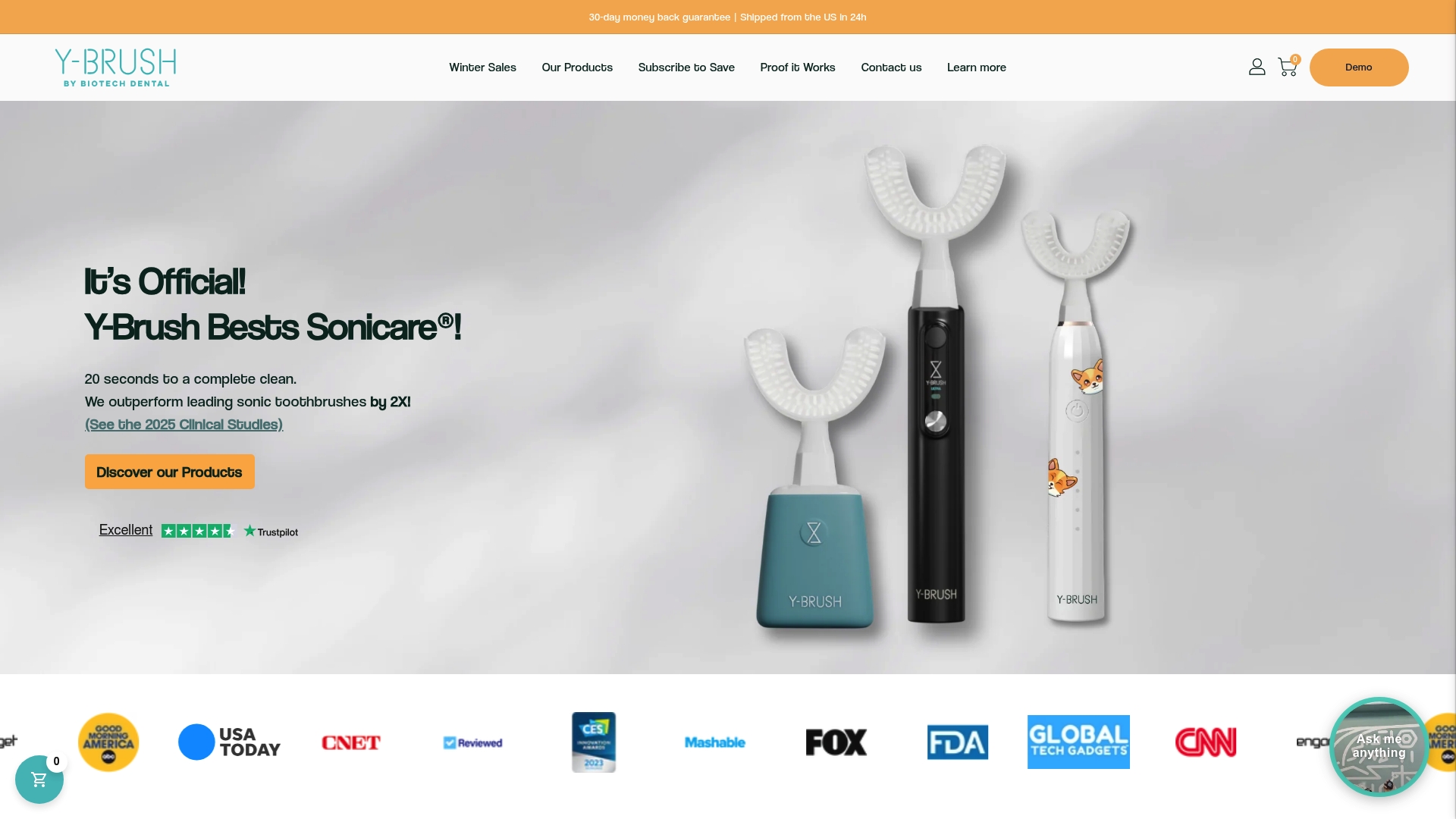
Y-Brush offers a warranty for its toothbrushes, which may simplify the process compared to standard manufacturer warranties. If a fixed quarterly cost sounds more manageable than pursuing a claim that may get denied, browse the full product and plan lineup to compare options.
This article is general information, not a substitute for advice from a qualified financial advisor. Consult a qualified financial professional about your own circumstances before acting on anything here.
Sources
- Publication 502 (2025), Medical and Dental Expenses | Internal Revenue Service
- Dentalplans
- ADA statement on toothbrush care, cleaning, storage
- CHPA — Expanding FSA/HSA eligibility for oral care
FAQ
Do Oral-B electric toothbrushes have a warranty?
Oral-B offers manufacturer warranties on its electric toothbrush handles that typically cover defects in materials and workmanship for a limited period after purchase. Coverage details, including the exact warranty length, are listed on Oral-B’s own support pages and generally exclude brush heads and normal wear.
Do Sonicare toothbrushes have a warranty?
Philips Sonicare provides warranty coverage on its toothbrush handles for manufacturing defects, with terms that vary by product line. Registration and proof of purchase are usually required to file a claim, and replacement heads are typically excluded from warranty coverage.
Does Costco offer a warranty on toothbrushes?
Costco generally honors its own return policy alongside whatever manufacturer warranty comes with the toothbrush itself, rather than issuing a separate Costco-specific warranty. Check the product packaging or Costco’s membership terms for the specific return window that applies to your purchase.
Are Sonicare toothbrushes FSA eligible?
Sonicare toothbrushes fall under the same IRS Publication 502 rule that applies to all electric toothbrushes: they’re treated as personal-use items and generally aren’t FSA eligible unless tied to a documented medical condition. Your FSA administrator makes the final call, so a written inquiry before purchase is the safest way to confirm eligibility.
Does dental insurance ever cover an electric toothbrush?
Standard dental insurance plans are built around procedures and preventive visits, so electric toothbrushes are typically excluded as personal hygiene items. Rare exceptions exist when a plan’s Evidence of Coverage lists durable equipment for a diagnosed condition, which is worth confirming directly with your administrator.


