


Short answer: No. A standard electric toothbrush is generally not HSA-eligible, because the IRS treats it as a personal-care item rather than a medical expense. There is one real exception: if a doctor documents that you need the device to treat a specific diagnosed condition, a Letter of Medical Necessity (LMN) or prescription can sometimes unlock reimbursement.
Before you buy one with HSA funds, check IRS Publication 502 and confirm the rule with your own plan administrator.
- Default rule: Electric toothbrushes fail the IRS “medical purpose” test on their own.
- Exception: An LMN tied to a diagnosed condition can sometimes change the outcome.
- Next step: Your plan administrator has final say, not the manufacturer or the IRS publication alone.
HSA and FSA balances have climbed steadily over the past decade, according to EBRI’s research on account trends, which is exactly why so many account holders want a straight answer before they tap pre-tax dollars on dental gear.
Key Takeaways
Electric toothbrushes are HSA-ineligible by default under IRS rules, but a Letter of Medical Necessity tied to a diagnosed condition can change that outcome.
| Point | Details |
|---|---|
| Default answer is no | Routine electric toothbrushes are classified as personal care and fail the IRS medical-purpose test. |
| LMN is the exception path | A letter naming your diagnosis and explaining medical need can qualify the purchase. |
| Plan admin has final say | Even a strong LMN can be denied since administrators vary in how they apply the rule. |
| Legislation may shift this | CHPA-backed bills like H.R. 8599 could remove the LMN requirement if passed. |
| Y-brush works regardless | The Y-Brush Essential Sonic Toothbrush delivers a 20-second clean whether you pay with HSA funds or out of pocket. |
Table of Contents
- Why Isn’t an Electric Toothbrush HSA Eligible by Default?
- When Can an Electric Toothbrush Become HSA Eligible?
- How Do You Actually Submit an HSA Claim for a Toothbrush?
- Could Legislation Change This Rule Soon?
- Real Scenarios: When Reimbursement Might Actually Get Approved
- What This Means If You Buy From Y-Brush
- Your Best Option Whether or Not HSA Covers It
- Where to Confirm the Rules Yourself
- Frequently Asked Questions
- Sources
Why Isn’t an Electric Toothbrush HSA Eligible by Default?
The IRS doesn’t publish a toothbrush-specific rule. It applies a broader test to every purchase: does the item treat, cure, mitigate, or prevent disease, or does it affect a structure or function of the body? IRS Publication 502 lays out that standard, and it’s the reason your dentist bill qualifies while your electric toothbrush usually doesn’t.
The IRS defines medical expenses as “the costs of diagnosis, cure, mitigation, treatment, or prevention of disease, and the costs for treatments affecting any part or function of the body.” General health items, even ones that clearly improve your hygiene, don’t automatically clear that bar.
A toothbrush maintains health for everyone, sick or not, which puts it in the same bucket as toothpaste, mouthwash, and floss. HSA Store’s eligibility listing confirms it’s classified as a personal-care item for that reason. Compare that with expenses that routinely qualify:
- Fillings, crowns, root canals, and other dental procedures
- Orthodontic treatment such as braces or aligners
- Prescribed periodontal therapy for diagnosed gum disease
- Dentures and denture-related supplies
The distinction isn’t about price or technology. It’s about whether the expense treats a disease you already have, versus preventing problems everyone faces.
When Can an Electric Toothbrush Become HSA Eligible?

Medical necessity is the door that opens eligibility. If your dentist or physician determines that a specific condition requires an electric toothbrush, not just recommends one, documentation can move your purchase into qualified territory. That’s where the Letter of Medical Necessity comes in.
A usable LMN typically includes:
- Your specific diagnosis (not a general wellness goal)
- A clear statement of why an electric toothbrush is necessary to treat that diagnosis, not just helpful
- The expected duration of treatment or need
- Your provider’s signature and the date of issue
Conditions that commonly support this exception include limited hand dexterity from arthritis or a tremor, advanced periodontal disease requiring more effective plaque control, and orthodontic patients who struggle to clean around braces with a manual brush.
Even a well-written LMN doesn’t guarantee approval. Plan administrators vary widely in how they interpret this exception; some accept a dentist’s note without question, others deny it outright regardless of documentation.
Pro Tip: Call your plan administrator before you buy anything. Ask directly whether they accept LMNs for oral-care devices, and get that answer in writing if you can.
How Do You Actually Submit an HSA Claim for a Toothbrush?
Getting reimbursed comes down to paperwork discipline. Here’s the sequence that gives you the best shot.
- Get the documentation first. Ask your provider for an LMN or prescription that names your diagnosis and, where possible, references the specific therapeutic feature you need, such as a pressure sensor for gum sensitivity.
- Save everything from the purchase. Keep the itemized receipt along with a product description or SKU that shows the therapeutic feature tied to your condition.
- Submit through your plan’s portal with a short cover letter. Attach the LMN, the receipt, and a one-paragraph explanation connecting the purchase to your diagnosis.
If your claim is denied, don’t treat it as final:
- Request the specific denial reason in writing.
- Compare that reason against your LMN. Missing details (no duration, no explicit diagnosis) are the most common gaps.
- Resubmit with a revised LMN or file a formal appeal through your plan’s process.
Treat the LMN like a prescription rather than a recommendation letter. Vague wording is the single biggest reason claims stall at the administrator level.
Could Legislation Change This Rule Soon?
Policy is moving, just not fast enough to help you this year. The Consumer Healthcare Products Association is actively pushing to expand FSA and HSA eligibility to cover electric toothbrushes, water flossers, and OTC anti-cavity toothpaste without requiring an LMN.
- CHPA frames this as both a consumer-access issue and a preventive-health measure, arguing that easier pre-tax access to oral-care tools reduces costlier dental problems down the road.
- The Oral Health Products Inclusion Act (H.R. 8599) is the specific bill tied to this push. It has not become law.
- If it passes, plan administrators would need to update their eligible-expense lists, and consumers would no longer need medical documentation for routine electric toothbrush purchases.
Until then, the current IRS standard governs every claim you file.
Real Scenarios: When Reimbursement Might Actually Get Approved
A significant number of Americans age 65 and older face dexterity-related dental challenges, which is exactly the kind of case that tends to succeed with proper documentation, especially when supported by dental, vision, and hearing coverage for Medicare.
- A senior with a hand tremor: A neurologist’s note diagnosing essential tremor, paired with a dentist’s statement that manual brushing leaves plaque behind, gives an administrator two data points instead of one.
- A patient with documented periodontitis: The LMN should name the periodontal diagnosis specifically, state that mechanical plaque removal beyond manual brushing is part of the treatment plan, and specify an expected treatment window.
- An orthodontic patient with braces: Evidence that manual brushing isn’t adequately reaching around brackets, combined with an orthodontist’s note, is more persuasive than a general dental cleaning recommendation.
In each case, the documentation connects a diagnosis to a device, not a device to a wish for better hygiene.
What This Means If You Buy From Y-Brush
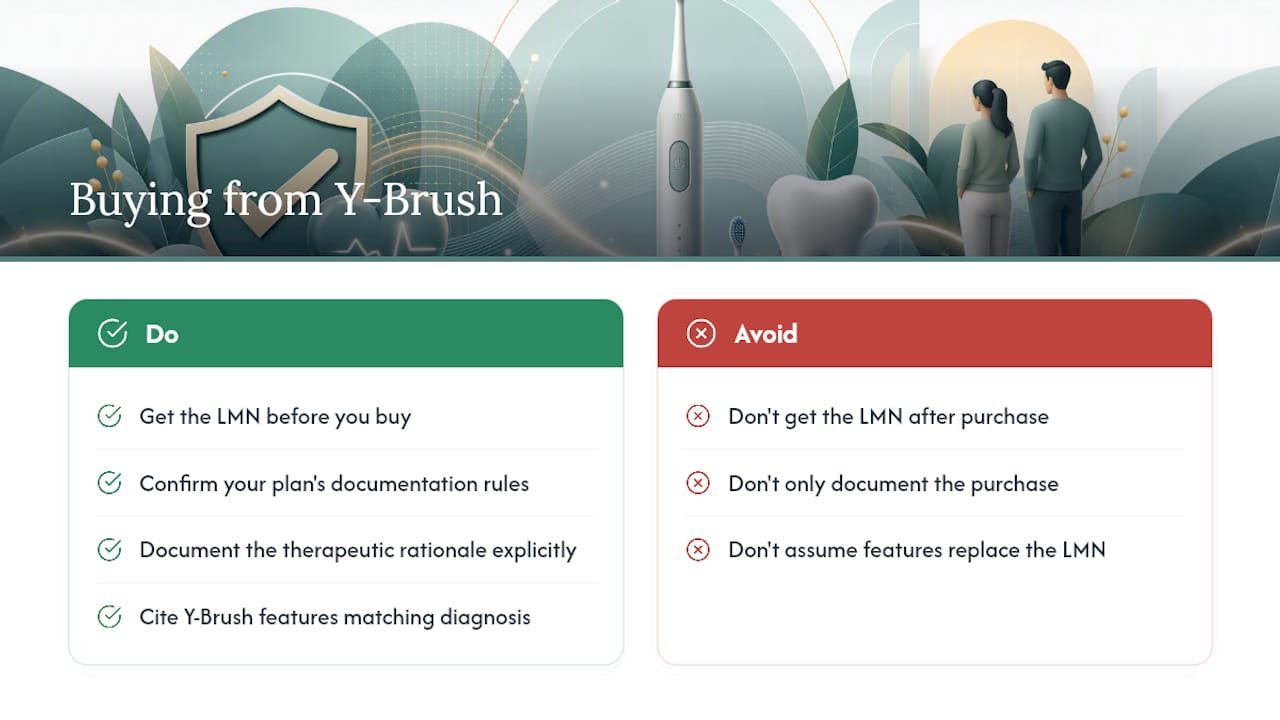
If you believe you have a qualifying condition, get the LMN before you buy, not after, and confirm your plan’s specific documentation rules first. Y-Brush’s Essential Sonic Toothbrush delivers a full clean in 20 seconds through sonic vibrations and a patented Y-shaped head, which matters if your LMN cites limited brushing time or reduced dexterity as part of the diagnosis. Document the therapeutic rationale, not just the purchase.
Your Best Option Whether or Not HSA Covers It
Reimbursement rules aside, you still need a toothbrush that actually cleans well in the time you realistically have. That’s the gap Y-brush was built to close. A traditional electric toothbrush demands the same two full minutes of manual guidance dentists have recommended for decades, and most people fall short anyway. Y-brush’s patented Y-shaped head cleans every surface at once using sonic vibrations, cutting a full brushing session down to 20 seconds.
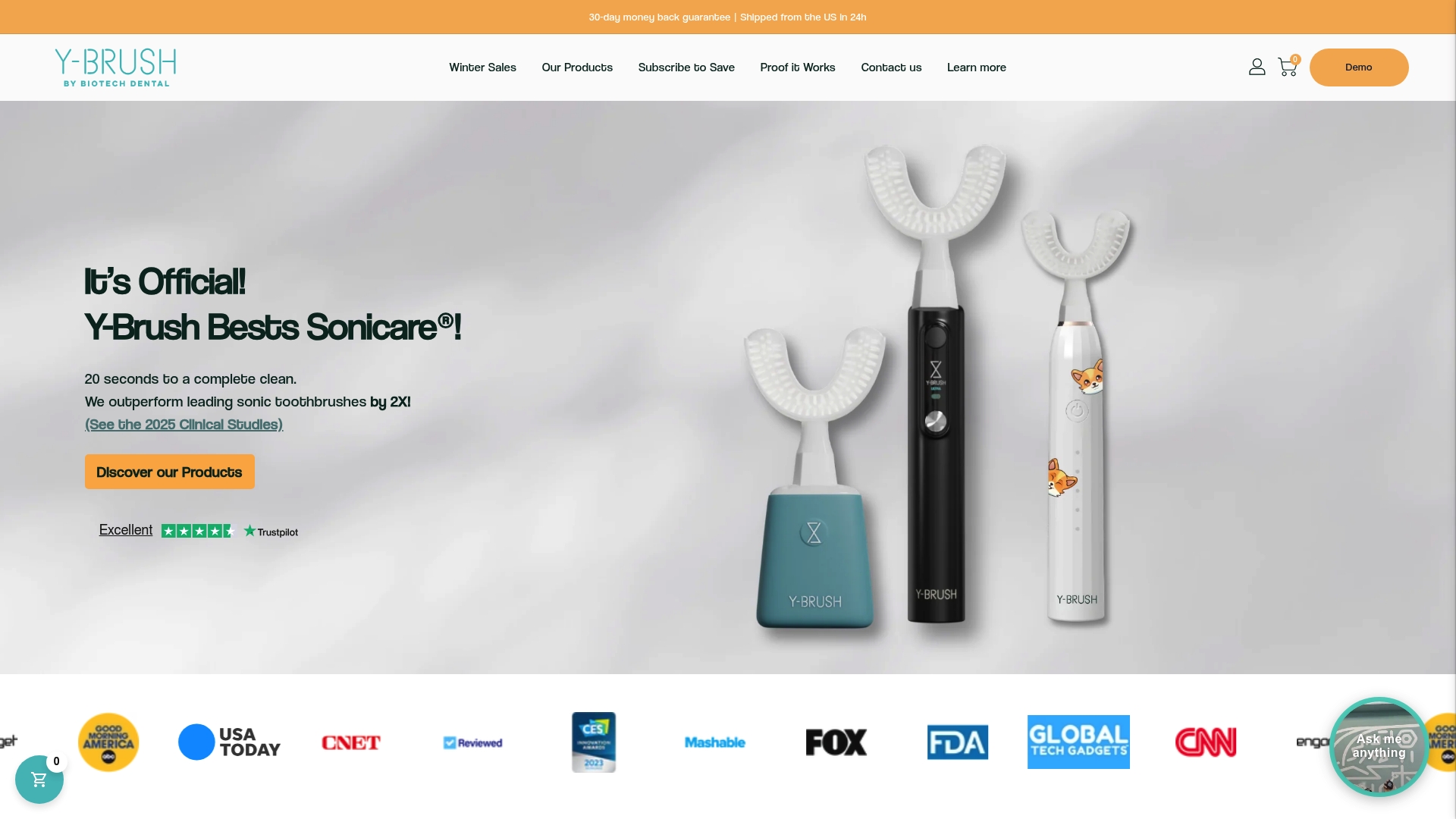
If your HSA claim doesn’t pan out, an out-of-pocket purchase still makes sense given how much time and effort it saves daily. The Y-Brush Essential Sonic Toothbrush is the adult model, and the Y-Brush KidsBrush covers kids ages 4 to 12. Both come with subscription plans for replacement heads, so you’re not reordering manually every few months. Just remember: verify your plan’s eligibility rules first if you’re hoping to use HSA funds, since Y-brush purchases follow the same IRS standard as any other electric toothbrush. Visit the product lineup to see which model fits your routine.
Where to Confirm the Rules Yourself
- IRS Publication 502 for the official medical-expense standard
- CHPA’s oral-care policy page for legislative updates
- Your plan administrator’s documentation portal before you submit any claim
Frequently Asked Questions
Is an electric toothbrush FSA eligible the same way it’s HSA eligible? Yes. FSA and HSA follow the same IRS standard, so an electric toothbrush that’s ineligible for HSA reimbursement is equally ineligible for FSA reimbursement without a Letter of Medical Necessity.
Can I use my HSA for an electric toothbrush if my dentist recommends one? A general recommendation usually isn’t enough. You need documentation tying the device to a specific diagnosed condition, not just a suggestion that it would improve your hygiene.
What HSA eligible dental products don’t need special documentation? Procedures like fillings, root canals, orthodontic treatment, and periodontal therapy typically qualify automatically, since they treat a diagnosed condition rather than support general hygiene.
Will buying an electric toothbrush through HSA trigger a tax penalty if it’s denied? If your plan denies the claim before reimbursement, there’s no penalty since you simply didn’t get approved. If you already withdrew HSA funds for it and it’s later found ineligible, you may owe income tax plus a 20% penalty on that amount.
Does a higher price or smart features make a toothbrush more likely to qualify? No. Advanced features don’t change tax treatment on their own. What matters is documented medical necessity, not the device’s price or technology.
This article is general information, not a substitute for advice from a qualified financial advisor. Consult a qualified financial professional about your own circumstances before acting on anything here.
Sources
- IRS Publication 502 (Medical and Dental Expenses)
- Expanding FSA/HSA Eligibility for Oral Care Products — CHPA
- Electric Toothbrush: HSA Eligibility — HSA Store


