


TL;DR:
- Hands-free toothbrushes automate the brushing process using mouthpiece designs or sensors to improve efficiency.
- The best options combine effective plaque removal with features like pressure sensors and coverage tracking for convenience and safety.
A hands-free toothbrush is a dental device that automates brushing motions, using sensors and design innovations to clean teeth without manual scrubbing. The category splits into two distinct types: true mouthpiece-style brushes that clean all teeth simultaneously, and smart electric brushes that automate technique through pressure sensors, timers, and motion tracking. The best hands-free toothbrush for most people delivers clinically effective plaque removal while reducing the effort and guesswork of manual brushing. Y-brush is one brand that has built its entire product line around this principle, delivering a full-mouth clean in just 20 seconds.
What is the best hands-free toothbrush in 2026?
The answer depends on how you define “hands-free.” Mouthpiece-style devices clean all teeth at once with no manual movement required. Smart electric brushes with pressure sensors, timers, and AI-guided coverage automate proper technique so thoroughly that they function as a hands-free dental care solution for most people. Both categories represent a real departure from traditional brushing, but they work differently and suit different needs.
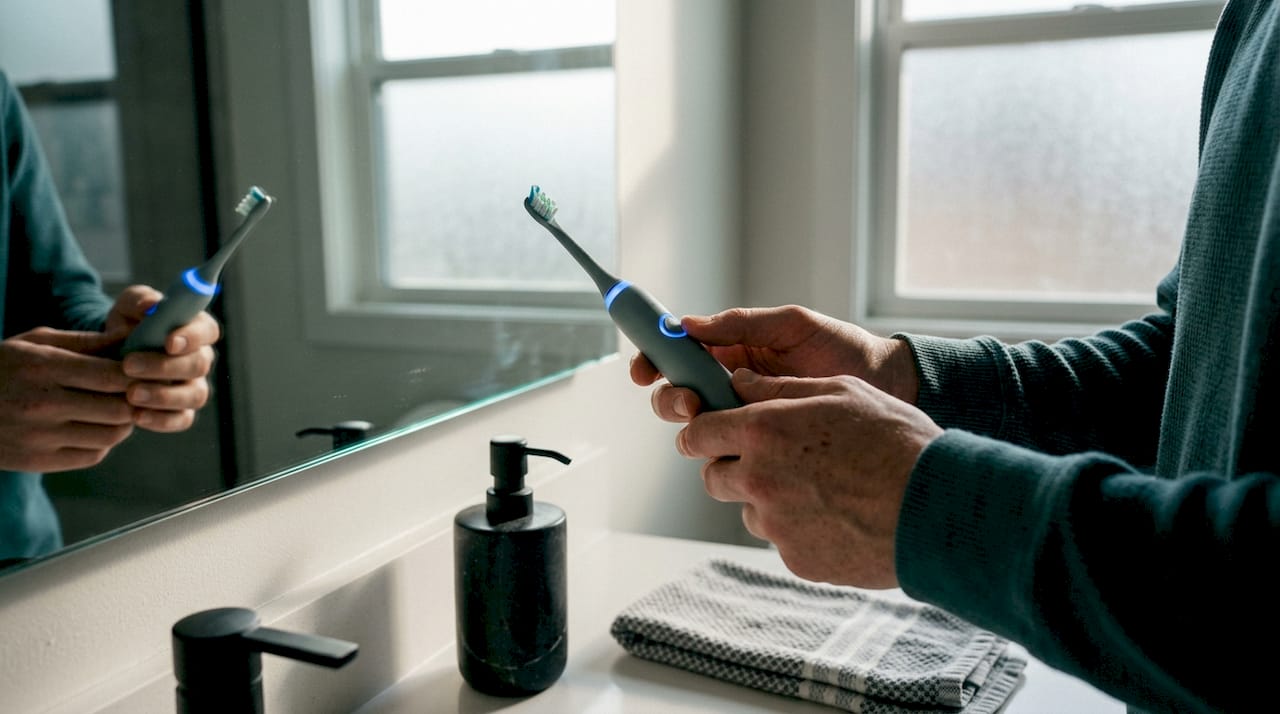
The American Dental Association (ADA) recognizes electric toothbrushes with timers and pressure sensors as effective tools for plaque removal and gum protection. That recognition matters because it sets a baseline standard for what “effective” means in this category. Any device worth considering should meet or exceed that standard.
Y-brush takes the mouthpiece approach further than most. Its sonic technology delivers a complete clean across all tooth surfaces in 20 seconds, addressing the core problem that 90% of people brush for under one minute instead of the recommended two. Speed and coverage together define the Y-brush value proposition.
What types of hands-free toothbrushes are available?
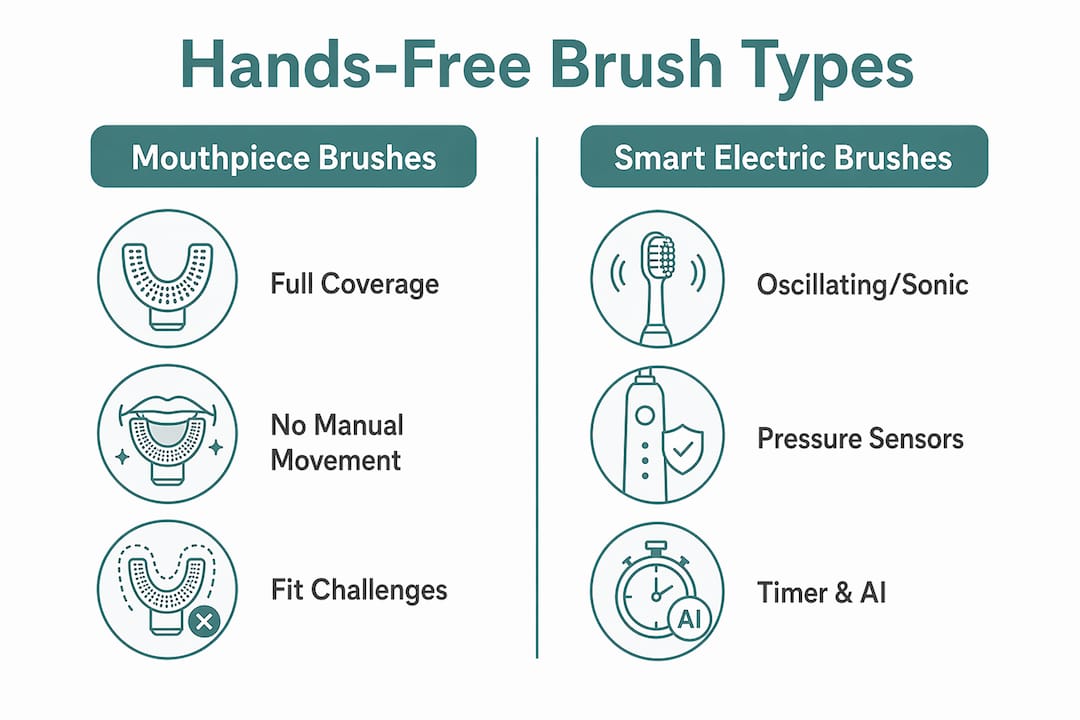
Two main categories define the hands-free oral hygiene market in 2026.
Mouthpiece-style toothbrushes
Mouthpiece devices fit over all teeth at once and use vibration or sonic waves to clean every surface simultaneously. You bite down, press a button, and the brush does the work. Y-brush uses this approach, combining a custom-fit mouthpiece with sonic technology for whole-mouth cleaning in seconds.
The trade-off is fit. Mouthpiece designs often struggle with coverage on unique dental anatomies and require a learning curve. People with non-standard arch shapes may find that certain areas receive less contact than others. Consistent biting pressure also matters. If you bite unevenly, some bristles may not reach the gum line effectively.
Smart electric toothbrushes with automation features
These brushes look like traditional electric toothbrushes but include sensors and software that automate proper technique. Key features include:
- Pressure sensors that alert you when you push too hard
- 2-minute timers with 30-second quadrant pacing
- Gyroscopes and accelerometers for real-time coverage tracking
- AI-guided mapping that identifies missed zones
Oscillating brushes rotate at approximately 8,000 times per minute, while sonic brushes vibrate at 31,000–40,000 times per minute. Each motion type has clinical support, but the automation layer is what makes these brushes approximate a hands-free experience. You still move the brush, but the device corrects your technique automatically.
Pro Tip: If you are new to hands-free brushing, start with a smart electric brush before committing to a mouthpiece device. The learning curve is shorter, and you can still benefit from significant automation.
What smart features actually enable hands-free convenience?
The technology inside modern brushes does more than most people realize. Each feature targets a specific brushing error that humans make consistently.
Pressure sensors
Pressure sensors provide real-time feedback to prevent overbrushing, protecting gum tissue that many people mistakenly think requires firm scrubbing to clean. Overbrushing causes gum recession, a condition that is difficult to reverse. A sensor that pulses or slows the brush head when you press too hard removes this risk entirely.
Timers and quadrant pacing
Most people underestimate their brushing time by 50–60 seconds with a manual brush. A 2-minute timer with 30-second quadrant alerts solves this directly. You do not need to count or watch a clock. The brush tells you when to move and when to stop.
Motion sensors and AI mapping
Gyroscopes and accelerometers for coverage tracking represent the most advanced layer of automation available in 2026. These sensors detect which zones you have cleaned and which you have skipped, then provide real-time guidance. Some premium models send this data to an external display or hub rather than requiring you to look at a phone app during brushing. That approach turns brushing into an automated health ritual with no screen interaction required.
Benefits for people with limited mobility
Hands-free oral hygiene technology is particularly valuable for people with arthritis, limited grip strength, or motor control challenges. Automation compensates for reduced manual dexterity without requiring a specialized medical device. The same brush that helps a busy professional save time also helps an older adult maintain consistent oral health.
Pro Tip: Look for brushes that use an external hub or magnetic display for guidance rather than a phone app. Holding a phone while brushing defeats the purpose of hands-free convenience.
How effective are hands-free toothbrushes?
Effectiveness varies significantly between device types, and the clinical evidence is more nuanced than most marketing suggests.
Clinical performance of smart electric brushes
Oscillating brushes reduce plaque and gingivitis more effectively than sonic brushes in 12-week clinical trials. That finding does not mean sonic brushes are ineffective. It means the motion type matters when you are comparing devices on clinical grounds. Both outperform manual brushing when used correctly, and both outperform manual brushing significantly when sensor technology corrects technique errors in real time.
Limitations of mouthpiece-style devices
True hands-free mouthpiece brushes require consistent biting pressure to be effective and generally have challenges accounting for individual dental arch shapes. This is the honest limitation of the category. A mouthpiece that fits one person’s arch perfectly may leave gaps for another. Manufacturers address this through multiple size options and flexible bristle designs, but fit remains a variable that smart electric brushes do not face.
Feature comparison by category
| Feature | Mouthpiece-style brushes | Smart electric brushes |
|---|---|---|
| Manual movement required | None | Minimal |
| Pressure sensor | Varies by model | Standard on mid-range and above |
| Coverage tracking | Limited | Available on premium models |
| Fit adaptability | Requires correct size | Universal |
| Cleaning time | 20–60 seconds | 2 minutes |
| Best for | Speed and convenience | Technique correction |
Pro Tip: Replace brush heads every 3 months. Replacement heads cost $10–$15 each and worn bristles reduce cleaning effectiveness regardless of how advanced the brush motor is.
How do you choose the right hands-free toothbrush?
Choosing well means matching the device to your actual habits, not your ideal habits. Here is what to evaluate before buying.
Key selection factors
- Brushing style: If you tend to rush, a mouthpiece device that finishes in 20 seconds removes the time variable entirely. If you prefer a traditional feel with added automation, a smart electric brush with sensors is the better fit.
- Sensitivity: People with sensitive gums benefit most from pressure sensors that prevent overbrushing. Look for models where the sensor actively slows the brush head rather than just alerting you with a light.
- Tech features: Prioritize pressure sensors, 2-minute timers, and quadrant pacing as non-negotiable features. AI mapping and coverage tracking are valuable additions, not requirements.
- Battery life: Mid-range smart brushes typically last two weeks per charge. Premium models can reach 40 days. If you travel frequently, battery life matters more than most buyers anticipate.
- Price range: Entry-level smart brushes start around $50. Premium AI-assisted models run $150–$250. Mouthpiece-style devices vary widely. Set a budget that includes ongoing brush head replacement costs.
- Brush head variety: Multiple head designs support better fit for different dental anatomies. A brand that offers only one head type limits your ability to customize coverage.
The best automatic toothbrush for a busy professional looks different from the best option for someone managing gum disease. Define your primary goal first, then match features to that goal.
Key Takeaways
The best hands-free toothbrush combines automation, sensor technology, and effective cleaning to minimize manual effort while maximizing plaque removal and gum protection.
| Point | Details |
|---|---|
| Two distinct categories exist | Mouthpiece-style brushes and smart electric brushes serve different needs and lifestyles. |
| Sensors prevent the most common errors | Pressure sensors stop overbrushing; timers and motion tracking correct coverage gaps automatically. |
| Fit matters for mouthpiece devices | Dental arch variation affects coverage, so size options and flexible bristles are critical features. |
| Replace heads every 3 months | Worn bristles reduce effectiveness regardless of motor power; budget $10–$15 per replacement head. |
| Speed and coverage define value | The best device for busy people delivers a complete clean with minimal time and effort required. |
My honest read on hands-free brushing in 2026
I have followed the evolution of oral care technology closely, and the gap between marketing claims and real-world results in this category is narrowing fast. Smart electric brushes with pressure sensors and motion tracking genuinely do correct technique errors that most people do not even know they are making. That is not a small thing. Consistent technique is the single biggest driver of brushing effectiveness, and these devices automate it.
Where I see people go wrong is in assuming that buying a sophisticated device replaces good habits. A $250 brush with AI mapping still requires you to actually use it twice a day. The technology compensates for imperfect technique, not for skipped sessions.
Mouthpiece devices like Y-brush represent a different philosophy entirely. They accept that most people will not brush for two full minutes and build a product around that reality. Twenty seconds for a full-mouth clean is not a compromise. It is a design decision that meets people where they actually are. For the majority of busy adults, that trade-off is worth making.
The learning curve for mouthpiece devices is real but short. Most people adapt within a week. After that, the consistency gains are significant because the barrier to brushing drops to almost nothing.
— Joris
Y-brush: hands-free sonic cleaning in 20 seconds
Y-brush builds its entire product line around one insight: the best oral care routine is the one you actually follow. The Y-brush Essential Sonic Toothbrush uses a full-mouth mouthpiece design with sonic vibration technology to clean all tooth surfaces simultaneously in just 20 seconds. No manual scrubbing, no quadrant counting, no timer watching.
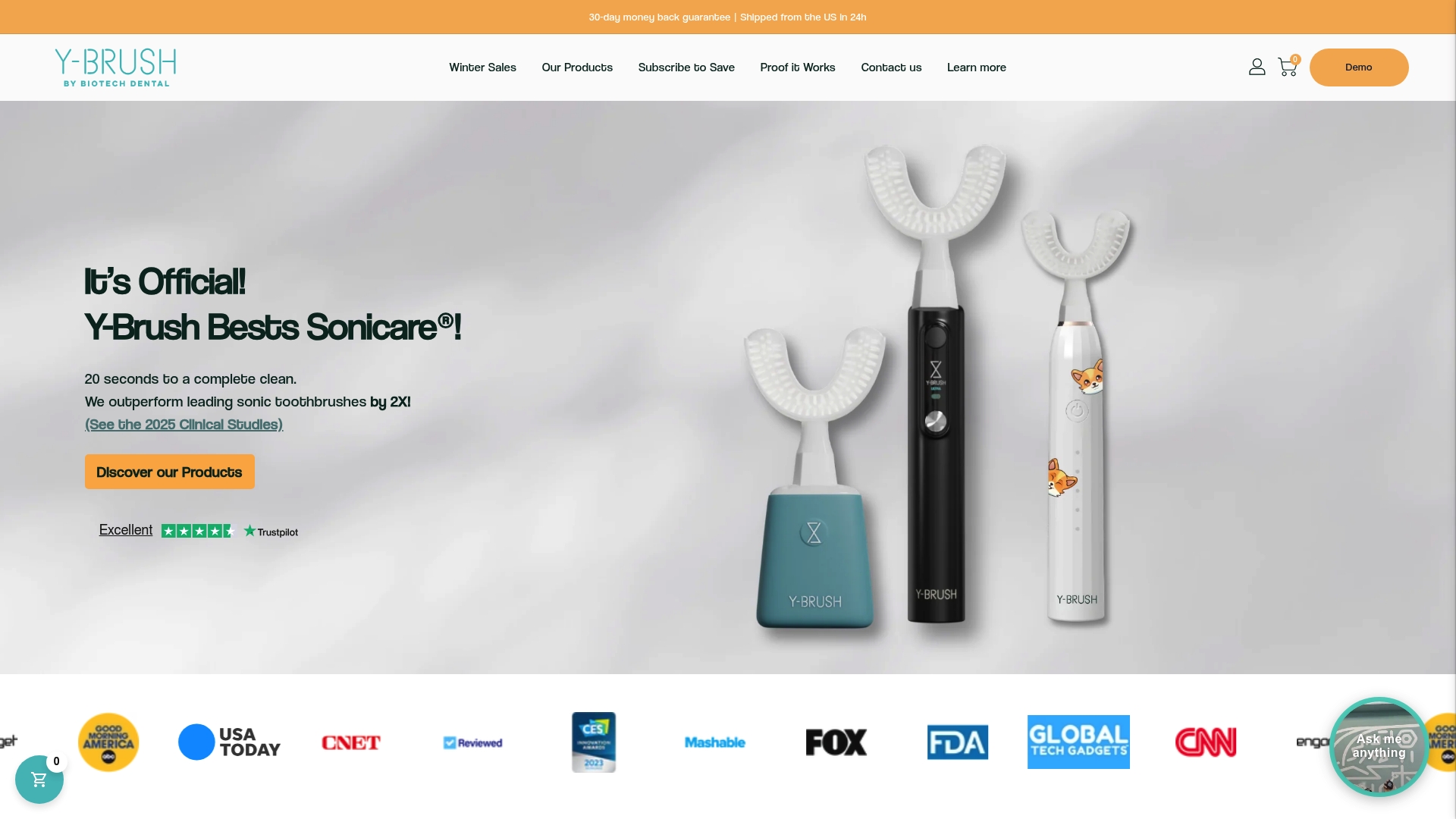
The Y-brush lineup also includes the Y-brush Ultra Sonic Toothbrush for people who want premium features and accessories, and the Y-brush KidsBrush for children aged 4–12. Every model is built on the same core principle: a complete, effective clean that fits into real life, not an idealized brushing routine. For people who want to see the full range of options, the new Y-brush products page covers the latest additions to the lineup.
FAQ
What is a hands-free toothbrush?
A hands-free toothbrush is a dental device that automates brushing motions through sensors, sonic vibration, or mouthpiece design, reducing or eliminating the need for manual scrubbing. The category includes both mouthpiece-style brushes and smart electric brushes with pressure sensors and motion tracking.
Are hands-free toothbrushes as effective as manual brushing?
Smart electric brushes with pressure sensors and timers outperform manual brushing in clinical studies, particularly for plaque reduction and gum protection. Mouthpiece-style devices deliver effective cleaning when they fit the user’s dental arch correctly.
How often should I replace the brush head on a hands-free toothbrush?
Dentists recommend replacing brush heads every 3 months. Replacement heads typically cost $10–$15 each, and worn bristles reduce cleaning effectiveness regardless of motor power.
What features should I prioritize in a hands-free toothbrush?
Prioritize pressure sensors, a 2-minute timer with quadrant pacing, and soft bristles as baseline requirements. AI coverage tracking and external display guidance are valuable additions for people who want maximum automation.
Is Y-brush a true hands-free toothbrush?
Y-brush uses a full-mouth mouthpiece design with sonic technology to clean all teeth simultaneously in 20 seconds, requiring no manual brushing motion. That makes it one of the most genuinely hands-free options available in 2026.


