


TL;DR:
- A sonic automatic toothbrush uses high-frequency vibrations to remove plaque and improve gum health more effectively than manual brushing. It features timers and pressure sensors to ensure proper technique, leading to better cleaning and gum protection. These devices benefit people with sensitive gums, limited dexterity, children, and busy lifestyles by promoting consistent, thorough oral care.
A sonic automatic toothbrush is defined as an electric toothbrush that uses high-frequency vibrations, typically above 30,000 brush strokes per minute, to remove plaque and promote gum health more effectively than manual brushing. The industry term for this category is “sonic electric toothbrush,” and the automatic design refers to the self-powered, timer-assisted operation that removes the guesswork from your routine. Clinical studies show these devices reduce gingivitis up to 45% and remove plaque up to 5.1 times better than a manual brush. That kind of performance gap is not marginal. It reflects a fundamental difference in how the cleaning actually happens.
How do sonic automatic toothbrushes work?
Sonic toothbrushes clean through two mechanisms working together. The bristles vibrate at high frequency to physically sweep plaque from tooth surfaces. At the same time, those high-frequency vibrations create fluid dynamics that push toothpaste and saliva between teeth and below the gumline, reaching areas where bristles never make direct contact. That second mechanism is what separates sonic technology from standard electric brushes.
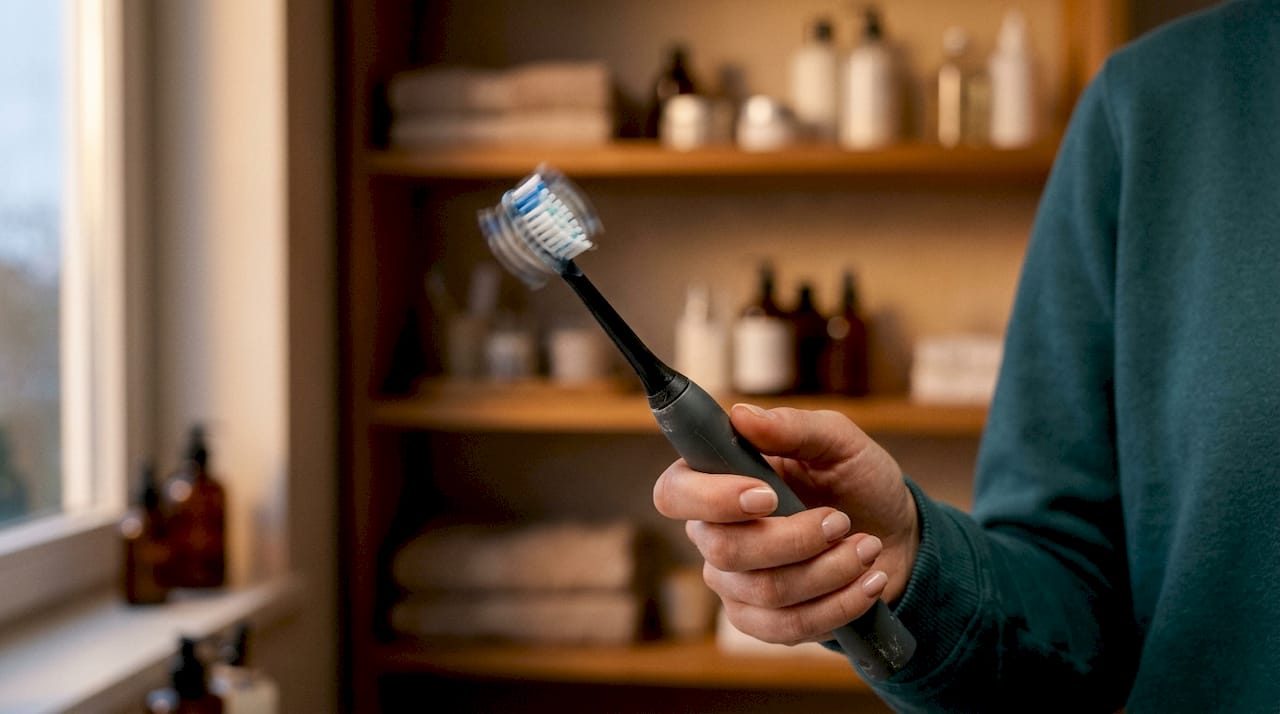
The automatic design handles timing and consistency. Most sonic automatic toothbrushes run for exactly two minutes and divide that time into four 30-second intervals, one for each quadrant of the mouth. This matters because dental guidelines recommend a full two-minute routine split into four 30-second quadrants at a 45-degree angle toward the gumline. Without a built-in timer, most people stop well short of that target.
The table below shows how sonic technology compares to manual brushing across key performance measures.
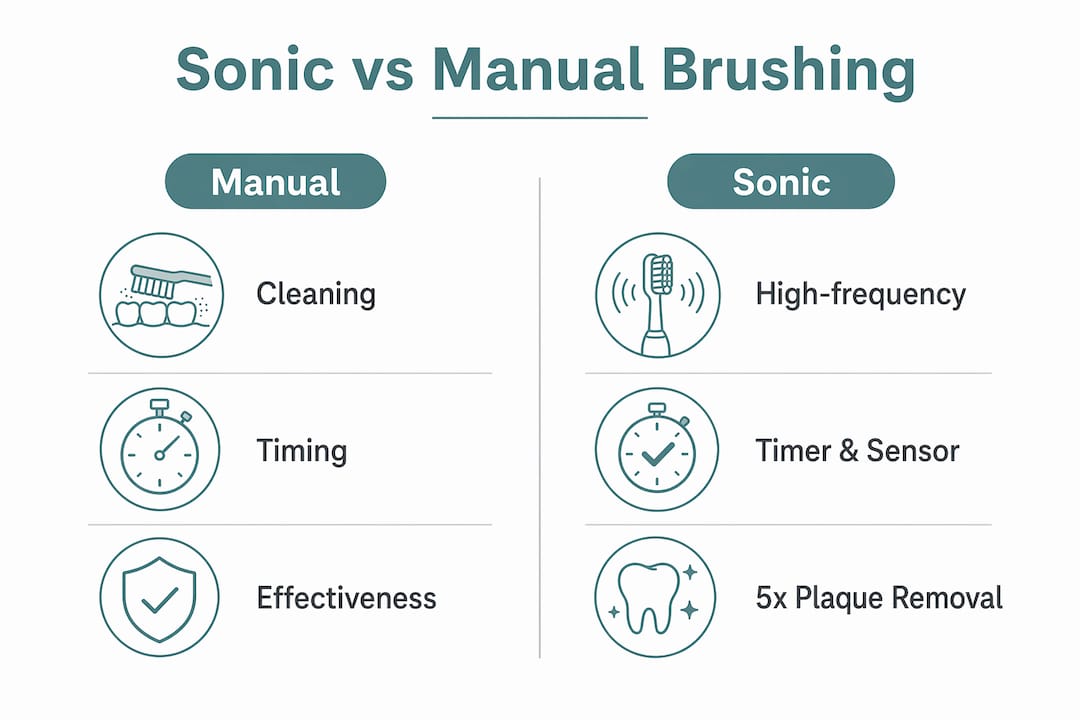
| Measure | Manual brushing | Sonic automatic toothbrush |
|---|---|---|
| Plaque removal | Baseline | Up to 5.1x more effective |
| Gingivitis reduction | Baseline | Up to 45% reduction |
| Between-teeth cleaning | Bristle contact only | Fluid dynamics extend reach |
| Brushing time consistency | User-dependent | Timer-enforced, 2 minutes |
| Gum pressure control | Manual judgment | Pressure sensor auto-adjusts |
The data reflects a consistent pattern across ADA-accredited clinical research. Sonic brushes do not just clean faster. They clean more completely, particularly in the interproximal spaces that manual brushing routinely misses.
What features should you look for in a sonic toothbrush?
The right features protect your gums, build good habits, and reduce long-term costs. Not every sonic brush on the market includes all of them, so knowing what to prioritize helps you make a better choice.
- Pressure sensor with auto-adjustment. Smart pressure protection reduces vibration power automatically when you press too hard. Dentists identify overbrushing as one of the most common causes of gum recession, and this feature removes the risk entirely.
- Built-in 2-minute timer with quadrant pacer. A timer enforces the full brushing duration. A quadrant pacer signals every 30 seconds so you move evenly through all four sections of your mouth.
- Easy-start mode. Many sonic brushes include a gradual power ramp-up over the first two weeks of use to help new users adjust to the vibration intensity. This reduces the discomfort that causes people to abandon the brush early.
- Battery life and charging type. Look for at least two weeks of battery life per charge. USB charging adds convenience for travelers. Inductive charging stands are common on premium models.
- Replacement head cost. Sonic brush replacement heads typically cost $8–$12 each and run about 60% more than heads for oscillating models. Factor this into your total annual cost before buying.
Pro Tip: Check whether the brand sells replacement heads in multi-packs. Buying two or three at once typically cuts the per-head cost by 20–30% and reduces the chance of brushing past the recommended three-month replacement window.
The science behind automatic toothbrush effectiveness confirms that pressure sensors and timers are not optional extras. They are the features most directly linked to measurable oral health improvements.
How to use a sonic automatic toothbrush correctly
Correct technique with a sonic brush is different from what most people expect. The brush does the work. Your job is to position it and move it slowly.
- Apply a pea-sized amount of toothpaste to the brush head before turning it on. Turning it on first causes splatter.
- Place the brush at a 45-degree angle toward the gumline. This angle directs vibrations into the sulcus, the small gap between the tooth and gum where plaque accumulates.
- Divide your mouth into four quadrants: upper right, upper left, lower right, lower left. Spend 30 seconds on each section.
- Guide the brush slowly from tooth to tooth. Do not scrub. Heavy scrubbing causes gum recession over time. Let the vibrations do the cleaning while you simply move the head along the gumline.
- Rinse the brush head thoroughly after use and store it upright to air dry. Capping a wet brush head traps bacteria.
Pro Tip: If you feel tickling or mild discomfort in the first week, that is normal. Use the Easy-start mode if your brush has one, or manually reduce pressure until your gums adjust. Sensitivity that persists beyond two weeks is worth mentioning to your dentist.
For a broader look at technique and duration, the brushing technique guide from Y-brush covers common mistakes and how to correct them. A good oral hygiene checklist can also help you build a consistent daily routine around your new brush.
Who benefits most from sonic automatic toothbrushes?
Sonic technology is not a one-size-fits-all upgrade. Certain groups see the most significant improvements.
- People with sensitive gums or gingivitis. Sonic brushes provide gentler cleaning than oscillating-rotating designs, making them better suited for gum recession, sensitivity, or active gingivitis. The fluid dynamic cleaning reduces the need for direct mechanical pressure.
- Busy adults who rush their routine. Research consistently shows that 90% of people brush for under one minute, well short of the two-minute standard. A sonic brush with a built-in timer corrects this without requiring any extra effort or willpower.
- People with limited dexterity. Arthritis, motor impairments, or post-surgical recovery can make manual brushing physically difficult. The automatic operation of a sonic brush reduces the fine motor demand to almost nothing.
- Children ages 4 and up. Sonic brushes designed for kids use lower vibration intensity and smaller brush heads. The timer teaches children the correct brushing duration from an early age, building habits that carry into adulthood.
- Frequent travelers. Models with two or more weeks of battery life per charge eliminate the need to carry a charger for short trips. Compact brush heads and travel cases make the format practical for carry-on luggage.
Dr. Catrise Austin confirms that sonic toothbrushes deliver superior efficiency and better gum health outcomes than manual brushing across all of these groups. The benefit is not limited to people with existing dental problems. Healthy mouths stay healthier with consistent sonic use.
Key Takeaways
A sonic automatic toothbrush removes plaque up to 5.1 times more effectively than manual brushing and reduces gingivitis by up to 45%, making it the most clinically supported daily oral care tool available.
| Point | Details |
|---|---|
| Sonic technology cleans deeper | High-frequency vibrations create fluid dynamics that reach between teeth where bristles cannot. |
| Technique matters as much as technology | Guide the brush at 45 degrees without scrubbing; let vibrations do the work to avoid gum recession. |
| Key features to prioritize | Pressure sensors, 2-minute timers, quadrant pacers, and Easy-start modes deliver the most measurable results. |
| Replacement head costs add up | Budget $8–$12 per head every three months; multi-packs reduce the per-unit cost. |
| Broad user benefits | Sensitive gums, limited dexterity, children, and busy adults all see meaningful improvements with consistent use. |
My take on sonic brushes after years of watching the market
The biggest misconception I see is that buying a sonic toothbrush is enough. People spend real money on a quality device, then use it like a manual brush, scrubbing back and forth with pressure. That technique cancels out most of the technology’s advantage and can actually cause gum damage faster than a soft manual brush would.
The second thing most reviews miss is the acclimation curve. The first week with a sonic brush feels strange. The vibration is unfamiliar, and new users often interpret that sensation as the brush being too aggressive. Most people who abandon sonic brushes do so in the first ten days. The Easy-start feature exists specifically to solve this problem, and it works. Stick with it past the two-week mark and the sensation becomes invisible.
On the market trends side, the most meaningful shift I have observed is the move toward full-mouth automatic designs, like Y-brush, that compress the entire brushing routine into 20 seconds by cleaning all teeth simultaneously. That format addresses the real behavioral problem, which is not that people brush incorrectly, but that they do not brush long enough. A device that fits a one-minute lifestyle while still delivering clinically meaningful results is a more honest solution than asking people to change habits they have held for decades.
The advanced toothbrush technology space is moving fast. The best advice I can give is to prioritize comfort and compliance over feature count. A brush you use correctly every day beats a premium model that sits on the counter.
— Joris
Y-brush: sonic oral care built for real life
Y-brush was built on one clear observation: 90% of people brush for under one minute, and no amount of reminding changes that. The Y-brush Essential delivers a clinically effective clean in just 20 seconds by brushing all teeth at once with sonic vibrations, fitting the routine people actually have rather than the one they wish they had.
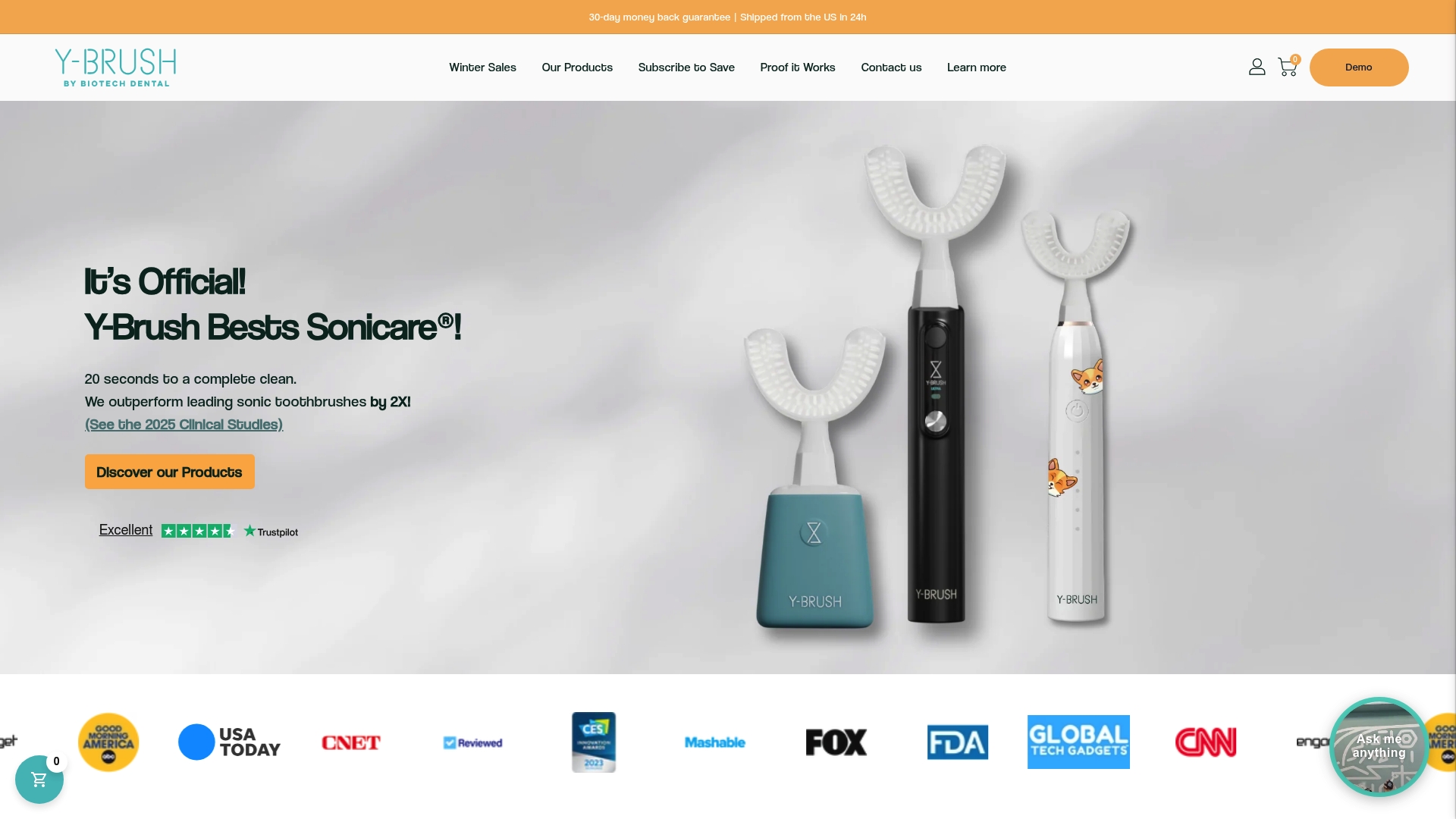
For families, the Y-brush KidsBrush brings the same sonic technology to children ages 4 to 12, with a gentler vibration intensity and a brush head sized for smaller mouths. If you want to keep replacement costs predictable, Y-brush membership plans bundle brush heads on a regular schedule so you never brush past the three-month replacement window.
FAQ
What is a sonic automatic toothbrush?
A sonic automatic toothbrush is a self-powered electric toothbrush that uses high-frequency vibrations to remove plaque and clean between teeth through fluid dynamics. It operates automatically with built-in timers and pressure sensors to guide correct brushing technique.
How does a sonic toothbrush differ from a regular electric toothbrush?
Sonic toothbrushes vibrate at higher frequencies than standard oscillating-rotating electric brushes, which creates a fluid dynamic cleaning effect that reaches beyond bristle contact. This makes them gentler on sensitive gums while delivering more thorough plaque removal.
How long should you brush with a sonic toothbrush?
Dental guidelines recommend two full minutes, divided into four 30-second quadrants. Most sonic automatic toothbrushes include a built-in timer and quadrant pacer to enforce this routine without any effort from you.
Are sonic toothbrushes safe for kids?
Sonic toothbrushes designed for children, such as the Y-brush KidsBrush for ages 4 to 12, use lower vibration intensity and smaller brush heads suited to developing teeth and gums. They are safe and effective when used with age-appropriate models.
How often should you replace a sonic toothbrush head?
Dental professionals recommend replacing brush heads every three months or sooner if bristles show visible wear. Sonic replacement heads typically cost $8–$12 each, so budgeting for four replacements per year is standard practice.


